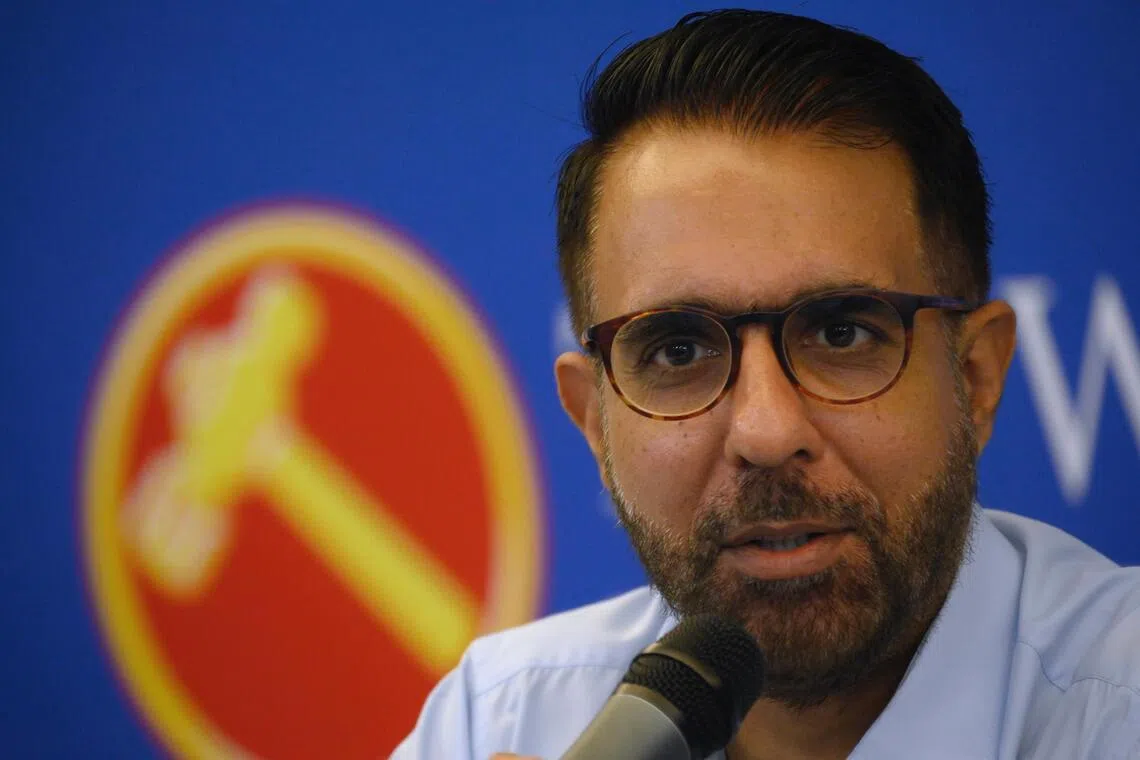
Pritam Singh faces WP leadership challenge – The Straits Times: Analyzing the Pressure on Singapore’s Opposition Head
Pritam Singh, the Secretary-General of the Workers’ Party (WP), is managing a complex leadership period defined by internal strategic debates and the necessity of sustaining party growth after the 2020 General Election. This leadership challenge involves balancing the party’s traditional grassroots identity with the requirements of being the formal Leader of the Opposition in the Singapore Parliament, according to political analysts and party observers.
What is the nature of the leadership challenge facing Pritam Singh?
The current friction surrounding the leadership of the Workers’ Party is not a traditional coup or a formal vote of no confidence, but rather a strategic tension. Pritam Singh faces the difficult task of transitioning the WP from a party of “estates”—focused on specific strongholds like Aljunied and Hougang—into a national alternative to the People’s Action Party (PAP). This shift requires a different style of leadership than that employed by his predecessors.
According to observers of Singaporean politics, the challenge manifests in three primary areas: internal consensus on candidate selection, the management of a growing parliamentary caucus, and the psychological burden of the “Leader of the Opposition” title. While the 2020 General Election provided the WP with its greatest mandate to date, it also increased the scrutiny on Singh’s ability to maintain unity among a diverse group of MPs and activists.
Key points regarding the current leadership dynamics include:
- Strategic Divergence: Tension between maintaining a “low-profile, high-service” grassroots approach and a “high-profile, national-policy” parliamentary approach.
- Succession Planning: The need to identify and groom a second tier of leadership to avoid over-reliance on a single figurehead.
- Resource Allocation: Balancing the needs of existing GRCs (Group Representation Constituencies) with the ambition to contest new territories.
The 2020 General Election as a Catalyst for Change
The events of the 2020 General Election fundamentally altered the trajectory of the Workers’ Party. By securing Aljunied-Hougang GRC, the WP proved it could win a large-scale constituency, but this victory brought new administrative and political pressures. For the first time, the party had a significant number of MPs who were not just representatives of their wards, but figures of national importance.
Pritam Singh’s role shifted from being a party leader to the official Leader of the Opposition. This designation, while prestigious, imposes a specific set of expectations. He is now expected to provide a cohesive alternative government vision rather than simply critiquing specific PAP policies. This transition is where much of the “leadership challenge” originates, as the party must evolve its internal machinery to support this broader role.
| Period | Leadership Focus | Primary Goal |
|---|---|---|
| Pre-2011 | Niche Opposition | Establishing a foothold in single member constituencies. |
| 2011–2020 | Expansion and Consolidation | Breaking into GRCs and proving governance capability. |
| 2020–Present | National Alternative | Defining a comprehensive national platform as the official Opposition. |
The Tension Between the Old Guard and New Guard
A recurring theme in the discourse regarding Pritam Singh faces WP leadership challenge – The Straits Times is the perceived gap between the “old guard” and the “new guard” within the party. The old guard, exemplified by the legacy of Low Thia Khiang, prioritized a cautious, disciplined, and deeply local approach to politics. This strategy focused on winning the hearts of residents through consistent, quiet service.
The new guard, however, consists of younger, professionally diverse candidates who are more comfortable with the digital age and national-level policy debates. These members often push for a more aggressive stance on systemic issues such as housing policy, cost of living, and civil liberties. Singh sits at the center of this divide. He must satisfy the disciplined requirements of the party’s founders while empowering a new generation of politicians who want to accelerate the party’s evolution.
This internal balancing act is a delicate process. If Singh leans too far toward the old guard, the party risks stagnation and losing the interest of younger voters. If he pivots too sharply toward the new guard, he risks alienating the loyal grassroots base that provided the party its initial strength.
The Burden of the ‘Leader of the Opposition’ Role
The formalization of the Leader of the Opposition (LO) role in Singapore has added a layer of complexity to Singh’s leadership. Historically, the opposition was a fragmented collection of parties and independents. The WP’s dominance has effectively made Singh the face of all non-PAP sentiment in the country.
According to parliamentary records, the LO is expected to lead debates on the budget, question the Prime Minister on national security, and represent the country in international forums. This requires a vast amount of time and intellectual energy, often at the expense of internal party management. When the leader is preoccupied with the high-stakes environment of Parliament, the internal administration of the party can suffer, leading to perceptions of a leadership vacuum or lack of direction.
“The transition from a party of protest to a party of governance requires a fundamental shift in leadership psychology. The leader is no longer just a fighter; they must be a manager of talent and a strategist of national proportions.”
Furthermore, the LO role makes Singh a primary target for legal and political challenges. The increased scrutiny on his every word and action means that any mistake is not just a personal failure but a setback for the entire opposition movement. This high-pressure environment can lead to internal fatigue and a desire among party members for a more distributed leadership model.
Succession Planning and the Central Executive Committee
One of the most critical aspects of the leadership challenge is the question of who comes next. The Workers’ Party has historically been centered around strong individual personalities. To ensure long-term survival, the party must move toward a more institutionalized form of leadership.
The Central Executive Committee (CEC) is the governing body of the WP, and its composition is vital to the party’s stability. Singh’s challenge is to delegate authority effectively to other senior members without appearing to lose control. The ability to build a “cabinet-style” leadership within the party—where different members lead different portfolios (e.g., policy, grassroots, communications)—would alleviate the pressure on the Secretary-General.
Political analysts suggest that the party’s ability to survive beyond Pritam Singh depends on whether it can create a culture of collective leadership. If the party remains a “one-man show,” it remains vulnerable to the removal or exhaustion of its leader. Therefore, the current “challenge” is as much about building a system as it is about managing a person.
Potential areas for leadership distribution include:
- Policy Development: Creating a dedicated wing for research and policy formulation to reduce the burden on MPs.
- Candidate Vetting: Establishing a more transparent and rigorous process for selecting candidates to minimize internal friction.
- Grassroots Coordination: Empowering local leaders in GRCs to make more autonomous decisions regarding ward management.
Impact on the Next General Election
How Pritam Singh handles these leadership pressures will directly impact the Workers’ Party’s performance in the next General Election. The PAP often campaigns on the theme of “stability” and “proven leadership.” If the WP appears fractured or overly dependent on a single leader, the PAP can use this to argue that the opposition is not ready for government.
Conversely, if Singh successfully navigates this period, he will have transformed the WP into a professionalized political machine capable of contesting multiple GRCs simultaneously. A unified party with a clear succession plan is a far more formidable opponent than a party led by a single charismatic figure.
The strategic goal for the WP is to move from “winning a few seats” to “being a viable alternative government.” This requires a leadership structure that can manage a large number of MPs across various constituencies without losing the core identity of the party. The current challenges are, in many ways, the “growing pains” of a party that has outgrown its original design.
For more information on the evolution of Singapore’s political landscape, see a related explainer on the GRC system and its impact on opposition parties.
Common Misconceptions About the WP Leadership
There are several common misunderstandings regarding the current state of the Workers’ Party leadership that require clarification.
Misconception 1: There is an active “revolt” against Pritam Singh.
In reality, there is no evidence of a formal rebellion or a split within the party. The “challenge” refers to strategic and systemic pressures, not a personal conflict between members. The party continues to present a unified front in Parliament.
Misconception 2: The WP is simply a “PAP-lite” party.
Critics often argue that the WP has become too moderate. However, the leadership challenge is not about moving toward the center, but about how to present a distinct alternative vision that is both bold enough to attract voters and responsible enough to be seen as credible.
Misconception 3: Leadership is only about the Secretary-General.
While Pritam Singh is the public face, the WP operates through a committee structure. The leadership challenge involves the entire CEC and the party’s senior MPs, all of whom must adapt to the party’s new role in the national political ecosystem.
Analyzing the Path Forward
The trajectory of the Workers’ Party will likely be determined by how it manages the intersection of parliamentary duty and party growth. The tension between these two poles is the core of the leadership struggle. To overcome this, Singh and the CEC must prioritize the institutionalization of the party.
This means moving away from a personality-driven model toward a platform-driven model. When voters support the WP, they should be supporting a set of ideas and a proven system of governance, rather than just the persona of Pritam Singh. This shift would not only secure the party’s future but would also redefine the nature of opposition politics in Singapore.
The markers of success in the coming years will be the emergence of new, visible leaders within the party and the ability of the WP to maintain its hold on Aljunied-Hougang while expanding its footprint. The “challenge” is an opportunity for the party to mature from a challenger into a sophisticated political organization.
Frequently Asked Questions
Why is Pritam Singh facing a leadership challenge?
The challenge is primarily strategic. As the Leader of the Opposition, Singh must balance the party’s traditional grassroots focus with the need to present a national alternative government vision, while managing internal tensions between different generations of party members.
Does this mean the Workers’ Party is splitting?
No. There is no evidence of a formal split. The term “leadership challenge” in this context refers to the difficulties of scaling a political party and evolving its leadership structure to match its increased parliamentary presence.
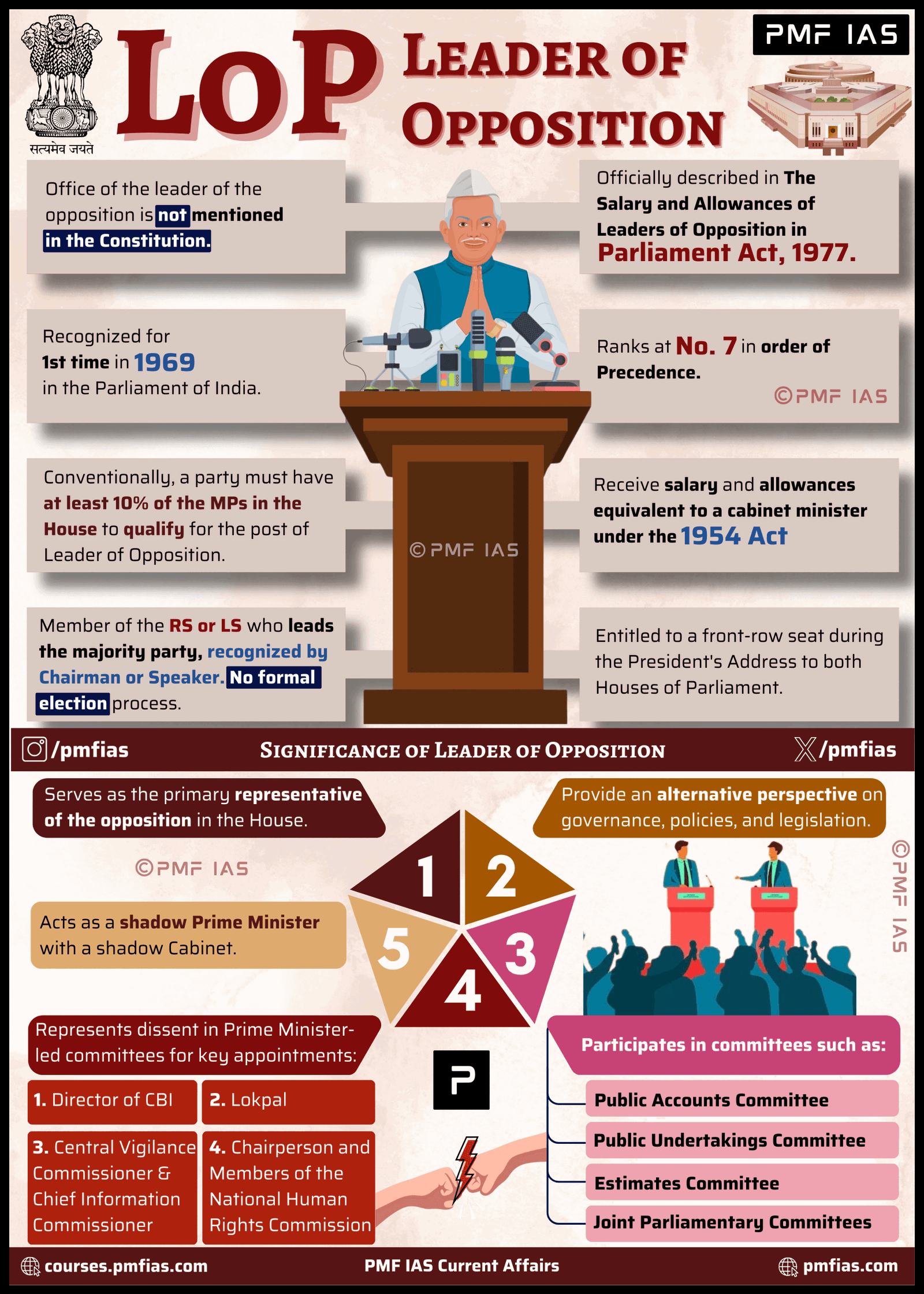
How does the “Leader of the Opposition” role affect the WP?
The role increases the public profile and legitimacy of the party but also places an immense workload on Pritam Singh. This can lead to a perceived gap in internal party management and increases the pressure on the party to have a robust succession plan.
Who are the potential successors to Pritam Singh?
The party has not officially named a successor. However, the focus is on developing a “collective leadership” model within the Central Executive Committee to ensure that the party’s viability is not tied to a single individual.
Will this impact the next General Election?
Yes. If the WP can demonstrate a stable, institutionalized leadership structure, it will be seen as a more credible alternative to the PAP. If it remains overly dependent on one person, it may be viewed as more vulnerable.
For further reading on how opposition parties organize in parliamentary systems, you may find a related explainer on parliamentary leadership transitions useful.
