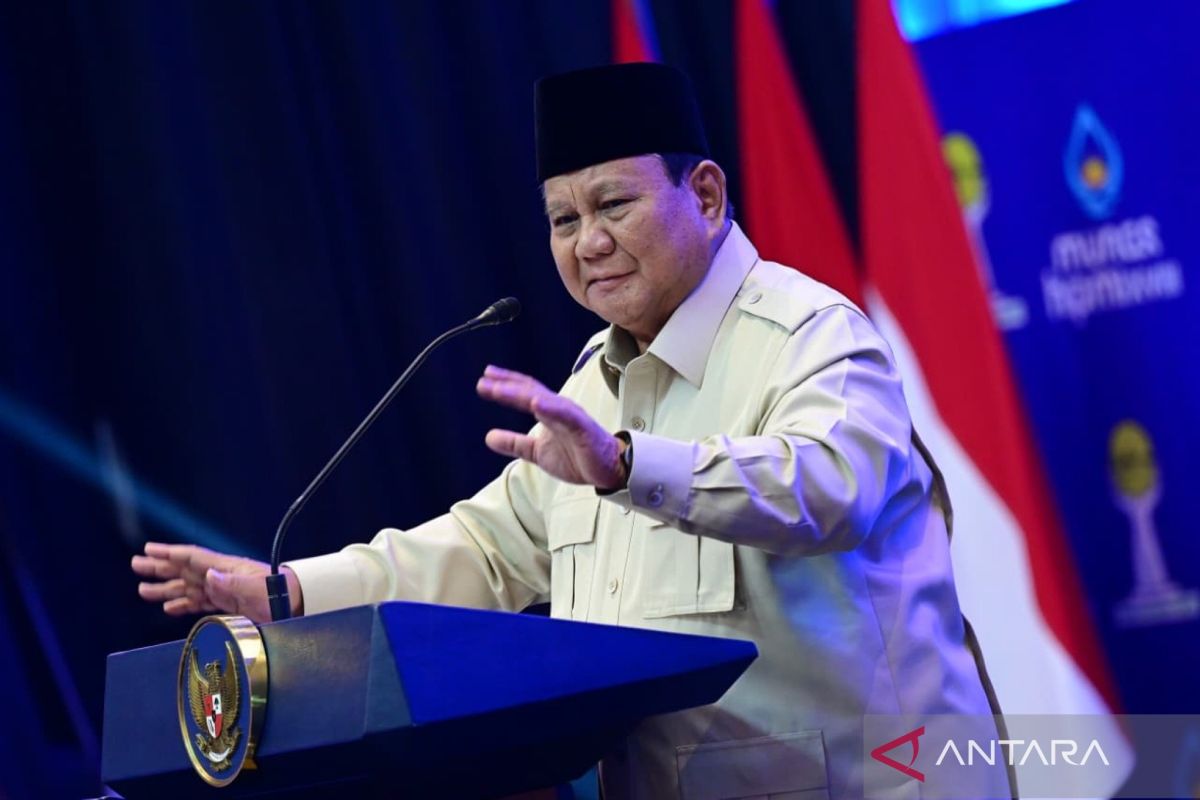
Prabowo defends foreign trips, cites free and active policy – ANTARA News
President Prabowo Subianto has defended his frequent overseas travel by citing Indonesia’s “free and active” foreign policy, according to reports from ANTARA News. While the administration asserts these diplomatic missions secure strategic national results, critics and analysts from The Jakarta Post and Tempo.co have raised concerns over the high costs and their alignment with domestic budget efficiency goals.
Why is President Prabowo defending his overseas travel?
President Prabowo has linked his international travel schedule to the “free and active” (bebas-aktif) principle that has guided Indonesian diplomacy since the early days of the republic. According to ANTARA News, the President views these trips as essential for maintaining Indonesia’s neutrality and influence amidst escalating global tensions. The “free and active” policy dictates that Indonesia does not align itself with any single superpower bloc but remains active in promoting global peace and national interests.
The administration argues that high-level personal diplomacy is the only way to ensure Indonesia remains a key player in global affairs. By meeting heads of state directly, Prabowo aims to strengthen bilateral ties, attract foreign direct investment, and secure Indonesia’s position in international forums. This approach is framed not as a luxury, but as a strategic necessity for a country seeking to elevate its status on the world stage.
Key drivers for these trips include:
- Strategic Neutrality: Balancing relationships between the United States and China to avoid dependency on either power.
- Economic Diplomacy: Directly negotiating trade deals and investment packages with global leaders.
- Regional Leadership: Asserting Indonesia’s role as the largest economy in Southeast Asia and a leader within ASEAN.
- Security Cooperation: Establishing defense partnerships to protect national sovereignty.
How do critics view the cost of these diplomatic missions?
While the government emphasizes strategic gains, other media outlets have highlighted the financial burden of these trips. Analysis from The Jakarta Post suggests that this “costly diplomacy” is coming under increased scrutiny. The concern centers on whether the tangible returns from these visits justify the significant expenditure of public funds.
Tempo.co English has taken a sharper tone, describing the President’s travel as a “wasteful travel spree.” The outlet points to a perceived contradiction in the administration’s messaging: while the government appeals to various sectors to tighten spending and implement austerity measures, the presidency continues to engage in expensive international tours. This discrepancy, according to Tempo.co, creates a narrative of inconsistency in how the administration manages the national budget.
“Appeals to tighten spending while on wasteful travel spree.” — Tempo.co English
The criticism is not merely about the total dollar amount spent, but about the timing. With Indonesia facing various economic pressures, critics argue that every rupiah spent on luxury travel and large delegations must be strictly accounted for and tied to a measurable outcome.
What are the budget efficiency concerns raised by experts?
The debate over the President’s travel extends into academic and policy circles. An expert from Universitas Gadjah Mada (UGM) addressed the alignment of President Prabowo’s overseas visits with the government’s stated goals for budget efficiency. The core of the issue is the tension between the “cost of doing business” in international diplomacy and the mandate for fiscal discipline.
According to the UGM analysis, the effectiveness of these trips should be measured against a clear set of Key Performance Indicators (KPIs). When the government calls for budget efficiency, that mandate should theoretically apply to the executive branch’s travel expenses as well. The expert suggests that without a transparent framework to track the “Return on Investment” (ROI) of these trips, the administration remains vulnerable to accusations of fiscal irresponsibility.
The friction between diplomatic ambition and budget reality can be broken down into three main areas:
- Delegation Size: The cost of a trip is often driven not by the President alone, but by the size of the accompanying entourage, including ministers, aides, and security detail.
- Frequency vs. Impact: Critics question whether a high frequency of short trips is more effective than fewer, more comprehensive missions.
- Opportunity Cost: The funds used for overseas travel are funds that cannot be allocated to domestic infrastructure, social welfare, or education.
What results has the administration claimed from these trips?
In response to the scrutiny, the government has pointed to concrete achievements. The cabinet secretary, speaking via ANTARA News, stated that Prabowo’s diplomacy is delivering actual results. While specific figures for every trip are not always immediately public, the administration claims these visits have opened doors for new investment and strengthened geopolitical alliances.
The administration’s defense rests on the idea that the “results” of diplomacy are often long-term and systemic rather than immediate cash infusions. These include:
- Improved Sovereign Credit Ratings: By appearing as a stable and globally connected leader, the President may help attract more institutional investors.
- Trade Agreements: High-level meetings often clear the path for technical teams to finalize trade deals that lower tariffs for Indonesian exports.
- Geopolitical Insurance: Strong personal ties with world leaders can provide Indonesia with diplomatic leverage during international crises.
The cabinet secretary maintains that the “free and active” policy requires a visible and active presence. In this view, the cost of the travel is an investment in Indonesia’s national security and economic future.
Comparing Perspectives on Presidential Diplomacy
The narrative surrounding President Prabowo’s travel is split between those who see a strategic visionary and those who see a fiscal liability. The following table summarizes the contrasting views presented across the cited sources.
| Perspective | Government View (ANTARA News) | Critical View (Tempo / Jakarta Post) | Academic View (UGM) |
|---|---|---|---|
| Primary Goal | Implementing “Free and Active” policy. | Maintaining prestige/visibility. | Balancing diplomacy with efficiency. |
| Cost Assessment | Necessary investment for results. | Wasteful and contradictory spending. | Needs a transparent ROI framework. |
| Outcome | Delivering strategic results. | Under scrutiny for lack of clarity. | Questionable alignment with budget goals. |
The geopolitical context of the “Free and Active” policy
To understand why the administration is so insistent on these trips, one must look at the historical weight of the bebas-aktif policy. Established shortly after Indonesia’s independence, this doctrine ensures the country does not become a satellite of any major power. In the current era of “Great Power Competition” between the U.S. and China, this policy is harder to maintain than ever before.
If Indonesia remains silent or invisible, it risks being sidelined in decisions that affect the South China Sea or global trade routes. By traveling frequently, Prabowo signals to both Washington and Beijing that Indonesia is an independent actor with its own agenda. This “active” component of the policy requires face-to-face engagement to prevent the country from being pressured into an alliance that could harm its national interest.
However, this strategic necessity clashes with the domestic economic climate. When a government asks its citizens or lower-level officials to “tighten their belts,” the optics of a presidential jet traveling across continents become a political liability. The challenge for the Prabowo administration is to translate these high-level diplomatic wins into “kitchen table” benefits for the average Indonesian citizen.
For more on how the government manages these priorities, see a related explainer on Indonesia’s national budget priorities.
Common misconceptions about diplomatic spending
A common oversimplification in this debate is that diplomatic trips are either “all waste” or “all profit.” In reality, diplomatic spending is complex. Many costs are shared between the host country and the visiting delegation, and some trips are reciprocal, meaning the host country pays for the visit to encourage a relationship.
Another misconception is that diplomacy can be replaced entirely by virtual meetings. While Zoom and secure video links are efficient for routine business, the “free and active” policy often relies on “corridor diplomacy”—the informal conversations that happen between official meetings. These unscripted moments are often where the most significant breakthroughs in trust and agreement occur.
The real point of contention is not the act of traveling, but the scale and transparency of the spending. The critique from outlets like Tempo.co is focused on the excess and the contradiction with austerity calls, rather than a total rejection of international engagement.
Evaluating the long-term implications
If the administration continues its current pace of travel without providing transparent data on the outcomes, it may face increasing domestic political pressure. The “free and active” policy provides a strong ideological shield, but ideological justifications often wear thin when contrasted with budget deficits or inflation.
Conversely, if the administration can prove that these trips led to specific, multi-billion dollar investments or critical security guarantees, the current criticism will likely fade. The success of Prabowo’s diplomatic strategy will be judged not by the number of countries visited, but by the tangible improvements in Indonesia’s economic and strategic position over the next few years.
The tension between the Cabinet Secretary’s claims of “results” and the analysts’ claims of “waste” suggests a gap in communication. The administration has focused on the intent and the principle, while critics are focusing on the invoice and the optics.
For further context on regional dynamics, a related explainer on ASEAN’s role in global trade provides a broader view of the environment Prabowo is navigating.
Frequently Asked Questions
What is the “free and active” policy mentioned by President Prabowo?
The “free and active” (bebas-aktif) policy is Indonesia’s long-standing diplomatic doctrine. “Free” means the country does not align itself with any major power bloc, and “active” means it takes a proactive role in maintaining global peace and promoting its own national interests.
Why are critics calling the President’s trips “wasteful”?
Critics, including reports from Tempo.co, argue that the high cost of these frequent overseas visits contradicts the government’s calls for budget efficiency and austerity. They question whether the spending is justified by the actual results achieved.

What results does the government claim these trips achieve?
According to the cabinet secretary and ANTARA News, the trips deliver strategic results, including strengthened bilateral ties, increased foreign investment, and a more influential role for Indonesia in global geopolitics.
How does the UGM expert suggest measuring the value of these trips?
The expert from Universitas Gadjah Mada suggests that the administration should use a transparent framework with clear Key Performance Indicators (KPIs) to ensure that diplomatic spending aligns with national budget efficiency goals.
Is diplomatic travel the only way to implement the “free and active” policy?
While virtual communication exists, the administration argues that high-level, face-to-face diplomacy is essential for building trust and navigating the complexities of Great Power Competition, which is central to the “active” part of the policy.
