
The Next Big Hurdle in Trump’s Penn Station Rebuild: Figuring Out How to Pay for Project
The primary obstacle facing the proposed redevelopment of New York City’s Penn Station is the absence of a concrete funding strategy, according to reports from Gothamist. While renderings depict a “world-class” transformation involving Amtrak, the architectural firm PAU, and developer Halmar, critics and analysts note that the project lacks a verified payment plan to move from conceptual drawings to construction.
What is the current status of the Penn Station rebuild plan?
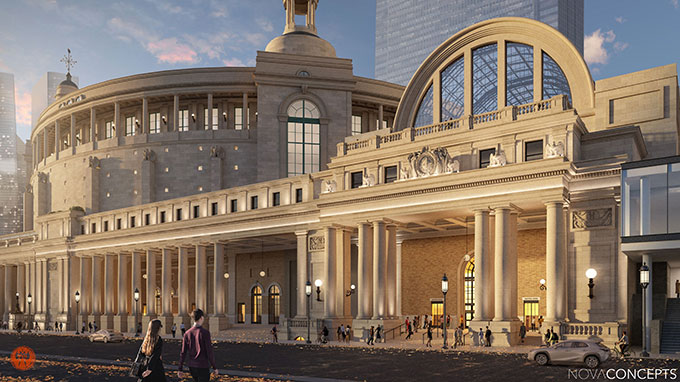
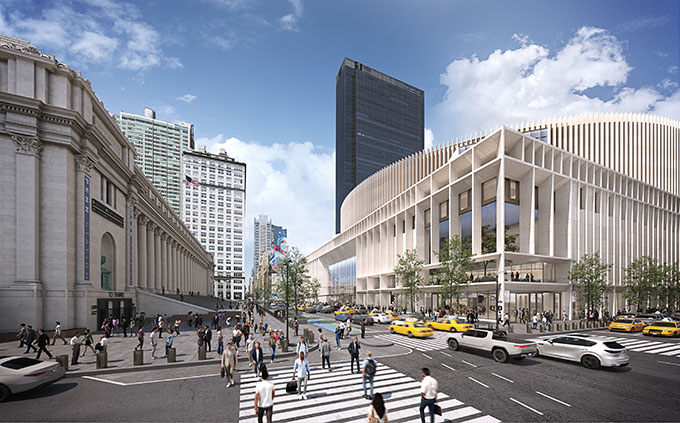
The current proposal for Penn Station focuses on a dramatic visual and structural overhaul intended to elevate the hub to a global standard. According to ABC7 Eyewitness News, the plan includes “world-class” redevelopment renderings that suggest a significant departure from the current subterranean, cramped environment. The vision is a collaborative effort between Amtrak, the architectural firm PAU, and the developer Halmar.
Despite the visual progress, the project remains in a conceptual phase. The New York Times has provided previews of these renovations, illustrating a more open, light-filled concourse. However, the transition from these images to actual groundbreaking depends entirely on securing billions of dollars in capital. According to Gothamist, the “next big hurdle” is not the design or the political will, but the specific mechanism for financing the work.
The project involves several key stakeholders with differing priorities:
- Amtrak: The primary owner and operator of the rail infrastructure.
- PAU: The architectural firm tasked with the spatial vision and design.
- Halmar: The development partner providing construction and real estate expertise.
- Federal and City Government: Potential sources of grants, tax incentives, or direct funding.
Why is the funding for the Penn Station project so contentious?
The controversy surrounding the project’s financing stems from a perceived gap between the public presentation of the plan and the financial reality. Streetsblog New York City characterized recent presentations as a “dog and pony show,” alleging that the organizers avoided the most critical question: how the project will actually be paid for.
Funding a project of this scale in Midtown Manhattan presents unique challenges. The station is one of the busiest transit hubs in the world, meaning construction cannot simply shut down operations. This requirement for “active-site” construction exponentially increases costs. According to the reports, the lack of a transparent budget or a named funding source has led to skepticism regarding the project’s viability.
“The vision is clear, but the ledger is empty.” — This sentiment reflects the critique from Streetsblog NYC regarding the disconnect between the architectural renderings and the financial planning.
Common funding models for such projects typically include:
- Public-Private Partnerships (P3): Where a private developer (like Halmar) funds construction in exchange for long-term lease rights to commercial space above the station.
- Federal Grants: Direct infusions of cash from the Department of Transportation or the Infrastructure Investment and Jobs Act.
- Value Capture: Using the increase in surrounding property values to pay for the infrastructure.
To date, no specific combination of these methods has been formally committed to the Penn Station rebuild in a way that satisfies financial analysts or transit advocates.
How does the proposed vision compare to previous redevelopment attempts?
Penn Station has been the subject of numerous redevelopment proposals over the last several decades. The current push differs primarily in its scale and the high-profile nature of the partnership between PAU and Halmar. While previous plans often focused on incremental improvements—such as adding a few more elevators or widening a concourse—the current vision is a wholesale reimagining of the space.
| Feature | Previous Incremental Plans | Current “World-Class” Vision |
|---|---|---|
| Scope | Minor renovations and capacity tweaks | Complete structural and aesthetic overhaul |
| Primary Goal | Operational efficiency | Global prestige and passenger experience |
| Design Approach | Utilitarian/Subterranean | Open, light-filled, architectural landmark |
| Funding Status | Often piecemeal or grant-based | Currently undefined/The “Big Hurdle” |
The Architect’s Newspaper notes that the collaboration between PAU, Amtrak, and Halmar represents a strategic attempt to align architectural ambition with development capability. However, the historical precedent for Penn Station projects is one of stagnation. Many “grand visions” for the station have previously collapsed once the true cost of digging beneath the existing tracks became apparent.
What are the logistical implications of the “World-Class” redesign?
The renderings showcased by ABC7 Eyewitness News and The New York Times suggest a move toward a more expansive, airy terminal. Achieving this requires significant engineering feats, as the current station is essentially a series of tunnels and basements beneath the streets of Manhattan.
To create the “world-class” feel described in the plans, developers would likely need to:
- Excavate deeper: To create higher ceilings and more open concourses.
- Reroute utilities: Moving centuries-old water, gas, and electric lines that crisscross the site.
- Maintain rail traffic: Ensuring that hundreds of thousands of daily commuters can still access trains while the station is being rebuilt around them.
These logistical requirements are exactly why the funding question is so pressing. The cost of maintaining “business as usual” during a massive rebuild often exceeds the cost of the actual construction. Without a dedicated funding stream, these engineering challenges remain theoretical.
For more context on how urban transit hubs are financed, see a related explainer on public-private partnerships in infrastructure.
Who are the key players and what are their interests?
The success of the project depends on the alignment of four distinct entities, each with its own set of motivations.
Amtrak
As the owner of the tracks and the primary operator, Amtrak’s interest is in operational capacity. A modernized station would reduce bottlenecks and improve the efficiency of the Northeast Corridor. However, as a quasi-governmental agency, Amtrak’s ability to fund such a project depends heavily on federal appropriations.
PAU (Architects)
PAU provides the aesthetic and functional blueprint. Their interest is in creating a landmark piece of architecture that solves the “dark and dingy” reputation of the current station. Their renderings serve as the primary tool for selling the vision to politicians and the public.
Halmar (Developers)
Halmar represents the private sector’s interest. Developers typically look for “air rights”—the ability to build commercial skyscrapers on top of the transit hub. If Halmar can secure the rights to build lucrative office or residential towers above Penn Station, they may be more inclined to invest in the station’s infrastructure below.
The Federal Government
The government’s interest is in national infrastructure resilience. A failing Penn Station is a liability for the entire East Coast’s economy. However, federal funding is often subject to political volatility and strict oversight, making it an unreliable sole source for a project of this magnitude.
What are the common misconceptions about the Penn Station rebuild?
One common misconception is that the project is already “greenlit” because renderings have been released. In the world of large-scale infrastructure, renderings are often “marketing materials” used to build political momentum rather than blueprints for immediate construction. As Streetsblog NYC pointed out, a visual presentation is not a financial commitment.
Another misconception is that the project is simply a “beautification” effort. While the “world-class” labels suggest a focus on aesthetics, the rebuild is fundamentally about capacity. The current station cannot handle the projected growth of ridership. The “beauty” of the new design is secondary to the necessity of moving more people more efficiently.
Finally, some believe the city of New York will simply pay for the project. However, the complex ownership structure of Penn Station—where Amtrak owns much of the land and the tracks—makes it difficult for the city to exert direct control or provide direct funding without a complex series of agreements.
How does this project fit into the broader New York transit landscape?
The rebuild of Penn Station does not exist in a vacuum. It is linked to several other massive projects, including the Gateway Program, which aims to build new tunnels under the Hudson River. According to transit analysts, the station rebuild and the tunnel project are symbiotic; new tunnels are useless if the station they lead into is a bottleneck, and a fancy station is useless if the tunnels leading to it are crumbling.
This interdependence adds another layer of financial complexity. If federal funding is split between the tunnels and the station, both projects could be underfunded. If the station rebuild is prioritized, the tunnel work may slow down. This “competition for capital” is a significant part of why the funding hurdle is so difficult to clear.
The broader implications for New York City include:
- Economic Impact: A modernized hub could increase property values in the surrounding Midtown area.
- Commuter Experience: Reducing congestion and improving accessibility for disabled passengers.
- Regional Connectivity: Improving the link between New York, New Jersey, and the rest of the Northeast.
For further reading on the intersection of rail and real estate, see a related explainer on NYC air rights development.
What to watch for in the coming months
The transition from “vision” to “reality” will be marked by a few specific milestones. Observers should look for the announcement of a formal funding agreement, the filing of specific zoning requests for air rights, or the allocation of a dedicated federal grant specifically earmarked for the station’s structural overhaul.
Until a specific dollar amount is attached to a specific source, the project remains in the realm of architectural aspiration. The tension between the “world-class” renderings and the “empty ledger” will likely continue to define the public discourse surrounding the station.
Frequently Asked Questions
What is the main problem with the Penn Station rebuild?
According to Gothamist, the primary problem is the lack of a clear funding plan. While there are ambitious designs for a “world-class” station, there is currently no verified source of payment to execute the construction.
Who is designing the new Penn Station?
The architectural firm PAU is responsible for the vision and renderings of the redevelopment, working in collaboration with Amtrak and the developer Halmar.
Why can’t they just start building?
The project is prohibitively expensive and logistically complex. Because the station must remain open during construction, costs are significantly higher than a standard build. Without a secured budget, construction cannot begin.
Is the project just about making the station look better?
No. While the renderings focus on aesthetics, the rebuild is intended to increase passenger capacity and improve the flow of people through one of the world’s busiest transit hubs.
Where would the money come from?
Potential funding sources include federal infrastructure grants, public-private partnerships with developers like Halmar (likely involving air rights for buildings above the station), and direct investment from Amtrak.
