
Finland and Sweden Deepen Defence Ties with Joint Acquisition Plan for Patria’s Arctic-Grade TRACKX Vehicles
Helsinki and Stockholm — Finland and Sweden have agreed to collaborate on the procurement of Patria’s TRACKX tracked vehicles, a move aimed at strengthening their combined Arctic defence capabilities amid evolving security challenges. The partnership, announced this month, focuses on adapting the vehicles for extreme cold, rugged terrain, and high-latitude operations, with potential integration into both nations’ militaries within the next two years.
According to sources familiar with the discussions, the agreement builds on existing defence cooperation between the two Nordic countries, which have accelerated military ties since Sweden’s NATO accession in March 2024. The TRACKX platform, designed for modular payloads and autonomous operation, aligns with both nations’ needs for versatile, all-terrain mobility in the Arctic—a region increasingly central to European defence planning.
Patria, the Finnish defence technology company behind the TRACKX, has positioned the vehicle as a solution for “the most demanding environments,” including Arctic conditions where traditional wheeled vehicles struggle with ice, snow, and permafrost. Industry analysts note that the joint procurement could serve as a template for future Nordic defence collaborations, particularly as both countries face shared threats in the High North.
Why This Deal Matters: Arctic Defence and Nordic Solidarity
The announcement comes as Finland and Sweden prioritize Arctic security, a region where climate change is opening new shipping routes and increasing military activity. Both nations operate in the Arctic Circle and share concerns over Russian naval presence in the Barents Sea, as well as the potential for hybrid threats in the far north.
Key reasons for the partnership:
- Operational synergy: The TRACKX’s tracked design offers superior mobility in snow and ice compared to wheeled vehicles, a critical advantage for Arctic patrols, logistics, and rapid response missions.
- Cost efficiency: Joint procurement reduces duplication of efforts, allowing both countries to leverage economies of scale while tailoring the vehicles to their specific needs.
- NATO alignment: Sweden’s recent NATO membership has deepened cooperation with Finland, which has maintained a “NATO-like” partnership since 2023. The TRACKX deal reflects broader efforts to standardize equipment across Nordic forces.
- Technological edge: Patria’s collaboration with German transmission specialist RENK on next-generation unmanned ground vehicle (UGV) concepts suggests the TRACKX could eventually incorporate autonomous features, aligning with both nations’ investments in AI-driven defence systems.
Defence analysts suggest the agreement could also influence other European nations operating in Arctic or high-latitude regions, such as Norway or Denmark, to explore similar collaborations. “This is a smart move by both countries,” said a senior defence official in Helsinki. “It’s not just about buying vehicles—it’s about creating a framework for future joint capabilities.”
According to a recent report by Shephard Media, the TRACKX has already undergone trials in Finland’s Lapland region, where temperatures drop below -30°C and snow depths exceed 1.5 meters. The vehicle demonstrated stable performance in conditions where traditional wheeled armoured personnel carriers (APCs) would struggle, a factor likely to have influenced the Swedish decision to engage.
What the TRACKX Brings to the Table: Capabilities and Comparisons
The TRACKX is part of Patria’s broader effort to modernize tracked vehicle platforms for European defence markets. Unlike wheeled vehicles, tracked systems like the TRACKX distribute weight more evenly, reducing the risk of getting stuck in soft snow or mud—a common issue in Arctic and sub-Arctic environments.
Technical specifications and advantages:
| Feature | TRACKX Advantage | Comparison to Wheeled Vehicles |
|---|---|---|
| Mobility in snow/ice | Continuous track reduces slippage; tested in -40°C conditions | Wheeled vehicles often require chains or modifications |
| Payload flexibility | Modular design supports infantry transport, command posts, or medical evacuation | Most wheeled APCs are single-purpose |
| Autonomous potential | Compatible with RENK’s UGV systems for future unmanned operations | Limited autonomous integration in legacy wheeled platforms |
| Arctic endurance | Heated cabins, thermal insulation, and cold-weather battery systems | Standard wheeled vehicles require aftermarket modifications |
Industry sources indicate that the TRACKX’s design draws from Patria’s experience with the Pasi and XA-180 tracked vehicles, which have been in service with Finnish and international forces for decades. However, the TRACKX represents a more modern, adaptable platform, with a focus on interoperability with NATO standards—a critical factor for Sweden’s post-accession integration.
One potential challenge, according to a defence analyst at Army Recognition, is ensuring the vehicles meet both countries’ distinct operational requirements. “Finland’s Arctic focus is heavily on mobility and endurance, while Sweden may prioritize rapid deployment and modularity for Baltic operations,” the analyst noted. “Balancing these needs will be key to the project’s success.”
How the Deal Fits Into Broader Nordic Defence Plans
The Finland-Sweden TRACKX agreement is the latest in a series of defence collaborations between the two nations, which have historically maintained close military ties despite Sweden’s long-standing neutrality. Since Russia’s full-scale invasion of Ukraine in 2022, both countries have accelerated defence spending and sought to align their capabilities with NATO standards.
Recent milestones in Nordic defence cooperation:
- 2022: Finland and Sweden signed a joint defence cooperation agreement, including information-sharing and joint exercises.
- 2023: Both countries committed to increasing defence budgets to at least 2% of GDP, with Finland allocating €2.3 billion and Sweden €1.5 billion for new procurement.
- 2024: Sweden joined NATO, formalizing its security partnership with Finland and other Nordic allies.
- 2025: Joint procurement talks began for air defence systems, with both nations eyeing common platforms like the Patriot or Iron Dome.
The TRACKX deal is notable for its focus on ground mobility, an area where Nordic forces have historically relied on a mix of legacy Soviet-era vehicles and newer European platforms. By standardizing on a single tracked vehicle, Finland and Sweden could reduce logistical burdens and improve interoperability—a priority as both nations prepare for potential Arctic contingencies.
Patria’s decision to present a next-generation UGV concept at Eurosatory 2026, Europe’s largest defence exhibition, suggests the company sees the TRACKX as a stepping stone toward fully autonomous Arctic operations. While no timeline has been set for unmanned capabilities, industry observers expect the technology to evolve alongside the vehicle’s deployment.
What Happens Next: Timelines, Testing, and Potential Expansions
Official details on the procurement timeline remain under wraps, but sources indicate that both countries aim to finalize contracts within the next 12–18 months, with deliveries beginning as early as 2027. The first phase will likely focus on evaluating the TRACKX’s performance in Arctic conditions, followed by modifications to meet specific Swedish and Finnish requirements.
Key next steps:
- 2025: Joint testing in Finland’s Lapland and Sweden’s Norrbotten regions to assess cold-weather performance.
- 2026: Potential participation in Eurosatory 2026, where Patria may showcase updated TRACKX configurations, including autonomous features.
- 2027–2028: Initial deliveries, with full operational capability expected by 2029.
- Long-term: Possible expansion to include other Nordic nations (Norway, Denmark) or NATO partners operating in Arctic zones.
One wild card in the timeline is whether the vehicles will incorporate the UGV technology Patria is developing with RENK. While autonomous capabilities are not expected in the first batch, industry insiders suggest that both Finland and Sweden are keen to explore AI-driven logistics and reconnaissance in the Arctic. “The TRACKX is a bridge between today’s tracked vehicles and tomorrow’s unmanned systems,” said a defence procurement official. “Both countries see value in starting with a proven platform that can evolve.”
Beyond the Arctic, the deal could have ripple effects across Europe. Nations like Norway, which operates in similar high-latitude environments, may take note of the Finland-Sweden model. Meanwhile, the success of the TRACKX could influence Patria’s broader strategy in the European defence market, where demand for versatile, all-terrain vehicles is growing.
FAQ: Key Questions About the Finland-Sweden TRACKX Agreement
Q: How does the TRACKX compare to other Arctic-capable vehicles, like Russia’s BTR-80 or Norway’s CV90?
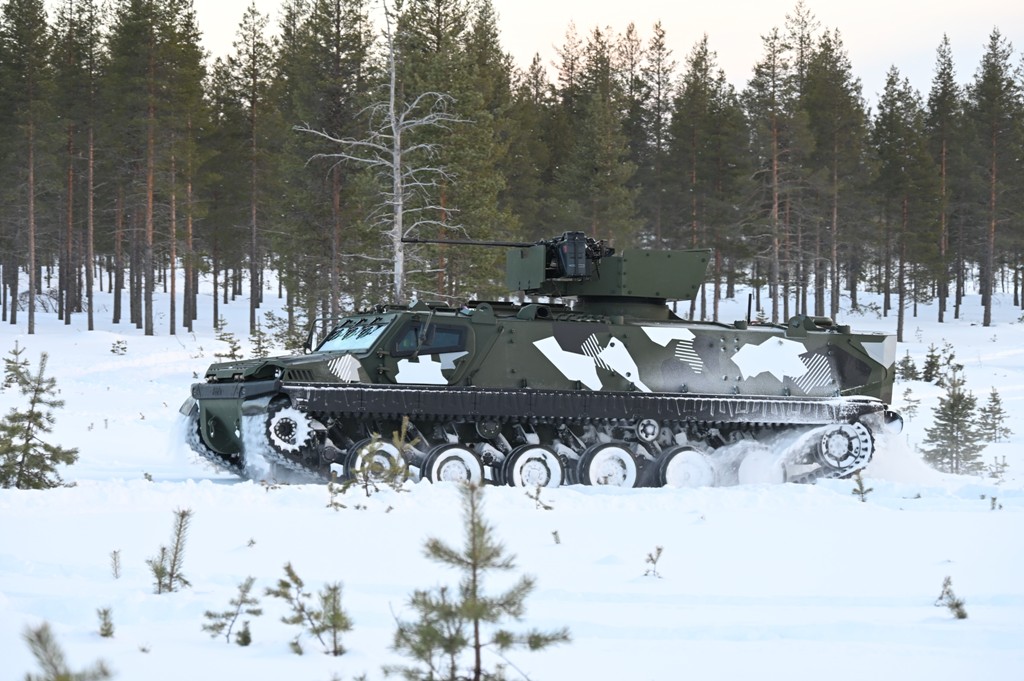
A: The TRACKX differs from wheeled vehicles like the BTR-80 by using continuous tracks for better snow and ice mobility. Unlike Norway’s CV90, which is primarily wheeled, the TRACKX is fully tracked, offering superior performance in deep snow and soft terrain. However, the CV90 has a longer operational history and is already in service with Nordic forces.
Q: Will the TRACKX be used for combat roles, or is it purely for logistics?
A: The TRACKX is designed as a modular platform, meaning it can be configured for infantry transport, command and control, medical evacuation, or even light reconnaissance. While it is not a main battle tank, its tracked design and payload capacity make it suitable for supporting combat operations in Arctic conditions.
Q: How much will the joint procurement cost, and who is paying?
A: Exact figures have not been disclosed, but industry estimates suggest the total cost could range between €500 million and €800 million for an initial batch of 200–300 vehicles. The costs will likely be split between Finland and Sweden, with additional funding potentially coming from NATO’s European Defence Fund if the project qualifies for co-financing.
Q: Could other NATO members join this procurement?
A: While the initial agreement is between Finland and Sweden, the open architecture of the TRACKX makes it a candidate for broader NATO adoption. Countries like Denmark, the Netherlands, or even Baltic states with Arctic interests could express interest, particularly if the vehicle proves successful in Nordic trials.
Q: What’s the timeline for autonomous capabilities?
A: Patria’s collaboration with RENK on unmanned ground vehicles suggests autonomous features could be integrated within 5–7 years, depending on funding and technical development. Both Finland and Sweden have expressed interest in AI-driven logistics, so early adopters of the TRACKX may see unmanned upgrades first.
Q: How does this deal affect Finland’s existing vehicle fleet?
A: Finland currently operates a mix of tracked vehicles, including the Pasi and XA-180, as well as wheeled platforms like the SISU XA-188. The TRACKX is expected to complement rather than replace these systems, with a focus on Arctic-specific missions where tracked mobility offers clear advantages.
Q: Is this part of a larger Nordic defence industrial strategy?
A: Yes. The TRACKX deal aligns with broader Nordic efforts to reduce dependence on foreign suppliers and foster domestic defence industries. Both Finland and Sweden have invested in Patria and other defence firms to ensure self-sufficiency in critical capabilities, particularly for Arctic operations.
As Finland and Sweden move forward with their TRACKX collaboration, the agreement underscores a broader shift in European defence: one where Arctic security, Nordic solidarity, and next-generation mobility are increasingly intertwined. With Russia’s military presence in the High North showing no signs of retreat, the two countries’ decision to standardize on a single platform reflects a pragmatic approach to shared challenges—and a potential blueprint for future defence partnerships in the region.
For now, the focus remains on proving the TRACKX’s worth in the harshest conditions on Earth. If successful, it could redefine how Europe approaches Arctic defence for decades to come.
