
Pasir Ris-Changi Residents to Access Discounted Food and Services via New Community Programme
Residents of the Pasir Ris-Changi area will now have access to reduced prices for food and essential services through a newly launched community initiative. The programme aims to lower daily expenses for local households by partnering with neighborhood merchants to provide sustainable discounts on a variety of goods and services.
How the Pasir Ris-Changi Discount Programme Works
The initiative operates as a partnership between community organizers and local business owners. Under the framework of the programme, participating merchants agree to offer a set percentage of discounts or special bundled pricing exclusively to residents who can verify their address within the Pasir Ris-Changi constituency.
According to programme details, the discounts extend across several categories:
- Food and Beverage: Reduced prices at participating hawker stalls and cafes.
- Personal Care: Discounts on haircuts, nail services, and other grooming needs.
- Home Services: Lower rates for basic maintenance and repair services.
- Retail: Special pricing on essential household items at select neighborhood shops.
To access these benefits, residents must present a valid form of identification or a digital verification token that confirms their residency. This ensures that the subsidies and discounts remain targeted toward the intended local population, preventing external users from utilizing the community-specific benefits.
“The goal is to create a symbiotic relationship where residents save money and local businesses see an increase in consistent foot traffic,” according to project coordinators.
Addressing the Cost of Living in Pasir Ris-Changi
The launch of this programme comes at a time when inflation and rising costs of living have become primary concerns for Singaporean households. While national-level subsidies exist, this localized approach targets the specific economic landscape of the Pasir Ris-Changi region.
Economic data indicates that food and transport costs have remained volatile. By lowering the cost of “last-mile” services—those found within the immediate neighborhood—the programme reduces the financial pressure on low-to-middle-income families. The focus on food is particularly critical, as hawker centers remain the primary source of affordable nutrition for a large segment of the population.
Why Localized Discounts Matter
Broad national vouchers often have expiration dates or limited use cases. In contrast, a residency-based discount programme provides a more permanent structural reduction in costs. This encourages residents to spend their money within their own neighborhood, which supports the “hyper-local” economy.
Key drivers for the programme include:
- Inflation Mitigation: Offsetting the rise in raw ingredient costs for hawkers.
- Community Bonding: Encouraging residents to interact more with local vendors.
- Merchant Sustainability: Helping small businesses maintain a loyal customer base despite competition from larger malls.
Impact on Local Merchants and Business Owners
For the business owners in Pasir Ris-Changi, the programme is less about charity and more about strategic customer acquisition. While merchants accept lower margins per transaction, the expected increase in volume is intended to offset the cost.
A local cafe owner noted that offering a “resident’s discount” transforms a casual visitor into a regular customer. When a resident knows they have a permanent price advantage in their own neighborhood, they are less likely to travel to distant shopping centers for basic needs.
| Merchant Benefit | Resident Benefit | Community Impact |
|---|---|---|
| Increased customer loyalty | Lower daily expenditure | Stronger neighborhood ties |
| Higher transaction volume | Access to affordable essentials | Support for small businesses |
| Better brand visibility | Reduced travel costs | Localized economic resilience |
However, some merchants express concern over the sustainability of these discounts if raw material costs continue to climb. To address this, the programme allows merchants to adjust their participating menu items or service lists to ensure they do not operate at a loss.
Comparing the Programme to National Initiatives
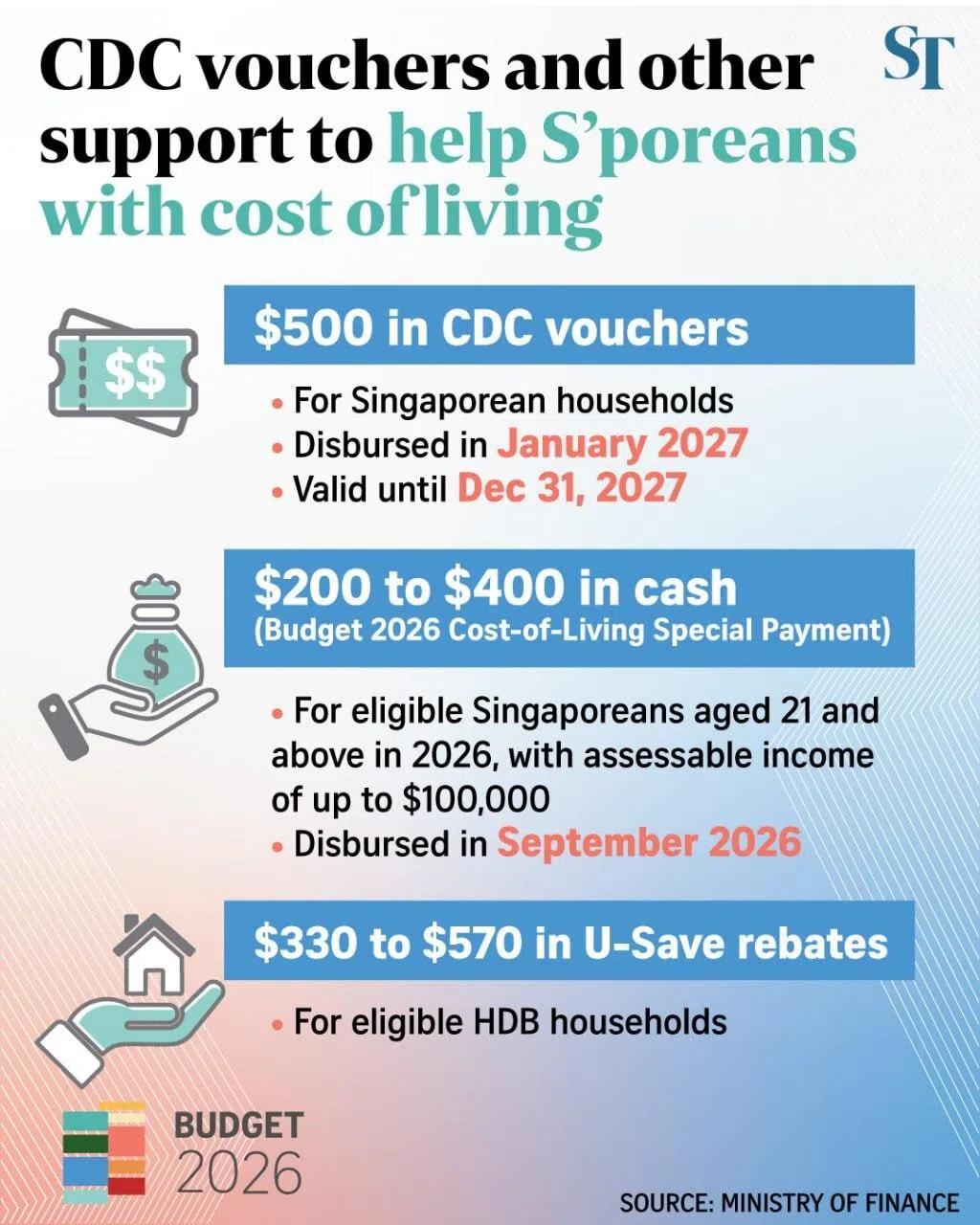
This initiative differs significantly from the Community Development Council (CDC) vouchers distributed periodically by the government. While CDC vouchers act as a one-time financial injection, the Pasir Ris-Changi programme functions as a continuous pricing model.
A comparison of the two approaches reveals a shift in strategy:
- Duration: Vouchers are temporary; this programme is designed for long-term availability.
- Funding: Vouchers are government-funded; these discounts are largely absorbed or managed by the merchants in exchange for loyalty.
- Scope: Vouchers are wide-reaching; this programme is geographically restricted to the Pasir Ris-Changi area.
By combining these two layers of support—national vouchers for major shocks and local discounts for daily maintenance—residents have a more robust safety net. For more information on how these systems overlap, see a related explainer on Singapore’s social safety nets.
Potential Challenges and Implementation Hurdles
Despite the benefits, the rollout of the Pasir Ris-Changi residents to get discounted food, services under new programme – The Straits Times initiative faces several operational challenges. The primary hurdle is the verification process.

Manual checks of NRICs or utility bills can slow down service at busy hawker stalls, potentially leading to longer queues and frustration for non-participating customers. Digital verification is the proposed solution, though this introduces a barrier for elderly residents who may not be proficient with smartphones.
The Digital Divide
To ensure inclusivity, organizers have indicated that physical membership cards or stamped booklets may be provided to seniors. This hybrid approach aims to prevent the “digital divide” from excluding the very people who need the discounts most.
Other risks include:
- Merchant Attrition: If the increase in foot traffic does not materialize, some vendors may opt out of the programme.
- Price Inflation: There is a theoretical risk that some merchants might raise base prices to compensate for the discount, though community monitors are tasked with overseeing this.
- Administrative Overhead: Managing the list of participating vendors requires constant updating to ensure residents do not visit shops that have since left the programme.
Wider Implications for Urban Community Planning
The Pasir Ris-Changi model serves as a potential pilot for other constituencies in Singapore. If successful, this “neighborhood-first” economic model could be replicated in areas like Jurong or Tampines to foster similar levels of local resilience.
Urban planners suggest that when residents feel a financial incentive to remain within their neighborhood, it reduces congestion on public transport and lowers the carbon footprint associated with commuting to centralized hubs for basic services.
Furthermore, this programme reinforces the concept of the “15-minute city,” where all essential needs—food, healthcare, and services—are accessible within a short walk or ride from home. By making these local services more affordable, the programme makes the 15-minute city model economically viable for the average resident.
Common Misconceptions About the Programme
Several misunderstandings have surfaced regarding the eligibility and nature of the discounts. It is important to clarify the following points based on official programme guidelines:

Misconception 1: The programme is only for low-income households.
Contrary to some beliefs, the discounts are available to all residents of Pasir Ris-Changi regardless of income level, provided they can prove residency. This inclusive approach prevents the stigmatization of low-income users.
Misconception 2: The government is paying the merchants directly.
The programme is primarily a partnership. While there may be administrative support from community organizers, the discounts are generally a business decision made by the merchants to attract more local customers.
Misconception 3: All shops in Pasir Ris-Changi are participating.
Participation is voluntary. Not every stall or shop in the area will offer these discounts. Residents are encouraged to look for specific signage or check the official list of participating partners.
Frequently Asked Questions
Who exactly is eligible for the Pasir Ris-Changi discounts?
Any person who officially resides within the Pasir Ris-Changi constituency is eligible. Proof of residency, such as a government-issued ID with the current address or a recent utility bill, is typically required for verification.
How do I find a list of participating merchants?
Participating merchants usually display a specific sticker or sign at their storefront. Additionally, a digital directory is often maintained by the community organizers, which can be accessed via local community club portals.

Are there limits on how often I can use the discounts?
Most discounts are applied per transaction and do not have a monthly cap. However, some specific “bundle deals” or high-value services may have their own terms and conditions set by the individual merchant.
What should I do if a participating merchant refuses to honor the discount?
Residents are advised to contact the community organizers or the local community club to report the issue. This helps organizers ensure that the partnership agreement is being upheld by all parties.
Will the discounts be available for delivery orders?
Generally, these discounts are designed to encourage physical foot traffic to local shops. Therefore, most discounts apply only to in-person purchases and may not be applicable to third-party delivery apps.
The success of the Pasir Ris-Changi initiative will likely depend on the continued willingness of merchants to maintain low margins and the ability of organizers to keep the verification process seamless. As the programme evolves, the focus will likely shift toward expanding the variety of services offered and ensuring that the most vulnerable residents are not left behind by digital requirements.
