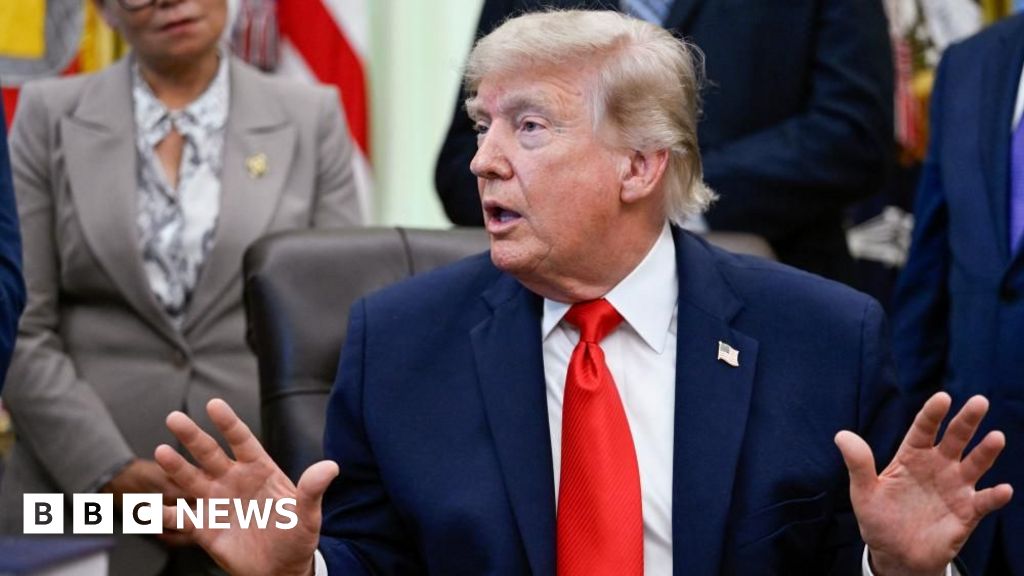
US-Iran Deal Scheduled to Be Signed on Sunday, Says Trump – BBC
President Donald Trump announced a peace deal with Iran is scheduled for signing this Sunday, though Iranian officials have disputed the timeline. While Reuters reports the two nations are close to an initial agreement, Tehran stated no signing will occur on Sunday, according to reporting from the BBC and other major news outlets.
Conflicting Claims Over the Sunday Signing Deadline
President Trump has publicly stated that a new agreement between the United States and Iran is set to be finalized and signed on Sunday. This announcement suggests a sudden acceleration in diplomatic efforts to resolve long-standing tensions between Washington and Tehran. However, this timeline is not agreed upon by both parties.
According to the New York Times, Iran has disputed the Sunday deadline, with officials in Tehran expressing caution regarding the timing of any formal agreement. This discrepancy creates a significant gap between the White House’s public narrative and the official position of the Iranian government.
Reuters reports that while the two countries are close to reaching an initial deal, Tehran has explicitly denied that a signing ceremony will take place this Sunday. The conflict in reporting highlights a common friction point in high-stakes diplomacy: the use of public deadlines to pressure an opponent into concessions.
The situation remains fluid, with the following points summarizing the current standoff:
- The U.S. Position: President Trump maintains the deal is “scheduled to be signed” on Sunday.
- The Iranian Position: Tehran denies the Sunday date and remains cautious about the timeline.
- The Status of Negotiations: Reuters indicates an initial deal is near, but not yet finalized.
Trump’s Rejection of the Obama-Era Pact
A central component of the current negotiations is President Trump’s continued opposition to the previous nuclear agreement. According to The Hill, Trump has used the announcement of the potential new deal to “trash” the Obama-era pact, known formally as the Joint Comprehensive Plan of Action (JCPOA).
The JCPOA was designed to limit Iran’s nuclear capabilities in exchange for the lifting of international economic sanctions. Trump has long argued that the original deal was flawed, claiming it provided too much flexibility to Iran and failed to address the country’s ballistic missile program or its influence in the region.
By framing the new deal as a replacement for the Obama-era agreement, the Trump administration is signaling a shift toward a more comprehensive set of demands. This likely includes not only nuclear restrictions but also behavioral changes regarding regional proxies and military activities. CNBC reports that Trump’s insistence on a new deal stems from this desire to move beyond the scope of the 2015 agreement.
“Trump says Iran deal ‘scheduled to be signed’ Sunday, trashes Obama-era pact,” reports The Hill, highlighting the administration’s intent to dismantle previous diplomatic frameworks in favor of a new arrangement.
Comparing the Public Narratives: U.S. vs. Iran
The disparity between the statements coming from Washington and Tehran suggests a strategic disagreement over the optics of the deal. While the U.S. president is projecting a definitive victory with a set date, Iran is managing expectations to avoid appearing as though it has succumbed to U.S. pressure.
The following table contrasts the claims made by both sides as reported by various news agencies:
| Feature | U.S. Administration Claim | Iranian Government Response | Source of Report |
|---|---|---|---|
| Signing Date | Scheduled for Sunday | No signing on Sunday | BBC / Reuters / NYT |
| Deal Status | Ready for signature | Close on initial deal, but cautious | Reuters / CNBC |
| View of JCPOA | Flawed and rejected | (Implicitly) Seeking sanctions relief | The Hill |
Why the Timeline Dispute Matters for Global Stability
The disagreement over whether a deal will be signed on Sunday is more than a scheduling conflict; it is a reflection of the geopolitical stakes involved. For the U.S., a signed deal on Sunday would be a major political win for President Trump, demonstrating his ability to negotiate a “better deal” than his predecessor.
For Iran, signing a deal under a timeline dictated by the White House could be perceived as a sign of weakness domestically. Tehran often utilizes a strategy of cautious deliberation to ensure that any agreement provides guaranteed sanctions relief and protects its national sovereignty.
International observers are watching this timeline closely because any failure to meet a publicly announced deadline can lead to a breakdown in trust. If Sunday passes without a signature, it may embolden hardliners in both countries who oppose diplomacy, potentially increasing the risk of military escalation.
The tension is compounded by the “initial deal” mentioned by Reuters. An initial deal often serves as a framework—a set of agreed-upon principles—rather than a final, legally binding treaty. It is possible that Trump is interpreting the completion of this framework as the “deal,” while Iran views it as merely a precursor to further negotiations.
Contextualizing the US-Iran Diplomatic Cycle
To understand why the current dispute over the Sunday signing is occurring, it is necessary to look at the history of U.S.-Iran relations. The two nations have had no formal diplomatic ties since the 1979 hostage crisis, making any “peace deal” a rare and volatile event.
The cycle of “maximum pressure” followed by “diplomatic openings” has characterized the Trump administration’s approach. By imposing heavy sanctions and withdrawing from the JCPOA, the U.S. sought to force Iran back to the table on American terms. The current reports of a deal being “close” suggest that this strategy may have reached a tipping point where Tehran feels the economic cost of sanctions outweighs the cost of new concessions.
However, the gap in communication—where one leader announces a date and the other denies it—is a recurring theme in these negotiations. Similar patterns were seen during the lead-up to the original 2015 deal, where multiple “deadlines” were set and missed before a final agreement was reached.
Related explainer on [international sanctions frameworks] may provide further insight into the economic levers being used in these talks.
Potential Implications of a New Agreement
If a deal is eventually signed, regardless of whether it happens this Sunday, the implications would be felt across several sectors:
Global Energy Markets
Iran holds some of the world’s largest oil and gas reserves. A peace deal that includes the lifting of sanctions would likely see a surge of Iranian crude returning to the global market. This could lead to a decrease in global oil prices, impacting producers from Saudi Arabia to Russia.
Regional Security and Proxies
A comprehensive deal, as envisioned by Trump, would likely address Iran’s support for groups like Hezbollah and Hamas. If the deal successfully limits Iran’s regional influence, it could reduce the frequency of proxy conflicts in Yemen, Syria, and Lebanon.
Nuclear Non-Proliferation
The primary goal of any US-Iran deal is to ensure Iran does not develop a nuclear weapon. A new agreement would need to establish strict monitoring and verification protocols, likely overseen by the International Atomic Energy Agency (IAEA), to ensure that uranium enrichment remains for peaceful purposes.
Common Misconceptions About the Current Negotiations
There are several common misunderstandings regarding the current reports of a US-Iran deal:
- Misconception: The deal is a return to the JCPOA.
Correction: As reported by The Hill, Trump has explicitly rejected the Obama-era pact. Any new deal is intended to be a replacement with different, likely more stringent, terms. - Misconception: A “signing” means all disputes are resolved.
Correction: As Reuters notes, the parties may be close to an “initial deal.” In diplomacy, an initial agreement often settles the broad strokes, while the technical details (the “annexes”) can take months to finalize. - Misconception: The Sunday date is a confirmed fact.
Correction: The date is a claim made by President Trump. It is not a mutually agreed-upon date, as evidenced by the denials from Tehran reported by the New York Times and BBC.
What to Monitor in the Coming Days
As the Sunday deadline approaches, several key indicators will reveal whether the deal is actually moving forward or if the announcement was a tactical maneuver.
First, look for movement in the diplomatic channels. The arrival of high-level envoys in a neutral city (such as Vienna or Geneva) would signal that the “initial deal” mentioned by Reuters is being refined into a final document. Second, monitor the rhetoric from the Iranian Foreign Ministry; a shift from “denial” to “cautious optimism” usually precedes a formal announcement.
Third, watch for changes in sanctions enforcement. If the U.S. Treasury Department signals a willingness to grant temporary waivers for oil exports, it would be a concrete sign that a deal is imminent. Without these tangible markers, the Sunday date remains a unilateral claim by the U.S. president.
Related analysis on [Middle East geopolitical shifts] can offer a broader view of how this deal fits into the regional power struggle.
Frequently Asked Questions
Is the US-Iran deal actually being signed this Sunday?
President Trump has stated that the deal is scheduled to be signed on Sunday. However, Iranian officials have disputed this timeline, and Reuters reports that while an initial deal is close, Tehran denies that a signing will occur on that specific date.

What is the difference between this deal and the Obama-era pact?
According to The Hill, President Trump has rejected the Obama-era JCPOA, calling it flawed. The new deal is expected to be more comprehensive, potentially addressing not only nuclear enrichment but also ballistic missiles and regional activities, which were not the primary focus of the 2015 agreement.
Why is Iran disputing the signing date?
Reports from the New York Times and BBC suggest Iran is remaining cautious about the timing. In diplomatic negotiations, admitting to a deadline set by an opponent can be seen as a sign of weakness or a lack of leverage.
What happens if no deal is signed on Sunday?
If the Sunday deadline passes without a signature, it may indicate that the “initial deal” mentioned by Reuters has not yet matured into a final agreement. It could also suggest that the announcement was used as a tool for diplomatic pressure rather than a confirmed schedule.
Who are the primary sources reporting on this event?
The current information is based on reports from the BBC, The New York Times, CNBC, The Hill, and Reuters, reflecting a mix of official U.S. statements and Iranian responses.
