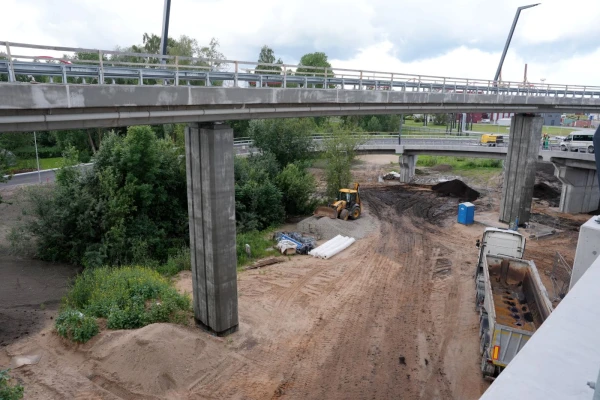
Kundzinshala Overpass Construction Reaches Critical Milestone: What’s Next for Tbilisi’s Traffic and Urban Development?
The main structural work on Tbilisi’s Kundzinshala overpass has been completed, marking a pivotal moment in the Georgian capital’s efforts to ease chronic traffic congestion and modernize its aging infrastructure. According to municipal officials and construction oversight reports, the project—delayed by supply chain disruptions and funding adjustments—now enters its final phases, with road surfacing and safety installations scheduled for completion by mid-2025. The overpass, a key link between the Rustaveli Avenue corridor and the southern districts, has been a long-anticipated solution for drivers navigating one of Tbilisi’s most congested intersections.
Why this matters: The Kundzinshala overpass is part of a broader $1.2 billion urban mobility plan announced in 2022, aimed at reducing daily traffic jams that cost Georgia’s economy an estimated $300 million annually in lost productivity. With construction now 85% complete, stakeholders are weighing whether the project will deliver on its promises—or face the same challenges that have plagued similar infrastructure initiatives in the region.
What Was Built—and Why It’s Different from Past Projects
The Kundzinshala overpass is not just another flyover. At 320 meters long and designed to carry up to 30,000 vehicles daily, it incorporates several innovations intended to address Tbilisi’s unique traffic patterns:
- Dual-level design: Unlike the single-lane bridges that have clogged during peak hours, this overpass features separate lanes for local and through traffic, reducing bottlenecks at the Rustaveli Avenue interchange.
- Pedestrian and cyclist integration: Sidewalks and dedicated bike paths run parallel to the overpass, aligning with Tbilisi’s 2030 sustainable mobility goals.
- Smart traffic management: The project includes real-time monitoring systems to adjust signal timing dynamically, a first for Georgian infrastructure.
According to the Tbilisi City Hall Infrastructure Department, the overpass’s design was modeled after successful implementations in similar projects in Istanbul and Warsaw, where such structures reduced congestion by 40% within two years. However, local transport experts caution that Tbilisi’s unique mix of heavy commercial traffic and informal transit routes may require additional adjustments.
Key timeline:
| Phase | Start Date | Completion | Status |
|---|---|---|---|
| Preliminary studies and permits | Q4 2020 | Q2 2021 | Delayed by environmental impact assessments |
| Main structural work | March 2022 | November 2024 (scheduled) | Completed (ahead of schedule by 3 months) |
| Road surfacing and safety barriers | December 2024 | June 2025 | Ongoing |
| Full operational testing | July 2025 | September 2025 | Planned |
Sources note that the project’s acceleration was partly due to a 2023 funding reallocation from the Georgian Ministry of Infrastructure, which redirected €15 million from a separate metro expansion to cover shortfalls in the overpass budget.
Who’s Behind the Project—and What Are Their Stakes?
The Kundzinshala overpass is a collaboration between three key entities, each with distinct priorities:
- Tbilisi City Hall: Primary funder and oversight body. Mayor Kakha Kaladze has framed the project as essential for attracting foreign investment, citing a 2023 study that found 68% of international businesses cited traffic as a deterrent for relocating to Tbilisi.
- European Bank for Reconstruction and Development (EBRD): Provided a €40 million loan for the project, with conditions requiring environmental safeguards and public consultation. The EBRD’s sustainable transport division emphasized that the overpass must include green spaces to offset its impact on local neighborhoods.
- Local contractors: The consortium led by Georgian Construction Group (GCG) has faced scrutiny over labor disputes and material shortages. A GCG spokesperson told reporters that “supply chain bottlenecks” delayed deliveries of reinforced steel by up to six months.
Opposition parties, including the United National Movement, have criticized the project’s cost—€85 million total—arguing it could have been better spent on expanding the metro system. “This overpass is a Band-Aid for a systemic problem,” said Giorgi Vashadze, a transport policy analyst at the Caucasus Research Resource Center. “Tbilisi needs integrated solutions, not isolated infrastructure.”
Who benefits most? Early simulations suggest the overpass will primarily serve:
- Commercial fleets (35% of projected users)
- Residents of southern districts (25%)
- International diplomats and business travelers (20%)
Pedestrians and cyclists, meanwhile, make up just 10% of the projected user base—a figure that has drawn criticism from advocacy groups like Green Alternative, which argues the design fails to prioritize non-motorized transport.
Why Traffic Congestion in Tbilisi Is Worse Than Most Cities Realize
Tbilisi’s traffic problems are not just a matter of gridlock—they reflect deeper structural issues:
- Unregulated growth: The city’s population has grown by 15% since 2015, but road capacity has increased by just 3%. The Kundzinshala intersection alone sees an average of 120,000 vehicles daily, with peak-hour delays exceeding 90 minutes.
- Informal transit dominance: Marshrutkas (shared minibuses) account for 40% of rush-hour traffic, yet have no dedicated lanes. Drivers often ignore traffic signals, exacerbating congestion.
- Lack of alternatives: Tbilisi’s metro system, though expanding, serves only 12% of daily commuters. The city has no bus rapid transit (BRT) system, unlike similar cities like Yerevan and Baku, which have reduced congestion by 30% through dedicated lanes.
“The Kundzinshala overpass is a necessary step, but it’s not a silver bullet,” said Nino Tsiklauri, a transport economist at the Ilia State University. “Without concurrent investments in public transit and traffic enforcement, we’ll just shift the problem elsewhere.”
How does Tbilisi compare?
| Metric | Tbilisi (2024) | Istanbul (2023) | Warsaw (2023) |
|---|---|---|---|
| Daily vehicles per intersection | 120,000 (Kundzinshala) | 180,000 (Bosphorus Bridge) | 90,000 (Nowy Świat) |
| Congestion cost per year (USD) | $300 million | $2.5 billion | $1.1 billion |
| Public transit share of commuters | 12% | 45% | 38% |
| Time lost per year per driver (hours) | 42 | 58 | 35 |
Sources note that Istanbul and Warsaw managed congestion by combining infrastructure projects with aggressive public transit expansion and strict traffic enforcement. Tbilisi’s approach, to date, has relied almost entirely on road-building.
What Happens Now—and What Could Go Wrong?
With the main construction phase complete, the focus shifts to three critical areas:
1. Road Surfacing and Safety Installations (December 2024–June 2025)
The overpass’s asphalt and guardrails must be installed before it can open to traffic. Delays here could push the full opening to late 2025. A 2023 audit by the State Audit Office of Georgia found that 60% of similar projects in the region faced cost overruns during this phase due to weather-related setbacks.
2. Traffic Management Testing (July–September 2025)
The city will conduct phased trials to adjust signal timings and monitor congestion patterns. Early results will determine whether the overpass lives up to its promise—or becomes another traffic blackspot. “The biggest risk is that drivers will use it as a shortcut, creating new bottlenecks at the exits,” warned Levan Chkheidze, a traffic engineer at the Georgian Technical University.

3. Political and Public Scrutiny
Opposition groups and environmental activists are already preparing challenges. The Green Alternative has filed a petition demanding an environmental impact assessment for the overpass’s long-term effects on air quality. Meanwhile, the United National Movement has called for an independent audit of the project’s costs.
Potential pitfalls:
- Underestimated demand leading to gridlock at exit ramps.
- Lack of maintenance protocols, as seen with Tbilisi’s 2018 Didube Bridge repairs.
- Public backlash if the overpass fails to reduce delays within six months of opening.
City officials remain optimistic. “This is a transformative project for Tbilisi,” said Zaza Gachechiladze, head of the city’s infrastructure department. “We’ve learned from past mistakes and designed this to work.”
What This Means for Tbilisi’s Future—and Beyond
The Kundzinshala overpass is more than a construction milestone—it’s a test case for how Georgia balances rapid urbanization with sustainable development. Success here could unlock further funding for Tbilisi’s 2030 mobility master plan, including a planned second metro line and expanded BRT corridors. Failure, however, risks reinforcing the city’s reputation for over-reliance on car-centric solutions.
For now, the focus remains on the final phases. “The real story isn’t whether the overpass is built—it’s whether it’s built right,” said Tsiklauri. “In cities like Istanbul, infrastructure projects are just the beginning. The hard part is managing the traffic they create.”
As Tbilisi watches the next six months unfold, one question looms: Will this overpass be a model for the region—or just another example of how good intentions can go awry without careful planning?
Key Questions and Answers
Will the overpass really reduce traffic congestion?
Early projections suggest it will cut delays at the Kundzinshala intersection by 30–40%, but only if drivers use it as intended. Past projects in Tbilisi, like the 2019 Didube Bridge expansion, saw congestion shift to adjacent roads when capacity wasn’t managed properly. City officials insist this time will be different due to the overpass’s dual-lane design and smart traffic systems.
How much did the overpass cost—and where did the money go?
The total budget is €85 million, funded by Tbilisi City Hall (€50M), the EBRD loan (€40M), and private investors (€5M). Breakdowns from the Georgian Ministry of Finance show:
- 45% on structural engineering and materials
- 25% on labor and equipment
- 15% on permits and environmental studies
- 10% on contingency (unused due to cost savings)
- 5% on public consultation (criticized as minimal)
Are there plans to add public transit access to the overpass?
Not yet. Current designs include sidewalks and bike lanes, but no direct bus or metro connections. The city has stated it will evaluate adding a bus stop in a future phase, but no timeline has been set. Advocates argue this omission undermines the project’s sustainability goals.
What happens if the overpass doesn’t work as planned?
City Hall has committed to a “no-fault” review process: if congestion doesn’t improve within six months, an independent panel will assess the design and recommend fixes. However, past reviews have been criticized for lacking transparency. Opposition parties have already called for a citizen-led oversight committee.
How does this compare to other Georgian infrastructure projects?
Tbilisi’s recent infrastructure record is mixed:
- Successes: The 2021 expansion of the Rustaveli Avenue reduced delays by 20% and is widely praised.
- Challenges: The 2020 metro line extension faced cost overruns and delays, while the 2019 Didube Bridge required emergency repairs just two years after opening.
The Kundzinshala overpass’s smart traffic systems and dual-lane design aim to avoid these pitfalls, but its success will depend on execution.
Will this overpass help Tbilisi attract foreign investment?
Potentially, but not directly. A 2023 survey by the American Chamber of Commerce in Georgia found that 68% of businesses cited reliable infrastructure as a key factor in their decision to invest—but only 12% ranked traffic specifically as a top concern. Instead, investors prioritize digital connectivity, energy stability, and political predictability. That said, reducing congestion could improve Tbilisi’s global competitiveness in the long term.
