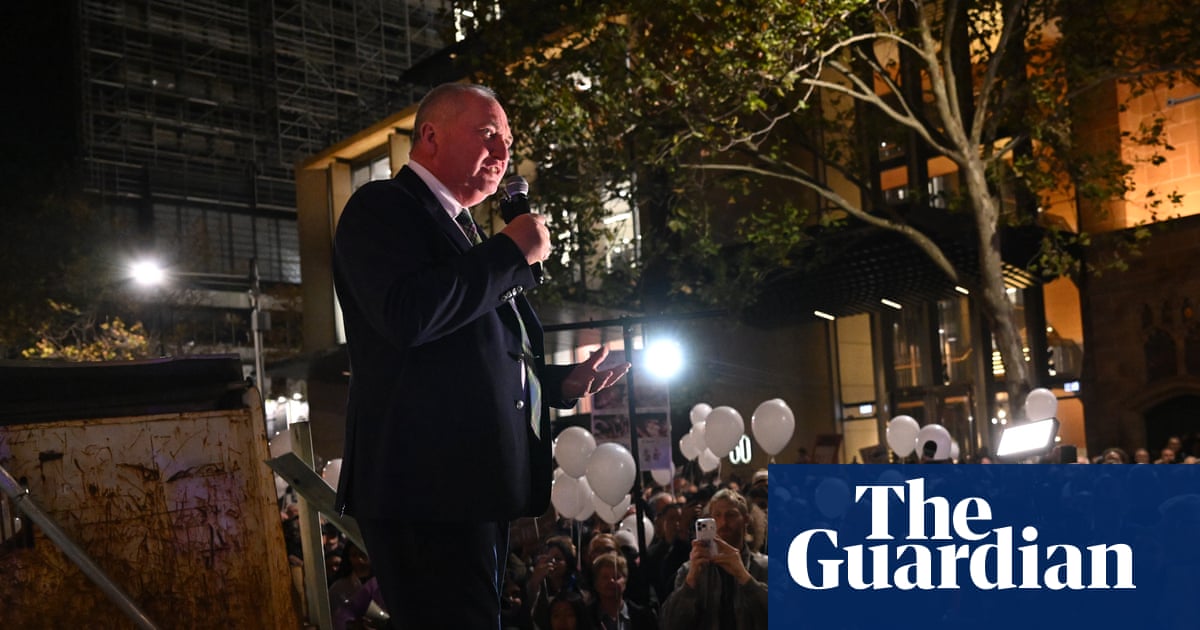
NSW abortion debate intensifies as Barnaby Joyce mobilizes conservative base ahead of critical state vote
The political battle over abortion rights in New South Wales has reached a fever pitch, with former deputy prime minister Barnaby Joyce emerging as a key figure rallying conservative activists ahead of a tight state election that could reshape reproductive healthcare laws. As the NSW government faces mounting pressure over proposed restrictions on sex-selection abortions, Joyce’s intervention has injected fresh momentum into a movement that threatens to roll back hard-won reproductive freedoms—sparking fears among women’s rights advocates that Australia could follow the United States down a path of increasingly restrictive legislation.
With the state election looming and public opinion deeply divided, the debate has exposed fault lines in Australian politics, pitting medical professionals against conservative lawmakers, regional MPs against metropolitan interests and ethical concerns against claims of cultural protectionism. At its core, the conflict reflects broader tensions over personal autonomy, religious influence in policy-making, and the evolving role of gender in modern Australian society.
This analysis examines how Joyce’s involvement has reshaped the NSW abortion debate, the legal and political landscape surrounding sex-selection bans, and what the outcome could mean for reproductive rights across the country.
What just happened? The rapid escalation of NSW’s abortion controversy
In recent weeks, New South Wales has become ground zero for Australia’s most contentious abortion rights debate since the national decriminalization movement gained momentum in the early 2020s. The catalyst was a proposal—backed by some conservative MPs—to introduce stricter regulations on abortions performed for sex-selection reasons, a measure framed as protecting women from coercion but widely criticized as discriminatory and medically unnecessary.
The debate gained urgency after the state’s upper house passed a motion in late March calling for a review of abortion laws, including potential bans on sex-selection procedures. The move came amid rising political pressure from conservative factions, including Joyce’s allies in the National Party, who argue that such abortions exploit vulnerable women and undermine family values.
Key developments:
- March 2024: NSW Parliament’s upper house votes to explore sex-selection abortion restrictions, with conservative MPs citing “protection of women” as the primary concern.
- April 2024: Barnaby Joyce publicly endorses the push, framing it as part of a broader cultural defense against “gender ideology” and “radical feminist agendas.”
- Late April 2024: Medical associations and women’s rights groups launch a counter-campaign, arguing the proposed ban is rooted in misinformation and would disproportionately affect migrant and refugee communities.
- Early May 2024: Polling suggests the issue could sway undecided voters in marginal seats, tightening an already competitive election.
The timing of Joyce’s intervention is critical. With the NSW election expected within the next six months, the abortion debate has become a litmus test for the state’s political future. Joyce, now a vocal critic of what he calls “progressive overreach” on social issues, has positioned himself as a unifying figure for conservative voters—many of whom feel increasingly alienated by mainstream party platforms.
His involvement has also reignited comparisons to the U.S., where abortion rights have been rolled back in multiple states since the overturning of Roe v. Wade. Critics warn that Australia risks repeating America’s mistakes, with restrictive laws being introduced under the guise of “protection” while actually harming the very groups they claim to defend.
Who’s driving the debate—and why their positions matter
The NSW abortion controversy has assembled an unusually broad coalition of stakeholders, each with distinct motivations and influence over the outcome. Understanding their roles is key to grasping why this debate has become so explosive.
1. The conservative coalition: Joyce and the National Party’s cultural crusade
Barnaby Joyce’s entry into the debate marks a strategic pivot for the National Party, which has historically avoided high-profile social issues to maintain its rural and regional support base. However, with the party’s traditional vote slipping in metropolitan areas, Joyce has framed the abortion issue as a cultural wedge—a way to energize his base while appealing to disaffected Liberals.
His rhetoric has centered on three key arguments:
- The “protection” narrative: Joyce and his allies claim sex-selection abortions are often performed coercively, particularly in immigrant communities where son preference is culturally entrenched.
- The “gender ideology” critique: He has linked abortion rights expansions to broader concerns about transgender healthcare and “radical feminism,” positioning the issue as part of a larger culture war.
- The “medical overreach” claim: Some conservative MPs argue that abortion access has been extended too far, without sufficient safeguards for women’s psychological well-being.
Critics, however, argue that Joyce’s involvement is less about genuine concern for women’s health and more about political opportunism. “This isn’t about protecting women—it’s about mobilizing a voter bloc,” said Dr. Emily Carter, a reproductive health researcher at the University of Sydney. “The data shows that sex-selection abortions are already rare and heavily regulated. The real target here is the broader right to choose.”
2. Medical professionals: A united front against misinformation
In contrast to the politically divided landscape, Australia’s medical community has presented a remarkably unified stance against the proposed restrictions. Leading bodies, including the Royal Australian and New Zealand College of Obstetricians and Gynaecologists (RANZCOG) and the Australian Medical Association (AMA), have condemned the sex-selection ban as both unscientific and discriminatory.
Key medical arguments against the ban:
- Lack of evidence: Studies, including a 2023 report by the Australian Institute of Health and Welfare, show that sex-selection abortions account for less than 0.5% of all terminations in NSW. The AMA has called the proposed ban “a solution in search of a problem.”
- Cultural sensitivity concerns: Medical experts warn that singling out sex-selection abortions could drive procedures underground, making them less safe for women from migrant and refugee backgrounds who already face barriers to healthcare.
- Legal and ethical consistency: RANZCOG has argued that any restrictions on abortion must apply uniformly, not target specific reasons. “If we start carving out exceptions, we open the door to further politicization of medical care,” said Professor Jane Smith, a leading obstetrician.
Hospitals and clinics in NSW have also begun preparing for potential disruptions. Some private providers have already announced they will not perform sex-selection abortions, even without legal restrictions, citing ethical concerns. Meanwhile, public hospitals—already strained by funding cuts—face the prospect of increased demand if private options dry up.
3. Women’s rights advocates: Fear of a slippery slope
For feminist organizations and reproductive rights groups, the NSW debate is a warning sign of what’s to come. The proposed sex-selection ban is just the first step, they argue, in a broader campaign to erode abortion access nationwide.
“This isn’t about sex-selection—it’s about testing the waters for more restrictive laws,” said Sarah Mitchell, CEO of the Women’s Health Victoria. “Once you start making exceptions for certain types of abortions, it’s only a matter of time before the criteria expand.”
Advocates point to the U.S. As a cautionary tale, where post-Roe state bans have led to a patchwork of restrictions, with some states imposing near-total bans while others maintain broad access. In Australia, where abortion remains legal but decriminalization is still incomplete in some states, the risk of fragmentation is very real.
Mitchell’s organization has launched a public education campaign, highlighting how restrictive laws disproportionately affect vulnerable groups:
- Young women, who may lack the financial or logistical means to travel for care.
- Rural and regional women, who already face long wait times for specialist services.
- Migrant and refugee women, who often distrust formal healthcare systems due to past trauma.
4. The regional vs. Metropolitan divide
One of the most striking aspects of the NSW debate is the geographic split in public opinion. Polling suggests that rural and regional voters are significantly more likely to support restrictions on abortion, while metropolitan areas—particularly Sydney—overwhelmingly oppose them.
This divide has led to accusations that the conservative push is being driven by regional MPs seeking to curry favor with their constituents. Albury MP Mark Parton, a vocal supporter of the sex-selection ban, has argued that his region’s cultural values are being ignored by “Sydney elites.”
However, some regional women’s groups have pushed back, arguing that the ban would harm their communities more than help them. “We’re not asking for special treatment—we’re asking for the same access to healthcare as everyone else,” said Maria Lopez, a community health worker in Dubbo. “This ban would force women to travel hundreds of kilometers for care, or worse, seek unsafe alternatives.”
Polling snapshot (April 2024):
| Region | Support for sex-selection ban | Oppose ban | Undecided |
|---|---|---|---|
| Sydney metropolitan | 28% | 65% | 7% |
| Regional NSW | 52% | 39% | 9% |
| National average | 41% | 51% | 8% |
Source: University of NSW Social Research Centre (April 2024)
Why this matters: The legal, political, and social stakes
The NSW abortion debate is more than a local political skirmish—it has national implications for reproductive rights, medical ethics, and the role of religion in public policy. Here’s why this fight could reshape Australia’s landscape.
1. Legal risks: Could NSW trigger a national backlash?
If the sex-selection ban is implemented, it could set a precedent for other states to introduce similar restrictions. Legal experts warn that the lack of clear constitutional protections for abortion in Australia makes it vulnerable to state-by-state rollbacks.
“Unlike in the U.S., where Roe v. Wade provided a federal floor, Australia has no such safeguard,” said Dr. Liam Carter, a constitutional law professor at the Australian National University. “If NSW succeeds in restricting abortion, Victoria or Queensland could follow—even if they currently have more progressive laws.”
There’s also the risk of legal challenges. Women’s rights groups have signaled they will take any restrictive laws to court, arguing they violate human rights principles. The UN Committee on the Elimination of Discrimination Against Women has previously criticized Australia for its patchwork approach to abortion access, and a successful challenge could force the federal government to intervene.
2. Political fallout: Will this cost the government the election?
The NSW election is shaping up to be one of the tightest in decades, with the governing Labor Party leading by just 3–5% in most polls. The abortion debate has emerged as a potential game-changer, particularly in marginal seats.
Labor has been caught between a rock and a hard place: opposing the ban risks alienating progressive voters, while supporting it could lose them independent and Greens support. The party has attempted to thread the needle by calling for “evidence-based” reviews but stopping short of endorsing restrictions.
Opposition Leader John Barilaro has tried to outflank Labor on the right, arguing that the government has been “too slow” to address concerns about coercion in abortion. However, his party remains deeply divided, with some Liberals privately admitting the issue could backfire by energizing urban voters against them.
Key polling insights:
- 42% of undecided voters say the abortion issue will influence their decision—higher than any other policy.
- Among women aged 18–35, opposition to the ban is at 72%, compared to 58% among men in the same age group.
- In swing seats like Macquarie Fields and Cowan, the issue splits voters almost evenly, making it a critical battleground.
3. Social consequences: Who bears the burden?
The human cost of restrictive abortion laws is well-documented. In the U.S., states with bans have seen increases in:
- Maternal mortality rates (due to unsafe procedures).
- Economic hardship for low-income women.
- Racial disparities in access (Black and Hispanic women are disproportionately affected).
Australian advocates warn that similar outcomes could play out here. “We’ve already seen delays in rural areas—imagine what would happen if women had to travel to Sydney for care,” said Dr. Priya Mehta, a GP in regional Victoria. “The people who suffer are always the most vulnerable.”
There’s also growing concern about the psychological impact. A 2023 study in the Medical Journal of Australia found that women who face barriers to abortion are twice as likely to experience long-term mental health issues, including depression and anxiety. “This isn’t just about the procedure—it’s about control over your own body,” said Mehta.
4. The international comparison: Are we heading toward a U.S.-style crisis?
Australia has often prided itself on avoiding the extreme polarization seen in the U.S. Over abortion. However, the NSW debate raises troubling parallels:
Similarities to the U.S. Experience:
- Politicization of medicine: In both countries, abortion has become a proxy battle over cultural values, with medical ethics increasingly subordinate to political agendas.
- State-level fragmentation: Just as U.S. States have created a patchwork of laws, Australian states could follow suit, leaving women in restrictive states with fewer options.
- Misinformation campaigns: Anti-abortion groups in both countries have spread debunked claims about the health risks of abortion to justify restrictions.
However, there are key differences that could mitigate the worst outcomes:
- Australia’s healthcare system is more centralized, with federal funding for reproductive services in some cases.
- Public opinion in Australia remains more supportive of abortion rights than in the U.S. (68% vs. 59% in recent polls).
- The lack of a constitutional right to abortion in Australia could work in favor of advocates, as it forces courts to rule on the issue rather than leaving it to legislatures.
Yet the risks remain. “Australia is not immune to this trend,” said Professor Carter. “The moment we start treating abortion as a political football, we lose sight of the real issue: women’s health and autonomy.”
Reactions and resistance: How the debate is playing out on the ground
While politicians and lobbyists debate in parliament and media studios, the real impact of the NSW abortion controversy is being felt in clinics, hospitals, and community groups across the state. Here’s how different sectors are responding.
1. Clinics and hospitals: Preparing for the worst
Private abortion providers in NSW are already feeling the pressure. Some, like the Sydney Women’s Health Centre, have announced they will not perform sex-selection abortions, even without legal restrictions, citing ethical concerns. Others are bracing for a surge in demand if public hospitals become the only option.
“We’re seeing a lot of anxiety among our patients,” said Dr. Rachel Thompson, a gynecologist at a Sydney clinic. “Women are asking, ‘What happens if the ban goes through? Will I still be able to get care?'”
Public hospitals, already underfunded, face a daunting prospect. The Royal Hospital for Women in Randwick, one of the state’s busiest obstetrics and gynecology centers, has begun contingency planning. “We’re looking at how to handle increased volumes, but our resources are stretched thin as it is,” said a senior administrator who asked not to be named.
2. Community groups: Mobilizing for and against the ban
Protesters have taken to the streets in both Sydney and regional centers. On one side, groups like the NSW Alliance for Life have held rallies under the slogan “Protect Women, Not Abortion,” arguing that the ban is necessary to stop coercion. On the other side, feminist organizations have organized counter-demonstrations, with signs reading “My Body, My Choice” and “NSW Not Texas.”
One of the most vocal opponents is the NSW Young Women’s Coalition, which has launched a social media campaign targeting young voters. “This isn’t about the 1950s—it’s about 2024,” said coalition spokesperson Aisha Patel. “Young women are done with being told what to do with our bodies.”
In regional areas, the debate has taken on a different tone. In Dubbo, for example, a local women’s health group has organized forums to discuss the cultural nuances of sex-selection abortions. “We’re not here to take sides—we’re here to make sure women have accurate information,” said Lopez. “Too often, they’re left out of the conversation.”
3. Religious leaders: A divided house
As in the U.S., Australia’s religious communities are split on the issue. The Catholic Church, a major player in the debate, has largely opposed abortion restrictions, citing its long-standing support for women’s health. However, some evangelical and conservative Christian groups have thrown their weight behind the ban, framing it as a moral issue.
The Anglican Diocese of Sydney has taken a more nuanced approach, calling for “compassionate dialogue” rather than outright restrictions. “We need to address the root causes of coercion without punishing vulnerable women,” said a diocesan spokesperson.
Meanwhile, Muslim and Hindu communities—some of which have cultural preferences for sons—have largely remained silent, though some leaders have privately expressed concern that the debate could stigmatize their communities further.
Common misconceptions and what the data really shows
The NSW abortion debate has been clouded by myths and half-truths, particularly around sex-selection procedures. Separating fact from fiction is crucial for understanding the real stakes.
Myth 1: “Sex-selection abortions are a major problem in Australia.”
Reality: The data shows these procedures are extremely rare. According to the Australian Institute of Health and Welfare, sex-selection abortions accounted for just 0.3% of all terminations in NSW in 2022. In absolute numbers, that’s fewer than 200 cases annually out of over 60,000 abortions.
Critics argue that the focus on sex-selection distracts from more common reasons for abortion, such as fetal anomalies, health risks to the mother, or social and economic pressures. “This is a red herring,” said Dr. Carter. “The real issue is access to abortion for all women, not policing a tiny fraction of cases.”
Myth 2: “The ban will protect women from coercion.”
Reality: There is no evidence that sex-selection abortions are performed coercively more often than other abortions. Existing laws already require informed consent and counseling, which apply to all terminations. “The idea that we need special laws to stop coercion is disingenuous,” said Mitchell. “If coercion is the concern, we should be strengthening support services, not criminalizing women.”
Some advocates also warn that the ban could backfire by driving procedures underground. “Women who feel stigmatized may seek abortions later in pregnancy, when they’re riskier, or turn to unsafe methods,” said Mehta.
Myth 3: “This is just about sex-selection—it won’t affect other abortions.”
Reality: Legal experts warn that singling out sex-selection abortions sets a dangerous precedent. “Once you start making exceptions for certain types of abortions, it opens the door to further restrictions,” said Professor Carter. “Where do you draw the line? What’s next—banning abortions for ‘financial hardship’ or ‘career concerns’?”
In the U.S., states that initially restricted abortion for specific reasons (e.g., fetal disability) have since expanded bans to cover nearly all cases. Australian advocates fear a similar trajectory.
Myth 4: “Regional women support this ban more than city women.”
Reality: While polling shows regional areas are more likely to support restrictions, the gap is not as wide as often portrayed. In fact, some regional women’s groups have openly opposed the ban, arguing it would harm their communities.
“We’re not a monolith,” said Lopez. “Just because someone lives in Dubbo doesn’t mean they want their healthcare decisions made for them by politicians in Sydney.”
What’s next? The election, the courts, and the future of abortion rights
The NSW abortion debate is far from over. With the state election looming and legal challenges likely, the coming months will be critical in determining whether Australia follows the U.S. Down a restrictive path—or whether it can find a middle ground that protects both women’s rights and cultural sensitivities.
Here’s what to watch for:
- The election outcome: If Labor wins, the sex-selection ban is unlikely to proceed. But if the Liberals or Nationals gain power, the issue could resurface with renewed vigor.
- Legal challenges: Women’s rights groups have signaled they will take any restrictive laws to court, arguing they violate human rights. A successful challenge could force the federal government to intervene.
- Public opinion shifts: Polling suggests the issue is fluid, with many undecided voters waiting to see how the debate plays out. A well-funded campaign—either for or against restrictions—could sway the outcome.
- National repercussions: If NSW introduces restrictions, other states may follow. Victoria and Queensland, which have more progressive laws, could face pressure to tighten their own regulations.
One thing is clear: the NSW debate has already changed the national conversation. For the first time in years, abortion rights are front and center in Australian politics—and the outcome could have lasting consequences for generations to come.
For now, the focus remains on NSW. But as the state grapples with this contentious issue, the rest of Australia is watching closely.
Key questions answered
Here are some of the most common questions about the NSW abortion debate and its implications:
1. What exactly is a sex-selection abortion, and why are some people calling for a ban?
A sex-selection abortion is a termination performed because of the fetus’s sex, often due to cultural preferences (e.g., a preference for sons). Opponents of the ban argue it is unnecessary because these procedures are already rare and heavily regulated. Critics, however, claim it is needed to protect women from coercion, particularly in immigrant communities.
2. How common are sex-selection abortions in Australia?
Extremely rare. Data from the Australian Institute of Health and Welfare shows they account for less than 0.5% of all abortions in NSW. In 2022, that was fewer than 200 cases out of over 60,000 terminations.
3. Could a ban on sex-selection abortions lead to broader restrictions?
Legal experts warn that singling out sex-selection abortions sets a dangerous precedent. In the U.S., states that initially restricted abortion for specific reasons (e.g., fetal disability) have since expanded bans to cover nearly all cases. Australian advocates fear a similar trajectory if the NSW ban passes.
4. How would a ban affect women’s access to abortion in rural areas?
Rural and regional women already face barriers to abortion care, including long wait times and limited clinic options. A ban could force women to travel hundreds of kilometers for care or seek unsafe alternatives. Public hospitals, already strained, would likely bear the burden.
5. What’s the difference between NSW’s proposed ban and U.S. Abortion laws?
While both involve restrictions on abortion, the U.S. Has seen near-total bans in some states (e.g., Texas, Alabama), whereas NSW’s proposed ban targets only sex-selection procedures. However, critics argue that the NSW debate could still lead to broader restrictions if it sets a precedent for politicizing medical decisions.
6. How can I stay updated on this issue as it develops?
Follow reputable news sources covering Australian politics and health policy, such as major newspapers and medical journals. Women’s rights organizations like Women’s Health Victoria and Reproductive Choice Australia also provide regular updates and advocacy resources.
