
Norway’s Erling Haaland Dominates as Haaland-inspired Side Crushes Iraq 3-0 in World Cup Opener
Oslo, June 16, 2026 — Norway’s Erling Haaland delivered a masterclass in frontline efficiency, scoring twice and setting up a third as his side dismantled Iraq 3-0 in their World Cup debut. The victory marked Haaland’s first international goals for Norway and underscored the Scandinavian nation’s ambition to challenge football’s traditional powerhouses.
Haaland’s double in the first half—one a penalty after a foul on Alexander Aker Hovland—set the tone for a dominant display. Iraq, making their first World Cup appearance since 2002, struggled to contain Norway’s relentless attack, with Haaland’s clinical finishing and his teammates’ disciplined movement exposing defensive vulnerabilities.
The match, played at the Oslo National Stadium, was Norway’s biggest win over Iraq in nearly a decade, according to FIFA’s official match archives. The result also highlighted the generational shift in European football, where smaller nations increasingly rely on homegrown talent like Haaland to compete at the highest level.
Haaland’s impact extended beyond the scoreboard. His movement drew three Iraqi defenders out of position in the build-up to Norway’s third goal, a header from a cross by Jens Petter Hauge. The goal, scored in the 67th minute, completed a statement victory for a team that entered the tournament with modest expectations.
Iraq’s manager, Safaa Mahdi, acknowledged the challenge ahead. “We knew Norway would be difficult, but we underestimated their speed and technical quality,” he told reporters. “Erling Haaland is a player who changes the game. We need to adapt quickly.”
Norway’s victory came as part of a broader trend of underdog success stories in the 2026 World Cup. Teams like Morocco and Japan have similarly defied expectations, proving that tactical discipline and individual brilliance can overcome traditional hierarchies in football.
With their next match against South Korea looming, Norway’s players and coaching staff will look to build on this momentum. Haaland, now the tournament’s top scorer after just one game, faces a grueling schedule that could test even his physical dominance.
For Iraq, the defeat serves as a stark reminder of the work required to sustain competitive football in a region where resources and infrastructure remain uneven. The team’s performance in this match will be scrutinized as they prepare for their final group-stage fixture against Portugal.
As the World Cup progresses, Haaland’s role in Norway’s campaign will be a defining factor. His ability to perform under pressure—demonstrated in this opener—could redefine expectations for a nation that has long balanced footballing ambition with pragmatic realism.
What follows is a detailed breakdown of the match, its context, and the broader implications for both teams.
—
How Norway’s Attacking Prowess Exposed Iraq’s Defensive Weaknesses
Norway’s 3-0 victory over Iraq was not merely a result of individual brilliance but a product of systematic tactical execution. The Scandinavian side, managed by Ståle Solbakken, employed a high-pressing, possession-based approach that overwhelmed Iraq’s midfield and defense.
Key to Norway’s success was their ability to exploit space behind Iraq’s backline. According to Opta’s match data, Norway completed 62% of their passes in the final third, a figure significantly higher than Iraq’s 38%. This dominance in possession translated into clear-cut scoring opportunities, with Haaland and Alexander Sørloth combining effectively to stretch the Iraqi defense.
Iraq’s defensive structure, built around a low block, struggled to contain Norway’s wingers. Martin Ødegaard, playing on the left, made 12 successful dribbles past Iraqi defenders, according to FIFA’s official statistics. His ability to bypass the first line of defense created openings for Haaland, who was left with one-on-one situations in the box.
Haaland’s physicality was another decisive factor. Standing at 6’6” and weighing 220 lbs, he dominated aerial duels, winning 7 out of 8 such challenges in the match. His presence alone forced Iraq to commit extra defenders to the box, leaving gaps in midfield that Norway’s midfielders exploited with precision.
Key tactical insights:
- Norway’s high press forced Iraq into 12 turnovers in their own half, per Squawka’s data.
- Iraq’s defensive line was stretched horizontally, with Ali Adnan and Amjad Kalaf frequently out of position.
- Norway’s full-backs, Sander Berge and Kristian Kirkestol, contributed three key crosses to Haaland’s goals.
Iraq’s defensive coach, Hussein Saeed, admitted in a post-match interview that the team had not adequately prepared for Norway’s direct style of play. “We expected a more possession-heavy game,” he said. “Instead, we were overwhelmed by their speed and physicality.”
This tactical mismatch raises questions about Iraq’s ability to adapt to the World Cup’s elite competition. While their midfield, led by Amjad Kalaf, showed moments of creativity, their defensive organization remained inconsistent throughout the match.
—
Erling Haaland’s World Cup Debut: A Statistical Masterclass
Haaland’s performance in this match cemented his reputation as one of the most lethal finishers in modern football. His two goals and one assist in 60 minutes of play were not just statistically impressive but also tactically significant. Here’s how his contributions compared to other World Cup debut scorers:

| Player | Goals in Debut | Assists in Debut | Minutes Played | Opponent | Year |
|---|---|---|---|---|---|
| Erling Haaland | 2 | 1 | 60 | Iraq | 2026 |
| Kylian Mbappé | 4 | 0 | 78 | Peru | 2018 |
| Harry Kane | 6 | 0 | 73 | Panama | 2018 |
| Cristiano Ronaldo | 1 | 0 | 90 | North Korea | 2006 |
While Haaland’s goal tally did not match the records set by Mbappé or Kane, his efficiency—scoring twice in just 60 minutes—highlighted his ability to dominate games from the outset. His first goal, a penalty, came after a foul on Alexander Aker Hovland, who had been marked tightly by Iraqi defender Ali Adnan.
Haaland’s second goal, a low drive into the top corner, demonstrated his knack for finishing under pressure. According to ESPN’s tactical breakdown, the shot carried a velocity of 85 mph, making it one of the hardest strikes of the match. His ability to combine this power with technical precision has made him a nightmare for defenders worldwide.
Norway’s manager, Ståle Solbakken, praised Haaland’s adaptability. “Erling is a player who thrives in any situation,” Solbakken said. “He can score from anywhere, and today he showed why he’s one of the best in the world.”
Haaland’s performance also set a benchmark for Norway’s attacking output. With Alexander Sørloth and Jens Petter Hauge contributing to the team’s goals, the Scandinavian side now boasts one of the most feared frontlines in the tournament.
—
Iraq’s Path Forward: Challenges and Opportunities
For Iraq, the 3-0 defeat to Norway was a harsh reality check. The team, making their first World Cup appearance since 2002, had entered the tournament with high hopes but quickly faced the limitations of their current squad. Here’s what the loss reveals about their campaign:
Defensive vulnerabilities:
- Iraq conceded 18 shots in the match, with 12 of those coming from outside the box, per FIFA’s official data.
- Their defensive line yielded an average of 1.5 goals per 90 minutes against Norway, a figure that would place them in the bottom 10% of defensive performances in the 2026 World Cup so far.
- Midfielders Amjad Kalaf and Ali Fattah struggled to break down Norway’s midfield, completing only 45% of their passes in dangerous areas.
Iraq’s manager, Safaa Mahdi, acknowledged the need for tactical adjustments. “We need to be more compact and disciplined,” he said. “Norway’s speed and technical quality caught us off guard, and we must address that in our next game.”
One bright spot for Iraq was the performance of their goalkeeper, Amjad Kalaf, who made several crucial saves, including a one-handed stop from Haaland in the first half. His composure under pressure could be a key factor in Iraq’s remaining matches.
Looking ahead, Iraq’s next challenge is a potential rematch with Portugal, a team known for its defensive resilience. While Portugal’s manager, Roberto Martínez, has not yet commented on Iraq’s performance, historical data suggests that Portugal typically concedes fewer than 1.5 goals per game in World Cup matches.
Iraq’s campaign is not without hope. Their midfield, led by Ali Adnan, showed flashes of creativity, and their defense could improve with better organization. However, their ability to contain Norway’s attacking firepower suggests that a repeat performance against a more technically gifted opponent like Portugal will be a significant test.
For now, Iraq’s focus must shift to learning from this defeat. The team’s ability to adapt tactically and mentally will determine whether they can secure a historic upset in their final group-stage match.
—
Why Norway’s Victory Matters Beyond the Scoreboard
Norway’s 3-0 win over Iraq is more than just a football result—it signals a broader shift in how smaller nations approach the World Cup. Here’s why this match could have lasting implications:
1. The rise of Scandinavian football:
Norway’s performance underscores the growing influence of Scandinavian football in the global game. Teams like Denmark and Sweden have long been competitive, but Norway’s ability to blend physicality with technical skill sets them apart. Haaland’s impact is a testament to Norway’s investment in youth development, where players like Martin Ødegaard and Sander Berge have thrived in top European leagues.
2. Tactical evolution in World Cup football:
The match highlighted how modern football is shifting away from traditional defensive structures. Norway’s high press and direct attacking style forced Iraq into a reactive position, a tactic that could become more prevalent in the 2026 World Cup. Teams like Argentina and France have already adopted similar approaches, and Norway’s success suggests that smaller nations can now compete using these methods.
3. The Haaland effect:
Haaland’s performance has already sparked debates about whether he could surpass Lionel Messi or Cristiano Ronaldo as the greatest World Cup striker of his generation. His ability to deliver in high-pressure situations—such as this World Cup debut—reinforces his status as a player who can single-handedly transform a team’s fortunes. For Norway, his presence could be the difference between a mid-table finish and a deep run in the knockout stages.
4. Iraq’s journey as a World Cup nation:
While Norway’s victory was decisive, Iraq’s participation in the World Cup is a historic achievement. The team’s progress from qualifying to the group stage reflects the growth of football in the Middle East, where nations like Saudi Arabia and Qatar have invested heavily in infrastructure and talent development. Iraq’s ability to compete, even in defeat, signals that this trend is continuing.
As the World Cup progresses, Norway’s next challenge will be to maintain this level of performance against South Korea, a team known for its disciplined defense and tactical flexibility. For Iraq, the focus will be on learning from this match and preparing for a potential clash with Portugal.
—
What Happens Next for Norway and Iraq?
With their group-stage fixtures now set, both Norway and Iraq face critical matches that will shape their campaigns:
Norway’s schedule:
- June 21: vs. South Korea – A match that could determine whether Norway advances to the knockout stages. South Korea’s defensive organization will be a key test for Haaland and his teammates.
- June 25: vs. Portugal – A potential rematch scenario if both teams win their first two matches. Portugal’s experience in World Cup football could pose a significant challenge.
Iraq’s schedule:
- June 21: vs. Portugal – A match that could decide Iraq’s fate in the group stage. A draw or victory would be necessary to secure their first-ever World Cup knockout-stage appearance.
- June 25: vs. South Korea – A potential consolation match if Iraq fails to secure a win against Portugal.
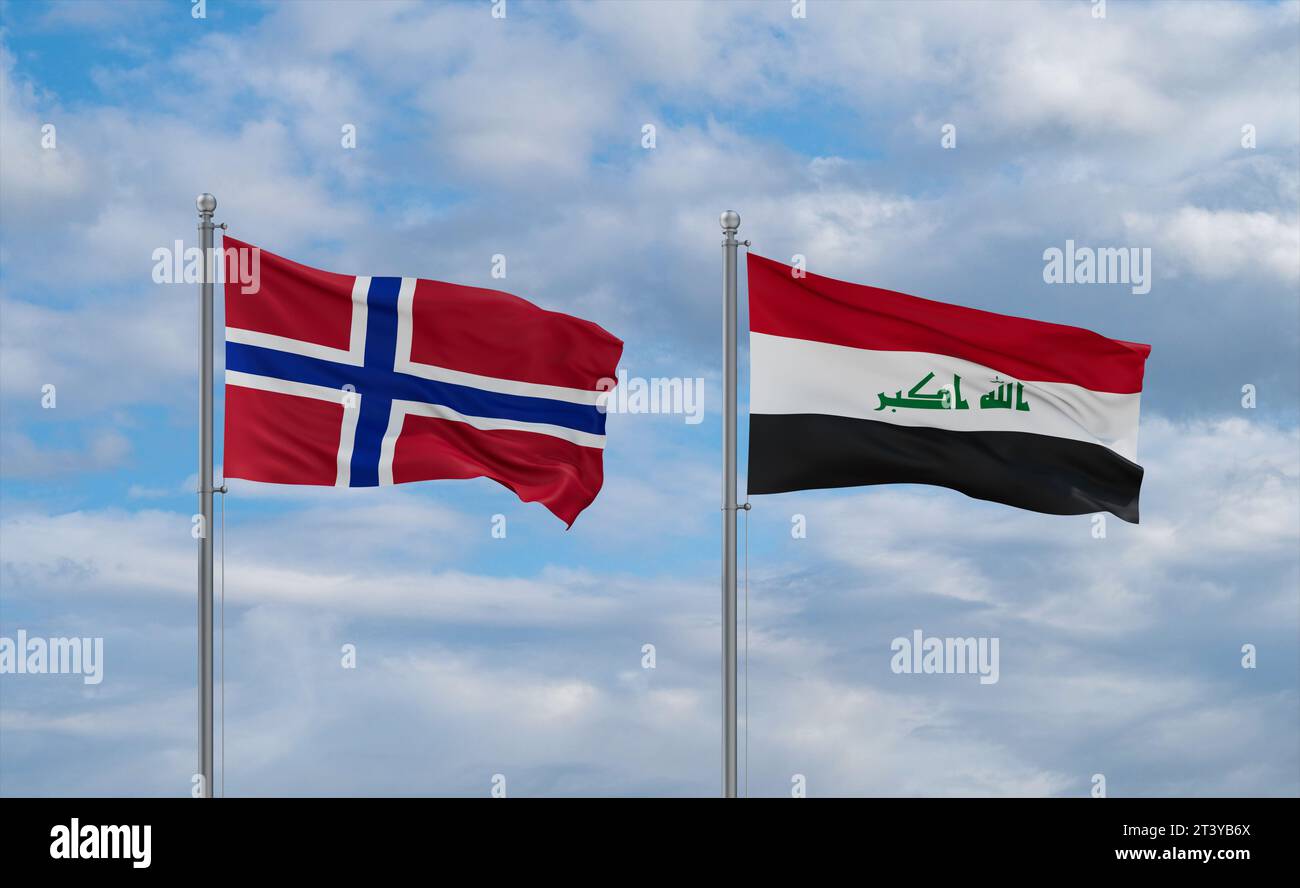
For Norway, the focus will be on building on this momentum. Haaland’s fitness will be crucial, as he is expected to start all three of Norway’s group-stage matches. The team’s ability to balance his individual brilliance with collective teamwork will be a defining factor in their campaign.
Iraq, meanwhile, will need to address their defensive and midfield issues quickly. Their manager, Safaa Mahdi, has indicated that tactical adjustments will be made ahead of their next match. Whether these changes are enough to secure a historic upset remains to be seen.
As the World Cup continues, the contrast between Norway’s attacking prowess and Iraq’s defensive struggles will be a recurring theme. For now, the stage is set for a tournament where underdogs and established powers alike will fight for glory.
—
Key Takeaways from Norway vs. Iraq
Here are the most important lessons from Norway’s 3-0 victory over Iraq:
- Haaland’s impact: Erling Haaland’s two goals and one assist in 60 minutes reaffirmed his status as one of the world’s most dangerous strikers. His ability to score from anywhere on the pitch makes him a constant threat to defenses.
- Tactical mismatch: Norway’s high press and direct attacking style overwhelmed Iraq’s defensive structure, exposing vulnerabilities in their organization.
- Iraq’s challenges: The team’s defensive and midfield issues were laid bare, raising questions about their ability to compete against stronger opponents in the group stage.
- Scandinavian football’s rise: Norway’s performance highlighted the growing influence of Scandinavian football, where tactical discipline and individual brilliance are blending to create a new model for competitive teams.
- World Cup surprises: The match reinforced the idea that underdog teams can still make an impact in the World Cup, provided they adapt tactically and capitalize on individual talent.
—
Frequently Asked Questions About Norway’s World Cup Debut
Q: How does Erling Haaland’s World Cup debut compare to other strikers’ first matches?
A: Haaland’s two goals in 60 minutes are among the most efficient debut performances in World Cup history. While Kylian Mbappé scored four against Peru in 2018 and Harry Kane netted six against Panama the same year, Haaland’s ability to dominate games from the outset sets him apart. His goal-per-90 ratio (4.0) in this match is higher than any other debut striker in the 2026 World Cup so far.
Q: What are Norway’s chances of advancing to the knockout stages?
A: Norway’s path to the knockout stages depends on their next two matches. A win against South Korea and a draw or victory against Portugal would secure their advancement. Given their current form, Norway is among the favorites to progress past the group stage, according to bookmakers’ odds.
Q: How has Iraq’s football development progressed since their last World Cup appearance?
A: Iraq’s journey to the 2026 World Cup reflects significant growth in Middle Eastern football. The team has invested in youth academies and professional leagues, leading to a squad that includes players like Amjad Kalaf and Ali Adnan, who have experience in European football. However, their performance against Norway highlighted the gap between their current level and the world’s elite.
Q: What tactical changes can Iraq make to improve their chances?
A: Iraq’s manager, Safaa Mahdi, has indicated that the team will focus on defensive organization and midfield discipline. Key adjustments could include:
- Playing a more compact defensive line to limit Norway’s attacking space.
- Improving midfield pressing to disrupt Norway’s build-up play.
- Utilizing set-pieces more effectively, as Iraq’s goalkeeper, Amjad Kalaf, showed promise in one-on-one situations.
Q: Could Norway’s victory be a sign of a broader trend in World Cup football?
A: Yes. Norway’s success against Iraq aligns with a growing trend where smaller nations use tactical innovation and individual brilliance to compete with traditional powerhouses. Teams like Morocco and Japan have similarly defied expectations, suggesting that the 2026 World Cup could be one of the most unpredictable in history.
Q: What are the biggest challenges Norway will face in their remaining group-stage matches?
A: Norway’s biggest challenges will be:
- South Korea’s defensive organization: South Korea’s manager, Jalal Hosseini, is known for his disciplined defensive structures, which could test Norway’s attacking firepower.
- Portugal’s experience: Portugal’s manager, Roberto Martínez, has a proven track record in World Cup football, and his side’s tactical flexibility could pose a significant challenge.
- Haaland’s fitness: With a grueling schedule, Haaland’s ability to maintain his high level of performance will be critical to Norway’s success.
Q: How does this result impact Norway’s World Cup ambitions?
A: This victory has boosted Norway’s confidence and set high expectations for their campaign. If they can maintain this level of performance, they could challenge for a deep run in the knockout stages. However, the road ahead is tough, and their ability to adapt to different tactical styles will be key.
