How America’s Unpredictable Shift Is Pushing a Nordic Nation to Rethink Europe’s Future
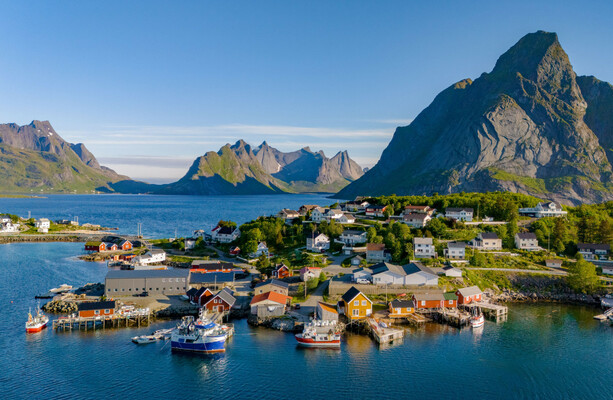
In a dramatic reversal of long-held political orthodoxy, officials in one of Europe’s most stable democracies are quietly revisiting a question that was thought settled decades ago: should their country join the European Union? The catalyst isn’t just economic uncertainty or domestic political pressure—it’s the chaotic geopolitical currents swirling from across the Atlantic, where a single administration’s policies have upended decades of transatlantic stability. And as leaders in Oslo weigh their options, they’re finding that the EU, once seen as a distant and bureaucratic dream, now looks like a lifeline in an increasingly volatile world.
This isn’t just about trade or borders. It’s about whether a nation that prides itself on neutrality and self-determination can afford to remain isolated when its closest allies appear to be abandoning long-standing commitments. The implications stretch far beyond Norway’s fjords: if this little but wealthy Nordic country—long the poster child for successful non-EU membership—were to reconsider its stance, it could send shockwaves through Brussels, Washington, and capitals across the continent. The question now isn’t if the world feels unstable, but whether Europe’s periphery can survive in it.
What follows is an examination of how a single administration’s approach to global leadership has forced a nation to confront its future—one where the old rules no longer apply, and where the safety of standing alone may no longer outweigh the risks of isolation.
— ###
The Turning Point: When Stability Became a Liability
Norway’s relationship with the European Union has always been a study in paradox. The country has enjoyed the economic benefits of the single market through the European Economic Area (EEA) agreement while maintaining its sovereignty, its currency, and its refusal to adopt the euro. For decades, this arrangement suited both sides: Norway contributed to EU budgets without the political strings attached to full membership, while Brussels gained a wealthy, stable partner in the Arctic. Polls consistently showed that around 50% of Norwegians supported EU membership, but the political will to push for it never materialized—until now.
The shift began not with a single event, but with a creeping realization: the world Norway had built its policies around no longer exists. Three key developments have converged to force a reckoning:
- The erosion of transatlantic trust: Under the current U.S. Administration, alliances that were once taken for granted—NATO’s Article 5 mutual defense clause, intelligence-sharing agreements, even the basic assumption that America would act as a stabilizing force in global affairs—have been treated as negotiable. For a nation that relies on U.S. Security guarantees in the Arctic, where Russian military activity is rising, this uncertainty has become a strategic vulnerability.
- The economic fallout of protectionism: Tariffs on Norwegian seafood, aluminum, and other key exports—imposed not as retaliation for specific actions, but as part of a broader America First trade strategy—have cost the country hundreds of millions annually. While Norway’s vast oil wealth cushions the blow, smaller industries and fishing communities have been left scrambling. Meanwhile, the EU’s single market remains Norway’s largest trading partner, accounting for nearly 60% of its exports.
- The climate and energy divide: Norway’s green transition—long a point of national pride—has clashed with U.S. Energy policies. While Oslo pushes for stricter emissions rules and invests heavily in electric vehicles and offshore wind, Washington’s rollback of environmental regulations and subsidies for fossil fuels has created a rift. The EU, meanwhile, has positioned itself as a leader in the green economy, offering Norway both a market and a potential partner in shaping global climate policy.
It was the combination of these factors that led Norwegian Foreign Minister Espen Barth Eide to describe the current global landscape as “unpredictable” in recent remarks. “We are seeing a world where the rules-based order is under strain,” he told reporters in Oslo. “That makes stability—whether economic, political, or security-related—more valuable than ever.” The subtext was clear: if the U.S. Can no longer be relied upon, and the EU offers a framework for stability, then the costs of staying outside may soon outweigh the benefits.
— ###
Who Stands to Gain—or Lose—If Norway Reconsiders?
The debate over EU membership in Norway isn’t just about trade or security. It’s a clash of identities, economic models, and visions for the future. To understand the stakes, it’s worth examining the key players and what they stand to gain—or lose—if the country were to hold a new referendum on the issue.
####
The Pro-EU Camp: Stability Over Sovereignty
Supporters of EU membership argue that the risks of isolation are too great. Their case rests on three pillars:
1. Economic resilience: The EU’s single market provides Norway with access to 450 million consumers without the bureaucratic hurdles of full membership. With U.S. Tariffs and Brexit-related disruptions creating uncertainty, the EU offers a predictable alternative. “The EEA agreement has served us well, but it’s no substitute for full membership when the global economy is in flux,” said Kari Kjønaas Kjos, a senior economist at the Norwegian Institute of International Affairs.
2. Security in an uncertain world: Norway’s Arctic strategy hinges on cooperation with NATO allies—but if the U.S. Is seen as an unreliable partner, the EU’s growing defense integration could become an attractive safety net. The EU’s Permanent Structured Cooperation (PESCO) framework, which includes joint military projects, could offer Norway a way to maintain its neutrality while still benefiting from collective security.
3. Climate leadership: The EU’s Green Deal and carbon border tax could either isolate Norway or integrate it more deeply into European environmental policy. By joining the EU, Norway could shape these rules rather than react to them—especially as its oil-dependent economy transitions to renewables.
Critics of this view point out that EU membership would require Norway to cede control over key policies—from fisheries quotas to immigration rules. But for many in the pro-EU camp, the question is no longer about sovereignty, but survival. “We’re not talking about joining the EU out of idealism,” said Anders W. Sunnafjord, a former Norwegian ambassador to the EU. “We’re talking about whether You can afford to stay out.”
####
The Anti-EU Camp: The Slippery Slope of Integration
Opponents of EU membership argue that joining would erode Norway’s distinctive political model—one built on consensus, strong social welfare, and a deep skepticism of centralized power. Their concerns include:
- The “democratic deficit”: Norway’s political system is highly decentralized, with strong local governance. The EU’s top-down decision-making could weaken this model, they argue.
- Economic risks: While the EU is Norway’s largest trading partner, full membership would expose the country to financial crises elsewhere in the bloc—such as the eurozone’s sovereign debt struggles.
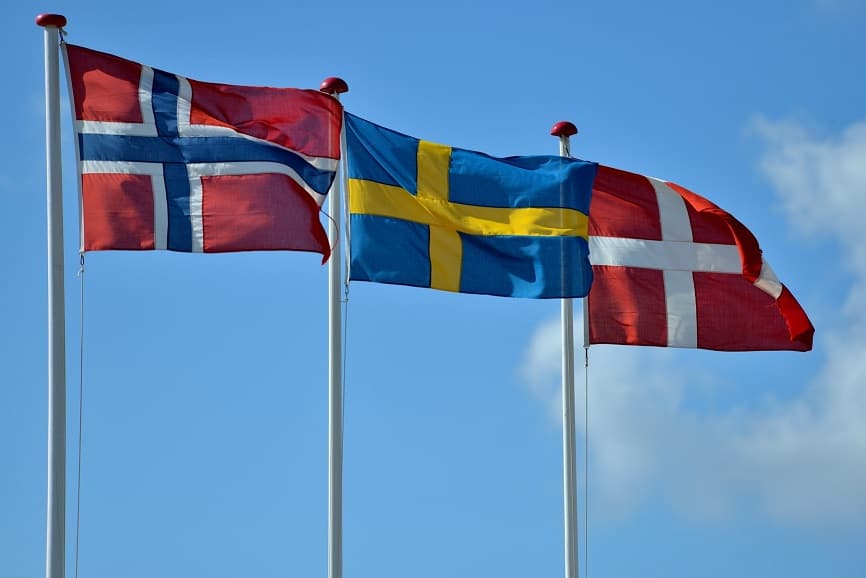
- Cultural identity: Many Norwegians fear that EU membership would lead to mass immigration, altering the country’s homogenous character. (This argument has gained traction as Sweden and Denmark grapple with rising asylum seeker numbers.)
- The cost of membership: Norway already contributes to the EU budget through its EEA agreement. Full membership would require additional payments, potentially straining public finances.
Yet even these arguments now carry less weight in a world where the alternatives seem riskier. “For decades, we could afford to be picky about our alliances,” said Solveig Ternström, a political scientist at the University of Oslo. “But when your biggest trading partner imposes tariffs on your fish, and your security guarantor treats alliances as bargaining chips, the cost of staying out starts to look like a luxury we can’t afford.”
— ###
A Timeline: How Did We Get Here?
Norway’s relationship with the EU has been defined by near-misses and referendums. Understanding today’s debate requires looking back at key moments:
| Year | Event | Impact |
|---|---|---|
| 1972 | Norway applies for EEC membership (precursor to the EU). | Rejected in a referendum (53.5% against). Oil wealth made independence seem viable. |
| 1994 | Second EU referendum (this time on the euro and EEA). | 52.2% vote to join the EEA (but reject the euro). Norway gains single-market access without full membership. |
| 2001 | Sweden joins the euro; Norway remains outside. | Reinforces Norway’s preference for the krone and monetary independence. |
| 2016 | Brexit referendum; Norway’s EEA agreement put under scrutiny. | Raises questions about whether Norway’s current model is sustainable long-term. |
| 2020–2023 | U.S. Tariffs on Norwegian aluminum, seafood, and steel. | Costs Norway’s export sector hundreds of millions; strains relations with Washington. |
| 2024 | Norwegian government forms task force to reassess EU membership. | First official acknowledgment that the status quo may no longer be tenable. |
The 2024 task force, led by the Ministry of Foreign Affairs, is the first formal step toward what could become a national debate. While no referendum has been announced, the fact that such a discussion is happening at all is historic. “This isn’t about joining the EU tomorrow,” said Jan Tore Sanner, a former Norwegian prime minister. “But it’s about recognizing that the world has changed, and so must our options.”
— ###
Why This Matters Beyond Norway’s Borders
Norway’s potential reconsideration of EU membership isn’t just a Nordic story—it’s a test case for Europe’s future. If a country that has thrived outside the EU now questions that choice, it raises critical questions about the bloc’s appeal in an era of rising nationalism, economic uncertainty, and shifting global power dynamics.
####
1. The EU’s Soft Power in a Fragmenting World
The European Union has long sold itself as a beacon of stability—a rules-based alternative to the chaos of global politics. But as the U.S. Retreats from its role as the world’s policeman, and China and Russia fill the void with their own visions of order, the EU’s ability to project stability is being tested. Norway’s potential shift could be seen as a vote of confidence in Brussels—or a warning that the EU’s model is still not compelling enough for nations on its periphery.
“The EU’s biggest challenge isn’t Brexit or the euro crisis,” said Mark Leonard, director of the European Council on Foreign Relations. “It’s proving that its benefits outweigh the costs of sovereignty in a world where sovereignty itself is under threat.”
####
2. The Arctic as a Battleground for Influence
Norway’s strategic location in the Arctic makes its decision particularly significant. The region is emerging as a new frontier for geopolitical competition, with Russia expanding its military presence, China investing in ports and infrastructure, and the U.S. And EU jockeying for influence. If Norway joins the EU, it could accelerate the bloc’s push to become a major Arctic player—one that rivals Russia’s Arctic Council dominance and China’s Polar Silk Road initiative.
“The Arctic isn’t just about resources anymore,” said Helga Hellevik, a professor of Arctic studies at the University of Tromsø. “It’s about who sets the rules. If Norway joins the EU, it could tip the balance in favor of a rules-based order—assuming the EU is willing to play that role.”
####
3. The Domino Effect: Could Other Non-EU Nations Follow?
Norway isn’t the only country watching this debate closely. Switzerland, Iceland, and even the UK (despite Brexit) have all considered their relationships with the EU in recent years. If Norway’s government were to push for a referendum—and if voters approved—it could embolden other nations to rethink their positions. “The EU’s enlargement process has been stalled for years,” said Ivan Jakšić, a senior fellow at the Brussels-based European Policy Centre. “But if a wealthy, stable country like Norway were to join, it could reopen the door for others.”
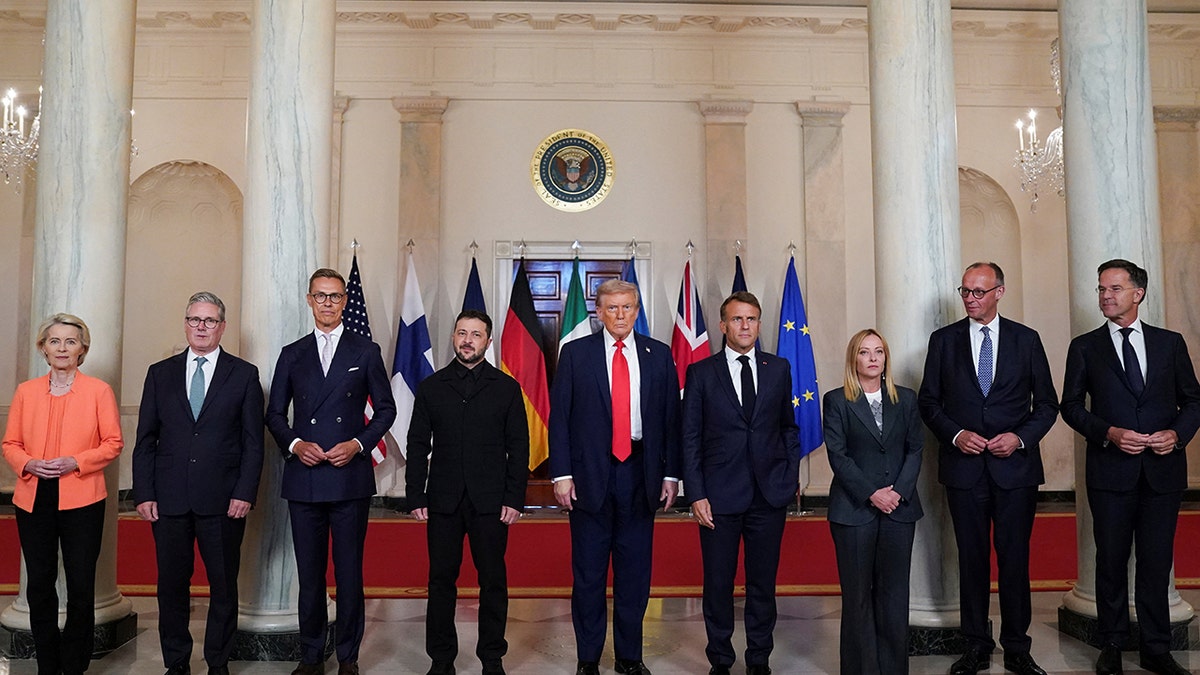
Conversely, if Norway’s experiment in staying outside the EU continues to pay off—despite current challenges—it could encourage other nations to resist full membership, seeing it as too costly or restrictive.
— ###
What’s Next? The Road to a Potential Referendum
Norway’s government has not yet announced plans for a new EU referendum, but the process—if it moves forward—would likely follow these steps:
- Public consultation: The task force will release a report in early 2025 outlining the pros and cons of membership, including economic models, security implications, and political trade-offs.
- Political debate: The two major parties—the center-left Labour Party and the center-right Conservative Party—have historically opposed EU membership, but their stances could shift if public opinion changes.
- Legislative hurdles: Any move toward EU membership would require a constitutional amendment in Norway, which would need parliamentary approval.
- The referendum itself: If held, it would likely be framed as a binary choice: stay outside the EU with current EEA access, or join fully with all the associated costs and benefits.
One wildcard remains: U.S. Policy. If the next American administration reverses course on trade and security, Norway’s calculus could change overnight. “This isn’t just about the EU,” said Tore Bjørgo, a political scientist at the University of Oslo. “It’s about whether Norway can afford to bet its future on one country’s whims.”
For now, the debate is quiet but intense. In cafés in Bergen, fishing villages in the north, and Oslo’s political circles, the question is no longer whether Norway should reconsider its stance—but how soon the country will have to make a choice.
— ###
Key Questions and Answers: What You Need to Know
Q: Has Norway ever seriously considered joining the EU before?
A: Yes, Norway has held two referendums on EU membership (1972 and 1994), both of which resulted in rejection. However, the 1994 vote was narrowly won (52.2% against joining the EEA), and support for membership has fluctuated in polls ever since. The current debate is the first time in decades that officials have openly discussed the possibility of a third referendum.
Q: What would Norway have to give up to join the EU?
A: Full EU membership would require Norway to adopt the euro (though it could apply for a temporary opt-out, as Denmark does), align its fisheries policies with EU quotas, and cede some control over immigration and justice policies. Norway would also lose its ability to negotiate its own trade deals with non-EU countries.
Q: How would U.S. Tariffs affect Norway’s economy if it joined the EU?
A: The EU has the legal tools to challenge U.S. Tariffs on Norwegian goods, including through the World Trade Organization (WTO). However, resolving such disputes can take years, leaving Norwegian exporters vulnerable in the short term. Joining the EU could also provide Norway with better protection against unilateral U.S. Trade actions.
Q: What do other Nordic countries think about Norway’s potential EU move?
A: Sweden and Denmark have expressed cautious support for Norway’s right to make its own choice but have not openly endorsed EU membership. Finland, which joined the EU in 1995, has remained neutral. Iceland, meanwhile, has its own complex relationship with the EU and has not taken a public stance on Norway’s debate.
Q: Could Norway join the EU without a referendum?
A: No. Norway’s constitution requires that any major change to the country’s relationship with the EU—including full membership—be approved by the public in a referendum. This was a key lesson from the 1994 vote, which saw a narrow rejection despite government support.
Q: What are the biggest risks of Norway joining the EU?
A: The primary risks include economic exposure to EU crises (such as another eurozone debt crisis), loss of control over key policies (like fisheries management), and potential political backlash if public opinion shifts against membership. There’s also the risk that joining the EU could strain Norway’s relationship with the U.S., which has historically viewed Norwegian neutrality as a strategic asset.
—
As Norway stands at this crossroads, one thing is clear: the world it inherited in the 1990s—where stability was assumed and alliances were taken for granted—no longer exists. The question now is whether Europe’s most successful non-EU member can afford to stay outside when the alternatives seem increasingly unstable. For Norway, the answer may soon be the most consequential decision in its modern history.
