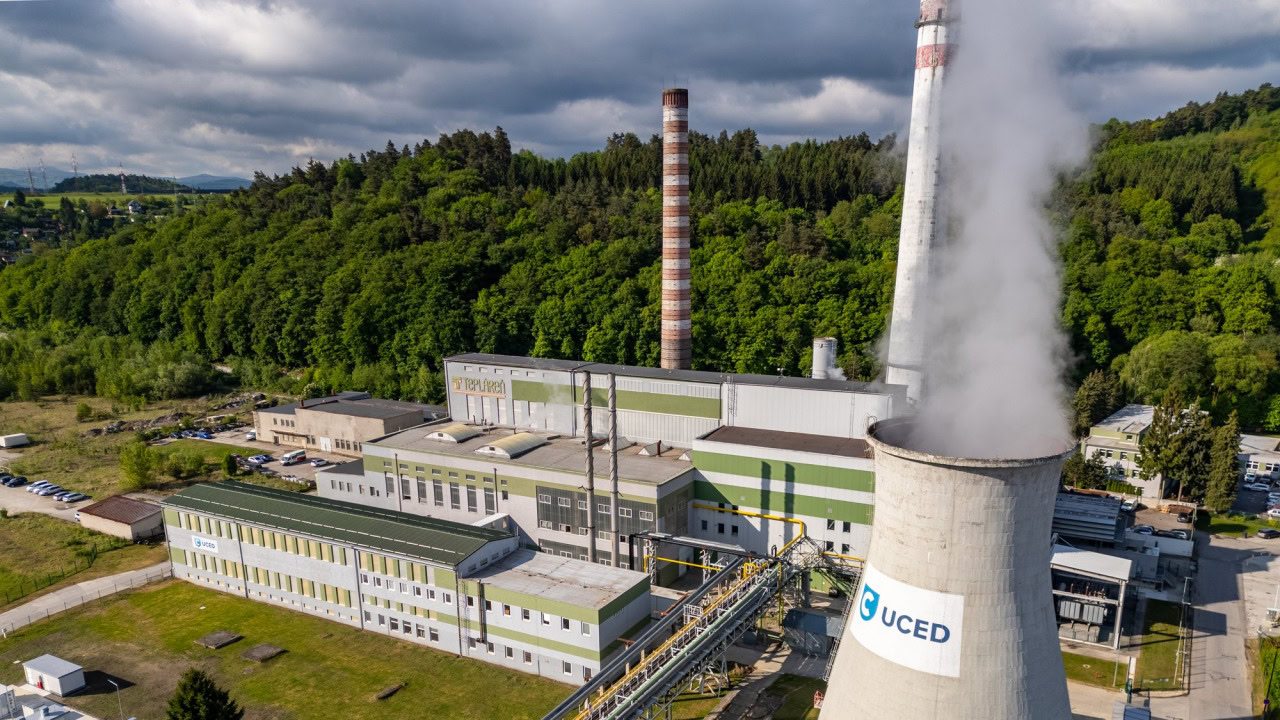
A €1 million investment in a new gas turbine at Slovakia’s Považská Bystrica plant will boost energy supply for local industry and households, according to company statements, but raises questions about long-term sustainability as Europe accelerates its shift away from fossil fuels.
The turbine, installed by a regional energy provider, will increase production capacity by 15%—enough to power roughly 1,200 homes annually—while cutting operational costs by 12% through improved efficiency, the company said in a statement. The project, funded entirely by internal reserves, aligns with Slovakia’s short-term energy security goals but contrasts with the European Union’s 2030 target to phase out coal and gas in favor of renewables.
Why This Matters for Slovakia’s Energy Mix
Slovakia, which still generates 45% of its electricity from coal and gas, has faced repeated supply disruptions in recent winters. The €1 million turbine—equivalent to roughly $1.08 million at current exchange rates—represents a modest but targeted response to those challenges. While the investment falls far short of the €1.2 billion Slovakia plans to spend on renewable energy projects by 2027, it highlights the tension between immediate energy needs and long-term decarbonization efforts.

“This is a pragmatic step to stabilize supply while we scale up wind and solar,” said a spokesperson for the energy provider, who requested anonymity to discuss internal strategy. “But we’re also under pressure from Brussels to accelerate the transition—so these kinds of upgrades are a stopgap, not a long-term solution.”
How the Investment Compares to Regional Trends
The Považská Bystrica turbine follows a broader pattern in Central Europe, where countries reliant on Russian gas imports have doubled down on domestic fossil fuel infrastructure. Poland, for example, approved a €3.5 billion coal plant expansion in 2023 despite EU warnings, while Hungary has extended the life of its last nuclear reactor amid energy crises. Slovakia’s move, though smaller in scale, fits this trend of balancing energy security with climate commitments.
By contrast, neighboring Austria—which generates 70% of its electricity from renewables—has committed to phasing out all fossil fuel plants by 2030. The disparity underscores Slovakia’s challenge: how to meet its EU obligations without triggering blackouts or economic disruption.
What Happens Next for Investors and Consumers
For local consumers, the turbine’s impact will be modest but tangible. The 15% capacity increase translates to fewer rolling blackouts during peak demand, while the 12% cost savings could translate to lower energy bills for industrial users—a critical factor in a country where manufacturing accounts for 28% of GDP. However, analysts warn that without deeper structural reforms, such incremental upgrades may not suffice as Europe’s energy grid evolves.
“This is a short-term fix, not a transformation,” said Peter Novak, an energy economist at the Slovak Institute for Economic Research. “The real question is whether Slovakia can attract the kind of foreign investment needed for large-scale renewables—or if it will remain dependent on patchwork solutions like this.”
Regulatory hurdles remain. The EU’s upcoming gas price cap reforms could make new fossil fuel projects financially unviable, while Slovakia’s own climate action plan requires 40% of energy to come from renewables by 2030—a target the turbine alone won’t meet.
A Timeline of Key Developments
- 2023: Slovakia approves €1.2 billion renewable energy fund but delays 60% of projects due to permitting issues.
- Q1 2024: Považská Bystrica plant announces turbine investment; construction begins immediately.
- 2025: EU mandates stricter emissions reporting for gas plants, potentially forcing retrofits or shutdowns.
- 2030: Slovakia’s legal deadline to reduce coal/gas share to 30% of energy mix.
