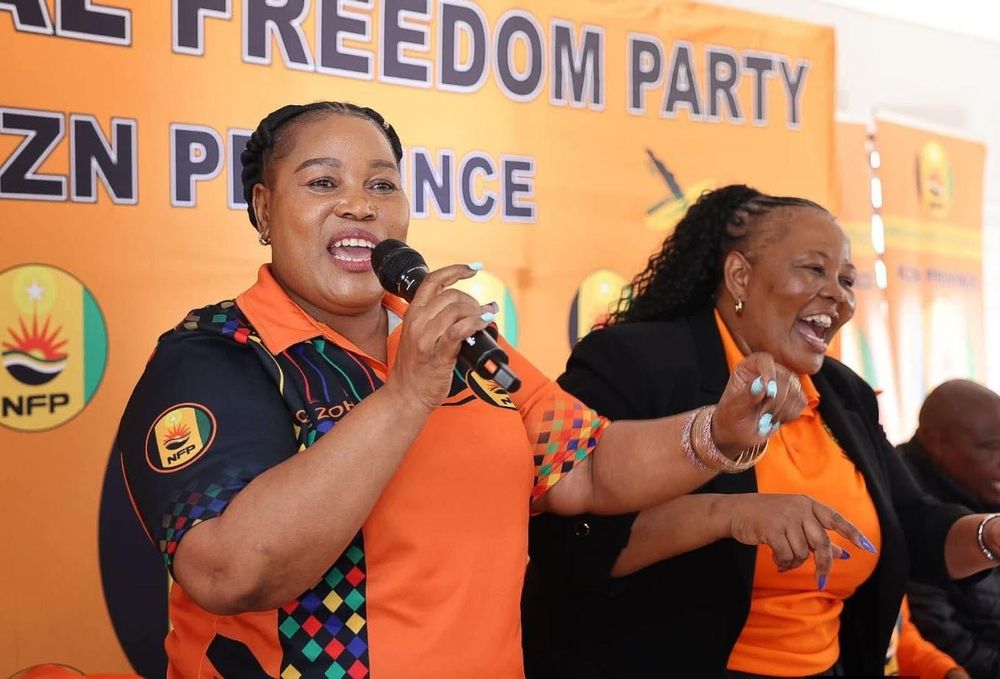
Senior NFP Leader in Hot Water for Siding with Expelled Mbali Shinga – IOL: A Deep Dive into the NFP’s Internal Crisis
The political landscape of KwaZulu-Natal is currently witnessing a volatile power struggle within the National Freedom Party (NFP), as a senior party official finds themselves under intense scrutiny for defying party leadership. The controversy centers on the decision of a high-ranking NFP leader to publicly support Mbali Shinga, a former powerhouse within the party who was abruptly expelled, leading to her removal from both the KZN Legislature and her influential role as the MEC for Social Development.
This internal rift is not merely a personnel dispute. it represents a fundamental clash over party discipline, the rights of political office-bearers, and the stability of the NFP in a province where political loyalty is often the only currency that matters. As the KZN Legislature moves to fill the vacuum left by Shinga’s departure, the fallout from a senior NFP leader in hot water for siding with expelled Mbali Shinga – IOL reports suggest, continues to ripple through the corridors of power, attracting unexpected allies from across the political aisle.
The Catalyst: The Fall of Mbali Shinga
To understand why a senior leader would risk their own standing to support Mbali Shinga, one must first examine the severity of her exit. Shinga was not just a member of the party; she held a pivotal executive position as the MEC for Social Development. This role placed her at the helm of critical social welfare services for millions of citizens in KwaZulu-Natal, making her one of the most visible and powerful women in the provincial government.
Her expulsion was swift and decisive. In the world of South African proportional representation, a party holds the seat, not the individual. When the NFP leadership moved to expel Shinga, they effectively stripped her of her legislative seat and her executive authority. This “political axing” triggered an immediate administrative process within the KZN Legislature to swear in a replacement, ensuring that the NFP’s allocated seat remained occupied, albeit by a different individual.
The expulsion of a high-ranking MEC is rarely a simple matter of misconduct. It typically signals a deep-seated ideological or personal divide between the party’s national leadership and its provincial executors. In Shinga’s case, the move was seen by some as a necessary “house-cleaning” exercise and by others as a targeted political purge.
Defiance in the Ranks: Why a Senior Leader is Now ‘In Hot Water’
The tension escalated when the NFP’s KZN chairperson chose to break ranks. In a political culture where “party lines” are treated as sacrosanct, the chair’s decision to argue the merits of Shinga’s case—and to push for the lifting of her expulsion—is viewed by the party’s top brass as an act of insubordination.
The chairperson’s position is rooted in the belief that the process used to expel Shinga may have been flawed or unjust. By advocating for a review of the evidence and a reconsideration of the penalty, the leader has positioned themselves as a defender of internal justice. However, from the perspective of the party’s national executive, This represents seen as siding with a “persona non grata,” thereby undermining the authority of the party’s disciplinary committees.
The clash between the NFP KZN chair and the national leadership highlights a recurring theme in South African politics: the tension between local provincial autonomy and centralized party control.
This defiance has placed the KZN chair in a precarious position. When a senior leader is described as being “in hot water,” it implies that disciplinary action may be imminent. The party is now faced with a dilemma: punish the chair and risk further alienating the provincial membership, or overlook the defiance and risk appearing weak in the face of rebellion.
The Legislative Shuffle and the Replacement Process
While the internal battle rages, the machinery of government continues to turn. The KZN Legislature has already begun the formal process of replacing Mbali Shinga. Because the NFP is a registered party with a specific number of seats based on the general election results, the seat does not vanish; it simply moves to the next person on the party’s candidate list.
- Administrative Transition: The swearing-in of a new member is a constitutional requirement to ensure that legislative quotas are met.
- Executive Vacuum: The removal of Shinga as MEC for Social Development requires the Premier to appoint a new head for the department, which can lead to policy shifts or administrative instability during the handover.
- Political Optics: Replacing a high-profile female leader with a new appointee during a period of internal strife often creates a perception of instability to the voting public.
The speed with which the legislature moved to replace Shinga suggests that the NFP leadership wanted to close the door on her influence as quickly as possible, leaving her with no official platform from which to challenge her expulsion.
An Unexpected Alliance: ANC Women and the Fight for Political Rights
One of the most intriguing developments in this saga is the intervention of the ANC Women’s League and other ANC women, who have rallied behind Mbali Shinga. On the surface, the ANC and NFP are competitors. However, this support is framed not as a partisan move, but as a struggle for political rights and gender equity.
The ANC women argue that the expulsion of a female leader from a position of power—without what they deem a fair or transparent process—sets a dangerous precedent. They view Shinga’s fight as a symbolic battle for all women in politics who may be vulnerable to arbitrary removal by party patriarchs.
The Gender Dimension of the Conflict
The support from the ANC highlights a burgeoning trend of “cross-party solidarity” among women in South African politics. By framing Shinga’s expulsion as an attack on her political rights, her supporters are elevating the issue from a party dispute to a human rights concern. This puts additional pressure on the NFP, as they are no longer just fighting an internal rebel, but are now facing criticism from a major political rival on the grounds of gender justice.
| Stakeholder | Position on Shinga’s Expulsion | Primary Motivation |
|---|---|---|
| NFP National Leadership | Support Expulsion | Party discipline and centralized authority. |
| NFP KZN Chair | Oppose Expulsion | Procedural fairness and provincial stability. |
| ANC Women | Support Shinga | Protection of political rights for women. |
| KZN Legislature | Neutral/Administrative | Maintaining legislative continuity. |
Analyzing the Broader Implications for the NFP
The fallout from the senior NFP leader in hot water for siding with expelled Mbali Shinga – IOL narrative suggests a party struggling to define its identity and maintain its cohesion. The NFP has historically faced challenges with internal stability, and this latest episode may be a symptom of a larger systemic issue.

The Risk of Fragmentation
When a provincial chair openly defies the national office, it creates a “dual power” dynamic. If members of the party in KwaZulu-Natal feel more loyalty to their provincial chair than to the national leadership, the party risks a formal split. We have seen this pattern in other South African parties where provincial grievances lead to the formation of breakaway factions.
Impact on Service Delivery
The removal of an MEC is never without consequence. The Department of Social Development handles sensitive issues, including grants, child protection, and elderly care. A leadership vacuum or a contested transition can lead to administrative paralysis, where officials are hesitant to make decisions until the political dust settles. This ultimately affects the most vulnerable citizens of the province.
The Legal Battle Ahead
It is highly likely that Mbali Shinga will challenge her expulsion in court. South African courts have previously ruled on the balance between a party’s right to manage its membership and an individual’s right to fair administrative action. If the court finds that the NFP failed to follow its own constitution or the principles of natural justice, the party could be forced to reinstate her, creating an even more awkward situation for the leader who replaced her.
Common Misconceptions Regarding Party Expulsions
Many observers assume that an expelled politician is simply “fired” like an employee. However, the legal reality in South Africa is more complex:
- The “Party Seat” Concept: In a proportional representation system, the seat belongs to the party. If you are expelled from the party, you automatically lose the seat. You cannot remain an “Independent” member of the legislature if you were placed there by a party list.
- Due Process: While parties have wide latitude, they must follow their own internal constitutions. If a party fails to give a member a fair hearing, the courts can intervene.
- Executive vs. Legislative Roles: Being an MEC is an appointment by the Premier. While the party recommends the person, the Premier formally appoints them. However, if the party withdraws its support (via expulsion), the Premier almost always removes the person from the executive to maintain the coalition or party agreement.
For more context on how party disputes affect governance, you may find a related explainer on South African proportional representation useful.
The Strategic Stakes for the KZN Political Arena
KwaZulu-Natal is a political battlefield. Every shift in loyalty within a party like the NFP can change the math for coalition governments and local council control. The fact that this dispute has become public knowledge means that opposing parties are likely monitoring the situation for opportunities to poach disgruntled members.
If the senior NFP leader who is currently “in hot water” is eventually purged, it could trigger a mass exodus of provincial supporters who feel the national leadership is out of touch with the KZN grassroots. Conversely, if the national leadership relents, it may signal a shift in the party’s power balance, giving the provincial wing more leverage over national policy.
Key Points of the Current Crisis:
- The Trigger: Mbali Shinga’s sudden removal as MEC and NFP member.
- The Defiance: The NFP KZN chair advocating for Shinga’s reinstatement.
- The External Pressure: ANC women framing the issue as a violation of political rights.
- The Immediate Result: A new NFP member being sworn into the KZN Legislature.
- The Long-term Risk: Potential legal battles and further party fragmentation.
Frequently Asked Questions
Who is Mbali Shinga and why was she expelled?
Mbali Shinga was a prominent member of the National Freedom Party (NFP) and served as the MEC for Social Development in KwaZulu-Natal. She was expelled by the party leadership, though the specific internal reasons for the expulsion have been a subject of intense debate and dispute within the party.

Why is a senior NFP leader facing backlash for supporting her?
In political parties, especially in South Africa, strict adherence to the decisions of the national executive is expected. By arguing that Shinga’s expulsion was unfair and should be reversed, the NFP KZN chair is seen as challenging the authority of the party’s top leadership, which is viewed as an act of disloyalty.
Can Mbali Shinga get her seat back?
The only likely path for Shinga to regain her seat would be through a legal challenge in court. If a judge rules that her expulsion was procedurally unfair or unconstitutional, the party may be legally compelled to reinstate her.
What is the role of the ANC women in this dispute?
The ANC women have stepped in to support Shinga, framing her expulsion as a broader issue of gender-based political exclusion. They are advocating for her “political rights,” suggesting that women in leadership are often targeted for removal more aggressively than their male counterparts.
How does the replacement of an MEC work in KZN?
When a party member who is also an MEC is expelled, they lose their party membership and, their seat in the legislature. The party then nominates a replacement from its candidate list. The Premier of the province then formally appoints a new MEC to lead the department.
As the NFP continues to navigate this internal storm, the eyes of the province remain on the KZN chair. Whether this leader will be purged or will successfully steer the party toward a reconciliation with Shinga remains to be seen. What is certain is that the intersection of party discipline and individual political rights will continue to be a flashpoint in South African democracy, with the outcome of this specific case potentially setting a precedent for how political parties handle their high-ranking officials in the future.
