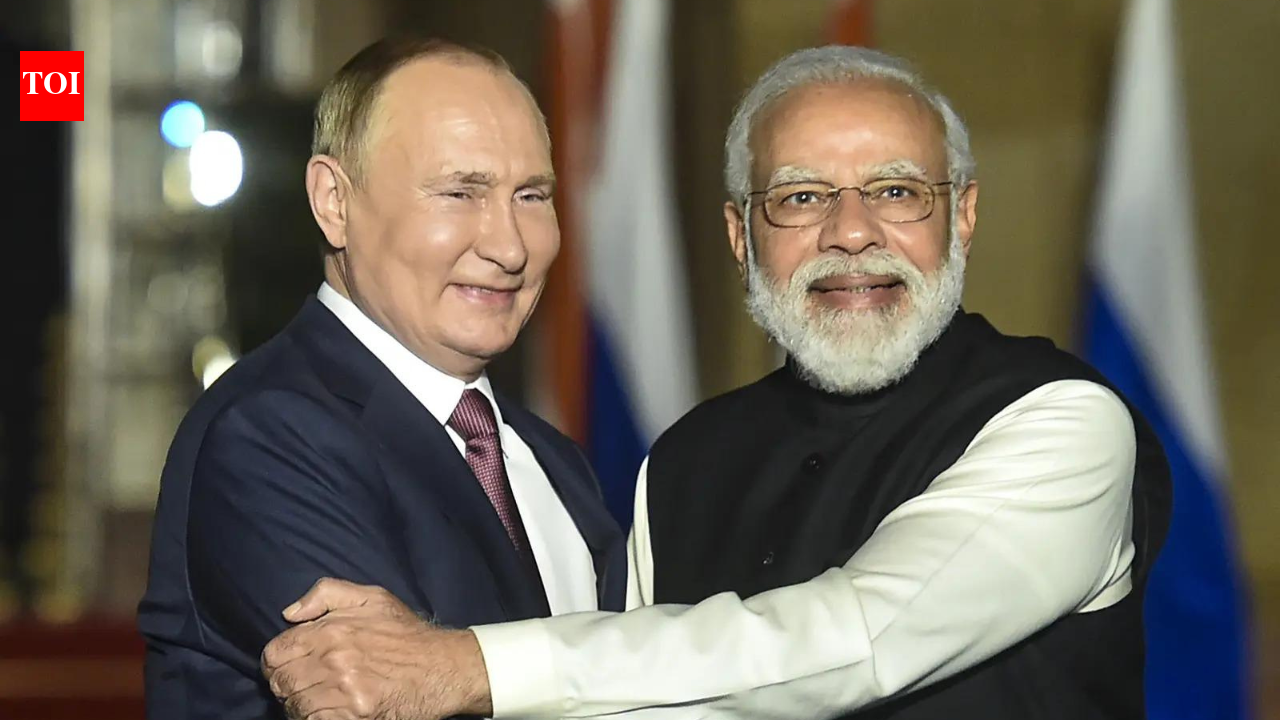
‘Useless to try to pressurise PM Modi’: Putin says India-US ties won’t affect Russia ties, praises economic growth
In a striking assertion of geopolitical resilience, Russian President Vladimir Putin has declared that attempts to exert pressure on Prime Minister Narendra Modi regarding India’s relationship with Moscow are fundamentally futile. This statement, which has sent ripples through diplomatic circles, underscores a critical reality of the modern era: India’s pursuit of “strategic autonomy” is not merely a diplomatic slogan, but a functioning pillar of its foreign policy. As the global community navigates a volatile landscape of sanctions and shifting alliances, the sentiment that It’s ‘Useless to try to pressurise PM Modi’: Putin says India-US ties won’t affect Russia ties, praises economic growth – The Times of India reflects a deeper confidence in the bilateral bond between New Delhi and Moscow.
The core of Putin’s message is clear: while India maintains a robust and expanding partnership with the United States, this does not necessitate a divorce from Russia. Instead, Russia views India as a sovereign actor capable of managing multiple, sometimes contradictory, high-level relationships. This balancing act is perhaps the most sophisticated diplomatic maneuver in the current global order, as India seeks to leverage its position as a bridge between the West and the East.
The Defiance of Pressure: Understanding the India-Russia-US Triangle
For several years, the United States has encouraged India to distance itself from Moscow, particularly following the escalation of the conflict in Ukraine. Through a combination of diplomatic persuasion and the implicit threat of sanctions—most notably via the Countering America’s Adversaries Through Sanctions Act (CAATSA)—Washington has sought to align New Delhi more closely with the G7’s stance on Russia.
However, Putin’s recent comments suggest that these efforts have failed to penetrate the core of India’s strategic calculus. By stating that pressure on PM Modi is “useless,” Putin is acknowledging that India’s national interests—ranging from energy security to defense procurement—are not easily swayed by external mandates. This perspective highlights a fundamental shift in how power is perceived in the 21st century; the era of a single superpower dictating the foreign policy of regional giants is rapidly fading.
The Pillars of Strategic Autonomy
India’s refusal to succumb to external pressure is rooted in several key strategic imperatives:
- Defense Diversification: While India is increasingly buying American drones and jet engines, Russia remains the primary source of critical spare parts and legacy systems for the Indian Army and Air Force.
- Energy Sovereignty: In the wake of global price volatility, India has significantly increased its imports of Russian crude oil, prioritizing the affordability of energy for its billion-plus population over geopolitical alignment.
- Multipolarity: New Delhi advocates for a “multipolar world” where no single nation or bloc holds absolute hegemony. Maintaining ties with both the US and Russia is a practical application of this philosophy.
“The ability of a nation to define its own path, independent of the pressures exerted by global superpowers, is the hallmark of a rising global power.”
The $100 Billion Ambition: Economic Synergy and Trade Liberalization
Beyond the political rhetoric, the relationship between India and Russia is entering a phase of intense economic recalibration. President Putin has expressed strong confidence that bilateral trade will soon hit the landmark figure of $100 billion. This is a staggering increase from previous levels, signaling a move toward a more diversified economic partnership that goes beyond the traditional “oil-for-arms” exchange.
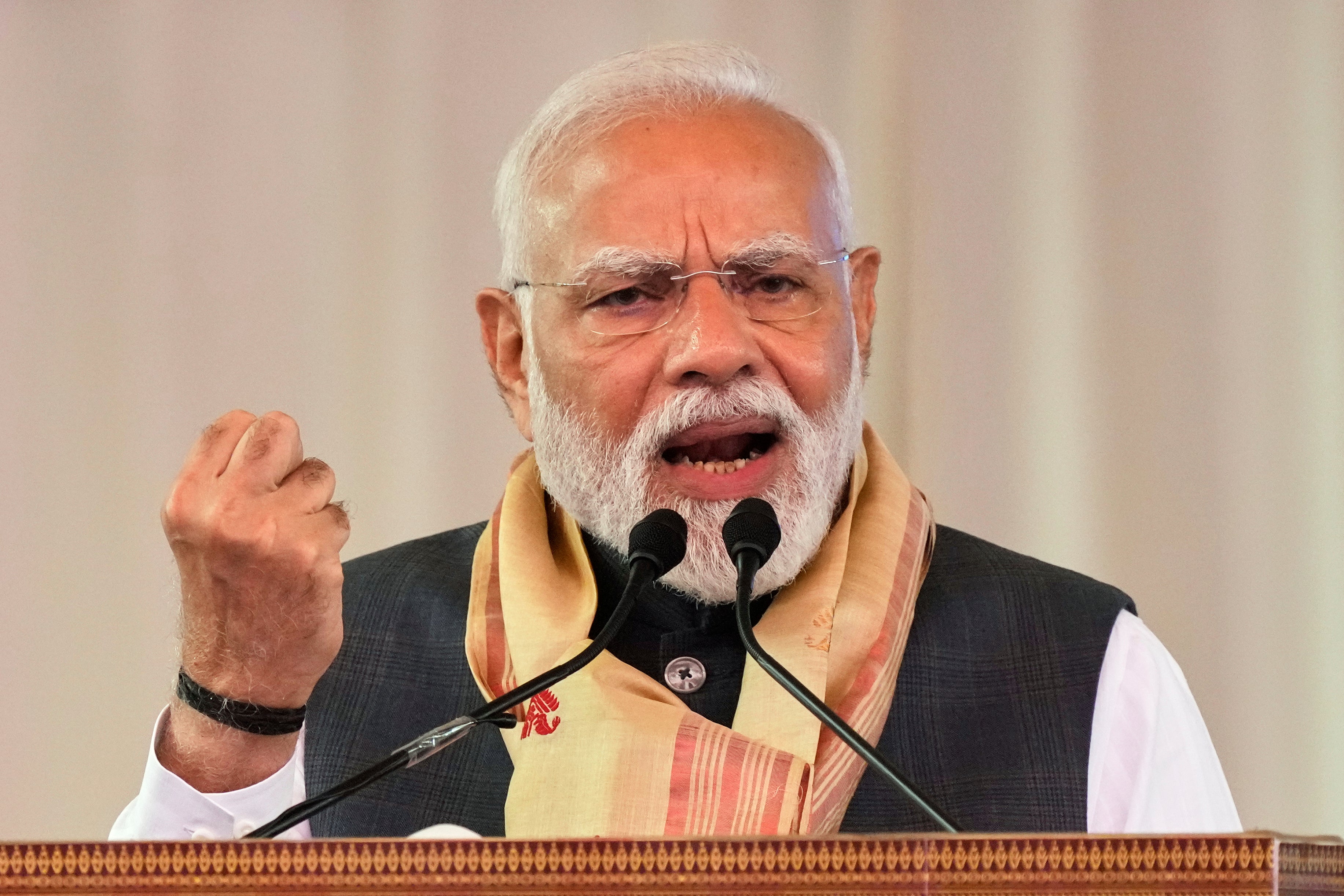
To achieve this, both nations have intensified talks on trade liberalization. The goal is to reduce tariffs, streamline customs procedures and open new markets for Indian exports, which have historically lagged behind Russian exports to India. Putin’s praise for India’s economic growth is not merely complimentary; it is a recognition that India is now an indispensable economic engine that Russia cannot afford to lose as it pivots its trade focus toward the “Global South.”
Key Sectors Driving the Trade Surge
The push toward the $100 billion mark is being fueled by several high-growth sectors:
- Energy and Nuclear Power: Beyond crude oil, the collaboration on nuclear energy (such as the Kudankulam plant) remains a cornerstone of long-term cooperation.
- Agriculture and Fertilizers: Russia is a critical supplier of fertilizers, essential for India’s food security. In return, India is exploring ways to export more organic produce and pharmaceuticals to the Russian market.
- Technology and Digital Payments: With the disruption of Western payment systems, there is an urgent push to integrate payment mechanisms (such as UPI and Russia’s Mir) to facilitate seamless trade.
| Metric | Previous Status | Target/Current Trend |
|---|---|---|
| Bilateral Trade Volume | Approx. $35–$60 Billion | $100 Billion Target |
| Primary Russian Export | Defense Equipment | Crude Oil & Fertilizers |
| Primary Indian Export | Pharmaceuticals/Tea | Diversified Industrial Goods |
| Payment Systems | SWIFT Dependent | Alternative/Local Currency Settlements |
Why Putin Views India as a ‘Reliable Partner’
In the eyes of the Kremlin, India stands out as a “reliable partner” because it has consistently avoided the “hysteria” of Western diplomatic narratives. While many of Russia’s former partners in Europe have severed ties completely, India has maintained a pragmatic, transactional, and respectful dialogue with Moscow.
This reliability is built on decades of trust, dating back to the Cold War era when the Soviet Union provided critical industrial and military support to India. However, the current reliability is more about shared interests than shared ideology. Both nations view themselves as civilizational states that resist the imposition of “universal values” by a small group of Western nations.
The Role of Leadership
Putin’s specific mention of PM Modi is significant. It suggests a personal rapport and a mutual respect between two leaders who project strength and national sovereignty. By praising Modi’s resistance to pressure, Putin is essentially validating the Indian Prime Minister’s leadership style on the global stage, framing him as a leader who puts his country’s interests above the expectations of foreign capitals.

For a deeper understanding of how this fits into broader regional dynamics, you might find a related explainer on the BRICS expansion useful, as it details how Russia and India are collectively reshaping global governance.
Navigating the Friction: Sanctions and the Ukraine Conflict
Despite the optimism expressed by Putin, the path to a seamless partnership is not without obstacles. The most glaring friction point remains the conflict in Ukraine. India has refrained from explicitly condemning Russia at the United Nations, a move that has drawn criticism from Washington and Brussels. However, PM Modi has consistently called for “dialogue and diplomacy,” emphasizing that “this is not an era of war.”
The threat of secondary sanctions remains a lingering concern for Indian businesses. While the Indian government has managed to secure certain waivers or navigate the loopholes of the US sanctions regime to import oil, the risk of “overstepping” remains. The challenge for New Delhi is to ensure that its economic ties with Russia do not trigger a backlash that damages its critical technological and security partnerships with the US.
Common Misconceptions About the Relationship
There are several oversimplifications often repeated in media narratives regarding India-Russia ties:
- Misconception: India is “siding” with Russia against the West.
Reality: India is not siding with anyone; it is practicing strategic hedging. It needs the US for technology and counter-balancing China, and it needs Russia for energy and defense. - Misconception: The relationship is purely based on old Soviet-era loyalty.
Reality: The bond is now driven by cold, hard economic data—specifically the need for cheap energy and the desire for new markets. - Misconception: US pressure will eventually force India to choose.
Reality: As Putin suggested, the more the US pressures India, the more India may perceive the US as an intrusive partner, potentially pushing New Delhi closer to a diversified set of alliances.
The Broader Geopolitical Implications
The statement that it is ‘Useless to try to pressurise PM Modi’: Putin says India-US ties won’t affect Russia ties, praises economic growth – The Times of India is a signal to the rest of the world. It announces the arrival of a “polycentric” world where middle powers and emerging economies no longer feel obligated to choose a side in a new Cold War.
If India can successfully maintain a high-level partnership with both the US and Russia, it provides a blueprint for other nations in the Global South. It demonstrates that economic growth and national security can be achieved through a diversified portfolio of alliances rather than a singular, rigid alignment.
The China Factor: The Silent Driver
One cannot analyze India-Russia ties without mentioning China. Russia’s growing dependence on Beijing is a point of anxiety for New Delhi. India knows that if it distances itself from Moscow, Russia will fall entirely into China’s orbit, which would be a strategic disaster for India. Keeping Russia “engaged” is as much about containing China’s influence as it is about securing oil or missiles.

Conversely, the US recognizes that India is the only democratic power in Asia capable of balancing China. This gives India immense leverage; Washington is likely to tolerate New Delhi’s relationship with Moscow because the alternative—an India pushed toward a Russia-China axis—is unthinkable for US interests in the Indo-Pacific.
Frequently Asked Questions
Why does Vladimir Putin believe it is “useless” to pressure PM Modi?
Putin believes that India’s foreign policy is driven by its own national interests and a philosophy of strategic autonomy. He recognizes that India values its sovereignty and is unlikely to abandon a long-term partner like Russia simply to satisfy the demands of the United States.
What is the significance of the $100 billion trade target?
Reaching $100 billion in bilateral trade would signal a massive shift from a purely military-focused relationship to a comprehensive economic partnership. It would reduce India’s dependence on a few sectors and create a more stable, mutually beneficial economic bond.
How does India balance its relationship with the US and Russia?
India employs a strategy of “multi-alignment.” It collaborates with the US on security and technology (via the Quad) while maintaining deep ties with Russia on energy and defense. By refusing to join a specific bloc, India maximizes its benefits from both sides.
Will US sanctions eventually impact India’s trade with Russia?
While the risk of secondary sanctions exists, India has navigated these challenges so far by using non-dollar currencies for trade and leveraging its importance as a strategic partner to the US. However, it remains a delicate balancing act.
How has the Ukraine conflict affected India-Russia relations?
Surprisingly, the conflict has intensified economic ties, particularly in the energy sector, as India stepped in to buy Russian oil. Politically, India has remained neutral, calling for peace while avoiding sanctions, which Putin views as a sign of reliability.
The trajectory of India’s foreign policy suggests a confident nation that is no longer content with being a junior partner in any alliance. By navigating the pressures of the world’s most powerful nations, New Delhi is redefining what it means to be a global power. The resilience of the India-Russia bond, coupled with the strategic necessity of the India-US partnership, ensures that India remains a pivotal player in the global order. As trade liberalization intensifies and the $100 billion goal looms, the world will be watching to see how this unique triangulation evolves in an increasingly fractured geopolitical environment.
