Moscow’s Growing Unease Over Armenia’s Shifting Stance on EAEU Membership
Armenia’s potential exit from the Eurasian Economic Union (EAEU) has set off alarm bells in Moscow, where officials and analysts view the prospect as a strategic setback that could weaken Russia’s economic and political influence in the South Caucasus. With Yerevan signaling openness to exploring alternatives—including deeper ties with the European Union—Russian leaders and state media have ramped up rhetoric warning of economic instability and regional isolation if Armenia severs its EAEU links. The tension underscores deeper divisions between Armenia’s post-war economic priorities and Moscow’s push to maintain dominance in its former Soviet sphere.
Armenia’s hesitation over its EAEU membership—officially suspended since 2020 but never formally terminated—has become a flashpoint in bilateral relations. While Prime Minister Nikol Pashinyan has repeatedly stressed that Armenia remains committed to the alliance, recent statements by his government and lawmakers hint at a possible pivot toward Western economic partnerships. Russian officials, including Foreign Minister Sergey Lavrov, have responded with sharp warnings, framing the EAEU as Armenia’s only viable path to stability amid ongoing conflicts with Azerbaijan.
This report examines the roots of Armenia’s wavering stance, the economic and geopolitical stakes for both sides, and the broader implications for the EAEU’s future as a Russian-led economic bloc.
—
Why Is Armenia Re-evaluating Its EAEU Membership?
Armenia’s flirtation with leaving the EAEU stems from a mix of economic frustration and geopolitical calculus. Since joining the customs union in 2015, Armenia has struggled to fully integrate its economy with Russia’s, facing trade barriers, currency volatility, and limited access to Russian markets for key exports like wine and brandy. According to the Armenian Ministry of Economy, non-tariff barriers imposed by Russia have restricted Armenian goods from entering the Russian market, despite EAEU membership promises of seamless trade.
Key factors driving Armenia’s reconsideration:
- Trade imbalances: Armenia’s exports to Russia have stagnated, while imports—particularly energy and machinery—remain heavily dependent on Moscow. In 2023, Armenia’s trade deficit with Russia widened by 12%, according to the Armenian Statistical Committee.
- Currency concerns: The Armenian dram’s devaluation against the Russian ruble (down 20% since 2022) has eroded the purchasing power of Armenian businesses trading with Russia.
- EU alternatives: Armenia’s 2017 Comprehensive and Enhanced Partnership Agreement (CEPA) with the EU offers tariff-free access to the bloc’s market, a stark contrast to the EAEU’s limited benefits. The EU remains Armenia’s second-largest trading partner after Russia.
- Post-war economic needs: The 2020 Nagorno-Karabakh war left Armenia’s economy in shambles, with reconstruction costs estimated at $4.4 billion by the World Bank. Yerevan is seeking foreign investment, and EU funds—particularly through the EU’s €500 million macro-financial assistance package—are seen as a lifeline.

Yet Armenia’s hesitation isn’t absolute. Pashinyan’s government has repeatedly emphasized that any shift toward the EU would require a phased approach, avoiding a sudden break with the EAEU that could trigger Russian retaliation. “We are not talking about an immediate exit,” Pashinyan told reporters in April. “But we must explore all options to diversify our economic partnerships.”
Russian officials, however, view even discussions of alternatives as a betrayal. In a recent interview with Rossiya 24, Russian economist Sergey Glazyev—chairman of the EAEU’s integration commission—warned that Armenia’s exit would “disrupt regional supply chains” and leave Yerevan vulnerable to “speculative attacks” from financial markets.
—
Moscow’s Response: From Warnings to Economic Leverage
Russia’s reaction to Armenia’s potential departure has been twofold: public diplomacy and economic pressure. Kremlin-backed media outlets, including RT and Sputnik, have amplified narratives framing Armenia as “abandoning its Soviet brothers” and risking isolation. State-run news agency TASS quoted Russian Deputy Prime Minister Alexander Novak as stating that Armenia’s EAEU membership is “non-negotiable” and that Moscow reserves the right to “adjust its economic cooperation” if Yerevan moves forward with alternatives.
Behind the scenes, Russia has leveraged Armenia’s energy dependence to signal consequences. In February, Gazprom announced a 30% increase in natural gas prices for Armenia, citing “market conditions.” While the hike was framed as a global trend, Armenian officials privately acknowledge it as a warning. “Russia has always used energy as a tool,” said a senior Armenian energy official, speaking on condition of anonymity. “They know we have no alternatives.”
Russia’s economic countermeasures:
- Trade restrictions: In 2022, Russia imposed temporary bans on Armenian wine and brandy exports, citing “quality concerns.” While officially lifted, Armenian producers report continued delays at Russian customs.
- Currency controls: The Central Bank of Armenia has faced pressure from Moscow to stabilize the dram against the ruble, limiting Yerevan’s monetary policy flexibility.
- Military and security threats: Russian Defense Minister Sergei Shoigu visited Armenia in March, reaffirming Moscow’s commitment to Armenia’s security under the 1997 Collective Security Treaty Organization (CSTO) pact. Analysts interpret this as a reminder that economic concessions could come with security costs.
Yet Russia’s leverage isn’t absolute. Armenia’s strategic location as a potential transit hub for EU-Russia trade—particularly through the proposed International North-South Transport Corridor (INSTC)—gives Yerevan some bargaining chips. If Armenia were to align more closely with the EU, it could position itself as a gateway for European goods into the Caucasus, reducing Russia’s monopoly on regional trade routes.
—
What Would Armenia’s Exit from the EAEU Look Like?
Armenia has never formally withdrawn from the EAEU, but its membership has been in limbo since 2020, when Pashinyan suspended participation in the customs union amid protests over economic hardship. A full exit would require a two-year notice period under EAEU rules, but political and economic realities could accelerate the process.
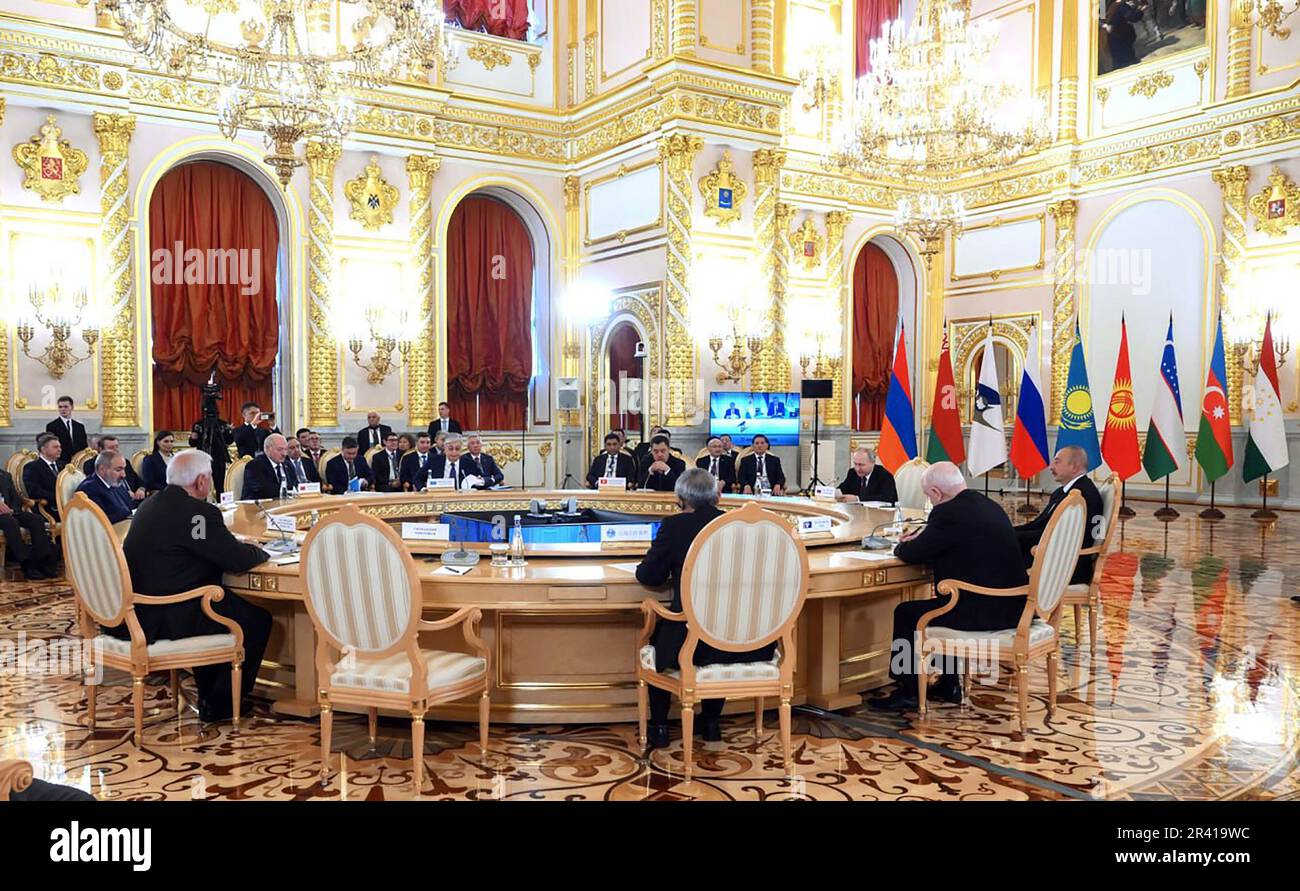
Potential scenarios for Armenia’s EAEU future:
- Gradual disengagement: Armenia could reduce its integration with the EAEU while maintaining diplomatic ties, similar to how Georgia operates with the Eurasian Economic Community (EAEC) without full membership.
- Hybrid model: Yerevan might seek an arrangement like Kazakhstan’s, where certain sectors (e.g., energy, defense) remain aligned with Russia while others (agriculture, services) pursue EU ties.
- Full withdrawal: A sudden break could trigger retaliatory measures from Russia, including trade bans, sanctions on Armenian businesses, or even pressure on Armenia’s CSTO allies to cut ties.
Economically, Armenia’s exit would have mixed consequences. On one hand, losing EAEU access could reduce Armenia’s already limited trade with Russia, but it might also force Yerevan to accelerate reforms to attract EU investment. “The EAEU has been a dead end for Armenia’s economy,” said Armen Grigoryan, a senior researcher at the Yerevan-based Regional Studies Center. “But leaving it would require painful adjustments—deregulation, tax reforms, and fighting corruption—that the government has avoided for years.”
Geopolitically, Armenia’s move could embolden other EAEU members—particularly Kazakhstan and Kyrgyzstan—to seek greater autonomy. Both countries have expressed frustration with Moscow’s dominance in the bloc, and Armenia’s potential exit could create a precedent. “If Armenia leaves, it sends a signal that the EAEU is not a permanent alliance but a tool of Russian influence,” said Kairat Abdrakhmanov, a political scientist at Nazarbayev University in Astana.
—
How Would the EAEU Survive Without Armenia?
The EAEU, formed in 2015 as a Russian-led alternative to the EU, has struggled with stagnant growth and member dissatisfaction. Armenia’s potential departure would deal another blow to the bloc’s credibility, particularly as Belarus—another key member—faces growing internal dissent and economic isolation due to its alignment with Russia’s war in Ukraine.
Key challenges the EAEU faces without Armenia:
- Economic shrinkage: Armenia contributed around 1.5% of the EAEU’s combined GDP in 2023. While not massive, its loss would reduce the bloc’s already limited market integration.
- Political fragmentation: Kazakhstan and Kyrgyzstan have increasingly resisted Moscow’s demands, such as energy price controls and military interventions. Armenia’s exit could push them to seek even more distance.
- Reputation damage: The EAEU has long marketed itself as a stable alternative to Western-led blocs. Armenia’s potential departure would undermine that narrative, making it harder to attract new members like Uzbekistan or Tajikistan.
Russia’s response would likely focus on two strategies: coercion (through economic or security threats) and co-optation (offering incentives to keep Armenia engaged). In May, Russian President Vladimir Putin met with Armenian officials and pledged additional investment in Armenia’s infrastructure, including a $1 billion loan for the South Caucasus Railway project. Yet analysts doubt such gestures will be enough to reverse Armenia’s drift.
“Russia is playing a long game here,” said Svetlana Savranskaya, director of the Arms Control Association. “They know Armenia can’t afford to fully break with the EAEU, but they also know Yerevan won’t stay if it feels trapped. The question is whether they can offer enough carrots to keep Armenia in the fold—or if they’re willing to accept a partial loss.”
—
What Happens Next? Armenia’s Balancing Act Between East and West
Armenia’s EAEU dilemma reflects a broader struggle in the South Caucasus: how to balance dependence on Russia with the need for economic diversification. With Azerbaijan’s blockade of Armenia’s Lachin corridor worsening humanitarian conditions and reconstruction needs mounting, Yerevan faces a stark choice—double down on Russian support or risk alienating Moscow to pursue Western alternatives.
In the short term, Armenia is likely to adopt a wait-and-see approach, delaying any formal decision while testing the waters with the EU. The European Commission has signaled openness to deeper ties, but Armenia’s EU integration remains stalled due to political resistance in Brussels and Yerevan’s reluctance to fully abandon the EAEU. Meanwhile, Russia is biding its time, using economic pressure and diplomatic rhetoric to keep Armenia engaged without triggering a full-blown crisis.

Longer-term, three outcomes are possible:
- Stasis: Armenia remains in a limbo state, neither fully in nor out of the EAEU, while gradually shifting trade toward the EU and other partners.
- Partial disengagement: Armenia reduces its EAEU commitments in key sectors (e.g., energy, defense) while maintaining diplomatic ties, similar to Georgia’s relationship with the EAEC.
- Full break: Armenia formally exits the EAEU, triggering retaliatory measures from Russia but unlocking EU investment and reducing economic dependence on Moscow.
One thing is clear: Armenia’s wavering stance is a symptom of a larger geopolitical realignment in the post-Soviet space. As Russia’s influence wanes in the Caucasus and Central Asia, smaller states are recalibrating their alliances—often at great risk. For Armenia, the stakes couldn’t be higher: a misstep could leave it economically isolated, while a bold move toward the West could provoke a Russian backlash with unpredictable consequences.
—
Frequently Asked Questions
Could Armenia leave the EAEU without Russia’s approval?
No. Under EAEU rules, any member state must provide a two-year notice before withdrawing. However, Russia could impose sanctions or trade restrictions before the formal exit takes effect, making the process politically explosive.
What would happen to Armenian businesses if it left the EAEU?
Armenian exporters—particularly in agriculture, wine, and brandy—would face higher tariffs entering the Russian market, the EAEU’s largest economy. Importers relying on Russian machinery and energy could see price spikes. The government would need to negotiate new trade deals quickly to offset losses.
Has any EAEU member ever tried to leave before?
No. While Belarus has openly criticized the EAEU’s structure, it has never formally sought to withdraw. Armenia is the first member to publicly signal a potential exit, making its case a test for the bloc’s stability.
Would the EU accept Armenia as a full member if it left the EAEU?
Unlikely in the near term. The EU’s enlargement process is slow, and Armenia’s current CEPA agreement already offers significant trade benefits without full membership. A complete break with the EAEU would require Armenia to meet strict EU economic and political criteria, which could take years.
How would Azerbaijan react if Armenia left the EAEU?
Baku would likely welcome Armenia’s reduced ties with Russia, as it sees Moscow as a destabilizing force in the region. However, Azerbaijan would avoid openly supporting Armenia’s exit to prevent accusations of meddling in its internal affairs. Privately, Azerbaijani officials have expressed hope that Armenia’s economic struggles could weaken its resistance to Baku’s demands over Nagorno-Karabakh.
What’s the worst-case scenario for Armenia if it leaves the EAEU?
The most severe outcome would be a combination of Russian trade sanctions, energy price hikes, and diplomatic isolation. Armenia could face difficulties securing loans from international institutions if Moscow blocks its access to Russian capital markets. The Lachin corridor blockade could worsen, cutting off Armenia’s only land link to Iran and the outside world.
—
For updates on Armenia’s economic policies and the EAEU’s future, see our explainer on post-Soviet economic blocs and analysis of Russia’s influence in the Caucasus.
