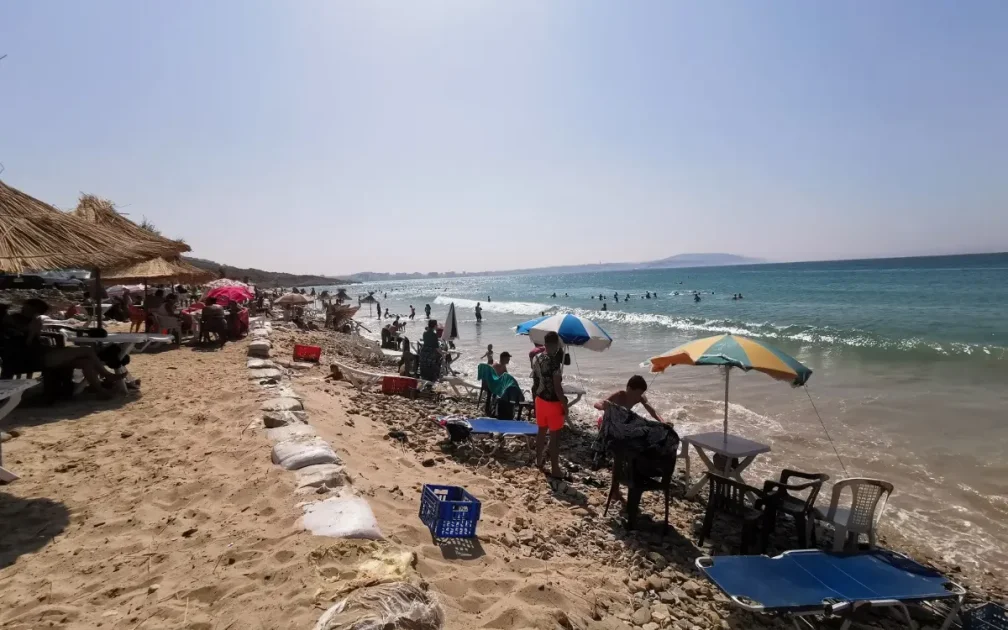
As the summer season approaches, a systemic effort to reclaim public coastlines is unfolding across Morocco, sparking a tension-filled battle between local authorities and the unauthorized commercialization of the shore.
The Fight for Public Access
In Tangier, authorities have begun the process of “freeing” beaches to ensure they remain accessible to the general public before the peak tourist influx. This initiative is part of a broader “big cleanup” across the northern regions, where officials are removing the proliferation of umbrellas, chairs, and tables that have historically encroached upon the sand.
Despite these efforts, the transition has not been seamless. In other parts of northern Morocco, visitors have expressed significant anger over the continued privatization of beach areas, where public space is often cordoned off for private use, limiting where tourists and locals can settle.
Crackdowns in Casablanca and Harhoura
The struggle over beach accessibility extends to the economic hubs and coastal suburbs near Casablanca. Local authorities have launched a targeted campaign to remove illegal umbrella renters who charge visitors for access to basic beach amenities on public land.
However, the reality on the ground varies by location. In Harhoura, reports indicate that visitors still face payment requirements to enjoy the most desirable stretches of the coast, suggesting that the influence of private operators remains entrenched in certain high-traffic areas.
Cultural Implications of the Coastline Conflict
This seasonal crackdown highlights a recurring cultural friction in Morocco: the balance between tourism infrastructure and the fundamental right to public space. While the removal of illegal rentals is aimed at protecting consumers from price gouging and ensuring equity, the persistence of “pay-to-play” zones in areas like Harhoura underscores the difficulty of fully deinstitutionalizing beach privatization.
For the millions of visitors heading to the coast this summer, the experience will likely be defined by this ongoing tug-of-war between government regulation and the opportunistic economy of the shoreline.
