Park Builder Finds ‘Spooky’ Message from 1964 – BBC: Uncovering a Haunting Echo from the Past
In a discovery that blends the mundane nature of urban construction with the eerie allure of a time capsule, a routine park development project recently took an unexpected turn. While preparing the ground for new public amenities, a construction worker unearthed a weathered message dating back to 1964. This discovery, which has gained traction under the headline Park builder finds ‘spooky’ message from 1964 – BBC, has sparked a wider conversation about the hidden histories buried beneath our feet and the human desire to communicate across generations.
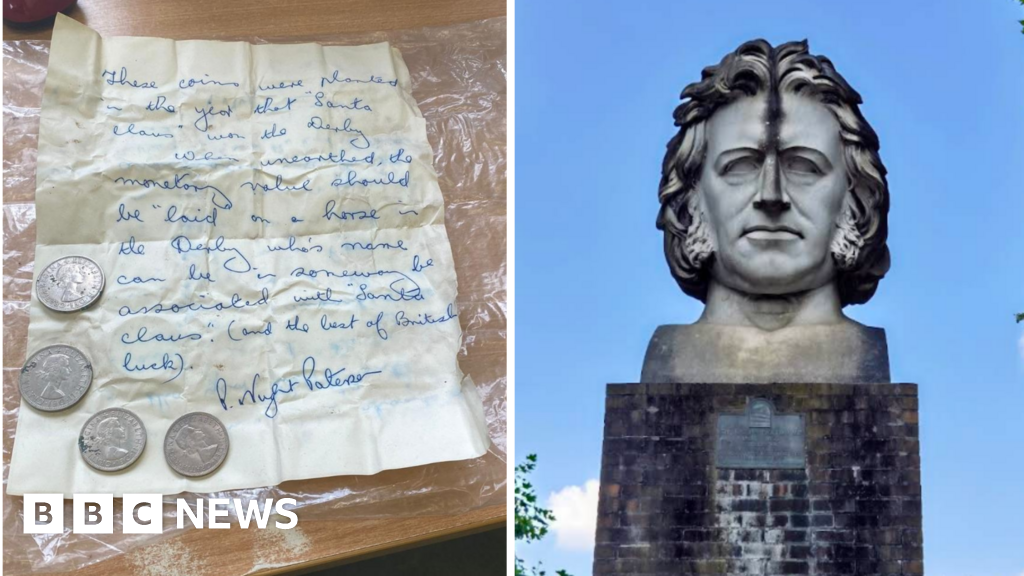
The find was not a formal time capsule—there were no stainless steel canisters or curated artifacts—but rather a raw, handwritten note left by an unknown individual six decades ago. The “spooky” nature of the message stems from its tone and the sheer coincidence of its discovery during a period of urban renewal, leaving the modern-day finders wondering about the identity of the author and the intentions behind the message.
The Moment of Discovery: From Grading Soil to Finding History
The event occurred during the early stages of a park revitalization project. Construction crews were engaged in standard excavation and grading, a process usually focused on drainage and foundation stability. However, as the machinery cleared a specific layer of sediment, a slight, protected pocket of debris revealed a piece of parchment that had miraculously survived the dampness of the earth for sixty years.
The worker who first spotted the item described a feeling of immediate curiosity. Unlike typical construction debris—such as old piping or discarded building materials—this object was clearly intentional. The note, though faded and stained by decades of soil exposure, remained legible enough to reveal its origin date: 1964.
Key Details of the Find
- Location: A public park construction site.
- Era: Mid-1960s (specifically 1964).
- Object: A handwritten note/message.
- Condition: Weathered but legible, preserved by specific soil conditions.
The immediate reaction on-site was one of bewilderment. In the fast-paced environment of modern contracting, encountering a personal relic from the mid-century is a rare occurrence that momentarily halts productivity, replacing the sound of heavy machinery with the hushed tones of speculation.
Decoding the ‘Spooky’ Element: What Made the Message Eerie?
When the news broke that a Park builder finds ‘spooky’ message from 1964 – BBC, many readers questioned what exactly made the note “spooky.” In the context of historical finds, “spooky” rarely refers to the supernatural, but rather to a sense of anachronistic intimacy—the feeling of a dead or distant person speaking directly to you from the void of time.
The message contained reflections on the future and perhaps a warning or a poignant observation about the state of the world in 1964. The eerie quality comes from the realization that the author knew they would not be present when the note was found. They were writing to a stranger, projecting their thoughts into a future they would never see, and that projection landed precisely in the hands of a worker in the 21st century.
“There is something inherently haunting about a message left in the ground. We see a bridge between two lives that can never meet, created by someone who accepted their own disappearance from the physical landscape.”
The Psychological Impact of Time-Delayed Communication
Psychologists suggest that these types of discoveries trigger a phenomenon known as “chronesthesia,” or mental time travel. When we read a note from 1964, we are forced to reconcile the world as it was—a world of different social norms, geopolitical tensions, and technological limitations—with our current reality. The “spookiness” is the friction between these two eras.
1964: The World That Left the Message
To understand the weight of this discovery, one must look at the global and local atmosphere of 1964. The mid-sixties were a hinge point in human history, characterized by a volatile mix of optimism and existential dread.
In 1964, the world was deeply entrenched in the Cold War. The threat of nuclear annihilation was a constant background noise in daily life, which often drove people to create “records” of their existence, fearing that the future might be precarious. Simultaneously, it was the era of the “British Invasion,” the rise of the Civil Rights Movement in the United States, and a burgeoning youth culture that questioned every established authority.
| Aspect of 1964 | Global Context | Potential Influence on the Note |
|---|---|---|
| Geopolitics | Cold War / Space Race | Anxiety about the long-term survival of humanity. |
| Culture | The Beatles / Mod Culture | A desire to be “remembered” as part of a revolutionary era. |
| Urbanism | Post-war reconstruction | Awareness that the landscape was changing rapidly. |
If the author of the note was reflecting on their surroundings, they were likely witnessing a world on the brink of a social explosion. This context adds a layer of depth to the “spooky” nature of the find; the note is not just a piece of paper, but a snapshot of a specific human psyche during a period of intense global transition.
Urban Archaeology: The Hidden Layers of Our Cities
The fact that a Park builder finds ‘spooky’ message from 1964 – BBC is a reminder that our cities are not static. They are palimpsests—surfaces that have been written on, erased, and rewritten many times over. Urban archaeology is the study of these layers, and while it often involves grand excavations of Roman ruins or Medieval foundations, it is frequently the “small finds” that provide the most human insight.
Construction workers are often the unofficial first responders of urban archaeology. Every time a trench is dug for a fiber-optic cable or a park is landscaped, there is a possibility of uncovering “domestic archaeology.”
Common ‘Accidental’ Finds in Urban Construction
- Discarded Personal Items: Old wallets, jewelry, or toys that provide clues about the previous inhabitants of a site.
- Informal Time Capsules: Notes, newspapers, or coins tucked into wall cavities or buried in gardens.
- Industrial Relics: Tools and machinery from defunct trades that reveal the economic history of the neighborhood.
- Architectural Fragments: Pieces of ornate molding or brickwork from demolished buildings that showcase past aesthetic values.
These discoveries serve as a vital link to the local identity of a place. When a park builder finds a note, they are not just finding trash; they are finding a primary source document that tells a story about who used that land and what they felt while doing so.
The Human Impulse to Leave a Mark
Why did someone in 1964 decide to bury a message? This action taps into a fundamental human instinct: the fear of oblivion. By leaving a physical mark in the earth, the author attempted to achieve a form of immortality. They ensured that, regardless of where their life led, some part of their consciousness would persist in a physical location.
This impulse is seen across history, from the cave paintings of Lascaux to the Voyager Golden Record launched into deep space. The scale differs, but the intent is identical: “I was here. This is what I thought. Do not forget me.”
Comparing the 1964 Note to Formal Time Capsules
There is a significant difference between a government-sanctioned time capsule and the “spooky” note found by the park builder. Formal capsules are curated; they contain items that the creators *want* the future to see. They are propaganda for the present.
In contrast, an informal, buried note is often more honest. It is an intimate, unpolished communication. It doesn’t seek to represent a nation or a city; it seeks to represent a person. This authenticity is what makes the discovery so compelling to the public and why stories like the one where a Park builder finds ‘spooky’ message from 1964 – BBC resonate so deeply.
Implications for Future Urban Development
This discovery raises interesting questions about how we handle the “accidental” history found during modern construction. In many jurisdictions, there are strict protocols for when an archaeological find is made, but these usually apply to items of significant antiquity (e.g., prehistoric or ancient). Modern “trash” or personal notes often fall through the cracks of legal protection.
However, there is a growing movement toward “community archaeology,” where developers work with local historians to document these small, personal finds. Rather than discarding a note from 1964, some cities are now incorporating these finds into the design of the new parks or buildings, creating “history walls” or digital archives that preserve the spirit of the land.
For those interested in how modern cities preserve their heritage, you might find a related explainer on urban preservation strategies useful for understanding the balance between progress, and memory.
Common Misconceptions About Historical Finds
When stories of “spooky” messages surface, the public often jumps to several common, yet incorrect, conclusions. It is important to clarify these points to maintain a factual understanding of the event.
1. The “Prophecy” Fallacy
Many people assume that if a message is called “spooky,” it must have predicted a future event with supernatural accuracy. In reality, most “prophetic” notes are examples of confirmation bias. We read a vague statement from 1964 and project our current knowledge onto it, making it seem like the author “knew” what was coming.
2. The “Hidden Treasure” Myth
There is often a belief that a single note is a clue to a larger buried treasure. While some historical caches exist, most informal notes are standalone acts of expression. The “treasure” in this case is the historical and emotional insight, not gold or jewels.
3. The “Perfect Preservation” Assumption
People often wonder how paper can survive for 60 years underground. It is not magic, but chemistry. Depending on the soil pH, the lack of oxygen (anaerobic conditions), and the presence of certain minerals, organic materials can be preserved far longer than they would be in an open-air environment. This is the same principle that preserves “bog bodies” in Northern Europe.
Frequently Asked Questions
What exactly was the ‘spooky’ message found by the park builder?
While the exact wording can vary in reports, the message is characterized as a personal reflection from 1964. Its “spooky” nature comes from the eerie feeling of receiving a direct communication from someone who lived and thought in a completely different era, creating a haunting sense of connection across time.
How did the note survive in the ground since 1964?
The preservation of the note was likely due to the specific environmental conditions of the soil. If the note was buried in a way that limited exposure to oxygen and moisture—or if the soil chemistry inhibited the growth of bacteria and fungi—the paper could remain intact for decades.
Is it common for construction workers to find time capsules?
While formal time capsules are rare, “informal” finds—such as notes, old bottles, or coins—are relatively common in older urban areas. These are often referred to as “domestic archaeology” and provide valuable insights into the daily lives of previous generations.
Why is this story trending under the ‘BBC’ keyword?
The story gained significant traction due to the human-interest angle and the universal appeal of mystery. The framing of the discovery as “spooky” makes it a compelling narrative that transcends local news, appealing to a global audience’s curiosity about the past.
What happens to the note now that it has been found?
Depending on the site’s ownership, such items are often handed over to local museums, historical societies, or kept by the finders as a curiosity. In some cases, they are archived digitally to ensure the message is preserved for future generations.
The Legacy of the Unseen
The story of the park builder and the message from 1964 serves as a poignant reminder that we are all, in a sense, leaving messages for the future. Every building we construct, every tree we plant, and every object we discard becomes a layer in the geological record of our civilization.
The “spookiness” of the find is ultimately a reflection of our own mortality. It reminds us that one day, the world we inhabit will be the “distant past” to someone else. The worker who found the note was not just clearing land for a park; they were momentarily stepping into the shoes of a ghost, proving that while people pass away, their thoughts—captured on a simple piece of paper—can endure, waiting for the right moment to be heard once again.
As urban development continues to reshape our landscapes, we can expect more of these echoes to surface. Each one is a reminder to consider what we are leaving behind and how we wish to be remembered by those who will eventually build upon the ground we walk today. For more insights into how the past influences the present, explore our guide to historical urban mapping.
