The Closest to Perfection: 10 Years Since Djokovic Held All Four Major Titles – ATP Tour
In the relentless pursuit of sporting immortality, few milestones carry as much weight as the simultaneous possession of all four Grand Slam trophies. For a professional tennis player, Here’s the ultimate litmus test of versatility, endurance, and mental fortitude. As we mark a decade since Novak Djokovic achieved this rare feat, the tennis world continues to analyze the magnitude of that accomplishment and what it means to be “the closest to perfection” in the modern era of the ATP Tour.
Holding all four major titles at once—the Australian Open, Roland Garros, Wimbledon, and the US Open—is a distinct achievement from the coveted Calendar Year Grand Slam. While the latter requires winning all four in a single calendar year, the former, often referred to as a “non-calendar year Grand Slam,” proves that a player is the undisputed king of every surface and every condition over a sustained period. For Djokovic, this period of dominance was not merely about the trophies, but about the total mastery of the game’s diverse demands.
Defining the “Hold”: The Rarity of Simultaneous Major Titles
To understand why the milestone of 10 years since Djokovic held all four major titles is so significant, one must first understand the sheer difficulty of the task. Tennis is unique among major sports because of its surface variance. The sliding, grueling baselines of the red clay in Paris require a completely different physical and tactical approach than the lightning-fast grass of London or the high-bounce hard courts of Melbourne and New York.
Most legendary players have a “preferred” surface. Some are maestros of clay; others are untouchable on grass. To hold all four titles simultaneously means the player has effectively eliminated any weakness. It signifies a period where no opponent, regardless of their specialty or the venue, could find a tactical edge.
“To hold all four majors at once is to tell the world that you are the best player in the world, regardless of where the match is played or who is across the net.”
The Distinction Between the Calendar Slam and the Non-Calendar Slam
There is often a debate among fans and historians regarding the prestige of these two achievements. The Calendar Year Grand Slam is the “Holy Grail,” a feat of perfect timing and health over twelve months. However, the “hold” is an exhibition of sustained dominance. It suggests that for a window of time, the player was an impenetrable wall across the entire global circuit.
| Achievement | Requirement | Primary Significance |
|---|---|---|
| Calendar Year Grand Slam | Win all 4 majors in one calendar year | Perfect timing and peak performance in a single season |
| Non-Calendar Year Grand Slam | Hold all 4 major trophies simultaneously | Absolute mastery across all surfaces over a sustained period |
| Career Grand Slam | Win all 4 majors at least once in a career | Versatility and longevity over a professional lifetime |
The Path to Perfection: Mastery Across Surfaces
The journey to holding all four major titles requires a player to evolve their game in real-time. When reflecting on the decade since this achievement, it becomes clear that Djokovic’s success was built on a foundation of tactical flexibility and an unprecedented level of physical conditioning.

The Hard Court Foundation
The hard courts of the Australian Open and the US Open are where the game’s baseline aggression and movement are most scrutinized. For Djokovic, these tournaments provided the platform to showcase his defensive capabilities—turning a defensive position into an offensive strike with a single shot. His ability to absorb pace and redirect it with precision made him nearly unbeatable on these surfaces.
The Clay Court Conquest
Roland Garros is historically the most challenging hurdle for non-specialists. The slow surface rewards patience and heavy topspin. Achieving the “hold” required Djokovic to outlast the most grueling rallies in the sport, utilizing a level of fitness that allowed him to maintain high intensity for five sets in the Parisian heat. His victory on clay was the final piece of the puzzle that cemented his status as a complete player.
The Grass Court Precision
Wimbledon demands a different set of skills: shorter points, lower bounces, and a premium on serve and volley. Djokovic’s transition to grass demonstrated his intellectual approach to the game. By combining his baseline stability with an improved serve and aggressive net play, he neutralized the advantages of traditional grass-court specialists.
The Psychological Architecture of Dominance
Beyond the physical and tactical elements, the ability to hold all four majors is a psychological triumph. The pressure of being the “man to beat” in every single tournament is immense. When a player holds all four titles, every opponent enters the court with the mindset that they are playing the definitive best version of the sport.
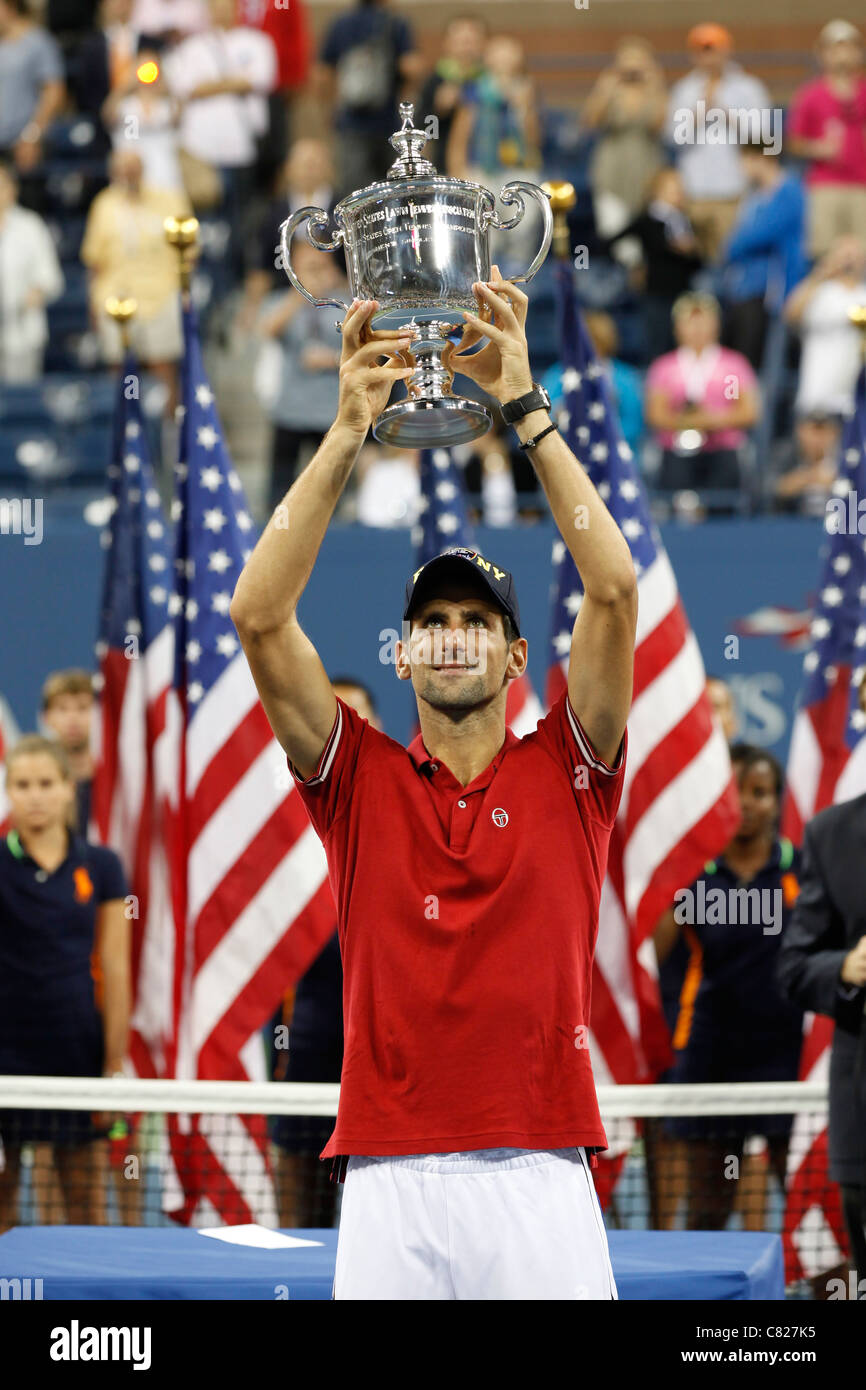
- Mental Resilience: The capacity to handle the “weight of the crown” without succumbing to complacency.
- Adaptability: The willingness to change strategies mid-match to solve the puzzle presented by an opponent.
- Emotional Control: Maintaining focus during high-stakes moments, often referred to as “clutch” performance.
This mental edge is what separated Djokovic from other greats. While others might have peaked for one or two tournaments, the “hold” requires a player to stay at a peak for nearly a year of high-pressure competition. This proves a test of nerves as much as it is a test of tennis.
Impact on the ATP Tour and the GOAT Debate
The legacy of holding all four major titles has fundamentally shifted the “Greatest of All Time” (GOAT) conversation. For decades, the metrics of greatness were based on total titles or weeks at number one. However, the “closest to perfection” narrative emphasizes the quality and variety of those wins.
By achieving this milestone, Djokovic challenged the notion that a player must be a specialist in one area to dominate. He proved that a holistic approach—focusing on health, nutrition, and mental wellness—could lead to a level of consistency that was previously thought impossible in the modern, high-velocity era of tennis.
The Ripple Effect on the New Generation
The influence of this achievement is visible in the current generation of ATP players. We now see a trend where young athletes are less likely to specialize in one surface and more likely to pursue a balanced game. The blueprint for success has shifted from “dominating a surface” to “dominating the circuit.”
Related explainer on the evolution of tennis training methods suggests that the modern approach to recovery and sports science is a direct response to the demands seen during Djokovic’s peak years.
Common Misconceptions About the “Perfect” Season
When discussing the 10 years since Djokovic held all four major titles, several misconceptions often arise among casual observers. Clarifying these helps provide a more accurate picture of the achievement.
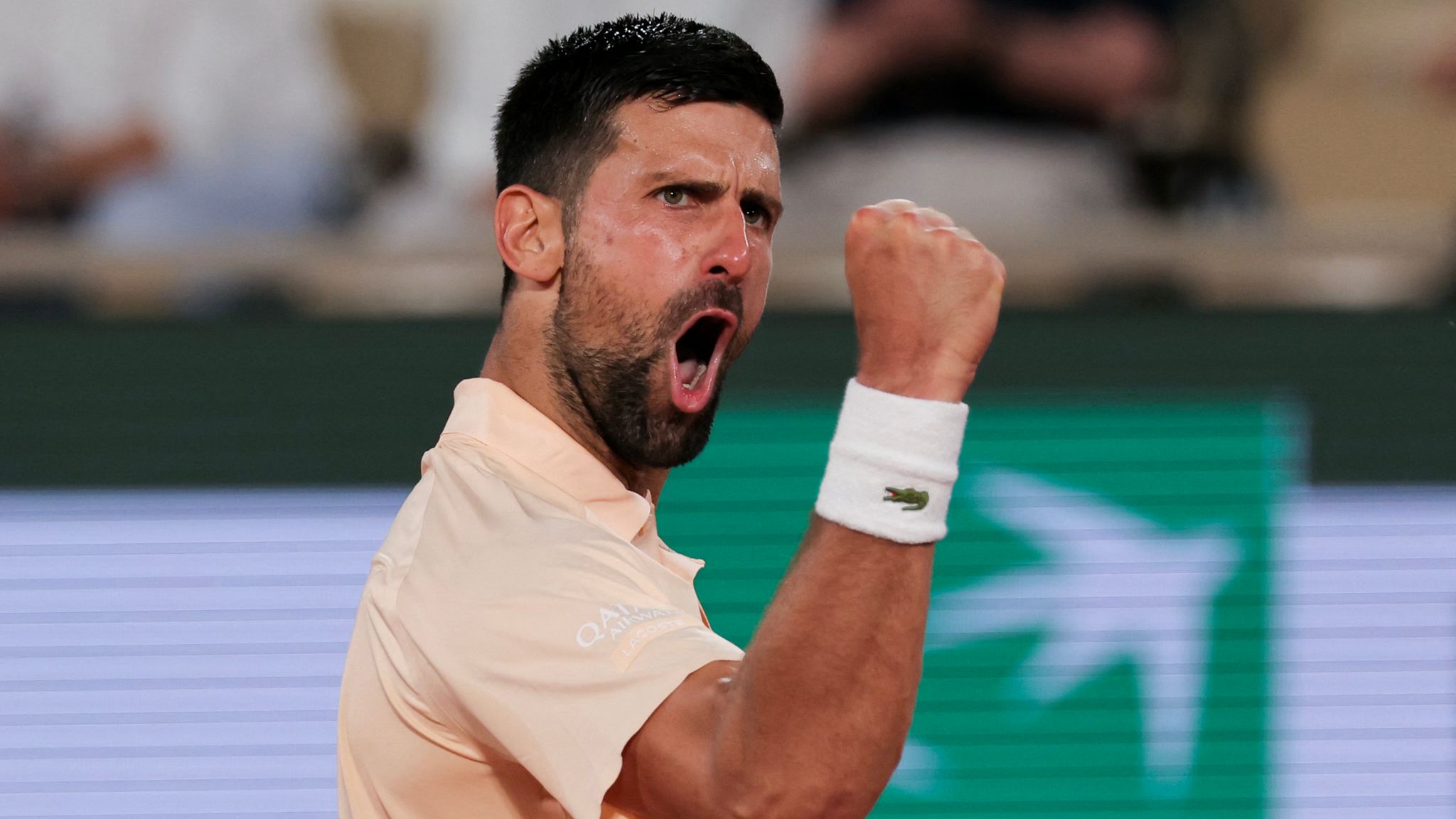
Misconception 1: “It’s the same as a Calendar Slam.”
As previously noted, it is not. A Calendar Slam is a specific temporal achievement. Holding all four is a state of being. While the Calendar Slam is rarer, the “hold” is a more direct representation of a player’s current standing as the absolute best across all terrains.
Misconception 2: “Luck plays a major role in the draw.”
While every tournament has a draw, holding all four titles simultaneously requires winning 28 consecutive high-stakes matches across four different cities and three different surfaces. The statistical probability of “luck” carrying a player through that many rounds against top-tier opposition is virtually zero.
Misconception 3: “Surface specialization is still the key to success.”
The “closest to perfection” era proved that versatility is the ultimate weapon. While specialists still exist, the path to the top of the ATP rankings now requires proficiency on all surfaces.
Key Takeaways from a Decade of Excellence
Looking back at this milestone, several core lessons emerge for athletes and sports enthusiasts alike:
- Consistency is the highest form of skill: Winning one major is a feat; holding four is a system of excellence.
- Physicality is the foundation: Without elite conditioning, the transition between clay, grass, and hard courts would be physically impossible.
- Mental fortitude is the multiplier: Tactical skill is neutralized if the player cannot handle the pressure of expectations.
The significance of this achievement does not fade with time; rather, it grows as new players attempt to replicate it. It remains a benchmark for what is possible when talent, discipline, and mental strength align perfectly.
Frequently Asked Questions
What does it mean to “hold all four major titles”?
It means that a player has won the Australian Open, Roland Garros, Wimbledon, and the US Open, and has not lost any of those titles since winning them. Essentially, they are the reigning champion of every Grand Slam tournament at the same time.
How is this different from a Career Grand Slam?
A Career Grand Slam means a player has won each of the four majors at least once at any point in their professional life. Holding all four simultaneously is much harder because it requires winning them in a short window of time without losing any of them in the interim.
Who else has achieved this in tennis history?
Very few players have managed to hold all four majors at once. It is a feat reserved for the absolute elite of the sport, and doing so in the modern era—where the gap between the top 10 players is smaller than ever—is significantly more difficult than in previous decades.
Why is this achievement called “the closest to perfection”?
Because it represents the total conquest of the sport. Since tennis is played on different surfaces that require different skills, winning all four simultaneously proves there are no weaknesses in the player’s game, making their performance “perfect” in terms of versatility.
Does this achievement guarantee a player is the GOAT?
While it is one of the strongest arguments in the GOAT debate, other factors such as total Major count, total weeks at Number 1, and head-to-head records are also considered. However, the “hold” is widely regarded as the ultimate proof of peak dominance.
The legacy of the decade since Novak Djokovic held all four major titles serves as a reminder that perfection in sports is not about a single moment of brilliance, but about the relentless pursuit of excellence across every possible challenge the game can offer.
