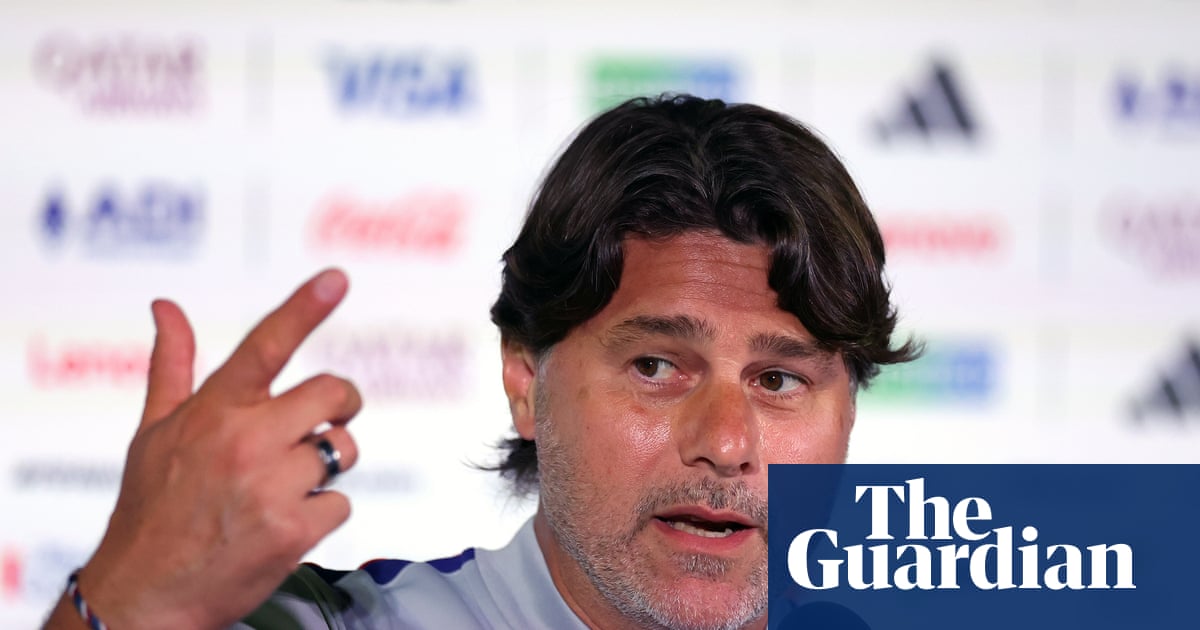
Pochettino preaches relaxation as USMNT’s 2026 World Cup debut looms – The Guardian
USMNT head coach Mauricio Pochettino is prioritizing mental relaxation and individual accountability over motivational rhetoric as the United States prepares to host the 2026 World Cup. According to reports from The Guardian and The New York Times, Pochettino intends to skip traditional pre-game speeches, asserting that players must arrive at the pitch internally prepared to compete.
Why is Mauricio Pochettino skipping pre-game speeches for the USMNT?
Mauricio Pochettino believes that the era of motivational talking is over for the United States Men’s National Team. In a statement reported by ESPN, the manager indicated that the time for speeches has passed, shifting the burden of motivation from the coaching staff to the players themselves. This approach marks a departure from the high-energy, oratorical style often associated with tournament football.
The philosophy centers on the idea that professional athletes at the highest level should possess an innate drive that does not require external prompting. According to The New York Times, Pochettino was blunt about this expectation, stating, “If you’re not ready, I’m sorry.” This suggests a culture of accountability where readiness is a prerequisite for selection rather than something manufactured through a locker-room address.
By removing the “speech” element, Pochettino aims to achieve several tactical and psychological goals:
- Reducing Anxiety: By preaching relaxation, he seeks to lower the cortisol levels of players facing the immense pressure of a home World Cup.
- Promoting Ownership: Forcing players to find their own mental gear encourages a more mature, self-reliant squad.
- Focusing on Execution: Shifting the focus from emotion to tactical discipline ensures that players are thinking about their roles rather than the magnitude of the event.
“If you’re not ready, I’m sorry.” — Mauricio Pochettino, via The New York Times.
Does the USMNT have the potential to be a 2026 World Cup contender?
While the global football community largely overlooks the United States as a serious threat to win the tournament, Mauricio Pochettino is challenging that narrative. The Guardian reports that Pochettino acknowledges the lack of external respect for the USMNT but explicitly asks, “Why not?” regarding their potential as contenders.
Pochettino’s perspective suggests that the gap between the “elite” and the “aspirants” is narrower than perceived. His goal is to instill a belief system where the USMNT does not just aim to participate or reach the knockout stages, but competes to win. This shift in ambition is critical for a team that has historically struggled to break through the quarter-final ceiling.

The argument for the USMNT as a contender rests on several factors cited in the context of Pochettino’s appointment:
- Home Field Advantage: Hosting the 2026 tournament provides an unprecedented logistical and emotional boost.
- Player Pool: An increasing number of US players are starting in top-tier European leagues, bringing a level of tactical sophistication previously lacking.
- Elite Coaching: Pochettino brings experience from the highest levels of the Premier League and Ligue 1, providing the tactical rigor necessary to compete with world powers.
However, the transition from “participant” to “contender” requires a psychological leap. Pochettino is attempting to bridge this gap by replacing nervousness with a calm, professional confidence.
What does Pochettino mean by “confusion” in American soccer culture?
Mauricio Pochettino has identified a distinct psychological difference between the United States and traditional footballing powerhouses. Speaking to EL PAÍS English, Pochettino noted a sense of “confusion” within the United States’ approach to the sport, contrasting it with the established identities of other nations.
According to Pochettino, nations like Spain, Argentina, and England possess a certain “arrogance”—which in this context refers to a deep-rooted, historical confidence in their style of play and their right to win. These countries do not question their status as footballing giants; they operate with a predetermined expectation of success.
In contrast, the “confusion” in the US stems from a lack of a defined footballing identity. The USMNT often fluctuates between trying to emulate European styles and relying on raw athleticism, without a cohesive cultural philosophy that anchors the team. This lack of identity can lead to instability under pressure, as players may lack a clear mental framework to fall back on when a match becomes chaotic.
To resolve this, Pochettino is not trying to manufacture a fake “arrogance” but is instead working to clear the confusion by establishing a clear, professional standard of play and a relaxed mental state.
How does the US footballing mentality compare to Spain, Argentina, and England?
The contrast in mentalities is a central theme in Pochettino’s current project. While the US focuses on growth and potential, the legacy powers focus on maintenance and dominance. Based on Pochettino’s comments to EL PAÍS English, the following table outlines the perceived psychological differences:
| Nation/Region | Psychological Driver | Pochettino’s Characterization | Impact on Pitch |
|---|---|---|---|
| Spain / Argentina / England | Historical Legacy | “Arrogance” (Confidence) | Expectation of dominance; composure in high-stakes moments. |
| United States | Emerging Growth | “Confusion” | Inconsistent identity; susceptibility to pressure. |
Pochettino’s strategy is to move the USMNT away from the “confusion” column without forcing a persona that doesn’t fit the American context. He accepts the confidence of the legacy powers as a benchmark but believes the US must find its own version of that certainty—one rooted in preparation and relaxation rather than historical entitlement.
How is Pochettino preparing the squad for the pressure of hosting the 2026 World Cup?
The pressure of being the host nation can either propel a team to success or cause a total collapse. Pochettino’s insistence on “relaxation” is a direct response to the looming weight of the 2026 tournament. By removing the theatrical elements of coaching—such as the pre-game speech—he is attempting to normalize the environment.
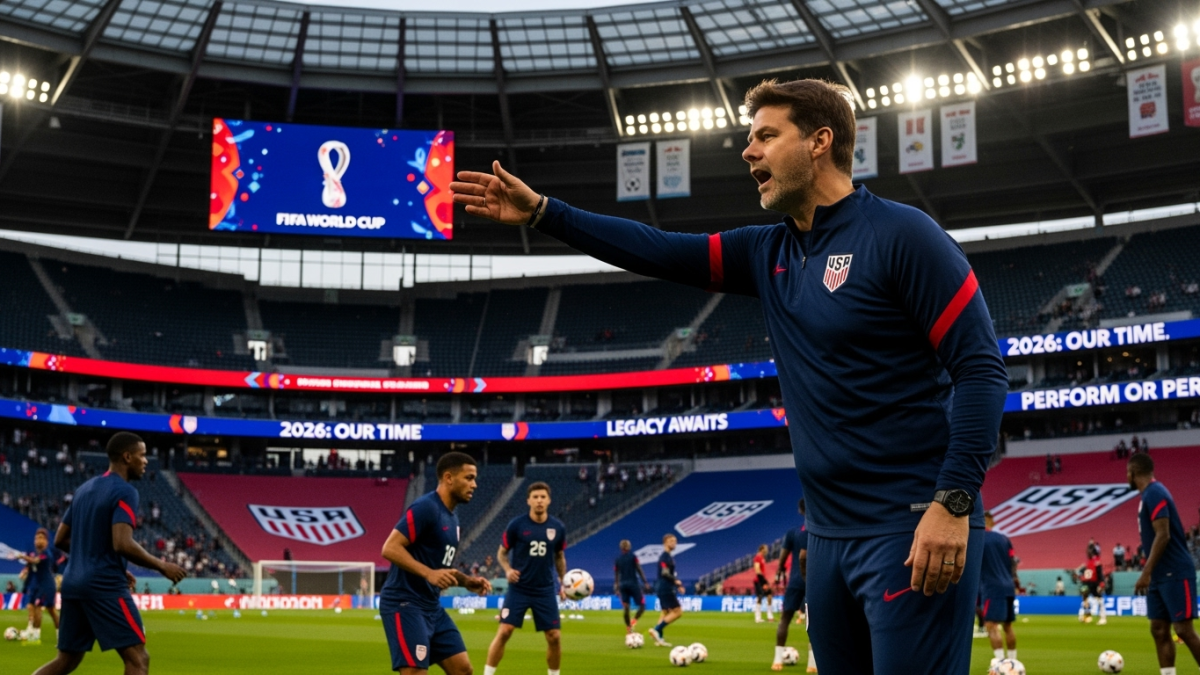
The preparation strategy involves several key pillars:
The Professionalization of Motivation
By telling players that the time for speeches is over, Pochettino is treating the USMNT like a veteran elite squad. This removes the “event” feel of the World Cup and reframes it as a professional assignment. When the game is treated as “just another day at the office,” the paralyzing effects of pressure are diminished.
Tactical Clarity over Emotional Hype
Emotional hype can lead to erratic play and tactical errors. Pochettino is shifting the focus toward concrete tactical instructions. If a player knows exactly where they need to be and what their trigger is for a press or a pass, they are less likely to be overwhelmed by the crowd or the occasion.
The “Contender” Mindset
Pochettino is actively fighting the “underdog” narrative. While being an underdog can sometimes be a motivational tool, it also reinforces the idea that the team is inferior to the opposition. By asking “why not?” in response to the US’s status as a non-contender, he is planting the seed that the USMNT belongs among the elite.
For more on the tactical shifts in international football, see a related explainer on modern high-pressing systems.
Common misconceptions about the USMNT’s road to 2026
There are several prevailing myths regarding the current state of the USMNT and Pochettino’s influence that require clarification based on the reported facts.
Misconception 1: Pochettino is being “cold” or “unsupportive” by skipping speeches.
Contrary to the idea that a lack of speeches equals a lack of support, this is a calculated psychological move. According to the reporting in The New York Times and ESPN, this is about fostering autonomy. High-performance environments often shift away from “cheerleading” toward “empowerment,” where the player is trusted to manage their own mental state.
Misconception 2: The USMNT is already viewed as a dark horse by the world.
The Guardian clarifies that “no one sees the USA as a contender.” The gap between the domestic perception of the team’s potential and the global perception is vast. Pochettino is the first high-profile manager to publicly challenge this global indifference.
Misconception 3: The “confusion” Pochettino mentioned is about the rules or tactics.
The “confusion” cited in EL PAÍS English is cultural and psychological, not technical. It refers to the lack of a national footballing identity—a “way of playing” that is instinctively understood by every player in the country, similar to the Tiki-Taka of Spain or the Samba style of Brazil.
Frequently Asked Questions
Why does Mauricio Pochettino believe relaxation is key for the USMNT?
Pochettino believes that excessive tension and emotional hype can hinder performance. By preaching relaxation, he aims to reduce the anxiety associated with hosting the 2026 World Cup, allowing players to execute their tactical roles with more composure and clarity.
What did Pochettino say about the USMNT’s chances in the World Cup?
According to The Guardian, Pochettino noted that while the rest of the world does not currently view the United States as a contender, he believes they should be. He challenged this perception by asking “why not?”, signaling a more ambitious goal for the team than simply advancing in the tournament.
How does Pochettino’s approach to motivation differ from other coaches?
Unlike coaches who rely on emotional pre-game speeches to fire up their players, Pochettino has stated that the “time for speeches is over.” As reported by ESPN and The New York Times, he expects players to be internally motivated and ready to play without needing external emotional prompts.
What is the “confusion” Pochettino mentioned regarding American soccer?
In an interview with EL PAÍS English, Pochettino contrasted the “arrogance” (deep confidence) of nations like England, Spain, and Argentina with a sense of “confusion” in the U.S. This refers to the lack of a defined, culturally ingrained footballing identity that provides players with a sense of certainty and belonging on the world stage.
Will Pochettino use a different strategy for the actual 2026 opener?
While specific game-day plans are private, his current trajectory suggests a move away from theatrical motivation. His stated philosophy is that if a player is not mentally prepared for the opener, a speech will not fix the problem, as evidenced by his comment, “If you’re not ready, I’m sorry.”
