
The Sentinel of the Atmosphere: How Mauna Loa Observatory Survives Lava, Budget Cuts And Politics
Perched at 3,400 meters above sea level on the flanks of one of the world’s largest active volcanoes, the Mauna Loa Observatory (MLO) serves as the planet’s primary stethoscope, listening to the rhythmic breathing of the Earth’s atmosphere. For decades, this remote outpost has provided the definitive record of atmospheric carbon dioxide (CO2), creating the legendary “Keeling Curve” that fundamentally altered our understanding of global warming. However, the facility’s existence has never been guaranteed. The narrative of how the Mauna Loa Observatory survives lava, budget cuts and politics is not just a story of scientific endurance, but a reflection of the precarious nature of climate research in an era of volatility.
The observatory does not merely collect data; it provides the baseline for the entire field of climate science. Because of its isolation and altitude, the air at Mauna Loa is remarkably well-mixed, representing the average composition of the Northern Hemisphere’s atmosphere rather than local pollution. This makes any disruption—whether from a molten river of basalt or a legislative pen in Washington D.C.—a potential catastrophe for global environmental monitoring.
The Geological Gauntlet: Facing the Fire
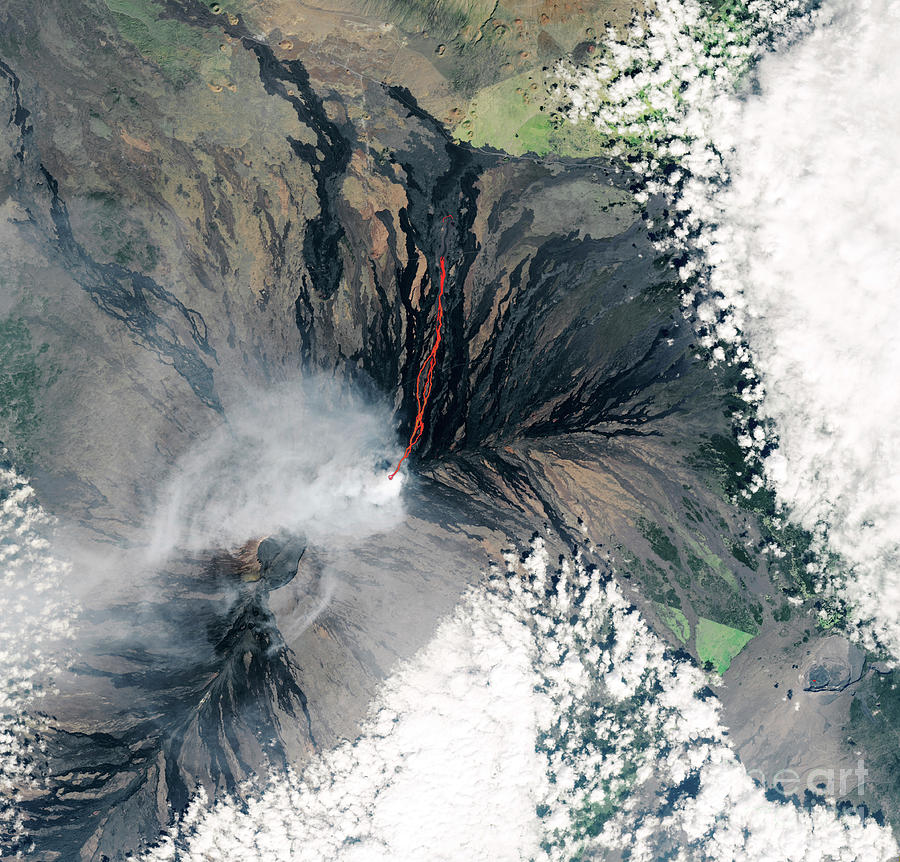
The most visceral threat to the observatory is the extremely mountain upon which it sits. Mauna Loa is a shield volcano, characterized by broad, gentle slopes and frequent, fluid lava flows. For years, the facility operated in a state of relative geological peace, but the eruption of 2022 served as a stark reminder that nature does not respect scientific milestones.
During the late 2022 eruption, lava flows advanced toward the observatory’s infrastructure. While the primary monitoring equipment remained intact, the event created an immediate logistical crisis. The roads providing access to the site were threatened, and the risk of volcanic gases contaminating the pristine air samples became a primary concern. For a facility dedicated to measuring parts-per-million of CO2, the sudden injection of volcanic carbon into the local atmosphere creates “noise” that can obscure the global signal.
The challenge of operating on an active volcano is a constant trade-off: the same isolation that makes the site scientifically perfect also makes it physically vulnerable.
To survive these events, the National Oceanic and Atmospheric Administration (NOAA) and the Scripps Institution of Oceanography have had to implement rigorous contingency plans. These include the ability to rapidly shift operations or use sophisticated filtering and data-correction algorithms to strip away the “volcanic signature” from the global atmospheric data. The 2022 event highlighted a critical vulnerability: the observatory is a single point of failure for certain types of high-precision baseline data.
The Logistics of Volcanic Resilience
- Infrastructure Hardening: Constant monitoring of lava flow trajectories to protect critical sensor arrays.
- Data Redundancy: Ensuring that data is transmitted in real-time to off-site servers so that a physical loss of the facility doesn’t mean a loss of the record.
- Alternative Site Identification: The ongoing search for “backup” locations that can mirror the atmospheric purity of Mauna Loa.
The Financial Tightrope: Navigating Budgetary Instability
While lava is a sudden, dramatic threat, budget cuts are a gradual, eroding force. The Mauna Loa Observatory relies heavily on federal funding, making it susceptible to the shifting priorities of the U.S. Government. In the realm of public spending, climate monitoring is often viewed as a “maintenance” cost rather than an “innovation” cost, which makes it a target during periods of austerity.
Budgetary constraints manifest in several ways: the inability to upgrade aging sensors, the reduction of on-site staffing, and the delay of critical infrastructure repairs. When funding is slashed, the risk is not necessarily a total shutdown, but a gradual decline in data precision. In science, “good enough” is often the enemy of “accurate,” and for the Keeling Curve, where precision to the second decimal point is vital, any dip in funding is a dip in scientific integrity.
The struggle for funding is often an invisible battle. Unlike a volcanic eruption, there are no dramatic images of budget cuts, only the quiet frustration of scientists working with outdated hardware or the anxiety of contract workers facing uncertainty. The resilience of the observatory in the face of these cuts has often depended on the tenacity of the scientific community and the ability to frame the data as a matter of national security and economic stability.
| Threat Type | Immediate Impact | Long-term Risk | Mitigation Strategy |
|---|---|---|---|
| Geological (Lava) | Physical destruction of sensors | Permanent loss of the primary site | Real-time data mirroring & site hardening |
| Economic (Budget) | Deferred maintenance & staff cuts | Degradation of data precision | Diversified funding & legislative advocacy |
| Political | Policy shifts & funding volatility | Suppression or dismissal of data | International collaboration & transparency |
The Political Atmosphere: Science vs. Ideology
Perhaps the most complex challenge the observatory faces is the political climate. The data produced at Mauna Loa is not neutral in the eyes of policymakers; it is the primary evidence for the reality of human-induced climate change. The observatory has found itself at the center of a geopolitical tug-of-war.
Throughout different presidential administrations, the emphasis on climate data has fluctuated. There have been periods where the findings of the observatory were championed as a call to action and other periods where the same data was marginalized or viewed with skepticism. When political leadership shifts toward climate denialism, the institutions that house the data—such as NOAA—often face internal pressures to alter how information is presented or to limit the visibility of alarming trends.
The “politics” of Mauna Loa are not just about funding, but about the legitimacy of the science. The Keeling Curve is an inconvenient truth for industries reliant on fossil fuels. By providing an unbroken record of CO2 increase, the observatory removes the “natural cycle” argument from the conversation, proving that the current spike is anomalous and anthropogenic. This makes the facility a symbolic target in the broader culture war over environmental regulation.
The Tension Between Data and Policy
The friction typically arises in the gap between observation and application. The scientists at Mauna Loa are observers; they report what the air contains. However, the political fallout occurs when that data is used to justify carbon taxes, emissions limits, or international treaties like the Paris Agreement. This transforms a scientific outpost into a political lightning rod.
Why the Continuity of the Keeling Curve Matters
To understand why the survival of the Mauna Loa Observatory is so critical, one must understand the concept of “data continuity.” In climate science, a 10-year data set is a snapshot; a 60-year data set is a movie. The Keeling Curve, started by Charles David Keeling in 1958, is one of the longest-running continuous records of a single environmental variable in human history.
If a gap of even a few months occurs due to a volcanic eruption or a government shutdown, it creates a “blind spot.” While other observatories exist (such as those in the South Pole or the Arctic), Mauna Loa remains the gold standard because of its specific atmospheric characteristics. Losing this continuity would be akin to losing the first few chapters of a history book; we might know the ending, but we lose the nuance of how we got there.
The implications of this data extend beyond academia. Global markets, insurance companies, and urban planners use these atmospheric trends to project future risks. The stability of the observatory’s operations is, linked to the stability of global risk assessment.
Common Misconceptions About Mauna Loa’s Data
Because the observatory is located on a volcano, a frequent criticism from climate skeptics is that the CO2 readings are “contaminated” by the volcano’s own emissions. This is a fundamental misunderstanding of how the observatory operates.
The facility uses a sophisticated system of “scrubbing” and timing. Volcanic CO2 is released in bursts and is localized. The observatory monitors the wind direction and the chemical composition of the air; if a “spike” is detected that corresponds with local volcanic activity, that data is flagged and removed from the global average. The Keeling Curve represents the background atmosphere—the air that has traveled thousands of miles and mixed thoroughly—not the air coming directly out of a vent.
Another misconception is that the observatory is a “weather station.” In reality, it is a geochemical laboratory. It does not predict tomorrow’s rain; it tracks the chemical evolution of the planet’s atmosphere over decades.
The Global Network of Resilience
The survival of the Mauna Loa Observatory is increasingly dependent on a globalized network of cooperation. Recognizing that no single site is invincible, scientists have expanded the Global Atmosphere Watch (GAW) program. By coordinating with sites in Samoa, the Azores, and Antarctica, the scientific community is building a “fail-safe” system.
However, these other sites are not perfect substitutes. Mauna Loa’s position in the mid-Pacific, high above the inversion layer, provides a clarity that is difficult to replicate. The effort to keep the observatory running despite lava, budget cuts, and politics is an effort to maintain the highest possible resolution of our planetary health record.
The struggle to maintain the facility is a microcosm of the struggle to maintain climate science itself: a constant battle against physical hazards, financial instability, and ideological resistance. The fact that the observatory continues to operate is a testament to the belief that the truth of the atmosphere is more important than the volatility of the moment.
Frequently Asked Questions
What is the Keeling Curve?
The Keeling Curve is a graph that plots the ongoing change in concentration of carbon dioxide in Earth’s atmosphere since 1958. It provides the most definitive evidence that CO2 levels are rising steadily due to human activity.
How does the observatory handle volcanic CO2?
The observatory uses wind-direction sensors and chemical analysis to identify local volcanic emissions. When “local” CO2 is detected, those samples are excluded from the global baseline record to ensure accuracy.
Why can’t we just move the observatory?
Atmospheric monitoring requires a “baseline” location—a place far from cities and forests, at a high altitude where the air is well-mixed. Very few places on Earth meet these criteria as perfectly as the slopes of Mauna Loa.
Who funds the Mauna Loa Observatory?
The facility is primarily funded by the U.S. Federal government through the National Oceanic and Atmospheric Administration (NOAA), with significant scientific collaboration and support from the Scripps Institution of Oceanography.
What happens if the observatory is destroyed by lava?
While there are other global monitoring sites, the loss of Mauna Loa would create a significant gap in the most prestigious and longest-running data set in climate science, potentially complicating our ability to track precise atmospheric changes.
The ongoing operation of the Mauna Loa Observatory serves as a vital bridge between the raw physical reality of the Earth and the policy decisions of human civilization. As long as the sensors continue to hum and the data continues to flow, the world has a reliable mirror in which to view its own atmospheric impact. The resilience of this site is not merely a victory for the scientists who maintain it, but a necessity for a global society attempting to navigate an uncertain climatic future.
