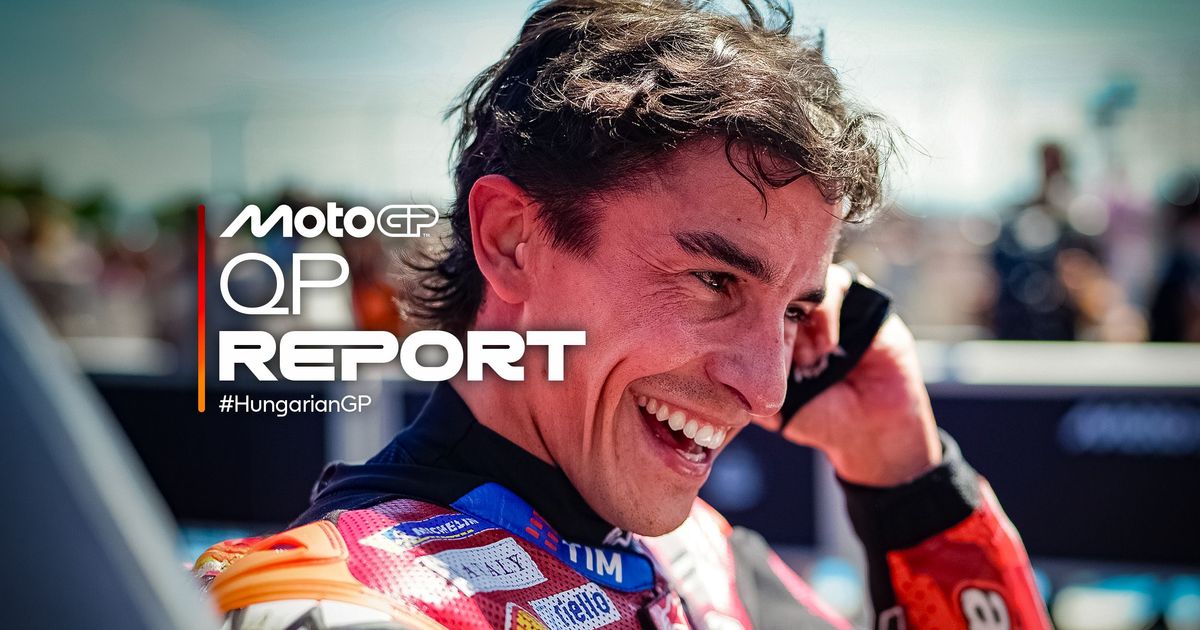
Marquez vs Acosta Decides Pole by Just 0.053 at Balaton – MotoGP Analysis
The tension at the Balaton Park circuit reached a fever pitch during the qualifying session for the 2026 Hungarian Grand Prix, culminating in one of the closest battles for pole position in recent memory. In a high-stakes showdown that pitted veteran experience against raw, youthful aggression, Marc Marquez managed to edge out Pedro Acosta by a razor-thin margin of just 0.053 seconds. This result not only sets the stage for a thrilling race but also underscores a shifting power dynamic within the MotoGP paddock.
For the spectators and analysts alike, the battle was more than just a fight for the fastest lap; it was a clash of philosophies. Marquez, operating with the calculated precision that has defined his career, faced a relentless challenge from Acosta, who continues to prove that he is the most formidable young talent to enter the premier class in a generation. As the checkered flag fell on qualifying, the timing screens revealed a gap so small it could be decided by a single missed apex or a fraction of a second’s hesitation on the brakes.
While the spotlight remained firmly on the duel for the top spot, the session also revealed significant vulnerabilities for other manufacturers. Most notably, the Aprilia contingent struggled to find the necessary rhythm at the Balaton circuit, leaving them adrift of the pace set by the leaders. This disparity in performance has raised immediate questions about the bike’s setup and its ability to handle the specific demands of the Hungarian layout.
The Anatomy of a Micro-Margin: How Marquez Secured Pole
In the world of elite motorcycle racing, a difference of 0.053 seconds is almost imperceptible to the naked eye, but it represents a massive divide in terms of technical execution. To understand how Marc Marquez secured the top spot, one must look at the nuances of his final flying lap. Marquez is renowned for his ability to find the absolute limit of grip, often sliding the bike into corners in a way that defies conventional physics.
At Balaton Park, the key to the pole was the management of the final sector. While Acosta showed superior speed in the high-speed sweeps, Marquez maximized his exit speed from the slower hairpins, ensuring that he carried more momentum onto the primary straights. This strategic approach allowed him to claw back the milliseconds he had surrendered to the younger rider earlier in the lap.
The psychological battle was equally intense. Knowing that Acosta was posting blistering times, Marquez had to balance the need for aggression with the risk of a low-side crash. His ability to maintain composure under the pressure of a ticking clock is a testament to his experience. By nailing the braking markers and optimizing his line, Marquez denied Acosta the top spot in a finish that felt like a photo-finish on two wheels.
“The difference between pole and second place at Balaton was essentially a heartbeat. When you are fighting someone like Pedro, you cannot afford a single mistake. 0.053 seconds is the distance between glory and the chasing pack.”
Key Factors in the Qualifying Duel
- Braking Efficiency: Marquez’s ability to delay braking into the tighter corners gave him a slight edge in lap time.
- Tire Management: The temperature at Balaton Park played a critical role; the riders who could keep the front tire from overheating in the final sector gained the most.
- The “Acosta Factor”: The sheer pace of Pedro Acosta forced Marquez to push beyond his comfortable limit, resulting in a faster overall time for both riders.
The Rise of Pedro Acosta: Challenging the Establishment
While Marquez took the headlines, the real story for many is the consistency and speed of Pedro Acosta. To be separated from a rider of Marquez’s caliber by only 0.053 seconds is a statement of intent. Acosta has transitioned from a “promising rookie” to a genuine title contender, bringing a riding style that is as daring as it is effective.
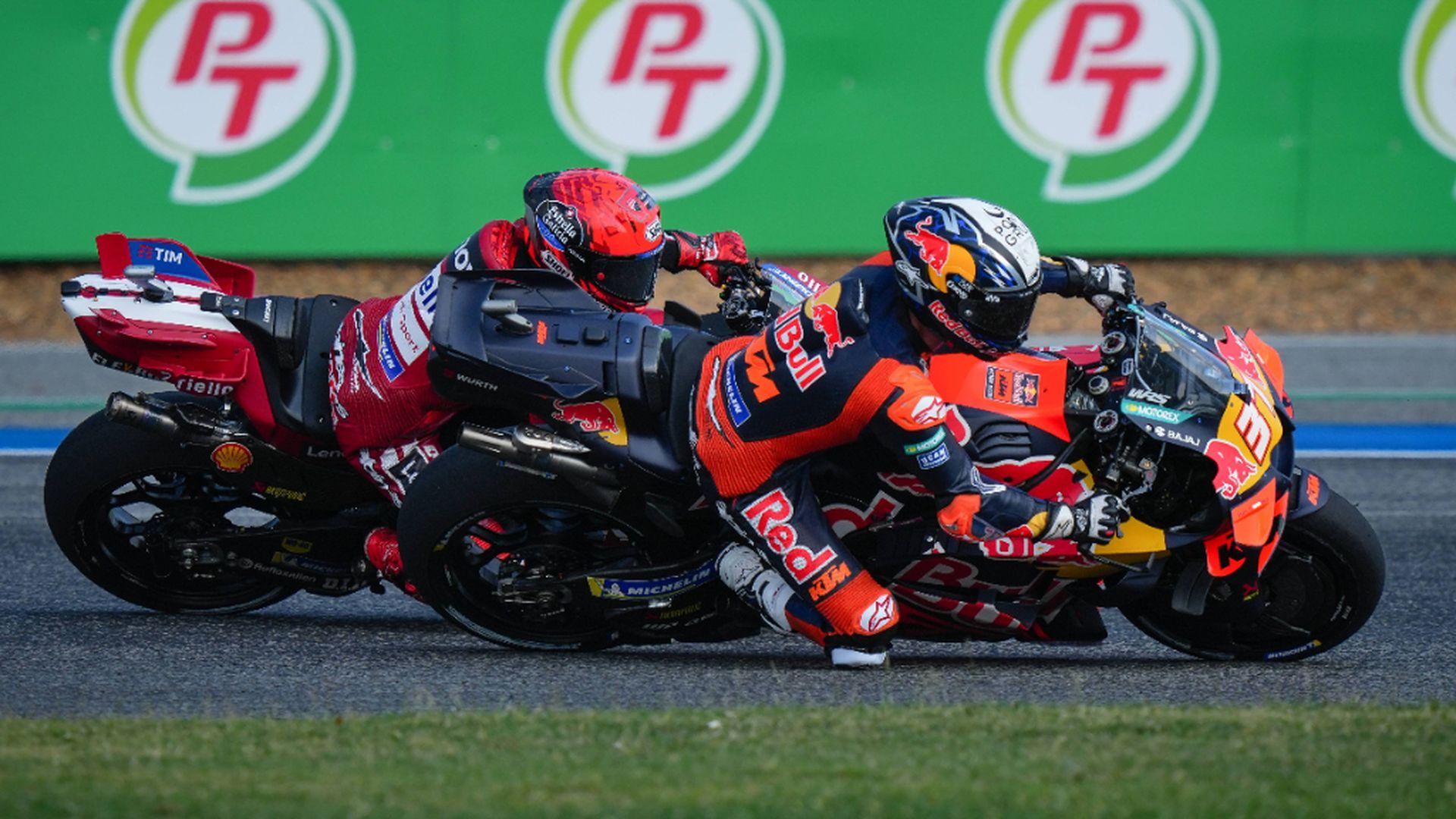
Throughout the qualifying session, Acosta appeared to be the faster rider in the middle sectors of the track. His fluidity through the transitions and his willingness to carry immense corner speed put the rest of the grid on notice. For Acosta, the narrow loss is likely a motivator rather than a disappointment. He has shown that he can go head-to-head with the greatest of all time and come within a fraction of a second of victory.
The rivalry between Marquez and Acosta is becoming the central narrative of the 2026 season. It is a classic “Master vs. Apprentice” dynamic, where the veteran is forced to evolve to keep up with the newcomer’s natural talent. This competition is pushing the limits of what is possible on current MotoGP machinery, as both riders are finding new ways to optimize their bikes for the unique demands of the Balaton Park circuit.
Aprilia’s Struggle: A Technical Puzzle at Balaton
While the battle for pole was a spectacle of speed, the performance of the Aprilia bikes was a source of frustration. Throughout the weekend, the Italian manufacturer struggled to find a balanced setup, with riders reporting issues with stability under hard braking and a lack of rear-end grip on the exit of the corners.
The struggle was evident in the qualifying results, where the Aprilias were unable to challenge the top three. This lack of pace was a surprise given the bike’s performance at other circuits this season. The Balaton Park layout, with its specific combination of technical sections and high-speed stretches, seems to have exposed a weakness in the current Aprilia chassis configuration.
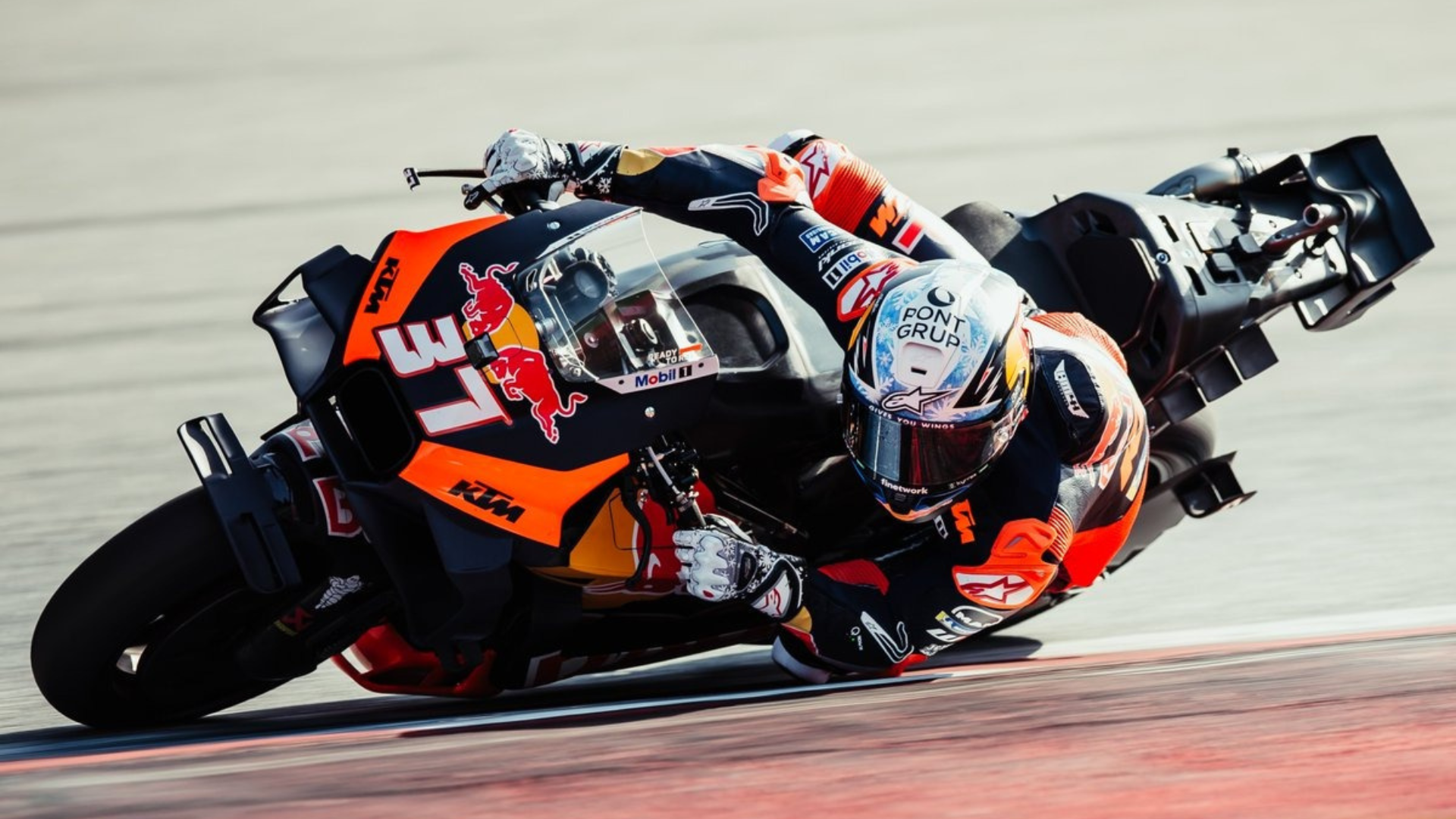
Fabio Di Giannantonio, reflecting on the situation, provided a cautionary perspective on the manufacturer’s struggle. He emphasized that while the qualifying results were disappointing, the paddock should not underestimate the team’s ability to recover. Di Giannantonio noted that Aprilia often finds a way to be competitive during the race, even when their qualifying pace suggests otherwise.
The sentiment among the Aprilia garage is one of focused determination. The engineers are working overtime to analyze the data and understand why the bike is reacting poorly to the Hungarian tarmac. Whether they can find a “magic” setup before the race remains to be seen, but their current position puts them at a significant tactical disadvantage for the start.
| Rider/Team | Qualifying Status | Key Challenge at Balaton |
|---|---|---|
| Marc Marquez | Pole Position | Managing tire degradation in final sector |
| Pedro Acosta | P2 (+0.053s) | Optimizing exit speed in slow corners |
| Aprilia Riders | Mid-Grid Struggle | Chassis stability and rear-grip issues |
Balaton Park: A New Challenge for the MotoGP Grid
The introduction of Balaton Park to the calendar has added a fresh layer of complexity to the 2026 season. As a relatively new addition, the track offers few historical benchmarks for the teams to rely on. Every rider is essentially learning the limits of the circuit in real-time, which increases the importance of raw adaptability.
The track is characterized by its undulating terrain and a mix of sweeping curves and tight technical sections. These features demand a bike that is versatile—stable enough for the fast sections but agile enough to navigate the tighter turns. The fact that Marquez and Acosta were able to push each other to such extreme limits suggests that the track rewards riders who are willing to take risks with their lines.
For the teams, Balaton Park is a testing ground for aerodynamics and electronics. The way the wind interacts with the bikes on the open sections of the track has played a role in the stability issues reported by some manufacturers. The battle for pole was not just a test of rider skill, but a test of how well the engineers could adapt their aero packages to the specific atmospheric conditions of Hungary.
Technical Breakdown of the Balaton Layout
- The High-Speed Sweepers: These sections favored Acosta’s fluid style and high corner entry speed.
- The Technical Infield: This is where Marquez excelled, using his superior braking and rotation to gain time.
- The Main Straight: Crucial for the final timing, where the 0.053-second gap was ultimately solidified.
Strategic Implications for the Hungarian Grand Prix
Starting from pole gives Marc Marquez a significant advantage, but in the current era of MotoGP, pole position does not guarantee a win. The narrow gap to Acosta means that the start will be critical. If Acosta can get a better launch, he could potentially seize the lead before the first corner, forcing Marquez into a chasing role.
For the Aprilia riders, the strategy will likely shift toward race pace and tire conservation. Since they lack the raw one-lap speed to fight at the front, their goal will be to maintain a consistent pace and capitalize on any mistakes made by the leaders. As Di Giannantonio suggested, the danger of Aprilia is that they are “always there,” lurking in the mid-pack and capable of a surge in the final laps.
The race will also be a test of endurance. The high-energy demands of the Balaton circuit mean that tire wear will be a deciding factor. The riders who can maintain their pace without destroying their rear tires in the first ten laps will be the ones fighting for the podium in the closing stages.
Related analysis on MotoGP tire strategies may provide further insight into how the riders will approach the race distance compared to the qualifying sprints.
Common Misconceptions About the Pole Gap
To the casual observer, a gap of 0.053 seconds might seem insignificant, leading some to believe that the two riders are essentially equal in pace. However, in professional racing, this gap is a meaningful distinction. It represents the difference between a perfect lap and a “near-perfect” lap.
Another misconception is that the Aprilia struggle is a sign of a failing bike. In reality, MotoGP bikes are often highly specialized. A bike that dominates at a flowing track like Phillip Island may struggle at a technical circuit like Balaton. The struggle in Hungary is more likely a matter of setup and specific track compatibility rather than a general decline in the manufacturer’s capabilities.
Finally, some may argue that Marquez’s pole is a result of “veteran luck.” On the contrary, the data suggests it was a result of meticulous precision. The ability to find that extra 0.053 seconds requires a level of focus and technical understanding that only comes with years of competing at the highest level.
Frequently Asked Questions
Who took pole position at the 2026 Hungarian Grand Prix?
Marc Marquez secured the pole position at Balaton Park, narrowly beating out Pedro Acosta.
What was the time difference between Marquez and Acosta?
The gap was incredibly tight, with Marquez edging out Acosta by just 0.053 seconds.
How did the Aprilia team perform during qualifying?
The Aprilia riders struggled significantly, failing to match the pace of the leaders due to issues with bike stability and grip.
Why is Balaton Park considered a challenging circuit?
It is a relatively new track with a mix of high-speed sweeps and technical sections, requiring a versatile bike setup and high rider adaptability.
What did Fabio Di Giannantonio say about Aprilia’s performance?
He warned against underestimating the team, suggesting that while they struggled in qualifying, they remain a threat during the actual race.
As the paddock prepares for the main event, all eyes remain on the front row. The battle between the established legend and the rising star has provided a glimpse of the intensity that will define the race. Whether Marquez can convert his narrow qualifying advantage into a victory, or if Acosta can close that 0.053-second gap, will be the defining story of the weekend in Hungary.
