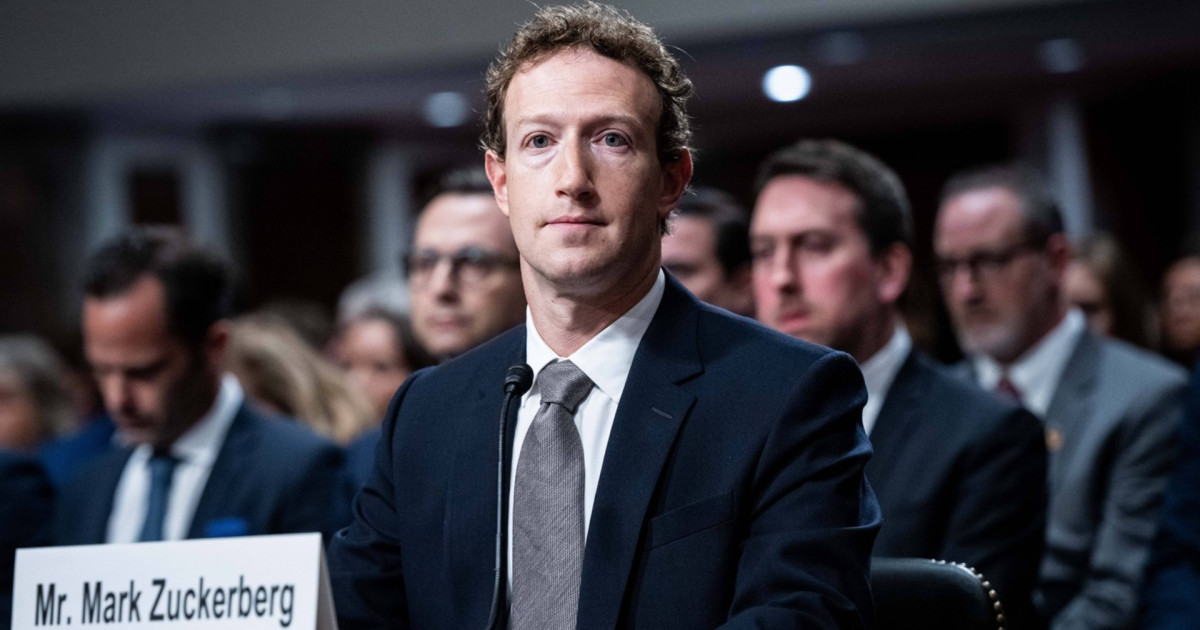
Meta Platforms Inc. will spend $145 billion on artificial intelligence over the next three years, but Chief Executive Mark Zuckerberg has admitted the company made “mistakes” in its recent workforce restructuring aimed at preparing for the AI era.
The acknowledgment comes as Meta accelerates its AI investments, including a $145 billion commitment announced last year to dominate the AI race by 2026. Yet internal missteps in restructuring—including layoffs and team realignments—have complicated the transition, according to multiple reports.
Why Zuckerberg’s Admission Matters
Zuckerberg’s rare public acknowledgment of errors in Meta’s AI-driven restructuring signals deeper challenges than previously disclosed. While the company has framed its $145 billion AI push as a strategic imperative, internal reports suggest missteps in workforce planning may delay execution.

Key Points
- $145 billion AI investment by Meta through 2026, announced in 2023.
- Zuckerberg admits “mistakes” in workforce restructuring for AI transition.
- No further layoffs expected, but internal realignments continue.
- Sources: Meta statements, Reuters, Digi24, Profit.ro, Mediafax.
How the AI Investment Stacks Up
Meta’s $145 billion AI commitment—equivalent to roughly 15% of its 2023 revenue—positions it as one of the largest corporate AI bets in history. For comparison, Microsoft’s AI investments (including its $10 billion OpenAI deal) totaled $30 billion in 2023, while Google’s AI-related spending reached $130 billion over the same period.
Yet the timing of Zuckerberg’s admission raises questions about whether Meta’s restructuring—including layoffs and team consolidations—has created operational friction. According to reports, the company has paused further workforce cuts but continues internal realignments to optimize for AI development.
What Happens Next for Meta’s Workforce?
While Zuckerberg ruled out additional layoffs in a recent statement, the company’s AI transition remains fluid. Sources indicate Meta is still refining its organizational structure to align with AI priorities, though no new restructuring plans have been disclosed.

“We made mistakes in how we approached this transformation,” Zuckerberg said in a statement to investors. “We’re almost certainly going to have to make more changes as we go.”
Analysts note that Meta’s AI push—centered on large language models and generative AI—requires both technical expertise and operational agility. The company’s restructuring missteps could delay its ability to compete with rivals like Google and Microsoft in AI-driven ad targeting and content creation.
Market and Regulatory Implications
Meta’s AI investments are likely to influence broader tech sector trends, particularly in cloud computing and developer tools. The company’s decision to pause layoffs while continuing realignments suggests a shift toward internal optimization rather than cost-cutting.
Regulators may also scrutinize Meta’s AI spending, particularly as antitrust concerns grow over Big Tech’s dominance in AI infrastructure. The European Commission, for example, has signaled increased oversight of AI-related mergers and acquisitions, which could impact Meta’s partnerships with third-party AI providers.
For now, Meta’s focus remains on executing its AI strategy without further disruption. The company has not provided updated timelines for its AI milestones, but investors will watch closely for signs of progress—or further setbacks—in its transformation.
