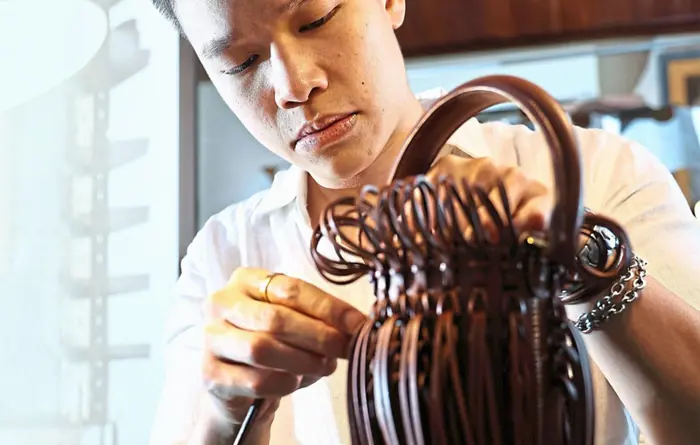
The Revival of Craft: How Malaysian Leather Artisans are Redefining Modern Fashion
Malaysian leather artisans are integrating traditional hand-stitching and heritage tanning methods into contemporary fashion to counter the proliferation of mass-produced goods. According to reports from the Asia News Network, this movement emphasizes the “authentic human touch” and sustainable production, signaling a shift in consumer preference toward slow fashion and long-term durability over disposable trends.
The Shift Toward Slow Fashion in Malaysia
A growing movement of craftspeople in Malaysia is actively rejecting the industrial model of fashion. For decades, the global leather market has been dominated by high-speed assembly lines and synthetic adhesives. However, reports on the “authentic human touch: Malaysian leather artisans put craft back into fashion – Asia News Network” highlight a return to manual techniques that prioritize the longevity of the product over the speed of delivery.
This transition is not merely aesthetic. It is a response to the environmental degradation caused by “fast fashion,” where low-quality leather goods are produced in bulk and discarded quickly. Malaysian artisans are now focusing on full-grain leathers and vegetable tanning processes, which avoid the harsh chemicals found in industrial chrome tanning.
Key drivers of this revival include:
- Environmental Consciousness: A preference for biodegradable tanning agents.
- Consumer Desire for Uniqueness: A move away from homogenized, brand-centric luxury toward one-of-a-kind pieces.
- Heritage Preservation: An effort to keep traditional Malaysian leatherworking skills from disappearing in the digital age.
Why the ‘Authentic Human Touch’ Matters in Leatherworking
In the context of luxury goods, the “human touch” refers to the visible and structural evidence of manual labor. While a machine-stitched bag is perfectly uniform, it lacks the structural integrity and character of a hand-stitched piece. Artisans in Malaysia are leveraging this distinction to position their work as a superior alternative to industrial luxury.
According to industry practitioners, the primary difference lies in the saddle stitch. Unlike a lockstitch produced by a sewing machine, a saddle stitch uses two needles passing through the same hole in opposite directions. If one thread breaks in a machine stitch, the entire seam can unravel. In a saddle stitch, the remaining thread holds the leather together, ensuring the item lasts for decades rather than years.
“The value of a handmade piece isn’t in its perfection, but in the intentionality of every stitch and the way the material evolves over time,” according to local craft perspectives on the slow fashion movement.
This focus on durability transforms the garment or accessory from a consumable product into an heirloom. By emphasizing the “authentic human touch,” these artisans are redefining value, moving it away from the logo and toward the labor involved in the creation.
Comparing Industrial Production vs. Artisanal Craftsmanship
The divide between mass-market leather goods and artisanal craft is evident in the materials used and the methods of construction. Industrial fashion relies on efficiency and cost-reduction, whereas Malaysian artisans prioritize the integrity of the hide.
| Feature | Industrial Leather Fashion | Artisanal Malaysian Craft |
|---|---|---|
| Stitching Method | Machine Lockstitch (Fast, prone to unraveling) | Hand Saddle Stitch (Slow, highly durable) |
| Tanning Process | Chrome Tanning (Chemical-heavy, fast) | Vegetable Tanning (Natural tannins, slow) |
| Material Quality | Corrected Grain/Bonded Leather | Full-Grain/Top-Grain Leather |
| Production Volume | Mass-produced (Thousands of units) | Small batch or Bespoke (One-off units) |
| Aging Process | Peels or cracks over time | Develops a unique patina (Darkens and softens) |
The Technical Process: From Raw Hide to Finished Accessory
The process of creating an artisanal leather piece in Malaysia is a multi-stage journey that requires patience and precision. Unlike factory production, where a piece may be finished in hours, a handmade bag can take several weeks to complete.
Material Selection and Cutting
The process begins with selecting the right hide. Artisans typically seek full-grain leather, which is the outermost layer of the hide and retains the natural strength and breathability of the skin. Using a sharp knife or a rotary cutter, the artisan manually cuts the patterns. This allows them to avoid natural imperfections in the leather, such as scars or insect bites, which a machine would ignore.
The Art of Edging
One of the most time-consuming aspects of the “authentic human touch” is edge finishing. In mass production, edges are often folded over or covered with plastic paint. Malaysian artisans often use a process called burnishing. This involves sanding the edges of the leather and rubbing them with a wooden slicker and a natural agent (like beeswax or gum tragacanth) until the fibers fuse together, creating a smooth, glossy, and sealed edge.
Hand-Stitching and Assembly
Before stitching, holes are manually punched using pruning chisels. This ensures that every stitch is perfectly spaced. The artisan then uses waxed linen thread to perform the saddle stitch. The wax prevents the thread from fraying and helps seal the hole against moisture, further increasing the lifespan of the accessory.
For those interested in the broader impact of these methods, a related explainer on sustainable textile production provides further context on how these techniques compare to other artisanal industries.
Economic Implications for Malaysia’s Creative Sector
The resurgence of leather craft is contributing to a broader economic shift in Malaysia’s creative economy. By moving away from the “race to the bottom” on pricing, artisans are creating a high-value niche market. This allows local creators to command prices based on skill and time rather than material cost alone.
This shift has several implications for the local economy:
- Job Creation: The growth of bespoke studios creates opportunities for apprentices and specialized leather workers.
- Tourism Integration: Artisanal workshops are becoming points of interest for cultural tourism, where visitors pay to learn the craft.
- Export Potential: There is a growing international demand for Southeast Asian craftsmanship, allowing Malaysian artisans to reach global markets via e-commerce.
However, the transition is not without obstacles. The primary challenge remains the perception of value. Many consumers are accustomed to the low prices of fast fashion and may struggle to justify the cost of a handmade item. Artisans are countering this by educating their customers on the “cost per wear”—the idea that a more expensive, durable item is cheaper over a decade than replacing a low-quality item every year.
Overcoming the Challenges of Mass-Market Competition
Competing with global conglomerates requires a different strategy than competing on price. Malaysian leather artisans are utilizing digital storytelling to bridge the gap between the workshop and the consumer. By documenting the process—showing the raw hides, the hand-stitching, and the hours of labor—they provide the transparency that mass-market brands cannot.
This transparency builds trust. When a buyer knows exactly who made their wallet and which tannery the leather came from, the product gains emotional value. This is the essence of the “authentic human touch: Malaysian leather artisans put craft back into fashion – Asia News Network” narrative; it is not just about the product, but the relationship between the maker and the owner.
Furthermore, the adoption of the “Made in Malaysia” label as a mark of quality, rather than just a point of origin, is helping these artisans compete. By aligning themselves with the global “slow living” movement, they are attracting a demographic of buyers who value mindfulness and sustainability over conspicuous consumption.
The Role of Technology in Preserving Tradition
While the craft itself is manual, the survival of these artisans depends heavily on modern technology. E-commerce platforms and social media have democratized access to the global market. A leather worker in a small Malaysian town can now sell a bespoke briefcase to a client in New York or London without needing a middleman or a physical storefront.
Digital tools are also used to enhance the craft without replacing the human element. Some artisans use CAD (Computer-Aided Design) software to refine their patterns before cutting them by hand, ensuring that the proportions are perfect while the execution remains artisanal.
This hybrid approach—traditional execution supported by digital distribution—is the blueprint for the survival of many heritage crafts across Asia. It ensures that the “human touch” remains the core value proposition while the business model remains viable in a globalized economy.
Common Misconceptions About Artisanal Leather
There are several frequent misunderstandings regarding handmade leather goods that often confuse consumers. Addressing these is critical for the growth of the industry.
Misconception 1: “Handmade means perfect.”
In reality, the opposite is true. A machine produces identical items. A handmade item will have slight variations. These are not “defects” but “signatures” of the human hand. These variations are what make the piece unique.
Misconception 2: “Vegetable-tanned leather is less durable.”
Some believe that because vegetable tanning is “natural,” it is weaker. In fact, vegetable-tanned leather is often denser and more durable than chrome-tanned leather, provided it is cared for. Its ability to develop a patina—a natural sheen and darkening—is a sign of quality, not wear.
Misconception 3: “Expensive leather is always better.”
Price does not always equal quality. Many luxury brands use “corrected grain” leather, which is sanded down to remove imperfections and then stamped with a fake grain. True artisanal leather is full-grain, meaning the natural surface is preserved, which is far more durable and breathable.
Frequently Asked Questions
What is the “authentic human touch” in Malaysian leather craft?
The “authentic human touch” refers to the use of manual techniques—such as saddle stitching and hand-burnishing—that replace industrial machine processes. It emphasizes the artisan’s skill and the unique, non-uniform nature of handmade goods, as reported in discussions regarding Malaysian leather artisans putting craft back into fashion.
Why is vegetable-tanned leather preferred by artisans over chrome-tanned leather?
Vegetable tanning uses natural tannins from tree bark and plants, making it more environmentally friendly and biodegradable. It also produces a leather that ages beautifully, developing a patina over time, whereas chrome tanning uses heavy metals and chemicals that are harmful to the environment and result in a more “plastic” feel.

How can you tell if a leather bag is hand-stitched or machine-stitched?
Look closely at the stitches. Machine stitches (lockstitches) usually look like a series of small, uniform loops. Hand-stitched saddle stitches often have a slight diagonal slant and are much more robust. If one stitch is pulled out of a machine-stitched seam, the whole line may unravel; a hand-stitched seam will remain intact.
Is the slow fashion movement in Malaysia only for luxury buyers?
While the initial cost of artisanal leather is higher, the movement focuses on “cost per wear.” By creating items that last a lifetime instead of a season, it encourages a more sustainable and ultimately more economical way of consuming fashion, moving away from the cycle of constant replacement.
Where does the “authentic human touch: Malaysian leather artisans put craft back into fashion – Asia News Network” trend fit into the global market?
It aligns with the global “Slow Fashion” and “Quiet Luxury” trends, where consumers prioritize quality, provenance, and sustainability over loud branding and mass production. It positions Malaysia as a hub for high-quality, ethical craftsmanship in the ASEAN region.
