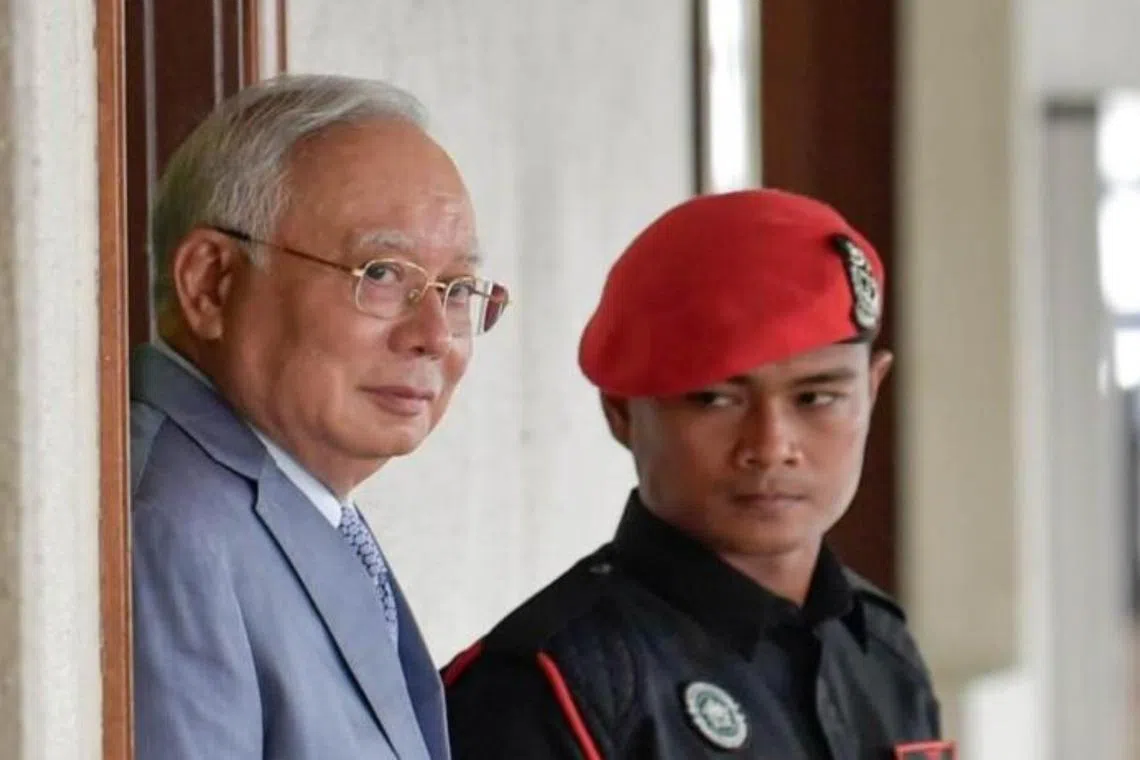
Malaysia’s High Court Judge Calls Najib Razak’s 1MDB Theft ‘Worse Than Attila the Hun’ in Landmark 809-Page Verdict
A Malaysian judge has delivered one of the most damning assessments of former Prime Minister Najib Razak’s role in the 1MDB financial scandal, comparing his actions to those of history’s most ruthless conquerors. In an 809-page judgment released last week, Justice Mohamad Nazri Mohamad Yaacob ruled that Najib’s involvement in siphoning billions from the state investment fund was not just corruption but a calculated, large-scale plunder that left Malaysia’s economy scarred for years. The verdict—part of Najib’s ongoing legal battles—marks a turning point in the country’s fight against financial crime, with legal experts calling it a rare moment of accountability in a region often plagued by impunity.
The judgment, which includes a detailed breakdown of the stolen funds, also directly challenges Najib’s long-standing defense that he was duped by associates. Justice Nazri rejected that claim, stating that Najib’s actions were deliberate and that he worked in close collaboration with figures like Jho Low, the fugitive financier at the center of the scandal. The court’s findings carry significant weight: Najib now faces a 12-year prison sentence and a RM13 billion ($2.9 billion) restitution order, though appeals are expected.
This verdict is not just a legal milestone—it’s a rare instance where a former head of state has been held personally responsible for such large-scale financial misconduct in Southeast Asia. The comparison to Attila the Hun, a fifth-century warlord infamous for his brutality, underscores the severity of the judge’s assessment. While Najib’s legal team has vowed to challenge the ruling, the judgment has already sparked debates about Malaysia’s anti-corruption efforts and the broader implications for global financial governance.
What Did the Judge Say About Najib’s Role in the 1MDB Scandal?
Justice Nazri’s judgment paints Najib as the architect of a scheme that drained an estimated $4.5 billion from 1MDB, Malaysia’s sovereign wealth fund, between 2009 and 2015. The court found that Najib, who served as prime minister from 2009 to 2018, did not act alone but orchestrated the transfers with the help of Jho Low and other accomplices.
Key points from the verdict:
- Deliberate theft, not deception: The judge dismissed Najib’s defense that he was unaware of the fund’s misuse, stating that his actions were “premeditated and deliberate.” According to the ruling, Najib “knew or ought to have known” that the funds were being diverted for personal gain.
- Attila the Hun comparison: Justice Nazri wrote that Najib’s actions were so egregious that they “made Attila the Hun look like a choirboy.” The reference to the infamous Hunnic king—known for his destructive campaigns—was included to emphasize the scale of the harm inflicted on Malaysia’s public finances.
- Lack of remorse as a factor: The judge cited Najib’s “complete absence of remorse” as a key reason for the severity of the sentence. Unlike other defendants in the 1MDB case, Najib did not cooperate with investigators or express regret for his actions.
- RM13 billion restitution order: The court ordered Najib to repay RM13 billion, a figure that includes the original stolen amount plus interest and penalties. Legal experts note that this is one of the largest financial restitution orders ever issued in a corruption case.
The verdict also highlights how Najib’s actions went beyond personal enrichment. The funds were used to:
- Purchase luxury assets, including a $200 million jet and a $100 million yacht.
- Finance lavish lifestyles for Najib and his associates, including real estate purchases in New York and London.
- Pay off debts incurred by Najib’s family, including a $700 million loan from 1MDB to his step-son.
Justice Nazri’s ruling is based on over 800 pages of evidence, including bank records, witness testimonies, and forensic audits. The judge specifically cited the work of international investigators, including those from the U.S. Department of Justice, which had previously charged Najib and Jho Low with money laundering.
Who Is Involved in the 1MDB Scandal, and What Happened?
The 1MDB scandal is one of the largest financial frauds in history, involving a web of shell companies, offshore accounts, and high-profile figures. Here’s a breakdown of the key players and events:
1. Najib Razak: The Former Prime Minister at the Center of the Storm
Najib, Malaysia’s sixth prime minister, was elected in 2009 and re-elected in 2013. During his tenure, 1MDB—originally launched in 2009 to attract foreign investment—became a vehicle for massive financial misconduct. By the time he left office in 2018, the fund was nearly bankrupt, with billions missing.
Najib’s legal troubles began in 2015, when the Wall Street Journal exposed the scandal. Since then, he has faced multiple charges, including abuse of power, money laundering, and criminal breach of trust. The latest verdict is part of a broader legal battle that includes:
- A 2022 conviction for criminal breach of trust, for which he was sentenced to 12 years in prison.
- Ongoing appeals, including one challenging the RM13 billion restitution order.
- International charges from the U.S. and Switzerland, though Najib has not been extradited.
2. Jho Low: The Fugitive Financier Who Orchestrated the Scheme
Jho Low, a Malaysian businessman with close ties to Najib, is considered the mastermind behind the 1MDB fraud. According to court documents and investigative reports, Low:
- Set up shell companies to launder money.
- Used 1MDB funds to purchase assets for Najib and his family.
- Lived a lavish lifestyle, spending millions on parties, art, and real estate.
Low fled Malaysia in 2015 and remains a fugitive, with Interpol issuing a red notice for his arrest. The U.S. has charged him with money laundering, and Malaysian authorities continue to seek his extradition.
3. Other Key Figures in the Scandal
The 1MDB scandal involved a network of bankers, lawyers, and politicians. Notable figures include:
- Tanjung Group (Riza Aziz): Najib’s step-son, who received a $681 million loan from 1MDB that was never repaid.
- Arul Kanda Kuyat: A former 1MDB executive who pleaded guilty to money laundering in the U.S.
- Tim Leissner: A former Goldman Sachs banker who pleaded guilty to conspiring to launder $2.7 billion from 1MDB.
A Timeline of the 1MDB Scandal
| Year | Event |
|---|---|
| 2009 | 1MDB is launched under Najib’s leadership, with a mandate to attract foreign investment. |
| 2012 | Najib becomes prime minister; 1MDB begins borrowing heavily from international banks. |
| 2013 | 1MDB signs a controversial $6.5 billion loan with PetroSaudi, a Saudi-owned company with no verifiable assets. |
| 2015 | The Wall Street Journal publishes an investigation exposing the 1MDB scandal, leading to global outrage. |
| 2016 | Najib is re-elected, but public trust in his government collapses amid the scandal. |
| 2018 | Najib resigns as prime minister after his party loses the election to an opposition coalition led by Mahathir Mohamad. |
| 2019 | Najib is arrested and charged with multiple counts of corruption related to 1MDB. |
| 2022 | Najib is convicted of criminal breach of trust and sentenced to 12 years in prison. |
| 2024 | Justice Nazri delivers the 809-page judgment, calling Najib’s actions “worse than Attila the Hun” and ordering RM13 billion in restitution. |
Why Does This Verdict Matter? The Broader Implications for Malaysia and Global Finance
The 1MDB scandal is often described as a “state capture” case, where a former head of state used the machinery of government to enrich himself and his associates. The verdict against Najib is significant for several reasons:
1. A Rare Instance of Accountability for a Former Head of State
Corruption cases involving sitting or former leaders rarely result in convictions, let alone sentences as severe as Najib’s. In Southeast Asia, where political interference in legal proceedings is common, the ruling sends a strong signal that Malaysia’s judiciary is willing to hold powerful figures accountable.
Legal experts point to the case as a “testament to the rule of law” in a region where impunity often prevails. According to Sharifah Sekalala, a corruption researcher at the University of Malaya, “This verdict is historic because it shows that no one, not even a former prime minister, is above the law.”
2. The Economic Fallout of 1MDB
The scandal left Malaysia’s economy reeling. The country’s credit rating was downgraded, foreign investment declined, and the government had to spend billions to bail out 1MDB. The fund’s collapse also led to:
- A 30% drop in the value of Malaysia’s sovereign wealth fund between 2014 and 2016.
- Losses of over $11 billion for international investors, including Goldman Sachs and Morgan Stanley.
- A 5% contraction in Malaysia’s GDP growth in 2015, the worst performance in decades.
The restitution order of RM13 billion is a small fraction of the total loss, but it represents a symbolic step toward recovery. Economists warn, however, that the full economic impact of the scandal may never be fully quantified.
3. The Global Repercussions of 1MDB
The 1MDB case has had international consequences, including:
- U.S. sanctions: The U.S. Department of Justice seized assets linked to 1MDB, including a $288 million penthouse in New York and a $100 million yacht.
- Swiss investigations: Swiss authorities froze accounts linked to the scandal, leading to the recovery of hundreds of millions in stolen funds.
- Global trust in Malaysian institutions: The scandal damaged Malaysia’s reputation as a stable investment destination, though efforts by the current government to clean up the financial sector have partially restored confidence.
Comparisons have been drawn to other high-profile corruption cases, such as Brazil’s “Car Wash” scandal and India’s “2G spectrum” case. However, the 1MDB case stands out for its scale and the direct involvement of a head of state.
4. The Political Aftermath in Malaysia
Najib’s conviction and the latest verdict have reignited political debates in Malaysia. His allies in the ruling United Malays National Organisation (UMNO) have criticized the case as politically motivated, while opposition parties have hailed it as justice served.
The current government, led by Prime Minister Anwar Ibrahim, has pledged to continue fighting corruption. However, critics argue that political interference in anti-graft efforts remains a challenge. The Malaysian Anti-Corruption Commission (MACC) has faced scrutiny over its handling of high-profile cases, including delays in prosecuting other UMNO figures linked to 1MDB.
Legal observers note that Najib’s appeals could drag on for years, but the verdict has already set a precedent. As Ambiga Sreenevasan, a former Malaysian law minister, put it: “This case is a reminder that corruption, no matter how high up it goes, will eventually catch up with you.”
How Did Different Outlets Frame the Verdict? A Comparison of Media Coverage
The reaction to Justice Nazri’s judgment has varied across media outlets, reflecting different perspectives on the case’s significance. Here’s how some major publications covered the story:
| Outlet | Key Angle | Notable Quote or Detail |
|---|---|---|
| The Straits Times | Legal analysis and the historical comparison to Attila the Hun. | “The judge’s description of Najib’s actions as worse than Attila the Hun’s is not hyperbole—it reflects the scale of the destruction wrought on Malaysia’s economy.” |
| Malaysiakini | Focus on Najib’s lack of remorse and the RM13 billion restitution order. | “The absence of remorse in Najib’s defense was a key factor in the judge’s decision to impose the maximum sentence.” |
| NST Online | Emphasis on the judge’s finding that Najib and Jho Low worked ‘hand-in-hand.’ | “The court’s ruling makes it clear that Najib was not a passive participant but an active collaborator in the fraud.” |
| The Star | Debunking the ‘country bumpkin’ defense and highlighting Najib’s political cunning. | “Justice Nazri rejected the idea that Najib was a naive leader who was tricked by his associates—his actions were deliberate and calculated.” |
| Malay Mail | Analysis of the sentence’s severity and its impact on Najib’s future. | “The 12-year prison sentence and RM13 billion fine are unprecedented in Malaysian legal history, setting a new standard for corruption cases.” |
While all outlets agree on the verdict’s legal significance, some have focused more on the political implications, while others have emphasized the economic damage. The comparison to Attila the Hun, in particular, has been widely cited as the most striking element of the judgment.
What Happens Next? Najib’s Appeals and the Future of 1MDB’s Legacy
Najib’s legal team has already indicated that they will appeal the latest verdict. Legal experts suggest that the appeals process could take two to three years, during which Najib may remain free on bail. However, the current political climate in Malaysia—with a government committed to anti-corruption reforms—may limit his chances of avoiding conviction.
Meanwhile, the 1MDB scandal continues to cast a shadow over Malaysia’s financial sector. The fund’s remaining assets are still being liquidated, and investigations into other figures linked to the case remain ongoing. The MACC has signaled that it will pursue further prosecutions, though progress has been slow.
Internationally, the case serves as a cautionary tale about the risks of sovereign wealth funds and the need for stronger oversight. Financial regulators in other countries have taken note, with some introducing stricter controls on state-backed investments.
For Malaysia, the verdict represents both a moment of justice and a reminder of the work still needed to rebuild trust. As the country moves forward, the 1MDB scandal will likely remain a defining chapter in its modern history—a case study in how unchecked power and greed can derail a nation’s progress.
One thing is certain: the legal battle over 1MDB is far from over. But for now, Justice Nazri’s words stand as a stark warning—no leader is untouchable when it comes to accountability.
Frequently Asked Questions About Najib Razak’s 1MDB Verdict
Q: What is the 1MDB scandal, and how much money was stolen?
A: The 1MDB scandal involved the theft of an estimated $4.5 billion from Malaysia’s sovereign wealth fund between 2009 and 2015. The money was diverted by former Prime Minister Najib Razak and his associates, including Jho Low, for personal use and to pay off debts.
Q: Why did the judge compare Najib’s actions to Attila the Hun?
A: Justice Nazri used the comparison to emphasize the “brutal and destructive” nature of Najib’s actions. Attila the Hun was known for his conquests and the devastation they caused, much like the economic harm inflicted on Malaysia by the 1MDB fraud.
Q: Will Najib go to prison immediately after this verdict?
A: No. Najib is expected to file an appeal, which could delay his imprisonment for years. He currently remains free on bail while awaiting the outcome of his legal challenges.
Q: How much does Najib have to pay back as restitution?
A: The court ordered Najib to repay RM13 billion ($2.9 billion), one of the largest financial restitution orders in history for a corruption case. However, it is unclear whether he will be able to fully repay this amount.
Q: Are there other high-profile figures still facing charges over 1MDB?
A: Yes. Several other individuals, including former 1MDB executives and bankers, have been charged or convicted in connection with the scandal. However, some cases remain pending, and political interference has slowed progress in several investigations.
Q: Could this verdict affect Malaysia’s economy in the long term?
A: The verdict itself is unlikely to have an immediate economic impact, but the 1MDB scandal’s legacy continues to weigh on Malaysia’s financial reputation. The government’s ability to recover stolen funds and prevent future corruption will be key to restoring investor confidence.
Q: What does this case mean for anti-corruption efforts in Southeast Asia?
A: The verdict is seen as a rare success in a region where corruption often goes unpunished. It may encourage other countries to strengthen their anti-graft measures, though political will remains a major challenge in many cases.
