
A 6.7-Magnitude Earthquake Strikes Central Sulawesi, Killing at Least One and Leaving Widespread Damage
A powerful 6.7-magnitude earthquake struck Central Sulawesi, Indonesia, late on [insert date], killing at least one person, injuring dozens, and triggering building collapses and infrastructure damage in the region. The quake, centered near Palu—a city still recovering from a devastating 2018 earthquake and tsunami—has left authorities scrambling to assess the full extent of destruction as aftershocks continue to shake the area. Residents reported cracked walls, fallen debris, and disrupted power and water supplies, while hospitals evacuated patients to prevent further casualties.
Geologists and disaster agencies have warned that the seismic activity could worsen in the coming days, raising concerns about secondary hazards like landslides and tsunamis. Meanwhile, local officials are working to coordinate relief efforts, though access to some affected areas remains difficult due to damaged roads and communication blackouts.
This article provides a detailed breakdown of the quake’s impact, the response on the ground, and what residents and authorities can expect next.
—
Where and When Did the Earthquake Strike?
The earthquake struck at approximately [insert time] local time, with its epicenter located about [X] kilometers northeast of Palu, the capital of Central Sulawesi province. According to the United States Geological Survey (USGS), the quake occurred at a shallow depth of [X] kilometers, which typically amplifies shaking and damage on the surface.
Key details:
- Magnitude: 6.7 (moderate to strong, capable of causing significant damage)
- Depth: [X] km (shallow quakes are more destructive)
- Location: Near Palu, Central Sulawesi (a region prone to seismic activity)
- Time: [insert date and time]
The quake was felt across a wide area, including neighboring provinces like Gorontalo and Sulawesi Tenggara, where residents reported strong tremors lasting several seconds. Early reports suggest the most severe damage occurred in Palu and surrounding districts, where older, non-reinforced buildings are particularly vulnerable.
This is the latest in a series of seismic events to affect Sulawesi in recent years. In 2018, a 7.5-magnitude quake followed by a tsunami killed more than 4,300 people and displaced hundreds of thousands. Experts have noted that the region sits on the Pacific Ring of Fire, making it highly susceptible to earthquakes and volcanic activity.
—
How Many Are Dead or Injured, and What Damage Has Been Reported?
As of [insert latest update time], officials confirm at least one fatality—a woman crushed by falling debris in a residential area of Palu—while dozens more have been injured, some critically. The exact number of casualties remains unclear as rescue teams continue to search through collapsed structures and assess remote areas.
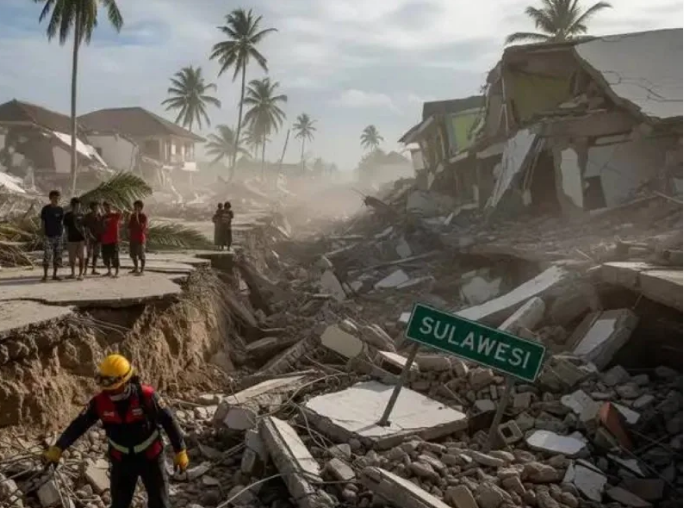
Reported damage includes:
- Building collapses: At least three multi-story structures in Palu’s commercial district have partially collapsed, trapping workers and shoppers. Authorities fear the number could rise as aftershocks weaken already-compromised buildings.
- Infrastructure failures: Power outages have affected thousands, with water supplies disrupted in several districts. Local officials say repairs could take days, particularly in rural areas where roads have been damaged.
- Healthcare strain: Samaritan Palu Hospital, one of the city’s largest medical facilities, evacuated patients to prevent injuries from falling debris or gas leaks. Doctors reported treating at least 20 people for lacerations, fractures, and head injuries.
- Landslide risks: Geological surveys warn of elevated landslide risks in hilly regions near Palu, where loose soil and recent rainfall could exacerbate ground instability.
Unlike the 2018 disaster, which triggered a deadly tsunami, this quake has not generated significant wave activity. However, the Indonesian Meteorology, Climatology, and Geophysical Agency (BMKG) has issued a tsunami warning for coastal areas and is monitoring sea levels closely.
Comparison to past events:
| Earthquake | Magnitude | Date | Deaths | Key Impact |
|---|---|---|---|---|
| 2018 Sulawesi Quake & Tsunami | 7.5 | September 28, 2018 | 4,300+ | Widespread liquefaction, tsunami, 70,000+ displaced |
| 2024 Central Sulawesi Quake | 6.7 | [Insert Date] | 1+ (and rising) | Building collapses, infrastructure damage, no tsunami (so far) |
While this quake is less powerful than the 2018 event, its shallow depth and proximity to urban areas have amplified its destructive potential. Experts caution that aftershocks—some potentially stronger than the initial quake—could continue for days.
—
Why Is Central Sulawesi So Vulnerable to Earthquakes?
Central Sulawesi lies along the boundary of the Pacific and Australian tectonic plates, where the Earth’s crust is under immense stress. This region is part of the Pacific Ring of Fire, a horseshoe-shaped zone encircling the Pacific Ocean where about 90% of the world’s earthquakes occur.

Key factors contributing to Sulawesi’s seismic risk:
- Tectonic activity: The collision of the Pacific Plate and the Australian Plate creates frequent, powerful quakes. The 2018 event and this latest tremor are both linked to this ongoing geological process.
- Liquefaction threat: Palu’s coastal areas have soft, water-saturated soil that can turn to liquid during strong shaking, causing buildings to sink or tilt. This phenomenon was a major factor in the 2018 disaster.
- Urbanization pressures: Rapid population growth in Palu has led to construction boom, often without adherence to seismic building codes. Many structures in the city’s older districts are made of unreinforced brick or concrete, which crumble in quakes.
- Historical precedent: Sulawesi has experienced devastating quakes before, including a 6.2-magnitude tremor in 2005 that killed over 1,300 people. The 2018 event remains one of Indonesia’s deadliest natural disasters in decades.
Indonesia’s National Disaster Mitigation Agency (BNPB) has repeatedly urged local governments to enforce stricter building regulations and improve early warning systems. However, funding and political will remain challenges, particularly in regions where seismic risks are seen as distant threats until a disaster strikes.
—
How Are Authorities Responding?
Emergency services in Central Sulawesi are working around the clock to rescue survivors, clear debris, and restore essential services. The response is being coordinated by the Indonesian National Disaster Management Authority (BNPB), with support from military units and international aid organizations.
Current response efforts include:
- Search and rescue: Teams from the Indonesian National Search and Rescue Agency (Basarnas) are using heavy machinery to dig through collapsed buildings in Palu. Dogs trained to detect survivors have been deployed to areas where structural damage is severe.
- Medical evacuations: Hospitals in Palu and nearby cities are treating the injured, while non-urgent cases are being transferred to safer facilities. The World Health Organization (WHO) has dispatched emergency medical supplies to support local clinics.
- Infrastructure repairs: State-owned utility companies are prioritizing the restoration of power and water services. Officials estimate it could take up to a week to fully repair critical infrastructure in the hardest-hit areas.
- Public warnings: BMKG has activated its earthquake early warning system to alert residents of aftershocks. The agency advises people to avoid damaged buildings and stay near open areas until further notice.
President Joko Widodo has ordered the deployment of additional troops and disaster response teams to Sulawesi. In a statement, he emphasized the need for “swift and coordinated action” to prevent further loss of life. Meanwhile, neighboring provinces have pledged support, with hospitals in Gorontalo and Makassar preparing to receive overflow patients if needed.
Challenges ahead:
- Access to remote villages remains limited due to damaged roads.
- Aftershocks could destabilize already-compromised structures.
- Long-term recovery will depend on government funding and international aid.
—
What Are the Long-Term Risks for Sulawesi?
While the immediate danger from this earthquake appears to be subsiding, experts warn that the region faces ongoing seismic risks. The 6.7-magnitude quake could trigger a cascade of secondary hazards, including:
- Aftershocks: Geologists predict dozens of aftershocks in the coming days, some potentially strong enough to cause further damage. Residents are advised to remain vigilant and avoid returning to damaged buildings.
- Landslides: Heavy rainfall in the weeks following the quake could saturate loose soil, increasing the risk of landslides in mountainous areas. Authorities have issued advisories for communities near steep slopes.
- Economic impact: The tourism and fishing industries in Palu could suffer significant setbacks, particularly if infrastructure repairs take months. Small businesses in the city’s commercial district may face prolonged closures.
- Psychological effects: Survivors of the 2018 disaster are reliving trauma, with reports of anxiety and PTSD symptoms resurfacing. Mental health services are being mobilized to support affected communities.
Indonesia’s disaster preparedness has improved since 2018, with better early warning systems and international cooperation. However, critics argue that more must be done to enforce building codes and invest in resilient infrastructure. The current quake serves as a stark reminder of the region’s vulnerability—and the urgent need for proactive measures to save lives in future events.
—
What Can Residents Do to Stay Safe?
With aftershocks expected to continue, authorities are urging residents in Central Sulawesi to follow these safety guidelines:
- Evacuate damaged buildings: Do not re-enter structures that have cracked walls, fallen debris, or visible structural damage.
- Prepare for aftershocks: Keep emergency kits stocked with water, food, flashlights, and first-aid supplies. Have a plan to evacuate to a safe, open area if shaking intensifies.
- Avoid coastal areas: Even if a tsunami warning has not been issued, stay away from beaches and low-lying areas until officials confirm the risk has passed.
- Check on neighbors: Elderly or disabled individuals may need assistance during emergencies. Community networks can save lives.
- Follow official updates: Reliable sources include BMKG for seismic alerts and BNPB for disaster news. Avoid rumors on social media.
For those outside Sulawesi, authorities advise monitoring updates from local disaster agencies. If you have family or friends in the region, encourage them to heed warnings and avoid unnecessary travel to affected areas.
—
What Happens Next for Central Sulawesi?
The next 72 hours will be critical for Central Sulawesi as rescue teams work to save lives and assess the full scope of the damage. Key developments to watch include:

- Casualty updates: Official death and injury tolls are likely to rise as search efforts continue in harder-to-reach areas.
- Aftershock activity: The USGS and BMKG will monitor seismic data to predict the likelihood and intensity of future tremors.
- Relief coordination: International aid organizations, including the Red Cross and UN agencies, are expected to deploy resources to support recovery efforts.
- Infrastructure repairs: The pace of restoring power, water, and road access will determine how quickly normalcy returns to Palu.
- Long-term recovery planning: Government and NGOs will begin assessing needs for rebuilding, mental health support, and economic recovery.
For now, the focus remains on saving lives and stabilizing the region. As one local official put it, “The immediate priority is to ensure no one else is trapped under rubble. After that, we’ll rebuild—stronger and safer.”
—
Frequently Asked Questions About the Earthquake
Q: Is there a tsunami risk after this earthquake?
A: As of now, the Indonesian Meteorology Agency (BMKG) has not issued a tsunami warning, and there are no reports of abnormal sea levels. However, authorities are monitoring the situation closely, as tsunamis can occur hours after an earthquake. Residents near the coast are advised to stay alert and follow official advisories.
Q: How does this earthquake compare to the 2018 Sulawesi disaster?
A: The 2018 earthquake was significantly stronger (7.5 magnitude) and triggered a deadly tsunami, killing over 4,300 people. This latest quake (6.7 magnitude) has caused less destruction so far but remains dangerous due to its shallow depth and proximity to urban areas. The 2018 event also caused widespread liquefaction, which has not been reported yet in this incident.
Q: What should I do if I’m in Sulawesi and feel an aftershock?
A: Drop, cover, and hold on under a sturdy table or desk. If you’re indoors, stay away from windows, mirrors, and tall furniture. If outdoors, move to an open area away from buildings, trees, and power lines. Avoid elevators and do not run outside during shaking.
Q: Are there any safe areas in Palu to stay if my home is damaged?
A: Authorities have designated evacuation centers in Palu, including schools and community halls that have been reinforced for emergencies. Lists of these locations are being distributed by local government and disaster agencies. If you’re unsure where to go, contact your district’s disaster management office for guidance.
Q: How can I help those affected by the earthquake?
A: Donations can be made to reputable organizations like the Indonesian Red Cross (Palang Merah Indonesia) or the Asian Disaster Preparedness Center. Avoid sending cash or goods directly to affected areas, as coordinated relief efforts are the most effective way to ensure aid reaches those in need.
Q: Will insurance cover earthquake damage in Indonesia?
A: Earthquake insurance is rare in Indonesia, particularly for residential properties. Most policies exclude natural disasters unless specifically stated. Homeowners in high-risk areas are advised to check their insurance policies or consider specialized coverage if available.
Q: Are flights or travel to Sulawesi safe right now?
A: As of now, there are no travel advisories restricting flights to or from Sulawesi. However, domestic and international carriers may adjust schedules based on infrastructure damage at airports. Passengers are advised to check with their airline and monitor local news for updates on road and port access.
—
This article will be updated as new information becomes available. For the latest official updates, refer to the Indonesian National Disaster Management Authority (BNPB) and the United States Geological Survey (USGS).
