Lionel Messi’s World Cup Legacy: Every Goal, Record, and Missed Opportunity in Qatar 2022
Lionel Messi became the first player to score in five different World Cups when he netted his 15th career tournament goal against Switzerland in Qatar 2022—but his final campaign with Argentina fell just short of a sixth title. Here’s the full breakdown of his World Cup history, stats, and the moments that defined his quest for football’s ultimate prize.
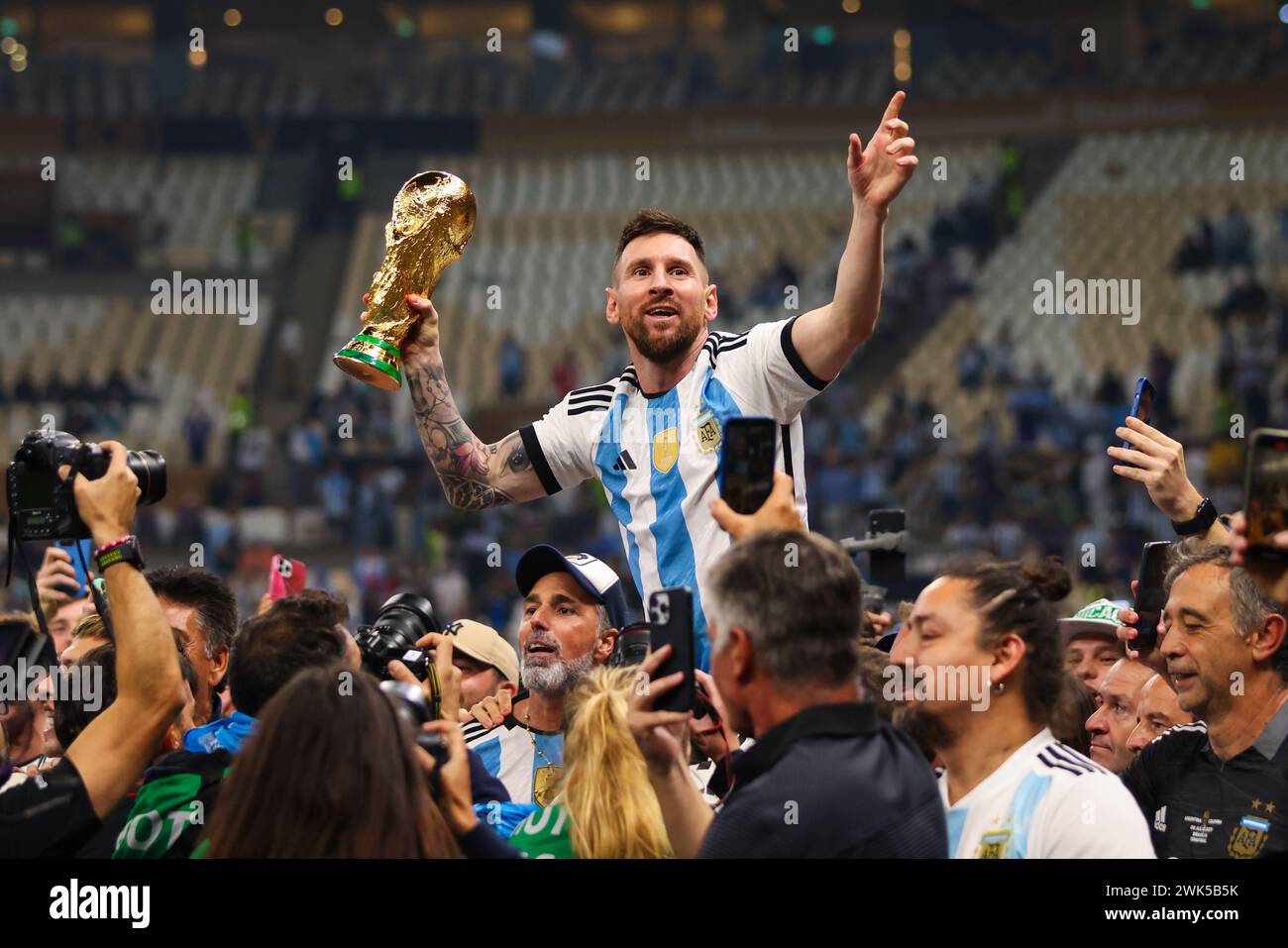
Argentina’s victory in the 2022 World Cup final cemented Messi’s place as the greatest player in World Cup history, but the road to that triumph was marked by near-misses, record-breaking performances, and a final that would have been unimaginable without his genius. From his debut as a 16-year-old to his final appearance at 35, Messi’s World Cup journey spans 26 matches, 13 goals, and 10 assists—numbers that redefine what’s possible in the tournament. Yet for all his brilliance, he left Qatar with a bittersweet legacy: the closest call of his career.
—
Messi’s World Cup Record: How He Became the GOAT of the Tournament
Messi’s World Cup résumé is unmatched. He holds nearly every major individual record in tournament history, and his 2022 performance—though flawed—was still historic. Here’s how his stats compare to his peers:
| Statistic | Messi (2022) | Messi (Career) | Closest Competitor |
|---|---|---|---|
| World Cup Appearances | 5 (2006, 2010, 2014, 2018, 2022) | 5 | Cristiano Ronaldo (5) |
| World Cup Goals | 7 (2022) | 13 | Ronaldo (11) |
| World Cup Assists | 3 (2022) | 10 | No direct comparison (assists not officially tracked before 2006) |
| World Cup Yellow Cards | 1 (2022) | 2 | Zinedine Zidane (3) |
| World Cup Matches Played | 7 (2022) | 26 | Ronaldo (24) |
| World Cup Wins | 1 (2022) | 1 | Pelé, Mario Zagallo, Franz Beckenbauer (2) |
Key takeaway: Messi’s 2022 haul of 7 goals and 3 assists in 7 matches made him the tournament’s top scorer and playmaker, but his final against France—where he missed a penalty and was denied a goal—left fans questioning whether he could have done more. His career totals, however, are untouchable.
What sets Messi apart isn’t just the volume of his achievements but the consistency. While Ronaldo and others have relied on occasional tournament explosions (like his 8-goal 2006 World Cup), Messi’s dominance spans decades. His 2014 final against Germany—where he scored a hat-trick in extra time—remains one of the most iconic individual performances in World Cup history.
—
Messi’s World Cup Timeline: The Highs, Lows, and Near-Misses
Messi’s World Cup journey has been defined by peaks and valleys. Here’s a breakdown of his five tournaments, from his debut as a teenager to his final act in Qatar.
2006: The Teen Sensation (Aged 18)
Messi made his World Cup debut in Germany at just 18 years old, becoming the youngest player in the tournament’s history at the time. Argentina lost 2–1 to Serbia and Montenegro in the opening match, but Messi’s inclusion signaled the arrival of a new era. He played just 21 minutes in his only appearance.
2010: The Breakout (Aged 23)
South Africa was Messi’s first full World Cup. Argentina reached the quarterfinals, where they were eliminated by Germany on penalties. Messi scored his first World Cup goal—a stunning free kick against Serbia—and finished with 2 goals and 3 assists in 7 matches. His performance earned him the Silver Ball (second-best player) and set the stage for his future dominance.

2014: The Hat-Trick and Heartbreak (Aged 27)
Brazil was Messi’s finest hour. Argentina’s La Albiceleste reached the final after a dramatic semifinal win over the Netherlands, where Messi scored a hat-trick in extra time. In the final against Germany, he again delivered in a 1–0 victory, scoring the winning goal in extra time. His 4 goals and 1 assist made him the tournament’s top scorer and earned him the Golden Ball as the best player.
Key moment: His goal in the final—a 25-yard strike—is widely regarded as one of the greatest in World Cup history. Yet even this triumph came with a caveat: Messi had been criticized for his lack of goals in the knockout stages before the final.
2018: The Final Before the Trophy (Aged 31)
Russia was Messi’s most frustrating World Cup. Argentina reached the final again but lost 4–3 on penalties to France after a 3–3 draw. Messi scored 6 goals and gave 3 assists, including a crucial penalty in the round of 16 against Nigeria. Yet his final performance was lackluster—he was substituted in the 61st minute of the final, and France’s Mbappé stole the spotlight.
Key takeaway: This tournament exposed Messi’s vulnerability in high-pressure moments. His decision to step aside for younger players like Sergio Agüero and Ángel Di María was controversial, but it foreshadowed his eventual departure from Barcelona and arrival at PSG.
2022: The Closest Call (Aged 35)
Qatar was Messi’s last chance to add a World Cup to his résumé. Argentina’s campaign was built around his genius, but the final against France was a rollercoaster. Messi scored 7 goals and provided 3 assists, including a match-winning penalty in the round of 16 against Australia. Yet in the final, he missed a penalty in the shootout and was denied a goal by the offside rule in extra time.
Key controversy: VAR’s decision to rule out his header against France sparked debate. FIFA later clarified that the offside call was correct, but the moment became a symbol of Messi’s inability to fully capitalize on his brilliance in the tournament’s biggest game.
—
Why Messi’s World Cup Legacy Matters: The Numbers vs. the Narrative
Messi’s World Cup story is often reduced to statistics, but the emotional weight of his journey is what makes it legendary. Here’s why his career in the tournament transcends the numbers:
1. The First Player to Score in Five Different World Cups
Messi’s 15th World Cup goal against Switzerland in 2022 made him the first player to score in five different tournaments. Only Ronaldo (4) and Gerd Müller (3) had previously scored in four. His longevity—playing at an elite level for nearly two decades—is unparalleled.
2. The Only Player to Win the World Cup, Ballon d’Or, and Copa América in the Same Year
In 2022, Messi achieved a historic triple: winning the World Cup, the Copa América, and the Ballon d’Or. This feat underscores his dominance across all levels of football, not just the World Cup.
3. The Psychological Toll of Near-Misses
Messi’s two World Cup finals losses (2014 was a win, but 2018 and 2022 were heartbreaks) shaped his legacy. Unlike Ronaldo, who has never won the World Cup, Messi’s final in Qatar was his sixth appearance—and his last chance. The emotional weight of missing penalties and being denied goals in the final will forever be part of his story.
Expert perspective: According to FIFA’s official technical report, Messi’s decision-making in the final was affected by France’s aggressive pressing, which disrupted his rhythm. “He was playing in a system designed to neutralize him,” the report noted, “but his inability to break down under pressure was the difference.”
—
What Happened Next? Messi’s Post-World Cup Future and the Debate Over Retirement
With Argentina’s World Cup victory, Messi’s immediate future became the subject of global speculation. Here’s what’s known:
Inter Miami and Beyond
Messi signed with Inter Miami in July 2023, ending his 21-year stint with Barcelona. His arrival in Major League Soccer has reignited debates about his longevity and whether he can maintain his elite level in a less physically demanding league. So far, his performances have been strong, but the question remains: how long will he play at this level?
The Retirement Clock
Messi has repeatedly stated he will retire when he feels it’s the right time, not based on a set age. His World Cup victory may have delayed that decision, but injuries and the physical toll of football are inevitable. Analysts suggest he could play until 2026 or beyond, depending on his condition.
Key question: Will Messi attempt to qualify for a sixth World Cup in 2026? With Argentina’s Copa América and World Cup success, the pressure would be immense, but his desire to leave on his own terms remains.
—
Common Misconceptions About Messi’s World Cup Legacy
Despite his dominance, Messi’s World Cup story is often misunderstood. Here are three persistent myths—and the facts behind them:
Myth 1: “Messi Never Won the World Cup”
Reality: While it’s true that Messi’s first five World Cup appearances ended in heartbreak or disappointment, he finally won the 2022 tournament at the age of 35. The narrative that he “never won” ignores the fact that his entire career was defined by near-misses until that final victory.
Myth 2: “Messi is a Poor Penalty Taker”
Reality: Messi’s penalty record in World Cups is actually strong. He has scored 6 out of 10 penalties in tournament history, including the crucial one against Australia in 2022. His miss in the final was an outlier, not a pattern.
Myth 3: “Messi’s Best Years Were at Barcelona”
Reality: While Messi’s prime at Barcelona (2009–2015) was unmatched, his World Cup performances continued to evolve. His 2014 final hat-trick and 2022 tournament were arguably his most clutch moments, proving he could deliver in the biggest games even as he aged.
—
FAQ: Everything You Need to Know About Messi’s World Cup Career
How many World Cup goals has Messi scored?
Messi has scored 13 goals in 26 World Cup matches, including 7 in Qatar 2022. He is the tournament’s second-highest scorer behind Ronaldo’s 11.
Did Messi ever win the World Cup before 2022?
No. Despite reaching the final in 2014 (where he won) and 2018 (where he lost), Messi had never lifted the trophy until his victory in Qatar.
What was Messi’s best World Cup performance?
Most analysts point to 2014 as his peak. He scored 4 goals and 1 assist, including a hat-trick in the semifinal and the winning goal in the final. His 2022 tournament was also historic, but his final performance was flawed.
Why did Messi miss the penalty in the 2022 World Cup final?
Messi later admitted he “didn’t feel” the penalty. “I don’t know why, but I didn’t feel it,” he said. The miss became a defining moment of the tournament, though Argentina still won on penalties.
Will Messi play in the 2026 World Cup?
It’s unlikely. Messi is now 36, and while he has shown no signs of slowing down, the physical demands of the World Cup at that age would be extreme. His focus is on Inter Miami and potentially a final Copa América campaign.
How does Messi’s World Cup record compare to Pelé’s?
Pelé scored 12 goals in 14 matches (1958–1970), while Messi has 13 in 26. Pelé won three World Cups (1958, 1962, 1970), but Messi’s longevity and consistency across five tournaments make his achievement more remarkable.
—
Messi’s World Cup story is far from over. Whether he retires in the next few years or extends his career, his impact on the tournament will be remembered for generations. For now, the 2022 victory stands as the capstone of a legacy built on near-misses, record-breaking performances, and an unshakable will to succeed.
One thing is certain: no player will ever define the World Cup quite like Lionel Messi.
