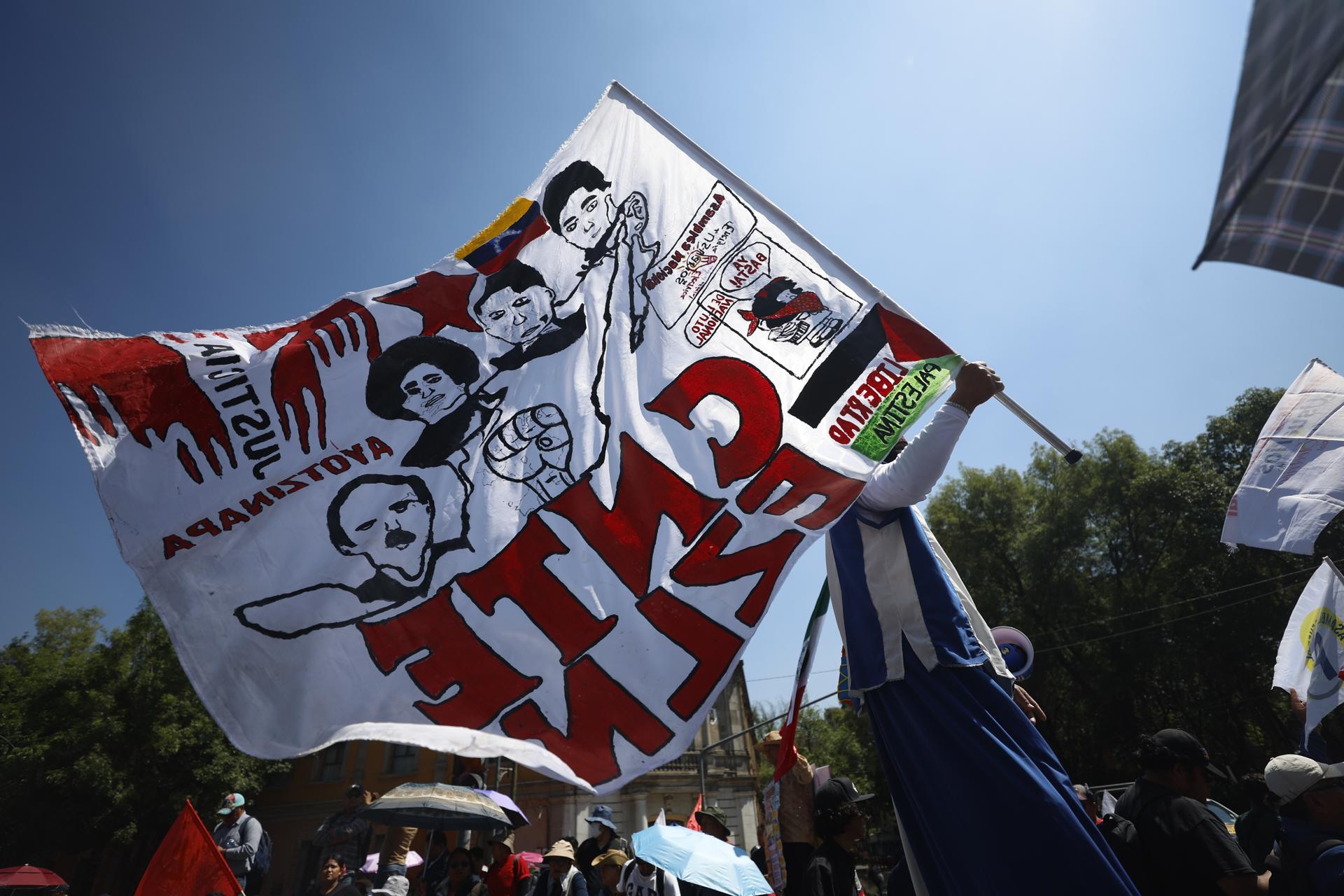
The streets of Mexico City are about to become the stage for one of the most dramatic labor protests in recent memory—and the world is watching. This Monday, the National Coordinator of Education Workers, or CNTE, is set to flood the capital with a massive march, shutting down major arteries in the process. The timing couldn’t be more charged: just days before the FIFA World Cup kicks off in the U.S., Mexico’s education system is at a boiling point, with teachers demanding reforms that could reshape public schooling for generations.
At the heart of the standoff is a high-stakes negotiation between the CNTE, Mexico’s most powerful teachers’ union, and the federal government under President Claudia Sheinbaum. The union, representing tens of thousands of educators, has vowed to paralyze the city unless their demands—including better wages, working conditions, and an end to what they call the “neoliberal education model”—are met. Meanwhile, the government has signaled a willingness to engage, with officials emphasizing a focus on “viable demands” ahead of the global sporting spectacle.
The Protest’s Scale and Stakes
The CNTE’s planned mobilization isn’t just another labor demonstration—it’s a full-blown occupation. Local media reports indicate that key routes in the capital, including Avenida de los Insurgentes and Paseo de la Reforma, will be blocked for hours, disrupting commutes and potentially straining logistics for the World Cup. The union has framed this as a last resort, following months of failed negotiations and what they describe as a “criminalization” of their movement by authorities.
What makes this moment particularly fraught is the intersection of education and culture. Mexico’s public school system, long a battleground for political and social movements, has historically been a microcosm of broader national tensions. The CNTE’s fight isn’t just about paychecks; it’s about the future of Mexican education, a system that has been both celebrated for its grassroots organizing and criticized for its bureaucratic inefficiencies. For many, the union’s demands strike at the core of what it means to educate—and be educated—in a country with deep inequalities.
Sheinbaum’s Delicate Tightrope
President Sheinbaum, a former Mexico City mayor with a background in education policy, finds herself in a precarious position. Her administration has publicly expressed confidence in reaching an agreement, but the clock is ticking. With the World Cup less than a week away, any disruption to Mexico’s infrastructure could have global repercussions, from tourism to international perceptions of stability.
In a statement, Sheinbaum’s team emphasized that negotiations would prioritize “demands that are feasible and aligned with the national development plan.” The phrase “viable demands” has become a focal point, with critics arguing it’s a way to water down the union’s core grievances. The CNTE, for its part, has dismissed such language as a smokescreen, insisting that their fight is non-negotiable.
What’s clear is that this isn’t just a labor dispute—it’s a test of Sheinbaum’s ability to balance progressive rhetoric with the realities of governance. Her predecessor, Andrés Manuel López Obrador, often clashed with the CNTE, leading to violent confrontations in 2019. Sheinbaum, however, has positioned herself as a mediator, though her track record on education reform remains unproven.
A Movement with Cultural Weight
The CNTE’s influence extends far beyond the classroom. The union has long been a force in Mexican politics, with its members often at the forefront of social movements. Their protests have been immortalized in art, music, and even film, reflecting their role as both educators and activists. For many Mexicans, the CNTE represents the voice of the working class—a group whose struggles are frequently sidelined in national conversations.
This week’s march, then, isn’t just about traffic jams or political posturing. It’s a reminder that culture and labor are inextricably linked. The teachers’ fight mirrors broader global conversations about the value of public education, the rights of workers, and the role of unions in shaping society. In a country where education has historically been a tool for both liberation and control, the CNTE’s demands resonate far beyond the picket lines.
What Happens Next?
Barring a last-minute breakthrough, Monday’s march will likely escalate tensions, with both sides digging in for what could be a prolonged standoff. The government has hinted at a willingness to engage in dialogue, but the CNTE has made it clear that symbolic gestures won’t suffice. With the World Cup looming, time is not on anyone’s side.
One thing is certain: this story won’t fade with the end of the protest. The CNTE’s fight is part of a larger narrative about Mexico’s future—one where the classroom is as much a battleground as the boardroom. For now, the capital’s streets will bear the weight of that struggle, and the world will be watching.
