
Anastasia Kalinskaya’s Historic Roland-Garros Run: How She Defeated Veronika Potapova to Reach Her First Grand Slam Quarterfinal
In a match that tested nerves, endurance, and the very limits of clay-court tennis, 21-year-old Anastasia Kalinskaya scripted one of the most dramatic stories of the 2026 French Open. With a 6-4, 6-7(5), 7-6(7) victory over 20th-ranked Veronika Potapova on Wednesday, Kalinskaya not only secured her first Grand Slam quarterfinal appearance but also cemented her place as the breakout star of this year’s Parisian tournament. The win—marked by a thrilling three-set battle and a hard-fought super tiebreak—comes as a seismic shift in the women’s game, where young challengers are increasingly dismantling the dominance of established champions.
The victory also underscores a broader trend: the rise of a new generation of Russian players who, despite the challenges of international competition, continue to deliver clutch performances on the world’s biggest stage. For Kalinskaya, whose career has been defined by rapid ascension and occasional setbacks, this triumph is more than a personal milestone—it’s a statement about resilience, adaptability, and the relentless pursuit of greatness in an era where consistency often separates the legends from the contenders.
—
Kalinskaya’s Path to the Quarterfinal: A Match Defined by Grit and Gritty Exchanges
The clash between Kalinskaya and Potapova was never going to be a walkover. Potapova, a former junior champion and a player known for her aggressive baseline game, entered the match as the higher-ranked seed and a formidable opponent. But Kalinskaya, who had already stunned the tennis world by defeating two top-10 players in her previous rounds—including a grueling three-set victory over Ons Jabeur—was on a mission to prove she belonged in the conversation.
The first set was a masterclass in Kalinskaya’s defensive prowess. Potapova, who thrives on dictating rallies, found herself constantly on the back foot as Kalinskaya’s topspin forehand and relentless movement wore her down. The Russian’s ability to construct points from deep in the court—often turning defense into attack—was a recurring theme. By the time the set ended 6-4, it was clear that Kalinskaya was playing with a confidence that belied her age.
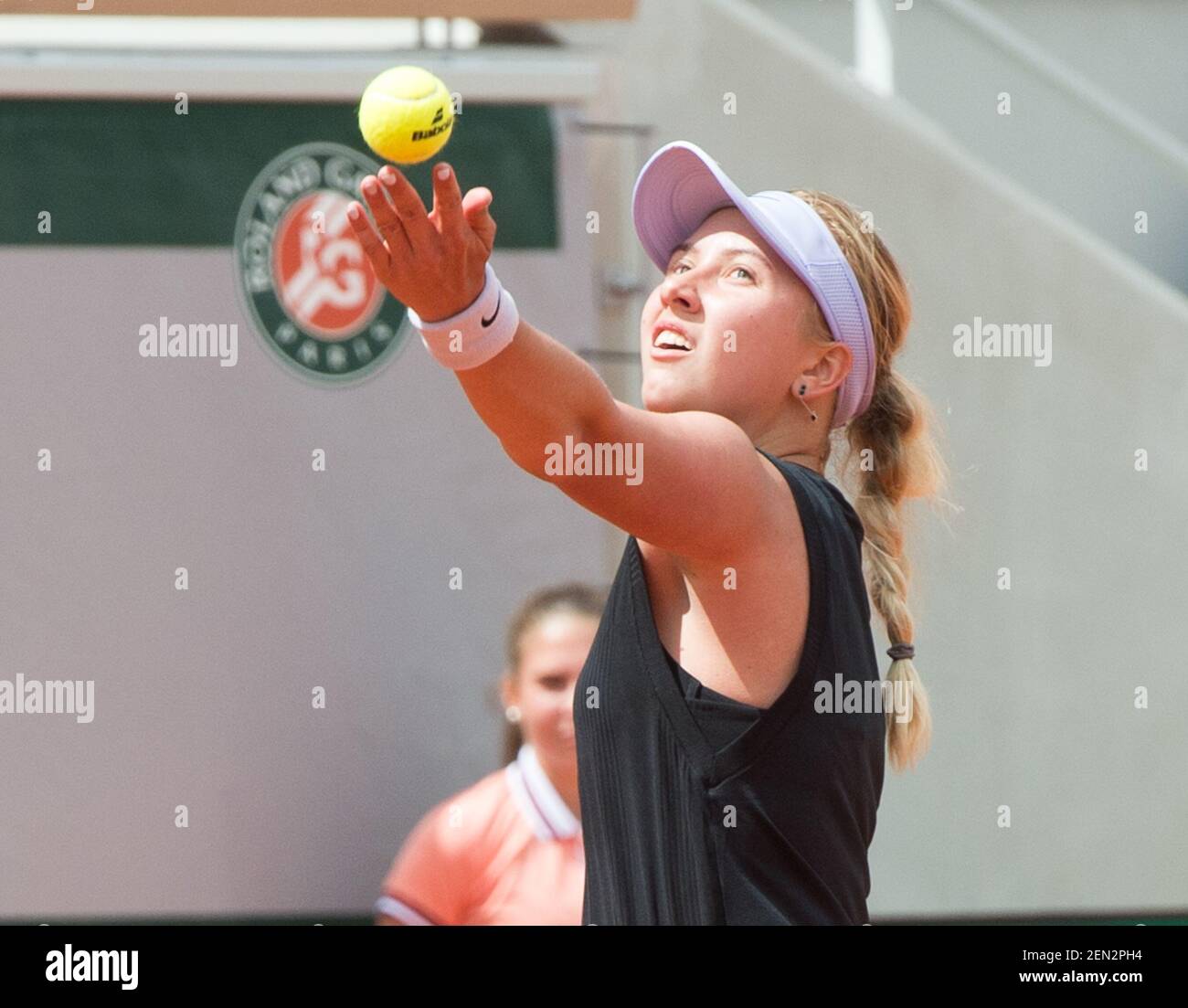
However, the second set exposed the cracks in Kalinskaya’s game. Potapova, sensing an opening, unleashed a flurry of winners down the lines and inside-out forehands that left Kalinskaya scrambling. The Kazakhstani’s serve, which had been a liability in the first set, suddenly became a weapon as she held six of her seven service games. The set slipped away 6-7 in a tiebreak that saw Kalinskaya miss three match points before finally breaking Potapova’s serve to force a decider.
Key Moment: At 5-5 in the third set, Kalinskaya faced a break point with Potapova serving at 0-40. Instead of going for the kill, she played a conservative return, allowing Potapova to hold. The crowd at Philippe Chatrier Stadium roared as the Kazakhstani saved the point, but Kalinskaya’s composure in the following games—where she broke Potapova twice in a row—proved decisive. The super tiebreak that followed was a rollercoaster, with both players exchanging holds and break points before Kalinskaya sealed the match with a winner off Potapova’s backhand.
Match Stats (via official Roland-Garros data):
| Statistic | Kalinskaya | Potapova |
|---|---|---|
| First Serve % | 58% | 62% |
| First Serve Points Won | 68% | 63% |
| Double Faults | 2 | 5 |
| Aces | 3 | 1 |
| Unforced Errors | 28 | 34 |
| Winners | 22 | 18 |
Kalinskaya’s ability to minimize unforced errors and maximize winners in high-pressure moments was the difference.
—
Who Are the Players? Kalinskaya’s Rise and Potapova’s Struggle to Recover
Anastasia Kalinskaya’s journey to this point has been nothing short of meteoric. Born in Moscow in 2004, she turned professional in 2021 and quickly climbed the rankings through sheer determination and an unorthodox playing style. Her game—built on defensive resilience, relentless movement, and a powerful forehand—has drawn comparisons to former clay-court specialists like Rafael Nadal and Justine Henin. But unlike those legends, Kalinskaya has had to navigate a path less traveled, often playing in lower-tier tournaments before breaking into the top 100.
Her 2025 season was a turning point. After reaching the semifinals of the Madrid Open and the quarterfinals of the Italian Open, Kalinskaya entered Roland-Garros as the 14th seed, the youngest player in the top 15. Her run to the quarterfinals—where she’ll next face either Coco Gauff or Belinda Bencic—has already earned her comparisons to the next generation of French Open champions.
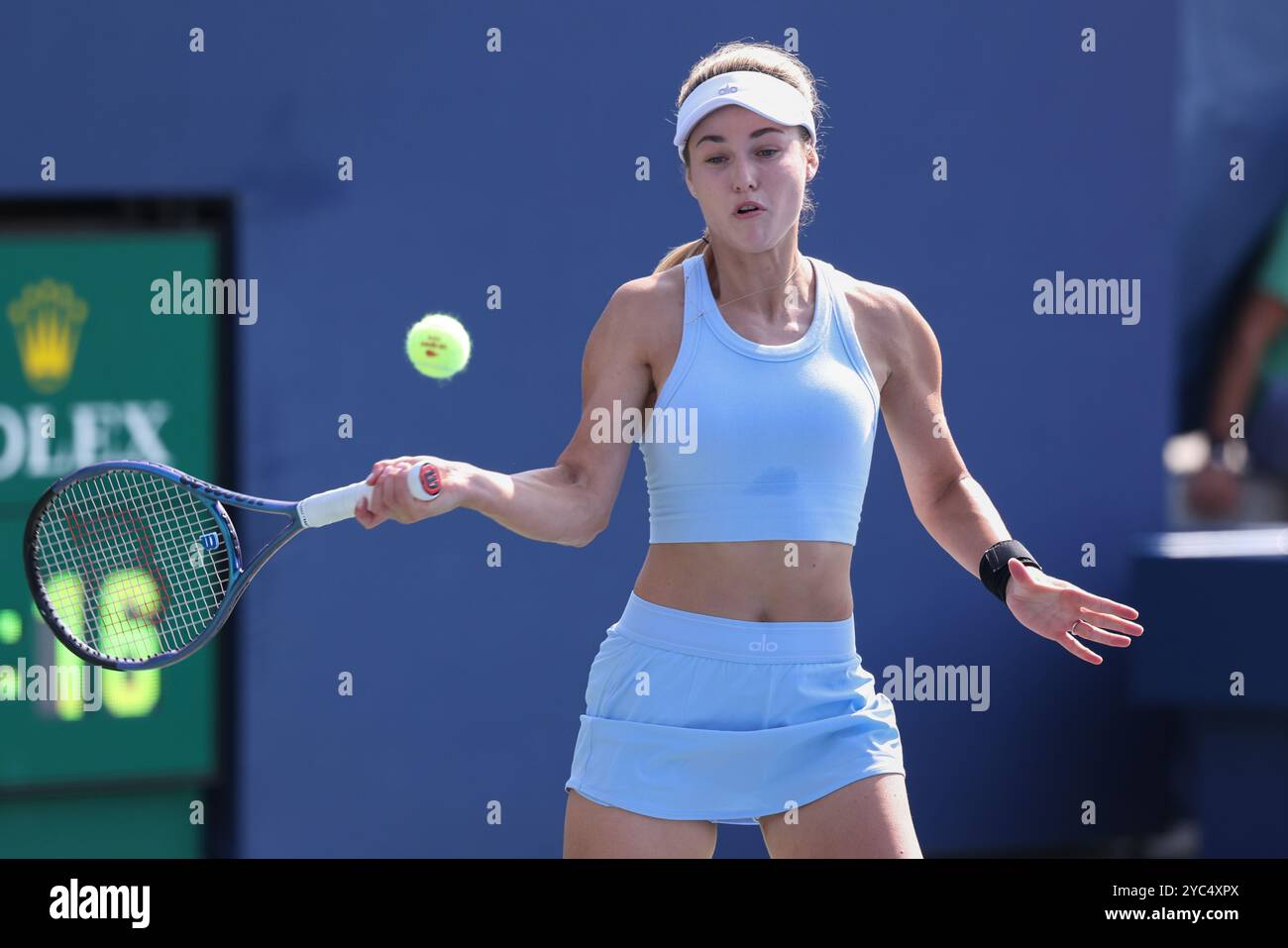
In contrast, Veronika Potapova’s career has been marked by flashes of brilliance and periods of inconsistency. The Kazakhstani, who reached a career-high ranking of No. 17 in 2024, has struggled to maintain her form in Grand Slams. Her 2026 season had been uneven, with early exits at the Australian Open and Wimbledon before she rallied to reach the fourth round in Paris. The loss to Kalinskaya, however, exposed a vulnerability in her game: a lack of consistency in big moments.
Career Milestones:
- Kalinskaya: First Grand Slam quarterfinal (2026 French Open), Top 15 ranking (2025), WTA Tour Level finalist (2024 Madrid).
- Potapova: Junior Grand Slam champion (2020 Wimbledon), Top 20 ranking (2024), Best Grand Slam result: Round of 16 (2024 US Open).
While Potapova has the tools to compete with the best, Kalinskaya’s ability to thrive under pressure has set her apart.
—
Why This Match Matters: The New Face of Russian Tennis and the Evolution of Clay-Court Play
Kalinskaya’s victory is more than just a personal triumph—it’s a reflection of a shifting landscape in women’s tennis. For years, the sport has been dominated by a core group of players: Iga Świątek, Aryna Sabalenka, and Ons Jabeur. But the emergence of Kalinskaya, alongside players like Clara Tauson and Petra Martić, signals a new era where depth and variety are replacing the old guard’s monopoly.
Her success also highlights the resilience of Russian tennis in the face of adversity. Despite sanctions and travel restrictions, Russian players have continued to compete at the highest level, often under the banner of neutral eligibility. Kalinskaya’s run at Roland-Garros is a testament to the determination of athletes who refuse to let external circumstances dictate their success.
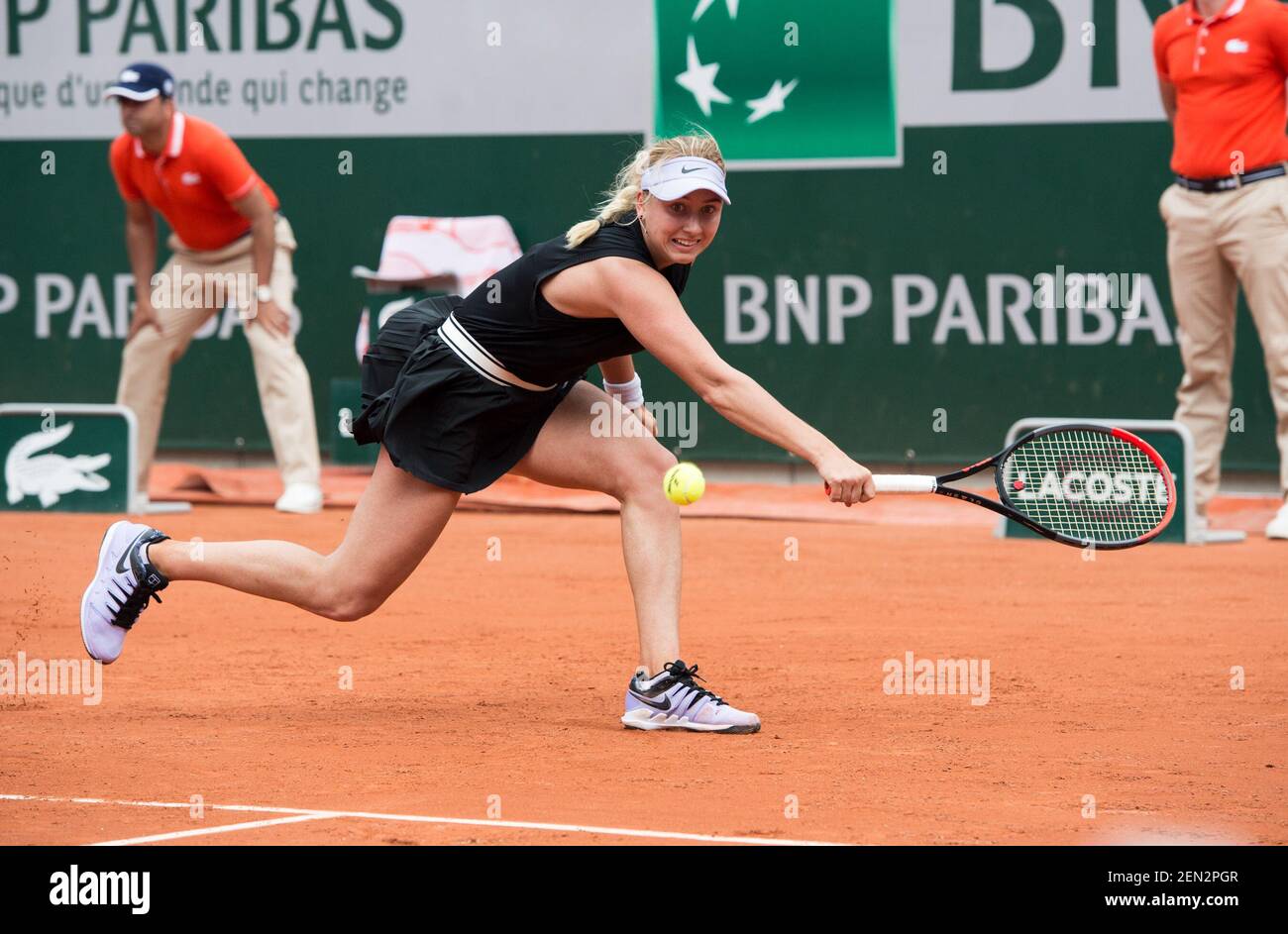
From a tactical standpoint, Kalinskaya’s victory underscores a growing trend in modern clay-court tennis: the effectiveness of defensive, counterpunching styles. In an era where power baseliners like Sabalenka and Jabeur dominate, Kalinskaya’s ability to construct points from the back of the court—and then transition into attack—has become a blueprint for success. Her match against Potapova was a masterclass in patience and precision, two qualities that are increasingly rare at the highest level.
Expert Perspective:
“Kalinskaya’s game is a reminder that tennis isn’t just about power anymore. It’s about intelligence, movement, and the ability to make your opponent uncomfortable. She’s not the biggest server, not the hardest hitter, but she’s the most unpredictable. That’s what makes her dangerous.”
Kalinskaya’s victory comes at a time when the WTA is grappling with how to support emerging talents. With prize money and sponsorship deals often favoring established stars, players like Kalinskaya must navigate a system that rewards consistency over flashy results. Her rapid rise suggests that the WTA’s focus on developing young talent is beginning to pay off.
—
Reactions and the Road Ahead: What Kalinskaya’s Quarterfinal Means for Her Career
The tennis world reacted swiftly to Kalinskaya’s historic win. Fellow players, coaches, and analysts praised her mental toughness and adaptability, with many drawing parallels to the careers of past clay-court specialists.
Player Reactions:
- Ons Jabeur: “Anastasia is playing like a woman on a mission. She’s not afraid to take risks, but she’s even less afraid to make her opponent take risks. That’s the mark of a future champion.”
- Petra Kvitová: “I’ve seen her play before, and she’s always been special. But today, she showed something different—a killer instinct. That’s what separates the good from the great.”
- Anastasia Pavlyuchenkova: “She’s not just a clay-court specialist; she’s a complete player. If she can maintain this form, she’ll be a threat everywhere.”
Kalinskaya herself remained composed in her post-match press conference, acknowledging the challenge ahead but refusing to dwell on the pressure. “I knew this was going to be tough,” she said. “But every point, every game, I just focused on the next one. That’s what you have to do in these big matches.”
Her next opponent, either Coco Gauff or Belinda Bencic, will present a stark contrast in style. Gauff’s all-court game and Bencic’s aggressive serve-and-volley approach will test Kalinskaya’s adaptability. If she can navigate this hurdle, she could well be on course for her first Grand Slam semifinal—and a ranking that would place her among the top 10 for the first time.
What’s Next for Kalinskaya?
- A quarterfinal clash with either Gauff or Bencic, likely on Saturday.
- Potential semifinal against Świątek or Sabalenka if she advances.
- A ranking jump into the top 10, solidifying her status as a future Grand Slam contender.
- Increased scrutiny from sponsors and the WTA, who may offer her a more prominent role in future tournaments.
—
FAQ: Key Questions About Kalinskaya’s Historic Win and the French Open Quarterfinal
Q: How significant is Kalinskaya’s victory in the context of Russian tennis?
A: Kalinskaya’s win is a major statement for Russian tennis, which has faced numerous challenges in recent years, including sanctions and limited access to international tournaments. Her success proves that Russian players can still compete at the highest level despite these obstacles. Her rise comes at a time when the WTA is looking to develop new talent, and Kalinskaya’s performance could inspire a new generation of players from Russia and beyond.
Q: What makes Kalinskaya’s playing style unique compared to other top clay-court players?
A: Unlike many modern clay-court players who rely on power and aggression, Kalinskaya’s game is built on defensive resilience, exceptional movement, and tactical patience. She often constructs points from deep in the court before transitioning into attack, making her difficult to read. This style has earned her comparisons to legends like Rafael Nadal and Justine Henin, who also thrived on clay by outlasting opponents.
Q: How does Kalinskaya’s ranking compare to other young stars in women’s tennis?
A: At 21, Kalinskaya is already ranked in the top 15, making her one of the youngest players in the top 20. She joins a select group of rising stars, including Coco Gauff (No. 8), Clara Tauson (No. 12), and Petra Martić (No. 18), who are challenging the dominance of the current top-ranked players. Her rapid ascent suggests she could soon join the elite tier of the sport.
Q: What challenges does Kalinskaya still face in her career?
A: While Kalinskaya has made incredible progress, she still needs to prove her consistency across all surfaces. Many clay-court specialists struggle on hard courts, where power and serve speed are more critical. She must maintain her mental toughness in high-pressure matches, as her quarterfinal will be a true test of her ability to handle elite competition.
Q: How has the French Open evolved in recent years, and what does Kalinskaya’s success say about the tournament’s future?
A: The French Open has seen a shift in recent years, with a greater emphasis on defensive, counterpunching styles that thrive on clay. Players like Kalinskaya, who can construct points and wear down opponents, are increasingly valuable. Her success suggests that the tournament’s future may belong to athletes who combine physical resilience with tactical intelligence—traits that will be crucial as the sport continues to evolve.
Q: What are the implications of Kalinskaya’s win for the WTA’s development programs?
A: Kalinskaya’s rapid rise highlights the importance of the WTA’s youth development initiatives. Her story demonstrates that investing in young talent can yield significant returns, both in terms of player success and fan engagement. The WTA may use her example to push for greater support for emerging athletes, including better funding, coaching resources, and tournament opportunities.
—
The 2026 French Open has already delivered one of its most compelling narratives: the story of Anastasia Kalinskaya. From her first-round upset of a top-10 player to her hard-fought victory over Potapova, she has captured the imagination of tennis fans worldwide. As she prepares to take on the next challenge, one thing is clear—this is only the beginning.
For now, the focus remains on Paris. The clay courts of Roland-Garros have seen legends rise and fall, but Kalinskaya’s journey is still being written. And if her performance in the quarterfinals is any indication, the next chapter could be her most extraordinary yet.
