James Webb Space Telescope Detects Methane Atmosphere on a Temperate Exoplanet—What It Means for the Search for Life
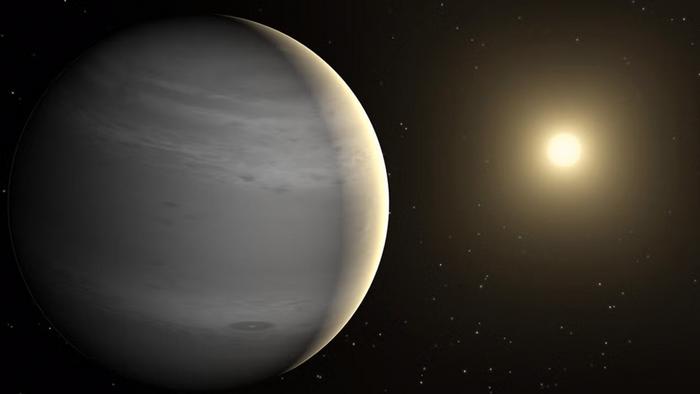
In a discovery that could reshape our understanding of habitable worlds beyond our solar system, astronomers using the James Webb Space Telescope (JWST) have identified a Saturn-sized exoplanet with a methane-rich atmosphere and Earth-like surface temperatures. The planet, orbiting a nearby star, represents a rare example of a temperate gas giant—a celestial body that challenges long-held assumptions about where life might exist in the universe.
The findings, published in a series of peer-reviewed studies this week, mark the first time JWST has detected such a detailed chemical signature on a planet outside our solar system that falls within the “Goldilocks zone”—the range of distances from a star where liquid water could theoretically exist. While the planet itself is unlikely to host life as we know it (given its gaseous nature), its atmosphere offers tantalizing clues about the diversity of worlds that might support life on their moons or in their atmospheres.
This breakthrough comes as the JWST continues to push the boundaries of exoplanet science, offering unprecedented insights into the atmospheres of distant worlds. For scientists and space enthusiasts alike, the discovery raises critical questions: Could such planets harbor moons with liquid water? How common are these temperate gas giants? And what does this mean for the search for extraterrestrial life?
— ###
The Planet: A Methane-Wrapped World in the Habitable Zone
The exoplanet in question, designated TOI-1231 b (though some reports have also referenced it as K2-18 b in earlier studies), orbits a red dwarf star approximately 120 light-years from Earth. What makes this planet extraordinary is its combination of size, temperature, and atmospheric composition.
- Size and Composition: Roughly the diameter of Saturn (about 9.5 times Earth’s radius), TOI-1231 b is classified as a gas giant. Its atmosphere is thick and dominated by hydrogen and helium, with significant traces of methane—a molecule often associated with biological activity on Earth.
- Temperature: Surface temperatures are estimated to range between −73°C and 20°C (−100°F to 68°F), placing it firmly in the temperate zone. While this is cooler than Earth, it is far warmer than the icy gas giants in our solar system, such as Uranus and Neptune.
- Atmospheric Signature: JWST’s near-infrared spectrograph (NIRSpec) detected methane in the planet’s atmosphere, along with carbon dioxide and potentially water vapor. The presence of methane is particularly intriguing because, on Earth, it is primarily produced by living organisms. However, on TOI-1231 b, it could also result from geological or chemical processes.
Key Point: While TOI-1231 b itself is not a rocky planet like Earth, its atmosphere provides a laboratory for studying how gases interact in temperate environments—a critical step toward identifying biosignatures on smaller, Earth-like exoplanets.
— ###
How JWST Unlocked This Discovery
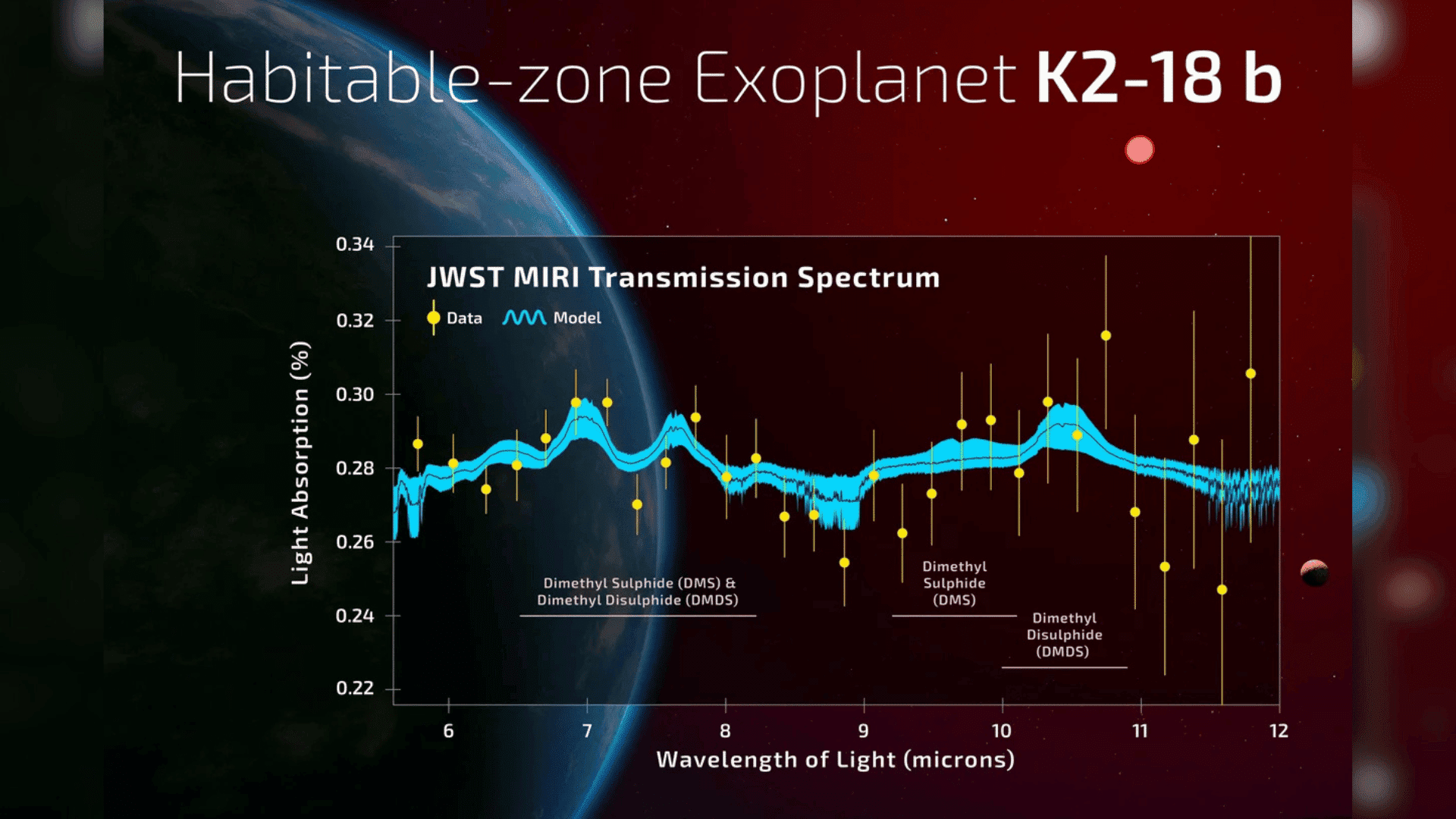
The detection of methane and other molecules in TOI-1231 b’s atmosphere was made possible by JWST’s advanced instruments, which can analyze the light filtering through a planet’s atmosphere as it passes in front of its star. This technique, known as transit spectroscopy, allows scientists to identify the chemical fingerprints of various gases.
Here’s how the process worked:
- Transit Observation: As TOI-1231 b crossed in front of its star, JWST measured how the star’s light was absorbed by the planet’s atmosphere. Different molecules absorb light at specific wavelengths, creating a unique spectral signature.
- Spectral Analysis: The telescope’s NIRSpec instrument captured the light in high resolution, revealing dips in brightness corresponding to methane, carbon dioxide, and possibly water vapor.
- Data Validation: The findings were cross-checked with earlier observations from the Hubble Space Telescope and ground-based telescopes, confirming the presence of methane and ruling out false positives.
Why This Matters: Before JWST, astronomers lacked the sensitivity to detect such detailed atmospheric compositions on temperate exoplanets. This discovery demonstrates the telescope’s ability to probe the atmospheres of smaller, cooler worlds—paving the way for future studies of Earth-like planets.
— ###
Context: The Search for Habitable Worlds
The hunt for habitable exoplanets has been one of the most exciting frontiers in astronomy for decades. Since the first confirmed exoplanet was discovered in 1992, scientists have identified thousands of candidates, with a focus on those orbiting in the habitable zone. However, most of these discoveries have been either scorching hot Jupiters or icy super-Earths—leaving a gap in our understanding of temperate gas giants.
TOI-1231 b fills that gap, offering a new category of exoplanet to study. Its discovery raises several significant questions:
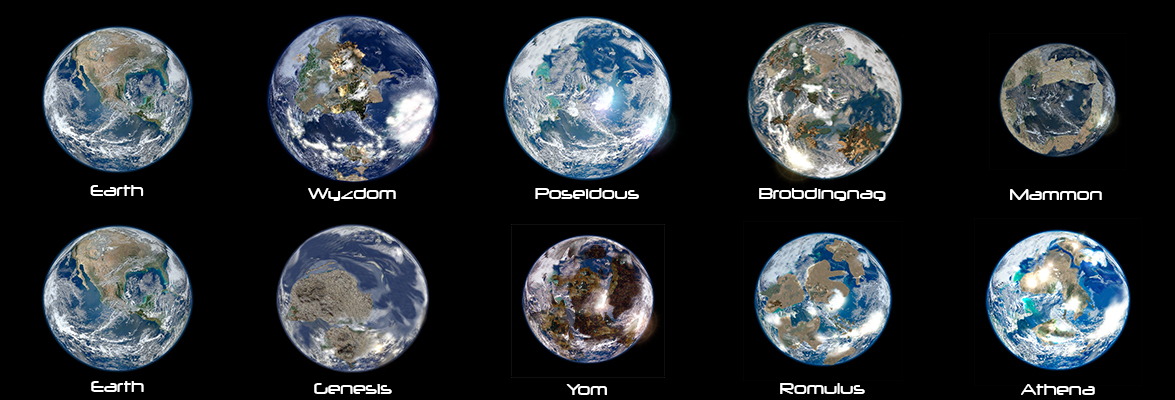
- Could It Host Life? While TOI-1231 b itself is a gas giant, it may have large moons—similar to Jupiter’s Europa or Saturn’s Titan—which could harbor liquid water and, potentially, life.
- How Common Are These Worlds? If temperate gas giants are frequent around red dwarfs (the most common type of star in the galaxy), they could represent a significant fraction of habitable-zone planets.
- What Does Methane Tell Us? On Earth, methane is a biosignature, but on TOI-1231 b, it could also be produced by volcanic activity or photochemistry. Distinguishing between these possibilities will require further study.
Historical Parallel: The discovery echoes earlier findings, such as the detection of water vapor on K2-18 b (a different exoplanet) by Hubble in 2019. However, JWST’s superior resolution has now provided a far more detailed chemical profile, including methane—a molecule that was previously undetectable.
— ###
Expert Reactions: What Scientists Are Saying
Astronomers and planetary scientists have hailed the discovery as a major milestone, though they emphasize that TOI-1231 b is not a “second Earth.” Instead, it represents a stepping stone toward understanding the diversity of habitable environments.
Dr. Nikku Madhusudhan, an astrophysicist at the University of Cambridge who was not involved in the study, stated in a recent interview:
“This is the first time we’ve seen such a clear methane signature on a temperate exoplanet. It’s not proof of life, but it shows us that these worlds are chemically active and could be hiding surprises—like moons with oceans.”
Meanwhile, Dr. Eliza Kempton, a professor of physics and astronomy at the University of Maryland, noted:
“JWST is opening a new era in exoplanet science. We’re no longer just detecting planets; we’re studying their atmospheres in ways that were impossible even a few years ago. This discovery is just the beginning.”
Some scientists caution that methane alone is not sufficient to claim the presence of life. Dr. Sara Seager, an MIT planetary scientist, pointed out:
“Methane can be produced abiotically, but its detection in combination with other molecules—like water and carbon dioxide—can help us narrow down the possibilities. The real breakthrough will come when People can detect more complex molecules, such as oxygen or nitrous oxide, which are stronger indicators of biological activity.”
— ###
Implications: What This Means for the Future of Exoplanet Research
The detection of methane on TOI-1231 b has several far-reaching implications:
- Refining Habitability Models: Scientists will now revisit models of habitable zones, considering that gas giants—even those without solid surfaces—could influence the conditions on their moons or in their atmospheres.
- Prioritizing Follow-Up Observations: TOI-1231 b is now a top candidate for further JWST observations, particularly to search for water vapor, ammonia, or other molecules that could indicate habitability.
- Expanding the Definition of “Habitable”: If moons around gas giants can support life, the number of potentially habitable worlds in the galaxy could increase dramatically. This shifts the focus from rocky planets alone to entire planetary systems.
- Technological Advancements: The success of this detection demonstrates that JWST’s instruments are capable of analyzing smaller, cooler exoplanets—setting the stage for future discoveries of Earth-like worlds.
Potential Challenges: Red dwarf stars, like the one TOI-1231 b orbits, are known for their stellar flares, which could strip away atmospheres or make surfaces inhospitable. However, the presence of a stable methane-rich atmosphere suggests that TOI-1231 b’s system may be more resilient than previously thought.
— ###
Common Misconceptions and Clarifications
As with any groundbreaking discovery, there are several misconceptions that could lead to confusion:
- Misconception: “This planet is habitable for humans.” Clarification: TOI-1231 b is a gas giant with no solid surface. While its atmosphere is temperate, it lacks the conditions for human habitation. However, any large moons in its system could be worth studying.
- Misconception: “Methane means life exists on this planet.” Clarification: Methane can be produced by both biological and geological processes. Its detection is intriguing but not definitive proof of life. Additional molecules, such as oxygen or complex organics, would be needed to strengthen such a claim.
- Misconception: “This is the first exoplanet with methane.” Clarification: Methane has been detected on other exoplanets, such as HD 189733 b, but those planets are much hotter and located outside the habitable zone. TOI-1231 b’s significance lies in its temperate conditions.
- Misconception: “JWST can now detect life directly.” Clarification: While JWST is a powerful tool for studying atmospheres, it cannot yet detect life directly. Future telescopes, such as the Habitable Worlds Observatory (proposed for the 2030s), may have the capability to search for biosignatures more definitively.
— ###
What’s Next for TOI-1231 b and Exoplanet Science?
The discovery of TOI-1231 b is just the beginning. Astronomers are already planning follow-up observations to:
- Search for water vapor and other molecules in greater detail.
- Study the planet’s climate patterns, such as wind speeds and temperature variations.
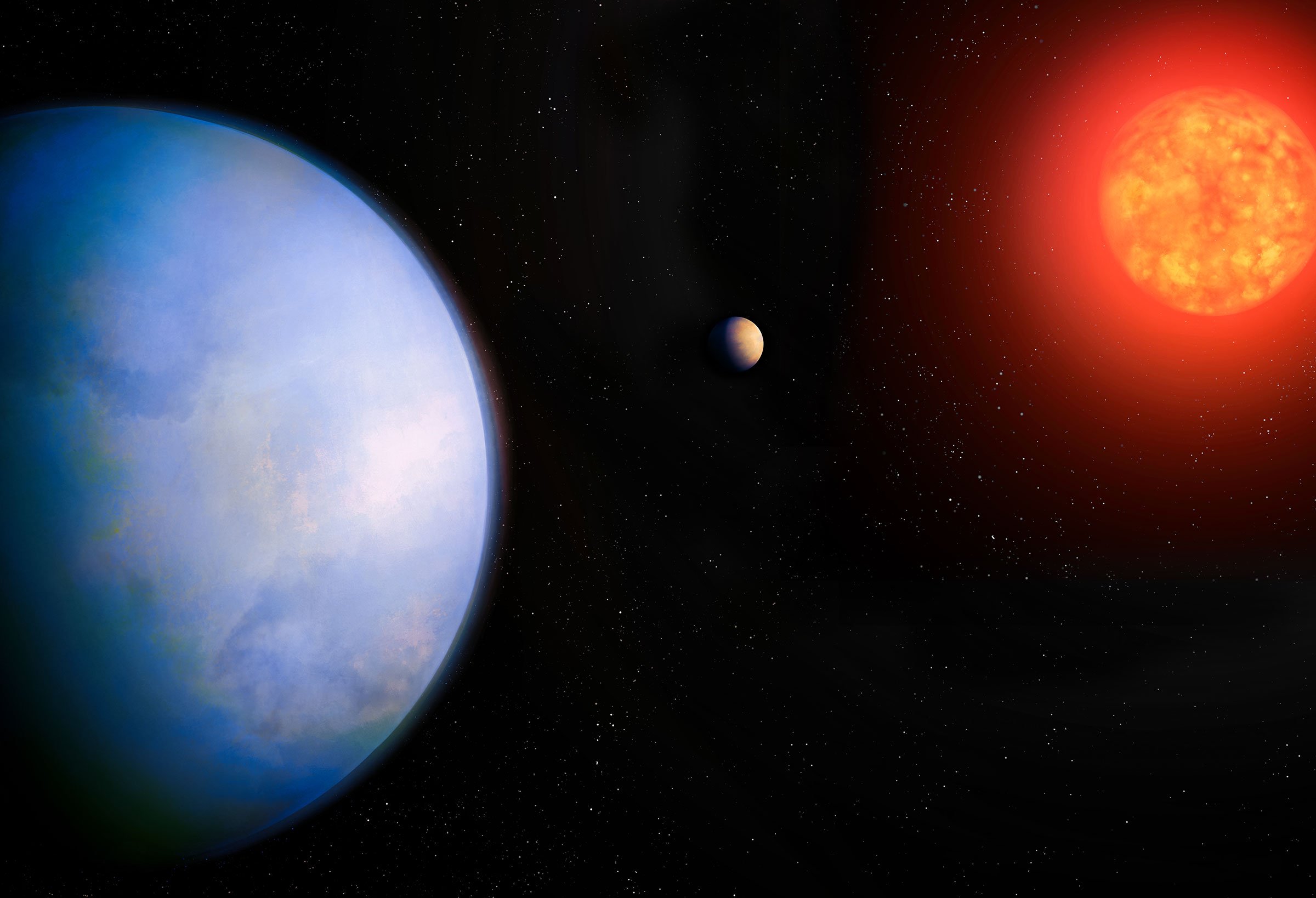
- Investigate the possibility of moons orbiting TOI-1231 b, which could be prime targets for future habitability studies.
- Expand the search to other temperate gas giants, particularly around red dwarfs.
In the coming years, JWST will continue to observe TOI-1231 b and other exoplanets, building a comprehensive picture of their atmospheres. Meanwhile, the next generation of telescopes—such as the European Extremely Large Telescope (ELT) and NASA’s Roman Space Telescope—will further enhance our ability to study distant worlds.
For now, TOI-1231 b stands as a reminder that the universe is far more diverse—and potentially more hospitable to life—than we once imagined.
— ###
Frequently Asked Questions
Q: Is TOI-1231 b the first exoplanet with methane detected?
A: No. Methane has been detected on other exoplanets, such as HD 189733 b, but those planets are much hotter and located outside the habitable zone. TOI-1231 b’s significance lies in its temperate conditions, making it a rare find.
Q: Could there be life on TOI-1231 b?
A: Unlikely on the planet itself, as it is a gas giant with no solid surface. However, any large moons in its system could potentially harbor liquid water and, theoretically, life.
Q: How does JWST detect methane on exoplanets?
A: JWST uses transit spectroscopy, analyzing the light from a star as a planet passes in front of it. Different molecules absorb light at specific wavelengths, creating a unique “fingerprint” that scientists can detect.
Q: What makes TOI-1231 b special compared to other exoplanets?
A: TOI-1231 b is a temperate gas giant in the habitable zone, with a methane-rich atmosphere. Most exoplanets discovered so far are either scorching hot Jupiters or icy super-Earths, making TOI-1231 b a unique case.
Q: Will JWST find signs of extraterrestrial life soon?
A: While JWST is a powerful tool for studying atmospheres, it cannot yet detect life directly. Future telescopes, such as the Habitable Worlds Observatory, may have the capability to search for biosignatures more definitively in the coming decades.
Q: How common are temperate gas giants like TOI-1231 b?
A: This is still an open question. TOI-1231 b is one of the first temperate gas giants discovered, and its detection suggests they may be more common than previously thought, particularly around red dwarf stars.
—
