New One-Step Photochemical Method Converts Pyrazoles to Imidazoles via Nitrogen-Carbon Switching
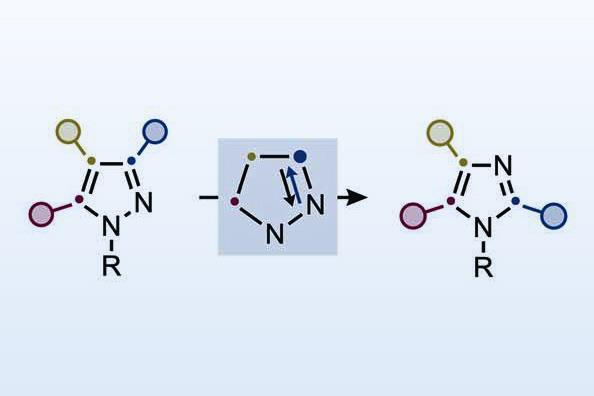
Researchers have developed a one-step photochemical method to convert pyrazoles into imidazoles by switching the positions of nitrogen and carbon atoms. According to reporting by Chemistry World, this light-driven process streamlines the synthesis of critical nitrogen-containing heterocycles, which are fundamental building blocks in the development of pharmaceuticals and agrochemicals.
How the Photochemical Nitrogen-Carbon Switch Works
The core of this chemical breakthrough is a process that allows chemists to rearrange the atomic architecture of a five-membered ring. In this specific reaction, a pyrazole—a ring containing two adjacent nitrogen atoms—is transformed into an imidazole, where the nitrogen atoms are separated by a carbon atom. This “switch” occurs in a single step triggered by light, rather than through a series of labor-intensive chemical reactions.
According to the research, the method utilizes photochemistry to energize the molecules, creating a high-energy state that allows the ring to open and reform with a different connectivity. Traditional organic synthesis usually requires the complete breakdown of one ring and the construction of another from scratch to achieve this change in nitrogen positioning. The one-step approach maintains the core structure while simply shifting the atomic arrangement.
Key technical aspects of the process include:
- Light-Driven Activation: The reaction uses specific wavelengths of light to trigger the molecular rearrangement.
- Atomic Switching: The process effectively swaps the positions of a carbon and a nitrogen atom within the five-membered heterocyclic ring.
- Single-Step Efficiency: The conversion happens in one reaction vessel without the need for isolating intermediate compounds.
The Structural Difference Between Pyrazoles and Imidazoles
To understand the significance of the one-step photochemical method switches nitrogen and carbon to convert pyrazoles into imidazoles – Chemistry World, one must first understand the structural nuances of the molecules involved. Both pyrazoles and imidazoles are five-membered aromatic rings containing two nitrogen atoms, but their arrangement dictates their chemical behavior and biological activity.
Pyrazoles feature nitrogen atoms at the 1 and 2 positions (adjacent). Imidazoles feature nitrogen atoms at the 1 and 3 positions. While the difference seems minor, this shift fundamentally alters how the molecule interacts with biological targets, such as enzymes or receptors in the human body.
| Feature | Pyrazole | Imidazole |
|---|---|---|
| Nitrogen Positions | 1, 2 (Adjacent) | 1, 3 (Separated) |
| Common Use | Analgesics, Anti-inflammatory drugs | Antifungals, Antihistamines |
| Synthesis Path | Typically via hydrazine derivatives | Typically via glyoxal or ammonia |
| Ring Stability | High aromatic stability | High aromatic stability, basic character |
Because these two structures are so similar yet functionally distinct, they are often viewed as “bioisosteres” in medicinal chemistry. This means a chemist might want to swap a pyrazole for an imidazole in a drug candidate to improve its solubility, reduce toxicity, or increase its potency.
Why One-Step Synthesis Matters for Pharmaceutical Research
The ability to switch between these two heterocycles in a single step has direct implications for drug discovery. In the pharmaceutical industry, the “Lead Optimization” phase involves making small, iterative changes to a molecule to see how it affects biological activity. If a researcher discovers that a pyrazole-based molecule is effective but has poor metabolic stability, they may want to test the imidazole version.
Until now, this transition was often a bottleneck. Converting a pyrazole to an imidazole typically required a “de novo” synthesis—destroying the pyrazole ring and building the imidazole ring from basic raw materials. This process can take several days or weeks and often involves hazardous reagents or extreme temperatures.
The reduction of synthetic steps from a multi-stage process to a single photochemical event significantly accelerates the “Design-Make-Test” cycle in drug development.
By using the one-step photochemical method, researchers can create “libraries” of similar molecules much faster. This allows for a more thorough exploration of the chemical space, potentially leading to the discovery of more effective medicines with fewer side effects.
Comparing Traditional Synthesis to Photochemical Ring Transformation
Traditional methods for synthesizing imidazoles often rely on condensation reactions, such as the Debus-Radziszewski imidazole synthesis, which reacts a dicarbonyl compound with ammonia and an aldehyde. While effective, these methods are not “transformative”; they build the ring from the ground up.

The photochemical method described in the Chemistry World report represents a shift toward “late-stage functionalization.” Instead of building a molecule from small pieces, chemists are now finding ways to edit complex molecules that are already mostly complete. This is akin to editing a word in a sentence rather than rewriting the entire paragraph.
Comparison of Synthetic Approaches
- Traditional De Novo Synthesis:
- Requires starting materials specifically for the target ring.
- Involves multiple purification steps (chromatography, recrystallization).
- Often produces more chemical waste (lower atom economy).
- Requires high heat or strong acids/bases.
- One-Step Photochemical Switching:
- Uses an existing pyrazole as the starting material.
- Reduces the number of purification steps.
- Higher atom economy, as most of the original molecule is retained.
- Operates under milder conditions using light as the energy source.
This shift toward light-driven chemistry is part of a broader movement known as “Green Chemistry,” which seeks to reduce the environmental impact of chemical manufacturing by eliminating toxic solvents and reducing energy consumption.
Potential Applications in Drug Discovery and Material Science
The utility of the one-step photochemical method extends beyond simple pharmaceutical swaps. Many naturally occurring compounds and synthetic materials rely on the precise positioning of nitrogen atoms to maintain their properties.
Medicinal Chemistry
Many FDA-approved drugs contain these rings. For example, certain COX-2 inhibitors use pyrazole cores, while many antifungal medications (like ketoconazole) rely on imidazole cores. The ability to switch between these allows researchers to fine-tune the acidity (pKa) of the molecule, which affects how the drug is absorbed in the gut or how it crosses the blood-brain barrier.
Agrochemicals
In the development of pesticides and herbicides, heterocyclic rings are used to target specific proteins in pests or weeds. The photochemical switch allows agrochemical companies to create analogues of existing products to overcome pest resistance, as a slight change in nitrogen positioning can bypass a mutation in a target enzyme.
Material Science
Imidazoles are frequently used as curing agents for epoxy resins and in the production of ionic liquids. The ability to derive these from pyrazole precursors opens new pathways for creating specialized polymers with tailored thermal and electrical properties.
Common Misconceptions About Ring Transformation
A common misconception in organic chemistry is that aromatic rings are too stable to be rearranged without completely destroying them. Because pyrazoles and imidazoles are aromatic, they possess a high degree of resonance stability, which usually makes them resistant to change.
Critics of early ring-transformation theories argued that the energy required to break an aromatic bond would be so high that it would destroy the rest of the molecule. However, the one-step photochemical method demonstrates that by using light, chemists can provide a very specific “packet” of energy (a photon) that excites the molecule into a reactive state without overheating the entire solution. This allows for a precise rearrangement—a “surgical” edit of the molecular structure—rather than a blunt-force destruction.
Another misconception is that photochemical reactions are only useful on a small laboratory scale. While light penetration can be a challenge in large vats (the “photon flux” problem), the industry is moving toward flow chemistry. In flow chemistry, the reaction mixture is pumped through thin tubes exposed to light, ensuring every molecule receives the necessary energy. This makes the one-step photochemical method scalable for industrial production.
The Role of Photoredox Catalysis in Modern Chemistry
The method reported by Chemistry World sits within the larger context of photoredox catalysis. This field involves using a catalyst (often a metal complex like ruthenium or iridium, or an organic dye) to absorb light and transfer electrons to the target molecule.
In the case of converting pyrazoles to imidazoles, the light-driven process likely involves the creation of a radical intermediate. A radical is a molecule with an unpaired electron, making it highly reactive. By creating a temporary radical state, the nitrogen-carbon bonds can break and reform in the more stable imidazole configuration.
This approach is significantly more sustainable than traditional redox reactions, which often require stoichiometric amounts of heavy metals or toxic oxidants. By using a catalyst and light, the process becomes “catalytic,” meaning a small amount of the catalyst can trigger thousands of transformations without being consumed.
For those interested in how these methods are evolving, a related explainer on photoredox catalysis provides more detail on the electron-transfer mechanisms used in these reactions.
Technical Challenges and Future Directions
Despite the efficiency of the one-step photochemical method, several challenges remain before it becomes a universal tool in the chemist’s kit. The primary issue is regioselectivity. When a ring rearranges, there is a risk that the atoms will settle into several different positions, creating a mixture of isomers (molecules with the same formula but different shapes).
Researchers are currently working on “directing groups”—specific chemical attachments that guide the nitrogen and carbon atoms into the exact desired positions. By adding a temporary “handle” to the pyrazole ring, chemists can force the rearrangement to occur in only one direction, ensuring a pure imidazole product.
Furthermore, the search for more sustainable light sources is ongoing. While many lab reactions use expensive mercury lamps or high-powered LEDs, the goal is to move toward visible light—and potentially even sunlight—to drive these transformations. This would further reduce the carbon footprint of pharmaceutical manufacturing.
Frequently Asked Questions
What is the main difference between a pyrazole and an imidazole?
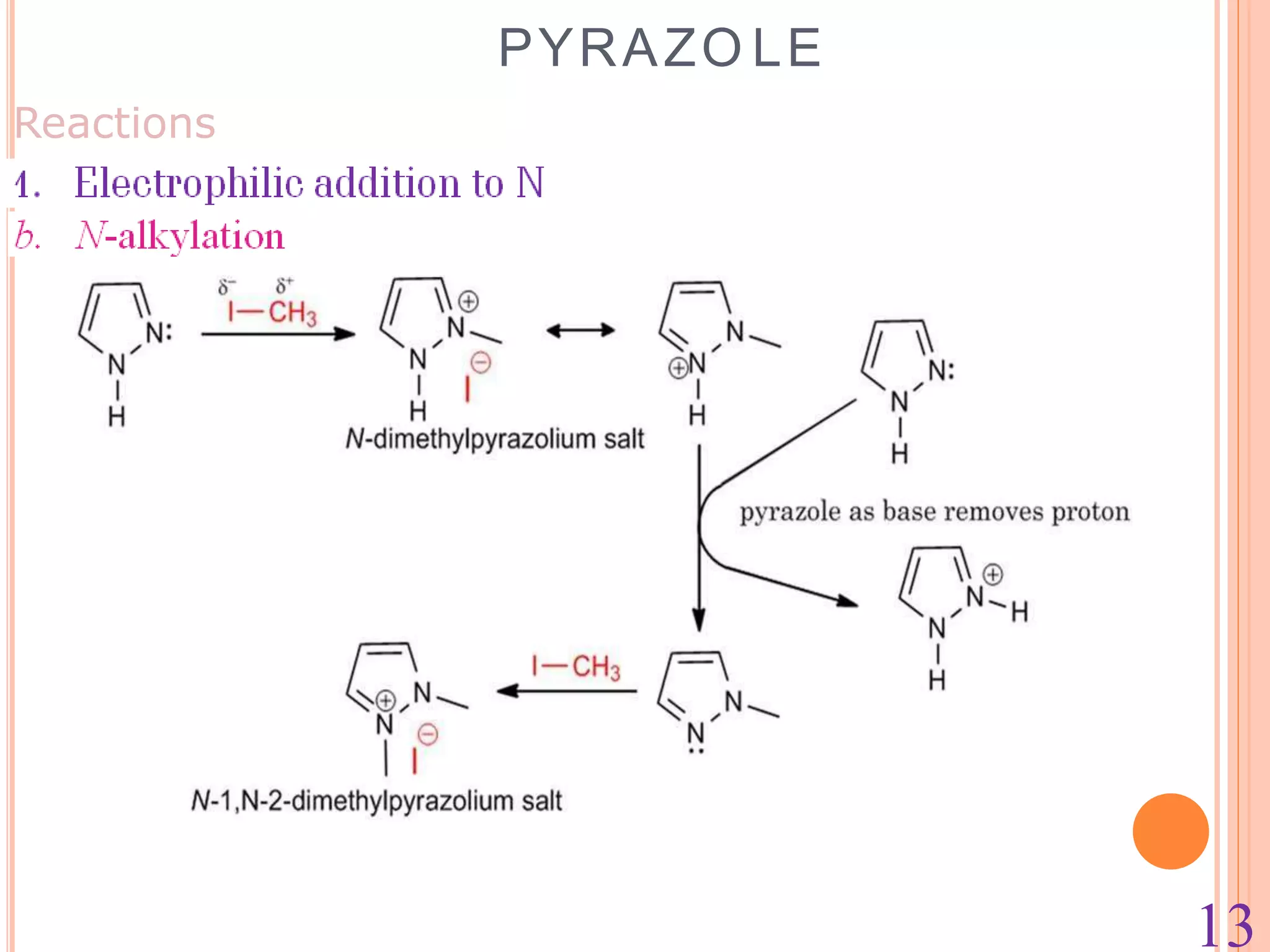
The primary difference is the position of the two nitrogen atoms in the five-membered ring. In pyrazoles, the nitrogens are adjacent (positions 1 and 2). In imidazoles, they are separated by a carbon atom (positions 1 and 3). This change in structure alters the molecule’s chemical properties and how it interacts with biological systems.
Why is a “one-step” method better than traditional synthesis?
Traditional synthesis often requires building the ring from scratch, which involves multiple chemical steps, more time, and more waste. A one-step method allows chemists to simply rearrange an existing ring, drastically reducing the time and resources needed to create a new molecule.
How does light trigger this chemical change?
Light provides the specific energy needed to excite the electrons in the pyrazole ring. This excitation allows the stable aromatic bonds to temporarily break and reform into a different, more stable arrangement (the imidazole ring), a process that would otherwise require extreme heat or harsh chemicals.
Can this method be used to make any imidazole?
While the method is versatile, its success depends on the substituents (the other atoms attached to the ring). Some complex groups may interfere with the photochemical process or affect the regioselectivity, meaning researchers must still optimize the reaction for each specific molecule.
Is this method used in commercial drug manufacturing?
Currently, this is primarily a research-grade tool used in drug discovery and lead optimization. However, with the rise of flow chemistry, which allows light to penetrate larger volumes of chemicals, it is becoming increasingly viable for larger-scale industrial applications.
