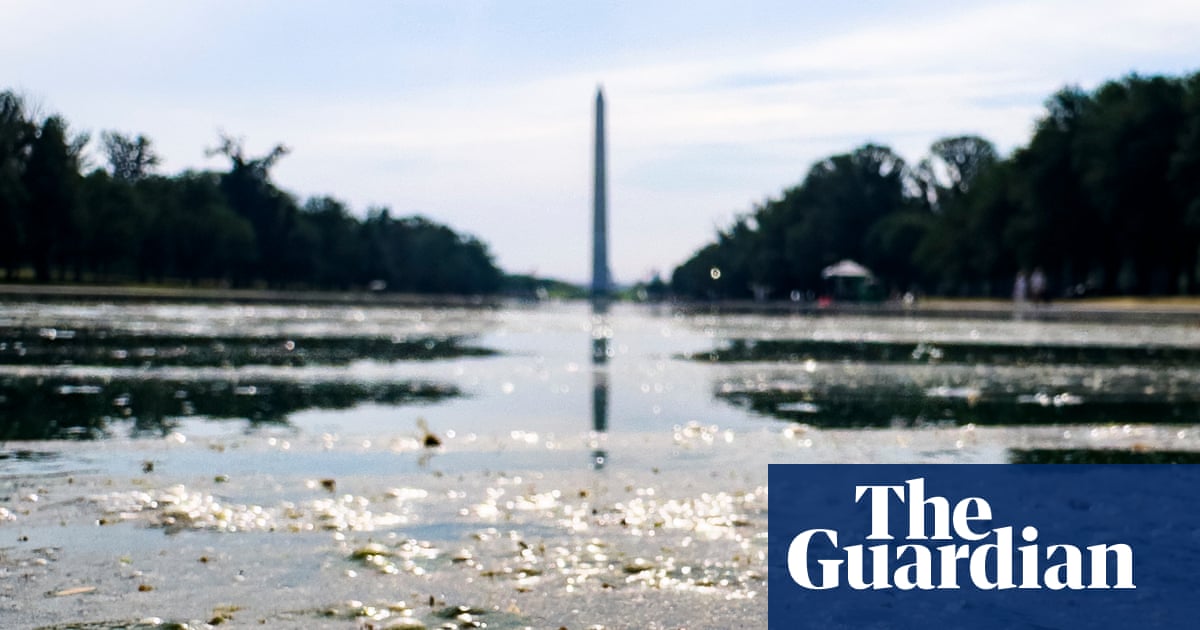
It’s Not Easy Being Green: Trump’s Botched Reflecting Pool Becomes a 2,028-Foot Metaphor
The reflecting pool at the National Mall, a symbol of Washington, D.C.’s civic pride, has become an unexpected focal point in a growing controversy involving former President Donald Trump. Recent incidents, including a dead duckling and claims of vandalism, have reignited debates over the pool’s maintenance and the broader implications of its deteriorating condition. The 2,028-foot-long water feature, once a serene tribute to the nation’s history, has now taken on a symbolic weight, reflecting not just the waters of the Potomac but also the complexities of public accountability and political blame.
What Happened? A Series of Unsettling Incidents
The reflecting pool, located between the Lincoln Memorial and the Washington Monument, has long been a gathering place for tourists, activists, and citizens. However, recent events have cast a shadow over its reputation. In early 2024, a dead duckling was discovered in the pool, sparking immediate speculation about its cause of death. Officials initially attributed the incident to natural causes, but the discovery prompted questions about the pool’s overall maintenance and environmental health.

Days later, a series of reports emerged about the pool’s deteriorating infrastructure. Leaks, algae growth, and structural cracks were cited as ongoing issues, with some experts warning that the pool’s condition could worsen without significant intervention. The U.S. National Park Service, which oversees the site, confirmed that the pool would undergo a temporary draining for repairs, a move that has drawn criticism from local residents and environmental groups.
Trump, who has frequently commented on public spaces during his political career, responded to the situation by blaming “vandals” for the pool’s troubles. In a public statement, he asserted, “The reflecting pool is being destroyed by people who don’t care about our country’s symbols. It’s not my fault, but someone needs to take responsibility.” His remarks were met with skepticism, as no evidence of intentional damage was immediately presented.
Who Is Involved? A Web of Stakeholders
The controversy surrounding the reflecting pool involves a diverse array of stakeholders, from federal agencies to local communities. The U.S. National Park Service (NPS) is the primary authority responsible for maintaining the pool, but its decisions have been scrutinized by lawmakers, environmental advocates, and the public. The NPS has faced pressure to address the pool’s long-term sustainability, particularly as climate change and urban development pose new challenges to historic landmarks.

Local residents and tourism officials have also expressed concerns about the pool’s condition. The National Mall, a major tourist attraction, relies on the reflecting pool to draw visitors, and its deterioration could have economic repercussions. “This isn’t just about a pool—it’s about the legacy of our national monuments,” said a spokesperson for the D.C. Tourism Board. “If the pool isn’t maintained, we risk losing a vital part of our cultural identity.”
Trump’s involvement, while less direct, has amplified the debate. His public statements have drawn attention to the pool’s issues, but critics argue that his focus on blame deflects from the need for systemic solutions. “The former president’s comments risk politicizing a public resource that should be treated with neutrality,” said a political analyst with the Center for Public Integrity. “The pool’s problems are not a political statement—they’re a logistical challenge that requires collaboration, not finger-pointing.”
The Timeline: From Maintenance to Controversy
The reflecting pool’s recent troubles are part of a longer history of maintenance challenges. Built in 1922, the pool has undergone several renovations over the decades, but its aging infrastructure has increasingly come under strain. In 2019, a $16 million renovation project was announced to address leaks and improve water quality, but the work faced delays and budget overruns. By 2023, the pool’s condition had deteriorated to the point where officials began considering a temporary draining to assess the damage.
The 2024 incidents marked a turning point. The discovery of the dead duckling, followed by reports of structural issues, forced the NPS to accelerate its plans. In March 2024, the agency announced that the pool would be drained for repairs, with an estimated timeline of six months. The decision was met with mixed reactions: while some praised the move as necessary, others criticized the lack of transparency about the pool’s long-term viability.
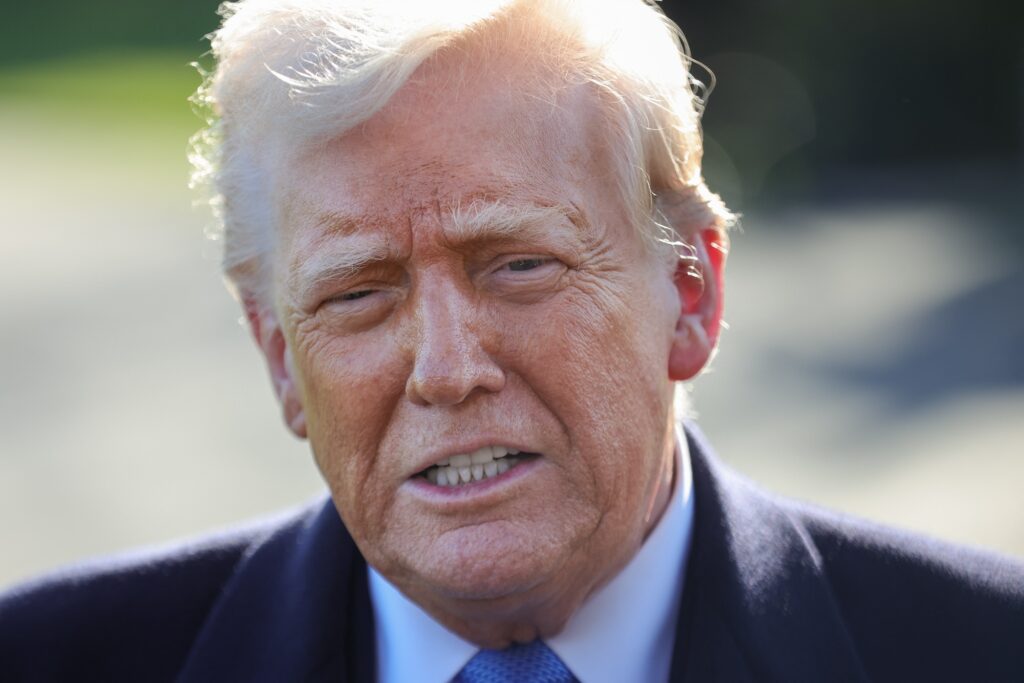
Trump’s comments on the situation came shortly after the draining announcement. His remarks, which framed the pool’s problems as the result of “vandalism,” contrasted with the NPS’s more measured approach. The agency emphasized that the pool’s condition was the result of natural wear and tear, not deliberate sabotage. “There’s no evidence to support the claims of vandalism,” a spokesperson said. “The pool requires routine maintenance, and we’re committed to ensuring it remains a safe and functional space for the public.”
Why It Matters: A Symbol of Public Accountability
The reflecting pool’s issues have taken on symbolic significance, reflecting broader debates about public infrastructure and political responsibility. For many, the pool represents the intersection of history, environment, and governance—a space where the past and present collide. Its deterioration underscores the challenges of maintaining aging landmarks in an era of shifting priorities and limited resources.
The controversy also highlights the role of political figures in shaping public discourse around infrastructure. Trump’s comments, while controversial, have drawn attention to the pool’s condition, but critics argue that his approach prioritizes rhetoric over solutions. “The pool’s problems are a microcosm of larger issues in how we manage public spaces,” said a historian at George Washington University. “When political leaders focus on blame, they risk undermining the collaborative efforts needed to
