
Israeli Offensive in Lebanon Gives Hezbollah New Purpose: Analysis of Conflict and Ceasefire Deadlocks
The geopolitical landscape of the Levant has shifted dramatically following a recent Israeli offensive in Lebanon, an escalation that has paradoxically provided Hezbollah with a revitalized sense of mission. While military operations are typically designed to degrade an opponent’s capabilities, the current trajectory suggests that the Israeli offensive in Lebanon gives Hezbollah new purpose, transforming a tactical struggle into a broader ideological campaign. As the region teeters between total war and a fragile peace, the struggle to implement a sustainable ceasefire has become a focal point for international diplomacy, involving not only local actors but also global powers and volatile energy markets.
At the heart of the current crisis is a complex interplay between state sovereignty and non-state military power. While the Lebanese government and Israel have signaled a willingness to move toward a cessation of hostilities, the actual power to enforce such a deal rests largely with Hezbollah. This tension has created a diplomatic vacuum where official agreements are frequently undermined by the strategic objectives of armed factions on the ground.
The Strategic Paradox: How Military Pressure Creates ‘New Purpose’
In the realm of asymmetric warfare, an offensive by a superior military force can often yield unintended psychological results. The recent Israeli operations in Lebanon were intended to neutralize threats and push back militant infrastructure. However, analysis suggests that these actions have instead served as a catalyst for Hezbollah to redefine its role within Lebanon and the wider region.
When a group like Hezbollah faces an existential or high-intensity military threat, it often pivots its narrative from one of deterrence to one of active resistance. This “new purpose” typically manifests in several ways:
- Ideological Mobilization: The offensive allows the group to frame itself as the primary shield protecting Lebanese sovereignty against foreign aggression.
- Recruitment and Legitimacy: By positioning itself as the only force capable of responding to Israeli incursions, Hezbollah may seek to consolidate its influence over diverse domestic populations.
- Regional Alignment: The conflict reinforces Hezbollah’s role as a critical node in a broader regional axis, linking its local survival to the strategic goals of its allies.
The dynamics of the current conflict illustrate a recurring theme in Middle Eastern geopolitics: military pressure can degrade physical assets, but it can simultaneously strengthen the political and ideological resolve of non-state actors.
The Cycle of Escalation and Justification
The logic of the “new purpose” is rooted in a cycle of escalation. Each Israeli strike provides a justification for Hezbollah to expand its operations, which in turn justifies further Israeli offensives. This loop creates a self-sustaining environment where the goal is no longer a return to the status quo ante, but rather a fundamental shift in the balance of power. For Hezbollah, the offensive is not merely a challenge to be survived, but an opportunity to demonstrate relevance and resilience on a global stage.
The Ceasefire Deadlock: Conditions vs. Reality
Amidst the violence, diplomatic channels have attempted to carve out a path toward peace. Reports indicate that Israel and Lebanon have reached a preliminary understanding to implement a ceasefire. However, this agreement is not unconditional. The primary sticking point is the requirement that Hezbollah must stop its attacks for the truce to hold.
This condition creates a fundamental paradox in Lebanese governance. The Lebanese state may agree to a ceasefire in principle, but it lacks the absolute authority to compel Hezbollah to cease fire. This creates a precarious situation where the official government is committed to a peace process that it cannot fully guarantee.
The ‘Last Opportunity’ Warning
The gravity of this situation is underscored by the warnings from Lebanese President Aoun. Describing the current ceasefire negotiations as a “last opportunity,” the President has highlighted the extreme difficulty of the talks. His framing suggests that Lebanon is approaching a tipping point. If this window for a diplomatic solution closes, the country faces the prospect of prolonged devastation and a total collapse of state authority.
President Aoun’s perspective reflects the desperation of a state caught between the hammer of an external military offensive and the anvil of an internal armed faction. The “last opportunity” refers not only to the immediate cessation of fire but to the survival of the Lebanese state as a functioning entity.
Hezbollah’s Rejection of the Truce
Despite the diplomatic efforts and the precarious position of the Lebanese government, Hezbollah has explicitly rejected the proposed Israel-Lebanon truce. This rejection stems from a strategic calculation: the group believes that the current conflict serves its long-term goals more effectively than a premature peace. By rejecting the truce, Hezbollah signals that it will not be coerced into a ceasefire that it perceives as limiting its operational freedom or failing to address its core demands.
This defiance places the Lebanese government in an impossible position, effectively rendering the state’s agreement with Israel a symbolic gesture rather than a functional peace treaty.
The Global Dimension: Trump, Iran and Regional War
The conflict in Lebanon is not an isolated border dispute. it is a theater in a much larger geopolitical war. The involvement of the United States and Iran transforms the local ceasefire negotiations into a high-stakes game of regional diplomacy.
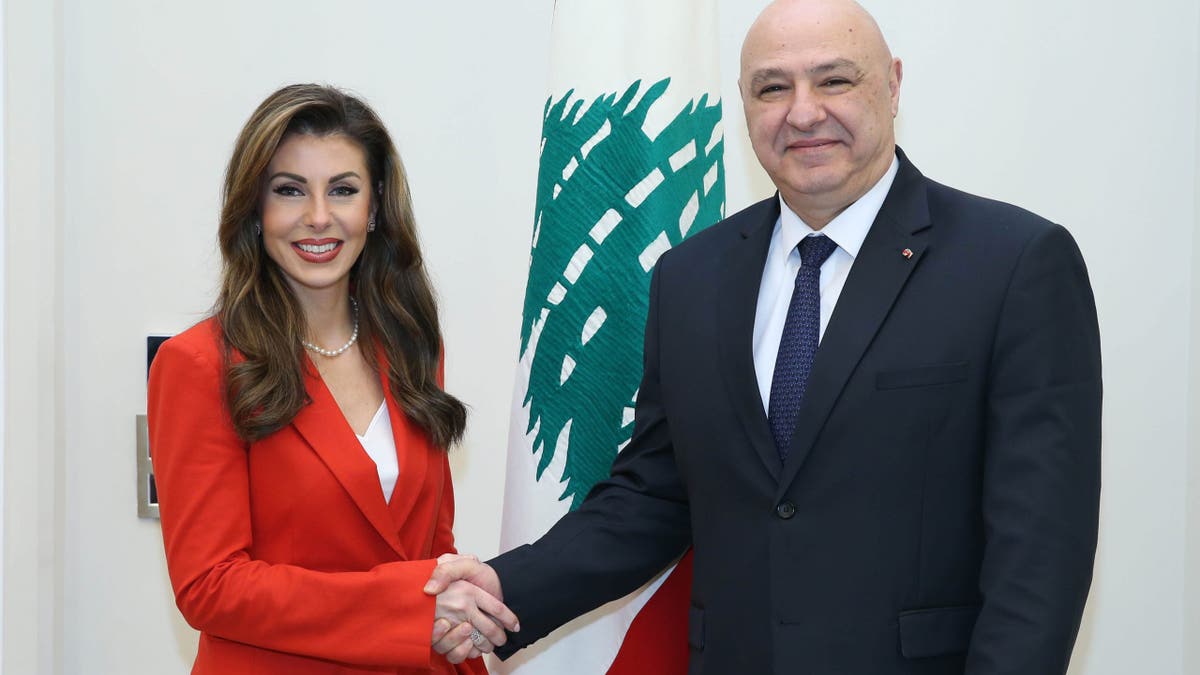
Recent developments indicate that former U.S. President Donald Trump has been actively involved in efforts to scramble a resolution to end the broader war involving Iran. This suggests that the Israel-Lebanon conflict is viewed by Washington as a proxy battle that could ignite a direct confrontation between the U.S. And Iran.
The Iran Connection
Iran’s influence over Hezbollah is the invisible thread that ties the Lebanese offensive to the global stage. For Tehran, Hezbollah serves as a strategic deterrent, allowing Iran to project power far beyond its borders without engaging in direct combat. Any ceasefire in Lebanon is inextricably linked to a broader deal with Iran.
The strategic interests involved can be summarized as follows:
| Stakeholder | Primary Objective | Stance on Ceasefire |
|---|---|---|
| Israel | Neutralize Hezbollah threats; secure border. | Conditional on total cessation of attacks. |
| Lebanese Gov | Prevent state collapse; end foreign offensive. | Urgent; viewed as a “last opportunity.” |
| Hezbollah | Maintain military leverage; fulfill “new purpose.” | Rejected current truce terms. |
| Iran | Preserve regional proxies; avoid direct war. | Linked to broader diplomatic deals. |
| United States | Regional stability; end Iran-linked conflicts. | Actively seeking a comprehensive end to war. |
Economic Fallout: Oil Markets and the Iran Deal
The volatility of the Israel-Lebanon conflict has immediate and tangible effects on the global economy, specifically within the energy sector. Oil prices are highly sensitive to instability in the Middle East, as the region is central to global petroleum supply chains.
Following reports of the Israel-Lebanon ceasefire attempts and the accompanying hopes for a broader deal with Iran, oil prices have settled lower. This market reaction is a direct result of the “risk premium” being removed from oil futures. When the threat of a full-scale war involving Iran diminishes, investors anticipate fewer disruptions to oil shipments and production, leading to a downward adjustment in prices.
The correlation between the Israeli offensive in Lebanon gives Hezbollah new purpose narrative and the oil market is clear: while the offensive creates local instability, the subsequent diplomatic scramble to prevent a regional war provides the market with a sense of cautious optimism.
Market Sentiment and Geopolitical Stability
The lower settlement of oil prices indicates that the global market is betting on the success of diplomatic interventions over the continuation of military escalation. However, this optimism is fragile. Should Hezbollah’s rejection of the truce lead to a renewed surge in violence, or should the “last opportunity” warned of by President Aoun pass without a deal, the energy markets are likely to see a sharp spike in prices once again.
Analyzing the Implications of the Conflict
The current situation reveals several critical insights into the nature of modern conflict in the Middle East. First, it demonstrates that military superiority does not always equate to political victory. While Israel may achieve tactical goals during its offensive, the resulting “new purpose” found by Hezbollah suggests a strategic stalemate.
Second, the conflict highlights the fragility of the “state” in Lebanon. When a non-state actor can reject a truce agreed upon by the national government, the remarkably definition of sovereignty is called into question. This creates a dangerous precedent where international treaties are signed by governments that cannot enforce them.
Third, the intersection of local conflict and global economics (via oil) ensures that the Israel-Lebanon border remains a point of extreme international interest. The world is not just watching for the sake of humanitarian concerns, but because the stability of the global economy is tied to the outcome of these negotiations.
Common Misconceptions Regarding the Conflict
There is often a tendency to view the Israeli offensive in Lebanon as a simple bilateral dispute. However, this is an oversimplification. The conflict is more accurately viewed as a multi-layered struggle:
- Layer 1 (Local): Border security and territorial incursions.
- Layer 2 (National): The struggle for control over Lebanese domestic policy and state sovereignty.
- Layer 3 (Regional): The proxy war between Israel/USA and Iran.
- Layer 4 (Global): The impact on energy security and global economic stability.
Correcting these misconceptions is vital for understanding why a simple ceasefire agreement between Israel and Lebanon is insufficient to end the violence. Without addressing the regional layers—specifically the role of Iran and the internal power structure of Lebanon—any truce is likely to be temporary.
Frequently Asked Questions
Why is the Israeli offensive said to give Hezbollah “new purpose”?
Military pressure often allows non-state actors to frame themselves as the sole protectors of their people. By surviving and resisting an offensive, Hezbollah can revitalize its ideological narrative, increase its domestic legitimacy, and justify its continued military existence to its supporters.
Why hasn’t the ceasefire agreement been implemented?
Although the governments of Israel and Lebanon have expressed a willingness to implement a ceasefire, the deal is conditional on Hezbollah stopping its attacks. Because Hezbollah has rejected the truce, the operational reality on the ground contradicts the diplomatic agreement between the two states.
What did President Aoun mean by “last opportunity”?
President Aoun’s warning suggests that Lebanon is at a critical breaking point. He views the current negotiations as the final chance to prevent the country from sliding into a state of permanent war or total systemic collapse, emphasizing that the window for a diplomatic solution is closing.
How does the conflict in Lebanon affect oil prices?
The Middle East is a primary source of global oil. Instability, especially involving Iran, increases the risk of supply disruptions, which drives prices up. Conversely, news of a potential ceasefire or a deal with Iran reduces this risk, causing oil prices to settle lower.
What role does the United States play in the current truce efforts?
The U.S. Acts as a primary diplomatic mediator, with efforts aimed at preventing the local conflict from escalating into a full-scale war between the U.S. And Iran. This involves coordinating between Israel and regional partners to find a sustainable exit strategy from the hostilities.
As the situation evolves, the world remains focused on whether the “last opportunity” for peace will be seized or if the revitalized purpose of Hezbollah will drive the region toward a deeper, more destructive confrontation. The interplay between military action, diplomatic desperation, and economic volatility ensures that the eyes of the global community remain fixed on the Lebanese border.
