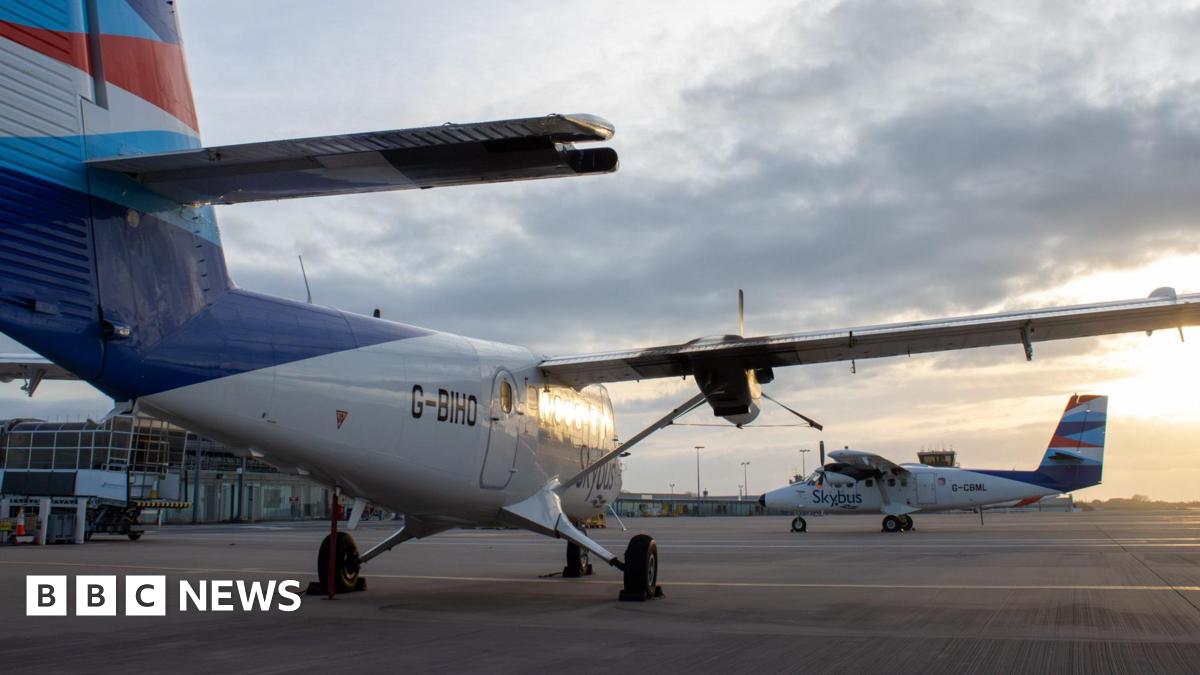
Isles of Scilly Extremely Unhappy Over Skybus Service – BBC: A Deep Dive into the Archipelago’s Connectivity Crisis
The Isles of Scilly, a breathtaking archipelago off the coast of Cornwall, are currently grappling with a logistical crisis that has left residents, business owners, and local officials in a state of profound frustration. The core of the conflict centers on the reliability and performance of Skybus, the primary air link connecting the islands to the mainland. Recent reports, including the widely discussed narrative that the Isles of Scilly extremely unhappy over Skybus service – BBC, highlight a growing divide between the airline’s operational capacity and the essential needs of a remote community that views air travel not as a luxury, but as a critical lifeline.
For the people of the Scillies, a flight cancellation is not merely an inconvenience. it is a systemic failure that disrupts medical appointments, halts the flow of commerce, and threatens the stability of a tourism-dependent economy. As the tension mounts, the situation has evolved from a series of isolated complaints into a broader debate regarding infrastructure resilience, monopoly power in remote aviation, and the government’s responsibility toward isolated territories.
The Anatomy of the Grievance: What is Driving the Discontent?
The dissatisfaction stemming from the Skybus service is not rooted in a single event, but rather a pattern of perceived instability. While aviation in the Atlantic is notoriously susceptible to weather patterns, the current wave of anger suggests that the issues extend beyond the unpredictable Cornish fog, and wind. Residents have pointed toward a recurring theme of technical failures, scheduling inconsistencies, and a perceived lack of transparency in communication.
Reliability and the “Stranded” Phenomenon
One of the primary drivers of the unrest is the frequency of last-minute cancellations. For a mainland traveler, a cancelled flight might mean a hotel voucher and a rescheduled trip. For a Scillonian, it can mean missing a critical health screening in Penzance or being unable to transport time-sensitive goods. The feeling of being “stranded” has become a common refrain, creating a psychological toll on a population already dealing with the inherent challenges of island life.
The Communication Gap
Beyond the physical absence of aircraft, there is a significant grievance regarding how the airline communicates these disruptions. Users have reported a lack of timely updates, leaving passengers waiting at terminals or in their homes without clear information on when service will resume. In a digital age, the expectation for real-time, accurate data is high, and the perceived failure to meet this standard has exacerbated the frustration.
| Stakeholder Group | Primary Concern | Direct Impact |
|---|---|---|
| Local Residents | Healthcare and Essential Travel | Missed medical appointments; isolation from mainland services. |
| Business Owners | Supply Chain and Logistics | Perishable goods spoilage; delayed deliveries; lost revenue. |
| Tourists | Reliability and Value | Ruined vacations; financial loss due to missed bookings. |
| Local Council | Economic Stability | Reputational damage to the islands as a destination. |
Why Air Connectivity is a Lifeline, Not a Luxury
To understand why the phrase “Isles of Scilly extremely unhappy over Skybus service – BBC” carries such weight, one must understand the unique geography of the archipelago. The islands are separated from the UK mainland by approximately 28 miles of treacherous ocean. While ferry services exist, they are slower and even more prone to weather-related disruptions than aircraft.
Medical Emergencies and Routine Care
The islands possess limited medical facilities. For specialized care, surgery, or chronic disease management, residents must travel to the mainland. When the air link fails, the risk to patient health increases. While emergency medevac services exist for life-threatening situations, the “grey area” of urgent but non-emergency care is where the Skybus reliability issue becomes most dangerous.
The Economic Engine: Tourism and Exports
The Isles of Scilly economy is heavily reliant on two pillars: tourism and the export of high-value agricultural products, such as the famous Scillonian flowers.
- Tourism: Many visitors book expensive packages. A cancelled flight doesn’t just affect the airline; it affects the local B&Bs, cafes, and tour guides who lose income when a group fails to arrive.
- Agriculture: The flower industry relies on speed. The window between harvest and delivery to mainland markets is razor-thin. Any disruption in air freight can lead to the total loss of a crop’s value.
“When the planes don’t fly, the islands don’t just slow down—they stop. We are talking about the basic circulatory system of our community being blocked.”
The Structural Dilemma: Monopoly and Remote Aviation
A critical layer of this conflict is the economic reality of operating an airline in such a niche environment. The Isles of Scilly represent a “thin” market—one with low passenger volumes but high essential demand. This creates a natural monopoly or duopoly environment where competition is minimal.
The High Cost of Remote Operations
Operating small aircraft in salt-heavy, corrosive maritime environments is expensive. Maintenance cycles are more frequent, and the pool of qualified pilots and engineers willing to work in remote locations is small. Skybus faces the daunting task of maintaining a fleet that can withstand these conditions while keeping tickets affordable enough for locals and attractive for tourists.
The Lack of Alternatives
Because the infrastructure (runways and hangars) is limited, it is incredibly difficult for a new competitor to enter the market. This lack of competition means that when service quality drops, the consumers have nowhere else to turn. This “captured market” dynamic is what transforms general dissatisfaction into “extreme unhappiness.” When you cannot switch providers, your only recourse is public outcry and political pressure.
For those interested in how this compares to other remote regions, a related explainer on island infrastructure may provide further context on the global challenges of remote connectivity.
The Council’s Role and the Political Fallout
The Council of the Isles of Scilly finds itself in a difficult position. They are the representatives of the people, but they do not own the airline. However, the council is responsible for the overall economic health and wellbeing of the islands, making them a central player in the dispute.
Pushing for Service Level Agreements (SLAs)
There have been calls for the implementation of stricter Service Level Agreements. An SLA would essentially be a contract that defines the minimum acceptable level of service, with penalties or corrective actions triggered if the airline fails to meet these benchmarks. The goal is to move away from “best efforts” and toward “guaranteed reliability.”
The Debate Over Subsidies
A recurring question in these discussions is whether the UK government or the local council should provide subsidies to ensure a more robust service. In many parts of Scotland and the Hebrides, air links are subsidized because they are recognized as “Public Service Obligations” (PSOs). The debate in the Scillies is whether their air link should be treated as a commercial venture or a public utility.
Common Misconceptions About the Crisis
In the wake of news reports stating the Isles of Scilly extremely unhappy over Skybus service – BBC, several oversimplifications have emerged in public discourse. It is essential to clarify these to understand the full scope of the issue.
Misconception 1: “It’s just the weather”
While weather is a factor, the core of the current anger is about non-weather related cancellations. Technical faults and staffing issues are the primary catalysts for the current unrest. If it were only the weather, the community would be more resigned, as they have lived with Atlantic storms for centuries.
Misconception 2: “The ferry is a viable alternative”
The ferry is a vital backup, but it is not a replacement. The transit time is significantly longer, and it is often more sensitive to sea states than planes are to wind. For a resident needing a two-hour appointment on the mainland, a multi-hour ferry journey is not a practical substitute.
Misconception 3: “The airline is simply greedy”
While profit margins are always a point of contention, the reality of small-scale aviation is often one of precarious margins. The cost of aircraft parts, fuel, and specialized labor in a remote area can be exorbitant. The issue is often one of capacity and resilience rather than simple corporate greed.
Comparing the Scilly Experience to Other Remote Archipelagos
To put this crisis in perspective, we can look at how other remote communities handle their air links. The “Scilly Model” is currently under pressure, but other models offer potential paths forward.
- The Scottish Highlands and Islands: Many routes are operated under PSO (Public Service Obligation) contracts. The government pays a subsidy to the airline to ensure a set number of flights per week, regardless of profitability. This prioritizes the citizen over the shareholder.
- The Faroe Islands: With a strong focus on state-supported infrastructure, they have integrated air and sea travel more cohesively, reducing the impact when one mode fails.
- The Caribbean Out-Islands: Often rely on a mix of private charters and scheduled flights, but suffer from similar “monopoly” frustrations when a single carrier dominates a route.
The common thread is that where reliability is highest, there is usually a level of government intervention or a diversified transport strategy.
Potential Paths to Resolution
Solving the crisis of confidence in the Skybus service will require more than just a few on-time flights; it will require a structural shift in how the link is managed.
Fleet Modernization
Investing in newer, more reliable aircraft could reduce the frequency of technical cancellations. While expensive, the long-term cost of losing tourism revenue and risking resident health may far outweigh the cost of a fleet upgrade.
Diversified Logistics
Exploring alternative transport options, such as increased investment in faster, more weather-resistant ferry technology or exploring the viability of other small-scale aviation partners, could break the monopoly feel of the current arrangement.
Enhanced Transparency Protocols
Implementing a robust, real-time communication system—where passengers are notified via app or SMS the moment a disruption is anticipated—would go a long way in reducing the psychological stress of the “stranded” experience.
For a deeper look at how local governments handle such disputes, you might find our guide to regional infrastructure disputes helpful.
Frequently Asked Questions
Why are the residents of the Isles of Scilly so upset with Skybus?
The unhappiness stems from a perceived lack of reliability, frequent flight cancellations (often for non-weather reasons), and poor communication. Because the air link is a critical lifeline for medical care and the economy, these failures have a disproportionate impact on the community.
Is the Skybus service the only way to get to the Isles of Scilly?
No, We find ferry services available. However, ferries are slower and can also be affected by weather. The air service is the fastest and most efficient way to transport people and time-sensitive goods, making its reliability essential.
How does this affect tourism in the archipelago?
Tourism is a primary economic driver for the islands. When flights are cancelled, visitors may cancel their entire trips or arrive late, leading to lost revenue for local hotels, restaurants, and tour operators. This creates a ripple effect across the entire local economy.
What is a Public Service Obligation (PSO) in aviation?
A PSO is a government-funded subsidy provided to an airline to ensure that a route is maintained for the benefit of the public, even if the route is not commercially profitable. This is often used in remote areas to ensure citizens have basic access to the mainland.
What is the Council of the Isles of Scilly doing about the situation?
The Council is acting as an advocate for the residents, pushing for better service standards, improved communication, and potentially exploring new agreements or frameworks to ensure the air link remains stable and dependable.
As the situation unfolds, the eyes of the UK’s remote communities are on the Isles of Scilly. The resolution of this conflict will likely set a precedent for how “lifeline” services are managed in the 21st century, balancing the needs of private enterprise with the fundamental rights of isolated populations to remain connected to the world.
