
Iran’s President Pezeshkian Visits Pakistan After US-Iran Talks: What It Means for Regional Diplomacy
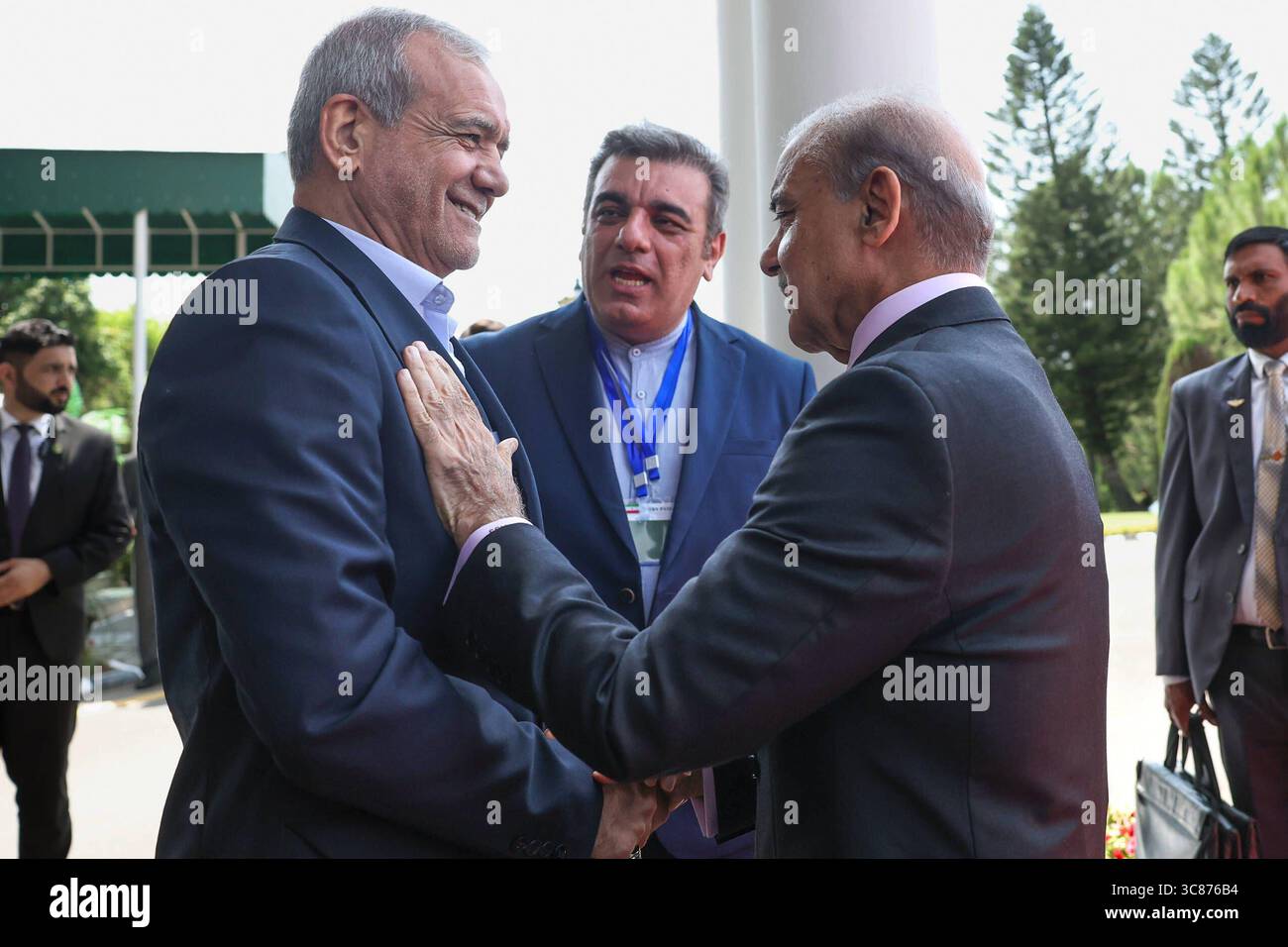
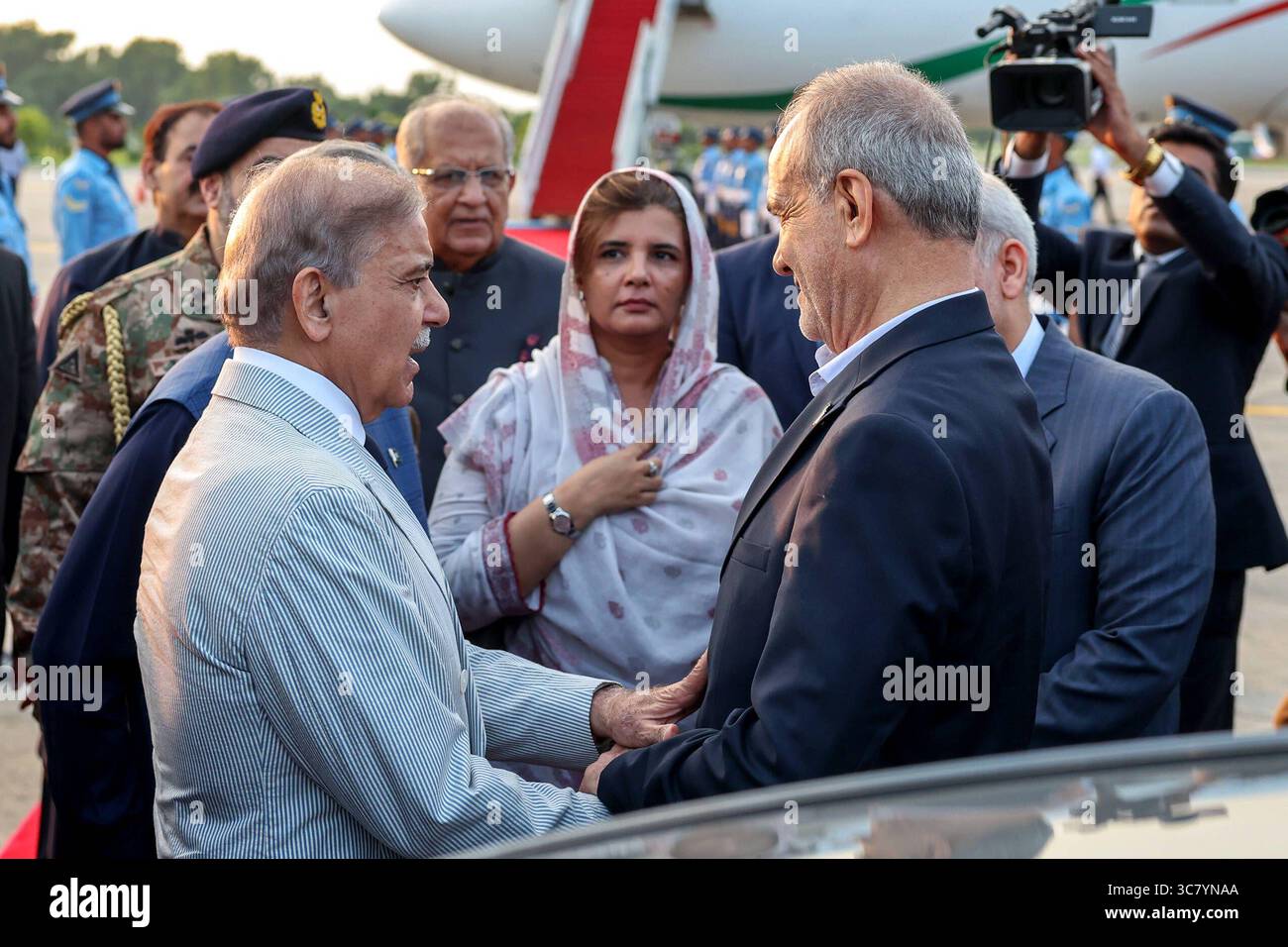
Islamabad, [Insert Date] — Iranian President Masoud Pezeshkian arrived in Pakistan this week amid heightened security measures, marking his first official visit since indirect US-Iran talks resumed in recent months. The trip comes as both nations explore deeper cooperation following a period of strained relations, with Pakistan positioning itself as a key mediator in regional diplomacy. While the Iranian government has not disclosed the full agenda, officials in Islamabad have signaled discussions centered on economic ties, counterterrorism, and potential follow-up to the US-Iran negotiations.
Pakistan’s government has taken extraordinary steps to accommodate Pezeshkian’s visit, including closing major bus terminals, imposing traffic bans in Islamabad, and shifting sensitive ministries to remote work. These measures reflect the high-stakes nature of the diplomatic engagement, which observers say could influence the balance of power in South Asia and the broader Middle East.
Here’s what we know about the visit, its context, and why it matters.
—
Why Is Pezeshkian Visiting Pakistan Now?
Pezeshkian’s trip to Pakistan follows a series of high-level diplomatic exchanges between Tehran and Washington in recent weeks. While the US and Iran have not held direct talks since the 2018 withdrawal from the nuclear deal, indirect negotiations—facilitated by Oman and other regional actors—have focused on reviving the agreement and easing tensions over Iran’s nuclear program, regional conflicts, and maritime security.
According to a statement from Pakistan’s Prime Minister Office, Pezeshkian and Pakistani Prime Minister Shehbaz Sharif discussed “regional security challenges” and “economic cooperation” during a phone call ahead of the visit. The call came after Sharif had previously expressed Pakistan’s willingness to serve as a “bridge” between Iran and the US, a role that aligns with Islamabad’s long-standing policy of maintaining ties with both Tehran and Washington.
Key context:

- US-Iran détente efforts: The indirect talks, which resumed in early 2024, have centered on Iran’s nuclear program, the release of detained Americans, and regional security concerns, including Iran’s support for proxy groups in Syria, Yemen, and Iraq.
- Pakistan’s mediator role: Islamabad has historically acted as a neutral interlocutor between Iran and the US, particularly during periods of heightened tension, such as the 2015 nuclear deal negotiations.
- Economic incentives: Iran and Pakistan share a $1 billion trade deficit, with Pakistan importing Iranian goods like steel, dates, and pharmaceuticals. Pezeshkian’s visit may aim to formalize trade agreements and address sanctions-related barriers.
Analysts suggest the timing of the visit—just weeks after the US and Iran exchanged indirect messages through European mediators—indicates Pakistan’s intent to leverage its diplomatic influence. “Pakistan sees this as an opportunity to strengthen its position as a key player in regional diplomacy,” said Dr. Ayesha Siddiqa, a defense and security expert at the Quaid-i-Azam University. “Both sides are likely discussing how to align their interests without directly challenging the US or Iran’s regional allies.”
—
Who Is Involved and What Are Their Interests?
The visit involves three primary stakeholders, each with distinct motivations:
| Stakeholder | Key Interests | Potential Outcomes |
|---|---|---|
| Iran (President Pezeshkian) |
|
|
| Pakistan (PM Shehbaz Sharif) |
|
|
| United States (indirectly) |
|
|
Pakistan’s government has framed the visit as a “historic opportunity” to deepen ties, but experts note that Islamabad must balance its relations with both Iran and the US. “Pakistan cannot afford to alienate either side,” said Ambassador Riaz Mohammad Khan, a former Pakistani diplomat. “The challenge will be to ensure that economic cooperation does not undermine security concerns for the US.”
—
What Security and Logistical Measures Are in Place?
Pezeshkian’s arrival in Islamabad has triggered one of the most extensive security operations in recent memory. Authorities have implemented measures rarely seen for foreign dignitaries, reflecting the sensitivity of the visit:
- Traffic restrictions: The Islamabad Capital Territory (ICT) administration has banned vehicles from entering the city’s Red Zone and imposed diversions on major routes, including the Margalla Hills area, where government offices are located.
- Public transport shutdowns: Major bus terminals, including the Islamabad Intercity Bus Terminal and Saddar Terminal, have been closed temporarily to prevent congestion and potential security risks.
- Government office adjustments: Ministries in the Red Zone have shifted to remote work, with only essential personnel reporting to offices. The Margalla Hills hiking trails—a popular spot for officials—have been restricted to the public.
- Military presence: Sources indicate an increased deployment of Pakistan Army and National Security Guard (NSG) personnel around Pezeshkian’s itinerary, including his stay at the Marriott Hotel Islamabad.
These precautions follow a pattern seen during visits by high-profile figures such as Chinese President Xi Jinping in 2023, though the scale suggests Pakistan is treating Pezeshkian’s trip as a potential diplomatic breakthrough. “The security measures are a sign that Pakistan is treating this as a state visit with significant geopolitical implications,” said Col. (Ret.) Asad Munir, a security analyst at the Institute of Strategic Studies Islamabad.
Local media reports indicate that Pezeshkian’s itinerary includes meetings with Pakistani officials, a visit to the Pakistan Institute of International Affairs (PIIA), and a possible call with US officials—though no direct meetings with American representatives are expected.
—
How Could This Visit Impact US-Iran Relations?
The timing of Pezeshkian’s visit—just as US-Iran indirect talks appear to be gaining momentum—raises questions about Pakistan’s role in shaping the outcome. While Islamabad has denied acting as a direct intermediary, its historical experience in facilitating such dialogues suggests it may play an indirect but influential role.
Three potential outcomes stand out:
- Economic cooperation as a confidence-building measure: If Iran and Pakistan sign trade agreements or infrastructure deals, it could signal to the US that Tehran is willing to engage economically without preconditions. However, the US has repeatedly warned Pakistan against becoming a conduit for sanctions evasion.
- Counterterrorism alignment: Both nations have expressed concern over militant groups operating in Afghanistan and along their shared border. A joint statement on counterterrorism could help Pakistan counter US accusations of harboring Iranian-backed proxies.
- Diplomatic cover for future talks: Pakistan may use the visit to signal to the US that it remains a viable partner for indirect negotiations, potentially easing Washington’s skepticism about Islamabad’s neutrality.
Yet, risks remain. “The US will be watching closely to ensure that Pakistan is not using this visit to undermine its own sanctions regime,” said Dr. Vali Nasr, a former US State Department official and Iran expert at Johns Hopkins University. “If Iran and Pakistan move too quickly on economic ties, it could derail the US-Iran negotiations.”
One wild card is the potential for a joint statement on regional security, which could include references to Afghanistan, where both nations have interests. Such a statement might be seen as a signal to the US that Pakistan is aligning its policies with Iranian priorities—a move that could provoke backlash from Washington.
—
What Happens If the US-Iran Talks Stall?
If the US-Iran indirect negotiations fail to produce a breakthrough, Pakistan’s role could become more critical—or more contentious. Historically, when US-Iran relations have soured, Pakistan has often stepped in to manage the fallout, particularly in areas like:
- Afghanistan: Pakistan and Iran share concerns over the Taliban’s governance and its ties to militant groups. A joint approach could help stabilize the region, but differences over the Taliban’s legitimacy persist.
- Trade and transit: Pakistan’s Gwadar Port, a key project under China’s Belt and Road Initiative, has been eyed by Iran as a potential trade hub. If sanctions ease, Iran may seek to use Gwadar as an alternative to its own ports, which are under US pressure.
- Energy cooperation: Iran has proposed gas pipeline projects to Pakistan, which could reduce Islamabad’s reliance on imported fuel. However, US sanctions have complicated these plans.
Should the US-Iran talks collapse, Pakistan may face pressure from both sides to choose a side. “Pakistan cannot afford to be seen as siding with Iran against the US, but it also cannot ignore its economic and security ties with Tehran,” said Tariq Fatemi, a former Pakistani ambassador to the US. “The challenge will be to maintain a delicate balance.”
One scenario analysts warn about is a sanctions-related backlash. If the US perceives Pakistan as facilitating Iranian trade or technology transfers, it could impose secondary sanctions on Islamabad, as it did in 2018 over the Iran-Pakistan gas pipeline project. This would force Pakistan to choose between economic gains and US aid.
—
How Is the Pakistani Public Reacting?
While the government has framed Pezeshkian’s visit as a diplomatic triumph, reactions on the ground are mixed. In Islamabad, residents have noted the unusual security measures but expressed little public enthusiasm for the visit. “People are more concerned about traffic and disruptions than politics,” said Maria Khan, a business owner in the city’s commercial district. “But if it leads to jobs or trade, that’s good.”
In contrast, Iranian expatriates in Pakistan—who number in the tens of thousands—have welcomed the visit. “This is a chance to strengthen ties between our two countries,” said Ali Reza, a Tehran-born resident of Karachi. “We hope it leads to easier travel and trade for our businesses.”
Pakistani media has largely portrayed the visit positively, with outlets like Dawn and Business Recorder highlighting the potential for economic cooperation. However, some analysts caution that public opinion could shift if the visit fails to deliver tangible benefits. “The government needs to manage expectations,” said Dr. Shahid Javed Burki, a former finance minister. “If there’s no clear outcome, people will see this as just another diplomatic exercise.”
—
What Could This Mean for the Future of US-Pakistan Relations?
Pezeshkian’s visit comes at a delicate moment for US-Pakistan relations, which have been strained over issues including counterterrorism cooperation, military aid, and Pakistan’s ties with China. The US has repeatedly urged Islamabad to reduce its dependence on Iranian oil and limit support for groups like Jaish-al-Adl, which operates along the Iran-Pakistan border.
If Pakistan deepens ties with Iran without addressing US concerns, it risks:
- Reduced military and economic aid from the US
- Increased scrutiny over sanctions compliance
- Potential isolation in regional forums where the US holds influence
Yet, Pakistan’s leverage has grown as it seeks to diversify its alliances. “Pakistan is no longer as dependent on the US as it was a decade ago,” said Michael Kugelman, director of the South Asia Institute at the Woodrow Wilson Center. “It can afford to play both sides, but it must do so carefully to avoid provoking either.”
One possible outcome is that Pakistan could position itself as a neutral facilitator in future US-Iran talks, similar to its role during the 2015 nuclear negotiations. This would require Islamabad to maintain strict oversight of any economic cooperation to prevent sanctions violations.
—
Key Takeaways and What to Watch For
Pezeshkian’s visit to Pakistan is more than a diplomatic courtesy—it reflects a broader realignment in regional politics where Pakistan seeks to balance its ties with Iran, the US, and China. Here’s what to watch in the coming weeks:
- Joint statements: Any official communiqué from the visit will be scrutinized for hints about US-Iran talks, counterterrorism, or trade deals.
- US response: Washington is likely to monitor for signs that Pakistan is facilitating Iranian sanctions evasion, which could trigger a backlash.
- Economic agreements: Look for announcements on trade, energy, or infrastructure projects that could signal deeper cooperation.
- Security developments: Any joint counterterrorism measures could influence US aid packages and military cooperation.
- Public perception: If the visit yields no tangible benefits, Pakistani citizens may grow skeptical of high-level diplomacy.
For now, the focus remains on whether Pezeshkian’s trip can serve as a catalyst for broader regional stability—or if it will be just another chapter in the complex dance of South Asian diplomacy.
—
Frequently Asked Questions
Q: Why is Pakistan hosting Iran’s president during a time of US-Iran tensions?
A: Pakistan has historically acted as a neutral mediator between Iran and the US, particularly in resolving conflicts like the 2015 nuclear deal. This visit aligns with Islamabad’s strategy to maintain ties with both Tehran and Washington while positioning itself as a key player in regional diplomacy. The timing also suggests Pakistan may be using the visit to signal its willingness to facilitate indirect US-Iran talks.
Q: Could this visit lead to a US-Iran deal?
A: While the visit itself is unlikely to produce a direct US-Iran agreement, it could create momentum for indirect negotiations. Pakistan may use the diplomatic cover to encourage both sides to return to the table, but any breakthrough would still require compromise on Iran’s nuclear program, sanctions relief, and regional security concerns.
Q: What economic benefits could Iran and Pakistan gain from this visit?
A: Both nations stand to gain from expanded trade, particularly in sectors like energy, pharmaceuticals, and infrastructure. Iran could access Pakistani ports like Gwadar as alternative trade routes, while Pakistan could secure cheaper fuel and energy supplies. However, US sanctions remain a major hurdle, and any deals would need to avoid violating international restrictions.
Q: How might the US react to closer Iran-Pakistan ties?
A: The US has repeatedly warned Pakistan against becoming a conduit for Iranian sanctions evasion. If Islamabad moves too quickly on economic cooperation, Washington could impose secondary sanctions or reduce military aid. The US is likely to demand assurances that any Iran-Pakistan deals comply with international law.
Q: What role could Afghanistan play in this diplomatic dynamic?
A: Both Iran and Pakistan have interests in Afghanistan’s stability, particularly regarding militant groups and trade routes. A joint approach to Afghanistan could emerge from the visit, but differences over the Taliban’s governance may limit cooperation. Any statement on Afghanistan would be closely watched by the US and regional allies.
Q: Is this visit a sign that Pakistan is siding with Iran against the US?
A: Not necessarily. Pakistan has long maintained a policy of strategic autonomy, balancing ties with multiple powers. While the visit strengthens Iran-Pakistan relations, Islamabad is unlikely to abandon its partnership with the US entirely. The challenge will be managing these relationships without provoking either side.
