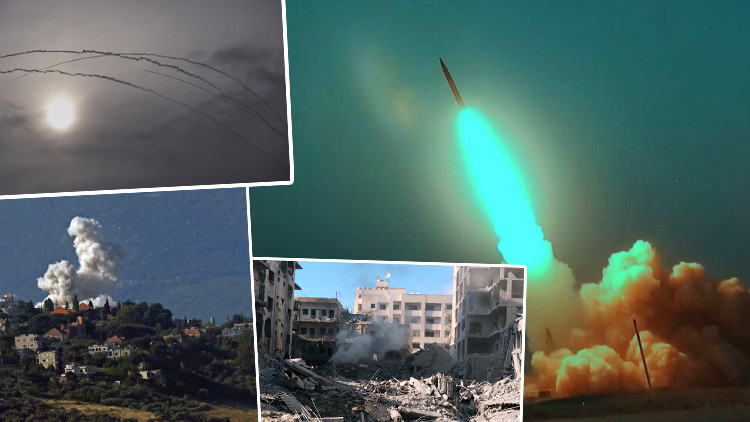
Escalating tensions between the U.S. And Iran reached a new flashpoint this week as military exchanges and economic pressure intensified in the strategically vital Persian Gulf, raising fears of a broader regional confrontation. The latest developments—including Iranian strikes on American assets, a U.S.-led maritime blockade, and direct threats of retaliation—have underscored the fragility of de-escalation efforts amid long-standing hostilities.
Iran’s Strikes and America’s Response
The Iranian Islamic Revolutionary Guard Corps (IRGC), the country’s elite military force, claimed responsibility for a series of aggressive moves, including a reported “annihilation” of a U.S. Military base and an airstrike on Keşm Island, a strategic location in the Straight of Hormuz. The IRGC’s statements, carried by state media, framed the actions as retaliation for what Tehran described as “unprovoked aggression” by the U.S.
In parallel, the U.S. Central Command (CENTCOM) announced it had “adjusted the routes” of 118 commercial vessels under a de facto maritime blockade in the Hormuz Strait, a critical chokepoint for global oil shipments. The move, framed as an “economic pressure” measure, drew immediate condemnation from Iran, which accused Washington of “piracy” and “war crimes.”
Further escalation occurred when Iranian military jets conducted “missile strikes” near U.S. Forces in the Hormuz region, according to CENTCOM, which confirmed “direct engagements” between Iranian aircraft and American naval assets. The exchanges marked the most overt kinetic clashes since the 2020 assassination of Qasem Soleimani, the IRGC’s top commander, by a U.S. Drone strike.
Diplomatic Standoff and the Path Forward
Despite the military posturing, both sides have signaled a willingness to engage in “backchannel negotiations”, though Iranian officials have made clear their demands for “binding guarantees” before any agreement is reached. According to Iranian state media, a senior Iranian diplomat conveyed a firm message to U.S. Interlocutors: “We will not sign anything without concrete security assurances.”
The standoff has sent shockwaves through global energy markets, with oil prices surging as traders brace for potential disruptions to 15 million barrels per day of crude transit through the Strait of Hormuz. The International Maritime Organization (IMO) has issued warnings to shipping firms, advising them to “avoid the region unless absolutely necessary.”
Regional and Global Ramifications
The escalation poses existential risks to Gulf Cooperation Council (GCC) nations, including Saudi Arabia and the United Arab Emirates (UAE), which rely on U.S. Security guarantees to counter Iranian influence. Meanwhile, China and Russia—both of which maintain close ties with Tehran—have called for “restraint”, though their public statements carry little weight given their historical support for Iranian resistance movements.
For the U.S., the crisis tests President Biden’s “de-escalation” strategy, which has struggled to contain Iranian proxy attacks in Iraq, Syria, and Yemen without triggering direct confrontation. Analysts warn that any miscalculation—whether by Tehran or Washington—could spiral into a full-blown war, with catastrophic consequences for the Middle East and beyond.
What’s Next?
With both sides dug in, the immediate focus remains on whether the current exchange of strikes will lead to a “pause” in hostilities or further deterioration. Iranian officials have not ruled out additional “retaliatory measures”, while U.S. Defense Secretary Lloyd Austin has reaffirmed America’s commitment to “deterring aggression” in the region. For now, the Strait of Hormuz remains a powder keg, and the world watches to see if diplomacy—or miscalculation—will prevail.
