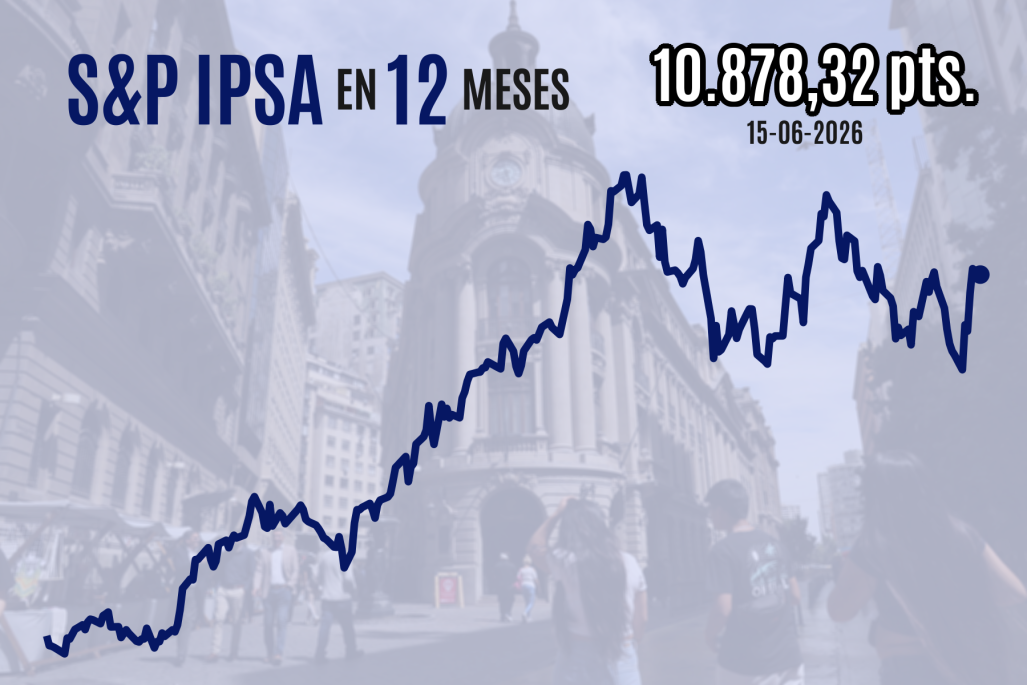
The IPSA index closed in the red Friday, bucking a global market rally driven by a U.S.-Iran detente announcement, as local investors weighed the geopolitical shift against domestic economic concerns. The benchmark fell 0.5% to 11,125 points, according to local media reports, while Wall Street surged over 3% on the same day.
Chile’s stock market performance diverged sharply from major global peers, with the IPSA underperforming even as regional markets like Brazil’s Bovespa and Mexico’s IPC climbed on optimism over Middle East peace talks. Analysts cited two key factors: a cautious local investor base still digesting the agreement’s implications and lingering uncertainty over Chile’s own economic outlook, including inflation and monetary policy.
Why the IPSA Dropped While Global Markets Soared
The disconnect between Santiago and international markets highlights how regional risk perceptions can override even major geopolitical developments. While U.S. equities rallied on hopes of reduced oil price volatility and broader Middle East stability, Chilean investors appeared more focused on domestic challenges. According to Diario Financiero, the IPSA had briefly spiked at the open on news of the U.S.-Iran deal but reversed course as trading progressed, suggesting profit-taking rather than sustained confidence.
In contrast, La Tercera noted that Chile’s market had already been under pressure from weaker-than-expected corporate earnings in key sectors like mining and retail. The IPSA had struggled to regain its 11,500-point peak from earlier this year, leaving it vulnerable to external shocks. “The market is still digesting the central bank’s recent rate hike,” said one Santiago-based economist, adding that investors remained wary of further tightening.
How the Geopolitical Shift Played Out Differently
The U.S.-Iran agreement sent mixed signals across Latin American markets. While Brazil’s Bovespa rose 1.2% and Mexico’s IPC climbed 0.8%, Chile’s performance stood out as an outlier. CNN Chile reported that local traders attributed the underperformance to Chile’s higher exposure to commodity prices—particularly copper, which had already faced downward pressure—and a more risk-averse investor base compared to neighbors.
A closer look at the IPSA’s sector breakdown showed technology and financial stocks leading the decline, while energy and materials—typically beneficiaries of Middle East stability—held up better. This suggests that Chilean investors may be prioritizing domestic economic signals over geopolitical tailwinds, a trend that could persist if the central bank signals further rate hikes.
What This Means for Chilean Investors and the Region
For now, the IPSA’s underperformance reflects deeper structural issues rather than a rejection of the U.S.-Iran deal. Local media reports suggest that Chilean investors remain focused on three key risks: inflation expectations, the central bank’s policy stance, and corporate earnings in export-driven sectors. The divergence from global markets could also signal that Santiago is pricing in slower growth than its neighbors, according to BioBioChile.

Looking ahead, analysts expect the IPSA to remain volatile as investors weigh whether the Middle East agreement will translate into sustained benefits for Chile’s trade-dependent economy. If copper prices stabilize and corporate results improve, the index could rebound—though any further central bank action could offset those gains.
The day’s trading underscored how even major geopolitical events can play out differently across markets, depending on local economic conditions. For Chilean investors, the focus remains firmly domestic—where risks and opportunities are more immediate.
