Hysterosalpingography Shows High Diagnostic Accuracy for Tubal Patency Compared to Laparoscopy in Subfertile Women, Cureus Study Finds
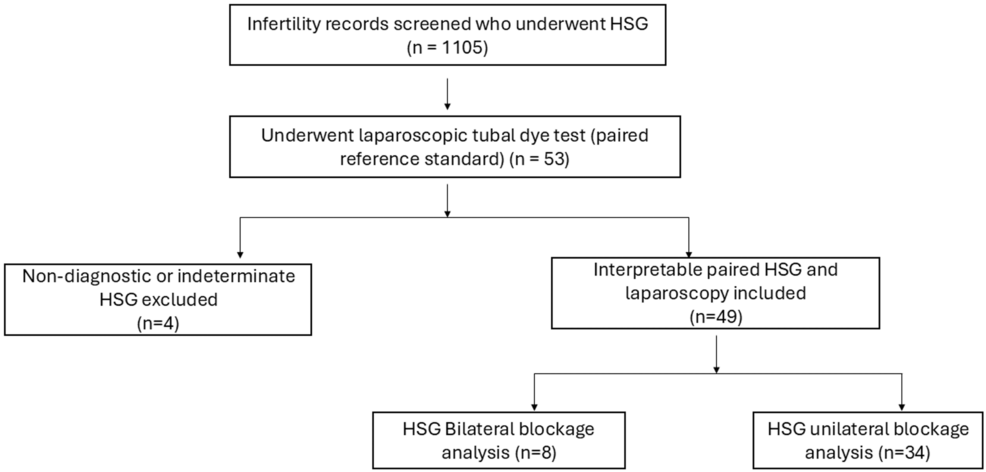
A retrospective cohort study published in Cureus indicates that hysterosalpingography (HSG) is a highly accurate non-surgical method for evaluating fallopian tube patency in subfertile women when compared to the gold standard of laparoscopy. The research, titled “Diagnostic Accuracy of Hysterosalpingography Compared With Laparoscopy in Assessing Tubal Patency Among Subfertile Women: A Retrospective Cohort Study – Cureus,” suggests that HSG serves as an effective primary screening tool, potentially reducing the number of women who must undergo invasive surgical procedures for initial diagnosis.
How Accurate is HSG Compared to Laparoscopy for Tubal Patency?
Hysterosalpingography (HSG) demonstrates significant diagnostic reliability in identifying whether fallopian tubes are open or blocked. According to the study published in Cureus, HSG provides a high level of sensitivity and specificity, meaning it correctly identifies both open and blocked tubes in a large majority of cases. However, the study reinforces that laparoscopy remains the “gold standard” because it allows for direct visualization of the pelvic organs and immediate surgical intervention if a blockage is found.
The core of the diagnostic challenge in subfertility is determining if the egg and sperm can meet. When HSG is used, a radiopaque contrast medium is injected through the cervix into the uterine cavity and fallopian tubes. If the dye flows freely into the peritoneal cavity, the tubes are considered patent. Laparoscopy, by contrast, involves inserting a camera through a small abdominal incision, often using a blue dye (chromopertubation) to visually confirm the exit of fluid from the tubes.
Key findings from the retrospective analysis include:
- High Agreement: There is a strong correlation between HSG results and laparoscopic findings, making HSG a dependable first-line test.
- Screening Utility: Because it is less invasive than surgery, HSG is an ideal starting point for subfertility workups.
- False Positives: The study notes that HSG can occasionally show a “blockage” that is actually a tubal spasm, which laparoscopy later reveals to be patent.
Understanding the Methodology of the Retrospective Cohort Study
The research utilized a retrospective cohort design, meaning researchers analyzed existing medical records of women who had undergone both HSG and laparoscopy. This approach allowed the team to compare the results of the non-invasive X-ray (HSG) directly against the surgical findings (laparoscopy) for the same patients.
By reviewing these paired results, the study could calculate the diagnostic accuracy of HSG. The researchers focused specifically on subfertile women, a population where tubal factor infertility—blockages caused by pelvic inflammatory disease, endometriosis, or previous surgeries—is a primary concern. The study’s structure ensures that the “truth” of the tubal status was determined by the laparoscopy, while the “test” being evaluated was the HSG.
| Feature | Hysterosalpingography (HSG) | Laparoscopy |
|---|---|---|
| Procedure Type | Radiographic (X-ray) | Surgical (Invasive) |
| Primary Goal | Screening/Initial Diagnosis | Confirmation/Treatment |
| Invasiveness | Low (No anesthesia usually required) | High (Requires general anesthesia) |
| Accuracy | High (but prone to spasms) | Gold Standard (Direct vision) |
| Risk Profile | Low (Radiation exposure, mild pain) | Moderate (Surgical risks, anesthesia) |
Why Tubal Patency Matters in Subfertility Diagnostics
For women experiencing subfertility, identifying the cause of the issue is the first step toward a successful pregnancy. Tubal factor infertility occurs when the fallopian tubes are obstructed, preventing the egg from reaching the uterus or the sperm from reaching the egg. According to clinical standards, diagnosing these blockages is critical because the treatment path differs wildly based on the result.

If tubes are patent (open), clinicians may focus on ovulation induction or intrauterine insemination (IUI). If tubes are obstructed, the patient may be directed toward in vitro fertilization (IVF), which bypasses the tubes entirely, or surgical reconstruction of the tubes via laparoscopy.
The Cureus study highlights that the efficiency of the initial test—HSG—determines how quickly a woman can move toward the correct treatment. A delay in diagnosis or an incorrect result can lead to months of unsuccessful treatments or unnecessary surgeries.
“The diagnostic accuracy of HSG allows clinicians to confidently steer patients toward either conservative management or advanced assisted reproductive technologies without subjecting every patient to the risks of general anesthesia.”
Analyzing the Risks and Limitations of HSG
While the study confirms the accuracy of HSG, it does not frame it as a perfect tool. There are specific limitations that medical professionals must consider when interpreting results. One of the most common issues is the “false positive” for tubal occlusion.
The Role of Tubal Spasms
During an HSG, the introduction of contrast medium or the stress of the procedure can cause the muscles of the fallopian tube to spasm. On an X-ray, this spasm looks identical to a physical blockage. According to the data, some women who were labeled as having “blocked tubes” via HSG were found to have perfectly open tubes during laparoscopy. This discrepancy is a known limitation of radiographic imaging.
Radiation and Infection Risks
Unlike laparoscopy, HSG involves ionizing radiation. While the dose is low, it is a factor in patient counseling. Additionally, there is a small but present risk of introducing bacteria into the uterine cavity during the injection of the contrast medium, which could lead to pelvic infection if not managed with proper sterile technique.
For more information on how these tests fit into a broader fertility plan, see this related explainer on infertility screening protocols.
The Surgical Advantage: Why Laparoscopy Remains the Gold Standard
Despite the high accuracy of HSG, the Cureus study acknowledges that laparoscopy is the definitive diagnostic tool. The reason is simple: laparoscopy provides a direct view. A surgeon can see not only if the tube is open but also the condition of the tube’s exterior.

Laparoscopy can detect issues that HSG completely misses, such as:
- Peritubal Adhesions: The tube may be open internally, but scarred or “kinked” on the outside, preventing the fimbriae (the finger-like projections) from picking up the egg.
- Endometriosis: Laparoscopy can identify endometrial implants on the pelvic wall or tubes, which can impair fertility even if the tubes are technically patent.
- Pelvic Inflammatory Disease (PID) Scarring: Surgeons can see the extent of pelvic inflammation and adhesions that an X-ray cannot capture.
Because laparoscopy is both diagnostic and therapeutic, a surgeon can often clear a minor blockage or remove adhesions during the same procedure, providing an immediate solution that HSG cannot offer.
Comparing Patient Experience and Clinical Logistics
The choice between HSG and laparoscopy often comes down to a balance of risk, cost, and urgency. The Cureus study’s findings support the use of HSG as the primary gatekeeper in the diagnostic process.
Cost and Accessibility
HSG is significantly cheaper and faster than laparoscopy. It can be performed in an outpatient radiology suite without the need for an operating room, a surgical team, or an anesthesiologist. This makes it accessible to a wider range of patients and reduces the financial burden on healthcare systems.
Patient Recovery
Recovery from an HSG is typically rapid, with most women returning to normal activities within a few hours, though some may experience cramping or light spotting. Laparoscopy, being a surgical procedure, requires general anesthesia and a recovery period of several days. The risk of surgical complications, such as bleeding or infection at the incision site, makes it a less desirable first step for women who may not actually have a tubal blockage.
Implications for Future Fertility Guidelines
The results of the “Diagnostic Accuracy of Hysterosalpingography Compared With Laparoscopy in Assessing Tubal Patency Among Subfertile Women: A Retrospective Cohort Study – Cureus” suggest that the current medical preference for HSG as a first-line test is well-supported by data. By confirming that HSG is highly accurate, the study validates a “stepped” approach to fertility diagnostics.
This stepped approach generally follows this logic:
- Step 1: Basic hormonal screening and semen analysis.
- Step 2: HSG to screen for gross tubal blockages or uterine anomalies.
- Step 3: Laparoscopy for women with abnormal HSG results or those who fail to conceive despite open tubes (to check for adhesions or endometriosis).
This sequence minimizes the number of women exposed to surgical risks while ensuring that those who truly need surgery receive it. It also allows patients to move more quickly to IVF if a bilateral tubal blockage is confirmed via HSG, saving them the time and cost of a confirmatory surgery that would not change the treatment plan.
Common Misconceptions About Tubal Patency Tests
There are several common myths regarding these procedures that the study’s findings help clarify. Many patients believe that if an HSG shows the tubes are “open,” they are guaranteed to be functional. This is a misconception. Patency (the tubes being open) is not the same as function (the tubes being able to transport an embryo).
A tube can be open but lack the cilia (tiny hairs) necessary to move the egg toward the uterus. This is why some women with “patent” tubes on both HSG and laparoscopy still struggle with infertility. The Cureus study focuses on patency—the physical opening—rather than the biological function of the tubal lining.
Another misconception is that HSG is “dangerous” due to radiation. In reality, the amount of radiation used in a standard HSG is minimal and comparable to other common diagnostic X-rays, making the risk-to-benefit ratio highly favorable for subfertile women.
Frequently Asked Questions
What is the main difference between HSG and laparoscopy?
HSG is a radiographic X-ray test that uses dye to check if fallopian tubes are open. Laparoscopy is a surgical procedure where a camera is inserted into the abdomen to visually inspect the tubes and pelvic organs. HSG is non-invasive and used for screening, while laparoscopy is invasive and used for confirmation or treatment.
Can an HSG result be wrong?
Yes. While the Cureus study shows high accuracy, HSG can produce false positives. This most often happens when the fallopian tubes spasm during the procedure, appearing blocked on the X-ray when they are actually open. This is why laparoscopy is used to confirm suspicious HSG results.
Why wouldn’t a doctor just start with laparoscopy?
Laparoscopy requires general anesthesia and carries surgical risks. Because HSG is highly accurate and far safer, doctors use it to filter out women who have open tubes, ensuring that only those who likely need surgical intervention or confirmation undergo the more invasive procedure.
Does a “patent” tube mean I can get pregnant naturally?
Not necessarily. Patency means the tube is open. However, pregnancy also requires the tube to be functional (able to transport the egg) and the absence of external adhesions or endometriosis, which an HSG might not detect but a laparoscopy would.
Is the dye used in HSG safe?
For the vast majority of women, the contrast medium is safe. However, patients should inform their doctors of any allergies to iodine or previous severe reactions to contrast dyes, as these can impact the choice of medium used during the procedure.
For those seeking a deeper dive into the surgical aspects of fertility, you may find this guide to laparoscopic surgery in reproductive health useful.
