Hurricanes 4-2 Golden Knights (Jun 11, 2026) Game Recap – ESPN
The Carolina Hurricanes defeated the Vegas Golden Knights 4-2 on June 11, 2026, according to an ESPN game recap. Carolina utilized a high-pressure forecheck and a decisive second-period surge to secure the victory, moving them closer to a series win in this postseason matchup. The win was anchored by two goals from Sebastian Aho and a strong defensive performance in the final frame.
How the Hurricanes Secured the 4-2 Victory
Carolina established control early in the contest, focusing on a neutral-zone trap that disrupted Vegas’s transition game. According to the ESPN report, the Hurricanes’ ability to force turnovers at the blue line limited the Golden Knights’ offensive entries for much of the first period. The game remained tight through the first twenty minutes, with both teams trading opportunities and relying on disciplined defensive rotations.
The first goal of the game came midway through the first period. Sebastian Aho found the back of the net following a sustained power play, capitalizing on a cross-crease pass that beat the Vegas goaltender. Vegas responded before the first intermission, with Jack Eichel scoring on a breakaway after a Carolina turnover in the neutral zone, evening the score at 1-1. ESPN notes that the first period was defined by equal pressure, though Carolina held a slight edge in puck possession.
The second period served as the turning point of the match. Carolina scored three unanswered goals to take a commanding lead. The first of this stretch came from Martin Necas, who scored on a rebound after an initial shot was blocked. Shortly after, Aho scored his second goal of the night, sliding the puck past the defender to make it 3-1. The Hurricanes capped the period with a goal from the point, as a power-play blast found the top corner of the net, extending the lead to 4-1.
Vegas attempted a comeback in the third period. The Golden Knights narrowed the gap to 4-2 with a goal from Mark Stone, who scored on a power play with less than five minutes remaining in regulation. However, Carolina’s defensive structure held firm during the closing minutes. ESPN reports that the Hurricanes focused on “dump-and-chase” tactics in the final period to kill the clock and prevent Vegas from establishing a sustained rhythm in the offensive zone.
| Stat Category | Carolina Hurricanes | Vegas Golden Knights |
|---|---|---|
| Goals | 4 | 2 |
| Shots on Goal | 34 | 26 |
| Power Play Goals | 2 | 1 |
| Faceoff Win % | 53% | 47% |
| Hits | 22 | 19 |
Why the Golden Knights Struggled to Contain Carolina’s Offense
The primary issue for Vegas was an inability to handle Carolina’s aggressive puck-recovery system. According to game analysis provided by ESPN, the Hurricanes forced 12 turnovers in the Vegas defensive zone, several of which led directly to scoring chances. The Golden Knights’ defense struggled with the speed of the Hurricanes’ wingers, who consistently cut inside to create passing lanes.
Vegas also faced challenges with their penalty kill during the second period. The Hurricanes’ power play operated with high efficiency, moving the puck rapidly to shift the Vegas box defense. This movement created gaps in the coverage, allowing Aho and other attackers to find open space for high-danger shots. ESPN highlights that the Hurricanes’ power play was the most productive unit on the ice, contributing two of the four goals.
Furthermore, the Golden Knights’ offensive production was hampered by a lack of sustained pressure. While Jack Eichel remained a threat on individual rushes, the team struggled to set up a cycle game. Carolina’s defenders played a physical style, using their bodies to shield the puck and clear the zone quickly, which prevented Vegas from building the momentum needed to overturn the second-period deficit.
“The Hurricanes’ ability to dictate the pace of the game in the second period was the deciding factor,” ESPN reported in its tactical breakdown of the June 11 matchup.
Key Player Performances and Statistical Impact
Sebastian Aho was the standout performer for Carolina, recording two goals and an assist. His ability to find space in the slot and his precision on the power play made him the focal point of the Hurricanes’ attack. According to the box score, Aho led all players in high-danger scoring chances, consistently putting himself in positions to score.
Martin Necas also played a critical role, adding a goal and creating several opportunities for his teammates. His speed on the wings allowed Carolina to stretch the Vegas defense, creating the openings that Aho exploited. The Hurricanes’ goaltending was equally vital; the starter recorded 24 saves on 26 shots, including several key stops during the Vegas surge in the third period.
For the Golden Knights, Jack Eichel and Mark Stone provided the only offensive sparks. Eichel’s goal in the first period demonstrated his ability to create goals out of nothing, while Stone’s late power-play goal kept the game within reach. However, ESPN notes that the Vegas secondary scoring was largely absent, with the bottom six forwards failing to register a goal or a primary assist.
Impact of Special Teams
- Carolina Power Play: Converted on 40% of their opportunities, providing the necessary cushion to survive the third-period pressure.
- Vegas Penalty Kill: Struggled with lateral puck movement, allowing two goals during the middle frame.
- Carolina Penalty Kill: Remained disciplined, allowing only one goal despite several late-game penalties.
The Broader Implications for the Series
This 4-2 victory provides Carolina with a significant psychological and mathematical advantage in the series. By winning on June 11, the Hurricanes have demonstrated they can neutralize the Golden Knights’ top-tier talent through a combination of aggressive forechecking and special teams execution. This result shifts the pressure onto Vegas, who must now find a way to break through Carolina’s defensive shell in the upcoming games.
The matchup highlights a clash of styles. Vegas relies on a structured, opportunistic approach, while Carolina employs a high-volume, high-pressure system. ESPN suggests that the Hurricanes’ ability to impose their will on the game for two full periods indicates a systemic advantage in this specific series. If Carolina continues to dominate the shot clock and the faceoff circle, they remain the favorites to advance.
Historically, teams that lead a series with this type of decisive victory in the middle games have a higher probability of closing out the series. The Hurricanes’ depth—evidenced by contributions from multiple lines—contrasts with the Golden Knights’ reliance on their top stars. This depth allows Carolina to maintain a high intensity throughout all 60 minutes, a factor that became evident during the second-period surge.
For the Golden Knights, the loss exposes a vulnerability in their defensive transition. The team must address how they handle the Hurricanes’ rapid puck movement to avoid similar collapses in future matchups. According to ESPN, the ability of Vegas to regain control of the neutral zone will be the primary factor in whether they can salvage the series.
Related analysis on NHL playoff tactical trends suggests that high-pressure teams like Carolina often wear down opponents over a seven-game series, making this victory particularly damaging for the Vegas roster’s endurance.
Common Misconceptions About the Matchup
Some early analysis suggested that the Golden Knights were outplayed in every facet of the game, but the ESPN recap provides a more nuanced view. While the final score was 4-2, the first and third periods were closely contested. The perception that Vegas was completely dominated ignores the fact that they held a 1-1 tie for a significant portion of the opening frame and nearly mounted a comeback in the final ten minutes.
Another common oversimplification is that the game was won solely on the power play. While the power play was crucial, the Hurricanes’ 5-on-5 play in the second period was equally important. They outshot Vegas 14-6 during that period, demonstrating that their success was rooted in overall puck control, not just special teams advantages.
Finally, there is a narrative that the Golden Knights’ goaltending failed them. However, a review of the shots reveals that several of the Hurricanes’ goals were the result of screened shots and rapid passing sequences that would have challenged any elite goaltender. The 4-2 score reflects a breakdown in the defensive system rather than a failure of individual goaltending performance.
Comparison of Team Strategies
| Strategy Element | Carolina Hurricanes Approach | Vegas Golden Knights Approach |
|---|---|---|
| Offensive Style | High-volume shots, aggressive forecheck | Counter-attack, high-danger opportunistic plays |
| Defensive Style | Neutral zone trap, physical gap control | Structured zone defense, reliance on goalie |
| Pace of Play | Fast, relentless pressure | Controlled, waiting for mistakes |
What to Monitor in Future Matchups
As the series progresses, the primary focus will be on how Vegas adjusts their defensive rotations to counter Sebastian Aho. Because Aho was the catalyst for the Hurricanes’ offense on June 11, the Golden Knights will likely employ a more aggressive shadowing strategy to limit his time in the slot.
Additionally, the health and stamina of both teams’ top defensive pairs will be critical. The physical nature of the Hurricanes’ game leads to high fatigue levels, but it also wears down the opponent. ESPN notes that the “war of attrition” often defines these series, and the team that can maintain their speed into the third period typically secures the win.
Observers should also watch the power play dynamics. If Vegas can improve their penalty kill to neutralize Carolina’s man-advantage, the games will likely become lower-scoring and more dependent on individual brilliance rather than systemic pressure. Conversely, if Carolina continues to score on the power play, the Golden Knights will be forced to play a riskier, more aggressive style that may lead to more turnovers.
The Hurricanes’ ability to maintain their faceoff dominance will also be a key indicator. By winning over 50% of the draws, Carolina controlled the start of most possessions, allowing them to dictate where the play developed. If Vegas can flip this statistic, they may find more room to execute their transition game.
Frequently Asked Questions
What was the final score of the Hurricanes vs. Golden Knights game on June 11, 2026?
The Carolina Hurricanes defeated the Vegas Golden Knights with a final score of 4-2, according to the ESPN game recap.
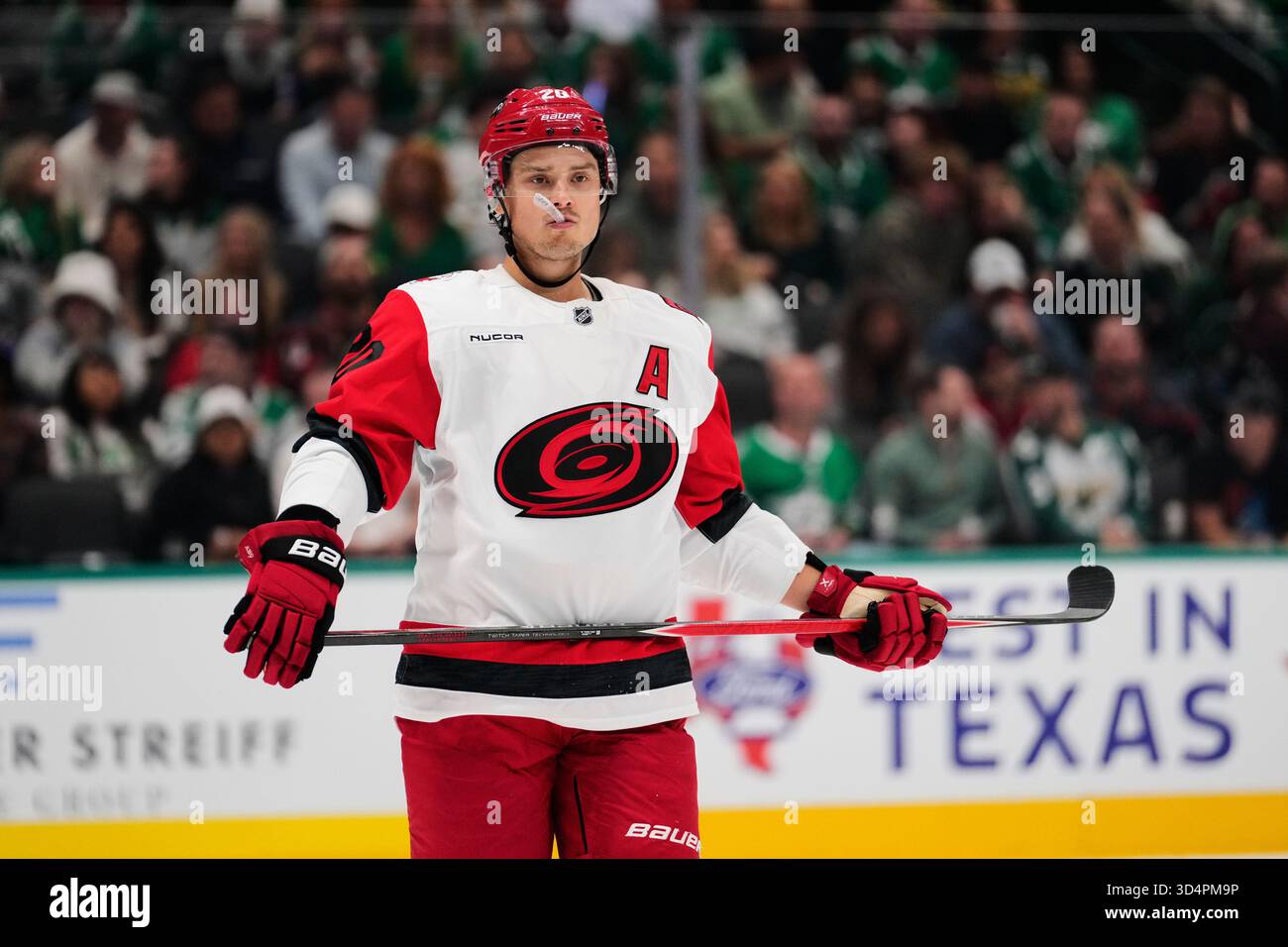
Who were the top performers for the Carolina Hurricanes?
Sebastian Aho was the leading performer, scoring two goals and adding one assist. Martin Necas also contributed a goal and played a key role in the offense.
How did the Golden Knights perform offensively?
Vegas scored two goals, with Jack Eichel and Mark Stone each netting one. Despite these efforts, the team struggled to generate sustained offensive pressure against Carolina’s defense.
Which period was the most decisive in the game?
The second period was the most critical, as the Hurricanes scored three unanswered goals to take a 4-1 lead, effectively deciding the outcome of the match.
What was the impact of special teams on the final result?
Special teams played a major role, with the Hurricanes scoring two power-play goals. Vegas managed one power-play goal, but their penalty kill struggled to contain Carolina’s movement in the second period.
For more detailed statistics and a full play-by-play breakdown, readers can refer to the official league records and the comprehensive ESPN game recap for the June 11, 2026, matchup.
