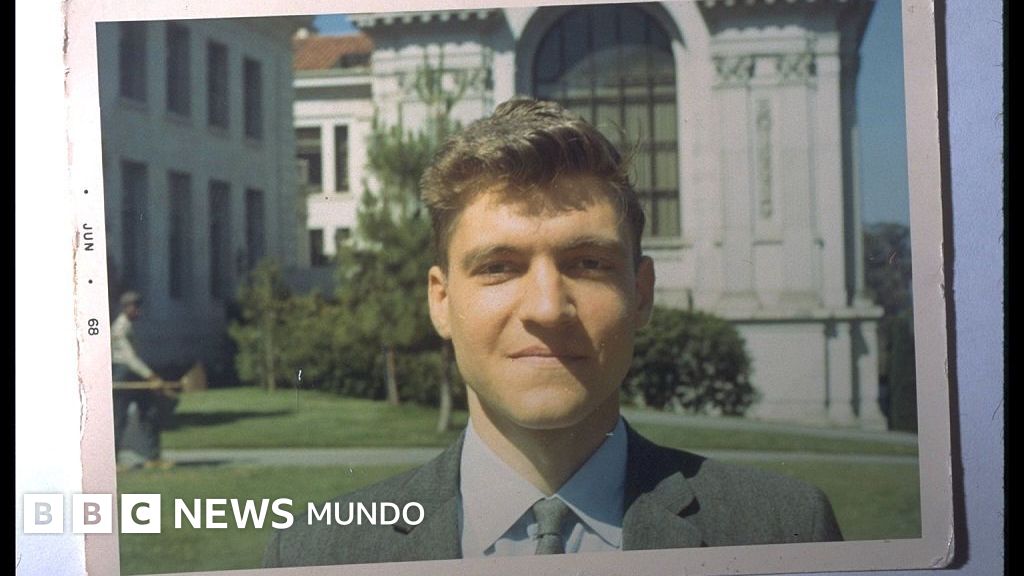
The trajectory of Theodore John Kaczynski, from a 16-year-old mathematics prodigy at Harvard University to a domestic terrorist known as the Unabomber, remains one of the most analyzed descents in American history. While his legacy is defined by a violent 17-year bombing campaign, researchers and historians have looked back at his formative years in Cambridge to understand the psychological catalysts behind his transition to a reclusive life of terrorism.
Key Details
- Academic Background: Harvard University (BA), University of Michigan (MA, PhD).
- Criminal Activity: Mail bombing campaign from 1978 to 1995.
- Casualties: 3 people killed and 23 injured.
- Apprehended: April 3, 1996.
- Notable Work: Industrial Society and Its Future (1995).
The Harvard Experiment
Kaczynski matriculated at Harvard College in 1958, living at 8 Prescott Street, a residence designed for the university’s most precocious incoming students. However, his time there was marked by more than just academic achievement. One year into his studies, Kaczynski was recruited by psychologist Henry A. Murray for a three-year psychological study titled Multiform Assessments of Personality Development Among Gifted College Men
.

The experiment, which involved 22 undergraduates, was designed to measure reactions to stress. According to reports, the study utilized techniques derived from screening tests for the Office of Strategic Services (OSS), the precursor to the CIA, specifically to test an applicant’s ability to withstand harsh interrogation.
The intent of the experiment was to undermine the students’ sense of self-worth by subjecting them to intense aggressive verbal attack.
Alston Chase
The process involved students writing detailed essays on their personal philosophies, which were then met with what Murray described as vehement, sweeping and personally abusive
attacks on the subjects’ egos and beliefs. Kaczynski, who was assigned the code name Lawful
, later described the experience as the worst experience
of his life.
From Academia to Isolation
Despite the psychological toll of the Harvard experiments, Kaczynski continued his academic ascent, eventually earning a PhD from the University of Michigan in 1967 with a thesis titled Boundary Functions. He later served as a mathematics professor at the University of California, Berkeley.
In 1969, Kaczynski abandoned his professional career to pursue a primitive, reclusive lifestyle. This transition preceded a nationwide campaign of mail bombings targeting individuals he believed were advancing modern technology and contributing to the destruction of the natural environment. His ideological framework was eventually detailed in his 35,000-word manifesto, Industrial Society and Its Future, which advocated for cultural primitivism and violent revolution against technology, fascism, and leftism.
Capture and Final Years
The campaign ended on April 3, 1996, when Kaczynski was apprehended. He was subsequently convicted on 10 counts of transportation, mailing, and use of bombs, as well as three counts of first-degree murder. He received several consecutive life sentences without the possibility of parole.
Kaczynski died on June 10, 2023, at the age of 81 in Durham, North Carolina.
