
Trust in Major Brands but News Avoidance Grows: Report on Irish Media Trends
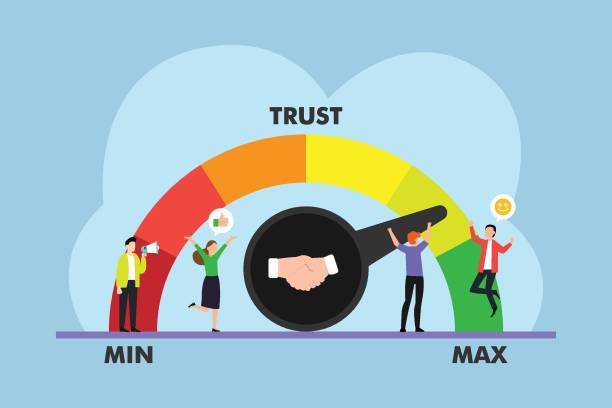
Irish public trust in major news brands remains higher than in the US, UK, and EU, even as a growing number of people actively avoid the news, according to a report cited by RTE.ie. The findings highlight a paradox where credibility remains high, but engagement is declining due to psychological and social factors.
Why is News Avoidance Rising Despite High Trust?
The report cited by RTE.ie indicates a widening gap between how much the Irish public trusts established media and how often they choose to consume it. While the credibility of major brands remains a pillar of the Irish media landscape, “news avoidance” has emerged as a significant behavioral trend. This phenomenon does not necessarily stem from a lack of faith in the facts, but rather from the emotional toll of news consumption.
Analysts suggest that news avoidance often manifests in two ways: selective avoidance, where users shun specific distressing topics, and active avoidance, where individuals intentionally distance themselves from all news cycles. The report suggests that the volume of negative global events and the perceived relentlessness of the 24-hour news cycle contribute to this fatigue.
Key drivers of news avoidance include:
- Emotional Exhaustion: A desire to protect mental health from constant exposure to crisis-driven reporting.
- Information Overload: The sheer volume of digital notifications making news feel overwhelming rather than informative.
- Perceived Lack of Agency: A feeling that the news presents problems that the individual cannot influence or solve.
Which News Sources Do the Irish Public Use Most?
Digital consumption continues to dominate the Irish market. According to the report, RTÉ and The Journal stand as the most used online news sources in Ireland. This indicates a dual preference for the traditional authority of a national broadcaster and the agility of digital-native journalism.
The Journal’s rise reflects a broader shift toward platforms that prioritize rapid updates and social-media-friendly formats. Meanwhile, RTÉ maintains its position through a combination of legacy trust and a wide-reaching digital infrastructure. The data suggests that while users are avoiding news in general, those who do engage prefer brands that offer a perceived balance of reliability and accessibility.
The Irish Independent also remains a significant player, with the report noting a high level of trust in news originating from major media brands. This suggests that the “brand name” acts as a proxy for quality and verification in an era of rampant misinformation.
How Does Ireland Compare to the UK, US, and EU?
Ireland maintains a stronger relationship with its news media than many of its international peers. The report cited by RTE.ie explicitly states that trust in news in Ireland is higher than in the United Kingdom, the United States, and across the European Union generally.
This disparity may be linked to the scale of the Irish media market and the perceived proximity of journalists to the communities they cover. In the US and UK, media polarization has historically eroded trust in “mainstream” outlets, leading to a fragmented landscape where audiences retreat into ideological echoes. Ireland has avoided this extreme level of polarization, allowing major brands to retain a broader mandate of trust.
| Region | Relative Trust Level | Primary Trend |
|---|---|---|
| Ireland | High | High trust but increasing avoidance |
| European Union | Moderate | Varied by member state |
| United Kingdom | Lower | High polarization/Skepticism |
| United States | Lowest | Deep systemic distrust in mainstream media |
What Role Does Local Radio Play in Maintaining Trust?
While digital platforms drive volume, local radio remains one of the most trusted forms of media in the country. The report highlights that local radio stations, such as Midwest Radio, enjoy a deep level of credibility with their audiences.
The trust in local radio is often attributed to the “community connection.” Unlike national or international news, which can feel detached or overwhelming, local radio focuses on immediate, tangible issues affecting the listener’s daily life. This hyper-local focus creates a feedback loop of trust; the news is verified by the listener’s own lived experience in their town or county.
This suggests that the antidote to news avoidance may not be more content, but more relevant content. When news is local and actionable, the psychological barrier to consumption drops.
The Implications of a Trust-Avoidance Paradox
The finding that “trust in major brands but news avoidance grows – report – RTE.ie” presents a strategic challenge for journalists and policymakers. If people trust the news but refuse to read it, the democratic function of the press is compromised.

A well-informed electorate is necessary for a functioning democracy. When citizens avoid the news, they may remain trusting of the institutions of journalism, but they lack the current information needed to make informed decisions at the ballot box or in civic life. This creates a vacuum that can be filled by unverified social media snippets or anecdotal evidence, even if the user doesn’t explicitly “trust” those sources as much as they trust a major brand.
Industry experts suggest several pivots to combat this trend:
- Solutions Journalism: Moving away from purely “problem-focused” reporting to include how issues are being solved.
- Curated Digests: Reducing information overload by providing concise, high-value summaries.
- Enhanced Localism: Leveraging the trust found in local radio to bring more community-centric reporting to digital platforms.
Common Misconceptions About News Avoidance
A frequent misunderstanding is that news avoidance is a sign of apathy or a lack of education. However, the data suggests the opposite. Many people who avoid the news are acutely aware of the world’s problems; they avoid the news precisely because they care and find the current state of global affairs distressing.
Another misconception is that news avoidance is driven by a move toward “fake news.” While misinformation is a problem, the report indicates that the avoidance is often a psychological defense mechanism rather than a shift in loyalty to unreliable sources. People aren’t necessarily switching to bad news; they are switching to no news.
The Evolution of Digital News Consumption in Ireland
The dominance of RTÉ and The Journal marks a shift in how the Irish public verifies information. The transition from print-first to digital-first has not destroyed trust, but it has changed the delivery mechanism. The speed of The Journal appeals to a younger demographic, while the institutional weight of RTÉ appeals to a broader cross-section of society.
This digital transition has also allowed for more diverse storytelling. The use of multimedia, interactive graphics, and short-form video helps mitigate the “overload” feeling that leads to avoidance. By breaking news into digestible segments, major brands are attempting to keep the audience engaged without triggering the stress response associated with long-form crisis reporting.
For those interested in the broader shift of media consumption, a related explainer on digital journalism trends provides more context on how newsrooms are adapting to these behavioral changes.
Frequently Asked Questions
What is news avoidance?
News avoidance is the intentional decision by individuals to stop or reduce their consumption of news. This can be “selective,” where they avoid specific topics like war or climate change, or “active,” where they avoid news entirely to protect their mental well-being.
Why is trust in Irish news higher than in the US or UK?
According to the report, Ireland has avoided the extreme levels of media polarization seen in the US and UK. The proximity of journalists to their communities and a more stable relationship between the public and major media brands contribute to these higher trust levels.
Which are the most trusted news sources in Ireland?
Major media brands generally hold high trust. Specifically, local radio (such as Midwest Radio) is noted for its high credibility, while RTÉ and The Journal are the most frequently used online sources.
Does news avoidance mean people don’t trust the media?
No. The report highlights a paradox: trust in major brands remains high, but people avoid the news anyway. The avoidance is typically driven by emotional exhaustion and information overload rather than a lack of trust in the reporting.
How are news organizations fighting news avoidance?
Many are turning toward “solutions journalism,” which focuses on how problems are being solved, and creating more curated, less overwhelming ways to consume information to reduce the psychological burden on the reader.
