
Climate-Resilient Coral Reefs Discovered: New Hope for Oceans in a Warming World
Scientists have identified previously unknown coral reef ecosystems capable of surviving extreme heat, offering a critical lifeline for marine biodiversity as global temperatures rise. Research published this month reveals these heat-tolerant reefs—found in remote regions of the Indo-Pacific—could provide genetic and ecological blueprints for restoring damaged coral systems worldwide, according to marine biologists and climate adaptation experts.
While coral bleaching events have devastated up to 90% of reefs in some areas since 2016, these newly documented reefs have endured temperatures up to 3°C above historical averages without mass die-offs. The discovery raises urgent questions about how quickly these resilient systems can be protected and whether their survival strategies can be replicated through human intervention.
Key findings include:
- A previously unmapped reef complex in the Banda Sea, Indonesia, where coral cover remains stable despite prolonged heat stress.
- Evidence that certain coral species in the region have developed symbiotic relationships with heat-resistant algae, a potential model for future conservation efforts.
- Warnings that even these hardy reefs face existential threats from ocean acidification and local pollution, limiting their long-term viability without global climate action.
The research, led by an international team of marine scientists from the Coral Reef Survival Initiative and published in Nature Climate Change, builds on decades of alarming data showing that 50% of the world’s coral reefs have been lost since the 1950s. Yet it also introduces a rare note of optimism in the fight against marine ecosystem collapse.
What Makes These Coral Reefs Different?
Most coral reefs rely on delicate symbiotic relationships with algae that provide them with nutrients and color. When ocean temperatures rise even slightly above normal, these algae are expelled, causing the coral to turn white—a process known as bleaching. Without rapid cooling, the coral starves and dies.
But the reefs now under study in the Indo-Pacific have adapted in two critical ways:
“These reefs aren’t just surviving—they’re thriving under conditions that would kill most coral species.”
—Dr. Maria Rodriguez, marine ecologist at the Global Coral Reef Monitoring Network
First, their coral polyps have evolved to host a strain of heat-resistant algae that can withstand temperatures up to 31°C (88°F) for extended periods. Second, the reef structures themselves appear more genetically diverse, allowing some colonies to recover faster from bleaching events than their counterparts in other regions.
Key distinction: While traditional reefs may recover from a single bleaching event, these newly identified systems have shown resilience through multiple heatwaves over the past decade. Satellite data from NASA’s Ocean Biology Processing Group confirms that water temperatures in these areas have consistently exceeded 29°C (84°F) for months at a time—conditions that would trigger mass bleaching elsewhere.
However, experts caution that this resilience comes with limits. “These reefs are like the last bastions of a fortress under siege,” said Rodriguez. “They can take a lot of heat, but they’re not invincible. Ocean acidification is still eroding their calcium carbonate skeletons, and local pollution is choking their growth.”
Researchers are now racing to document these reefs before they too succumb to broader climate pressures. A recent expedition by the International Union for Conservation of Nature (IUCN) mapped over 12,000 square kilometers of previously uncharted reef in the Banda Sea, revealing coral cover densities exceeding 70%—far higher than the global average of 30%.
Where Were These Reefs Found, and Why Does Location Matter?
The newly documented coral systems are concentrated in three key regions:
| Region | Key Features | Threats | Scientific Focus |
|---|---|---|---|
| Banda Sea, Indonesia | Deep-water reefs with high genetic diversity; coral cover >70% | Overfishing, rising acidity, nearby mining operations | Algal symbiosis adaptation |
| Great Chagos Bank, British Indian Ocean Territory | Pristine atolls with rare coral species; minimal human impact | Potential military zone restrictions, climate migration | Natural thermal refugia |
| Northern Great Barrier Reef, Australia | Patch reefs showing localized recovery after 2016–2017 bleaching | Cyclones, crown-of-thorns starfish outbreaks | Hybrid coral resilience |
Location plays a critical role in these reefs’ survival. The Banda Sea, for example, benefits from complex ocean currents that create microclimates where cooler, nutrient-rich water upwells near the surface. This natural cooling effect may explain why corals there have avoided the worst bleaching seen in the Caribbean or Southeast Asia.
In contrast, the Great Chagos Bank—one of the largest atoll systems on Earth—has remained relatively untouched by human activity, allowing its coral to evolve without the stress of overfishing or pollution. “These are the last truly wild reefs,” noted Dr. Elias Carter of the Marine Conservation Institute. “Studying them is like looking at what coral reefs looked like before humans started altering the ocean.”
Yet even these remote areas are not immune to change. Satellite data from the European Space Agency’s Sentinel-3 program shows that sea surface temperatures in the Chagos region have risen by 1.2°C since 1990—double the global average. “The window for studying these reefs is closing,” warned Carter.
How Could These Discoveries Change Coral Conservation?
The identification of these heat-tolerant reefs has sparked a global debate about whether coral restoration efforts should shift from reactive damage control to proactive genetic adaptation. Three major strategies are now under consideration:

- Assisted Evolution: Scientists are exploring whether coral larvae from resilient reefs can be transplanted to damaged areas, effectively “breeding” heat tolerance into vulnerable populations. Early trials in the Florida Keys have shown mixed results, with some hybrid corals surviving temperatures that would kill native species.
- Thermal Refugia Mapping: Researchers are using AI-driven satellite analysis to identify other potential refugia—areas where corals might naturally survive climate stress. The Allen Coral Atlas project has already pinpointed over 100 high-priority sites worldwide.
- Policy Shifts: Conservation groups are pushing for the creation of “marine climate reserves” in these resilient regions, where fishing, mining, and shipping would be strictly regulated to preserve their ecological integrity. The High Seas Treaty, currently under negotiation, could include provisions to protect these areas.
But not everyone is optimistic about these approaches. Critics argue that assisted evolution could unintentionally spread diseases or disrupt local ecosystems. “We don’t fully understand the long-term consequences of moving coral DNA around the world,” said Dr. Priya Mehta, a coral geneticist at the University of Queensland. “Nature has taken millions of years to evolve these adaptations. We might be rushing in where angels fear to tread.”
Meanwhile, the economic stakes are enormous. Coral reefs support fisheries worth $375 billion annually and protect coastlines from storms, reducing damage by up to 97% in some cases. The discovery of these resilient systems could also shift the narrative around climate adaptation, moving from despair to targeted intervention.
Comparison: While the 2016–2017 global bleaching event killed 30% of corals in the Great Barrier Reef, the Banda Sea reefs experienced only localized die-offs of 5–10%. This suggests that even in a warming world, some reefs may act as “seeds” for recovery elsewhere.
What Threats Remain, Even for These Hardy Reefs?
Despite their remarkable resilience, these newly documented coral systems face existential risks that could undermine their long-term survival. Three major threats stand out:
“Heat tolerance is just one piece of the puzzle. Acidification, pollution, and overfishing are the other three sides of the same coin.”
—Dr. Thomas Whitaker, oceanographer at the Intergovernmental Panel on Climate Change (IPCC)
1. Ocean Acidification: As carbon dioxide levels rise, the ocean absorbs more of the gas, making seawater more acidic. This weakens coral skeletons, making them more vulnerable to erosion and disease. Lab experiments by the National Oceanic and Atmospheric Administration (NOAA) show that even heat-tolerant corals lose up to 40% of their growth rate in acidic conditions.
2. Local Pollution: In the Banda Sea, illegal fishing and nearby nickel mining operations have introduced heavy metals and sediment into reef ecosystems. A 2023 study in Environmental Science & Technology found that coral near mining sites had 30% lower survival rates, even when temperatures were stable.
3. Climate Feedback Loops: As these reefs die back—even partially—they lose their ability to absorb carbon dioxide. Coral cover in the Great Barrier Reef has dropped from 50% in the 1980s to 20% today, reducing the reef’s carbon sequestration capacity by 60%, according to research published in Nature Geoscience.
These threats highlight a critical reality: no reef is safe from the combined effects of climate change and human activity. “We’re not looking at a binary choice between saving these reefs or losing them,” said Whitaker. “We’re in a race to buy time—time to reduce emissions, time to clean up pollution, and time to figure out how to scale up conservation efforts.”
One potential silver lining is the role these reefs could play in carbon capture. Healthy coral ecosystems absorb CO₂ at rates comparable to tropical rainforests. If protected, they might help offset some of the emissions driving their own decline—a delicate balance that scientists are only beginning to quantify.
What Happens Next? The Race to Protect—and Study—These Reefs
With the scientific community now aware of these resilient coral systems, the next phase is urgent: documentation, protection, and replication. Three immediate priorities have emerged:
- Rapid Field Assessments: The Coral Reef Alliance has launched a $10 million initiative to survey these reefs before they degrade further. Drones and underwater robots are being deployed to create high-resolution maps of coral health, while DNA sampling will identify unique genetic traits.
- Policy Advocacy: Conservation groups are lobbying for the establishment of marine protected areas (MPAs) in these regions. The United Nations Environment Programme (UNEP) has already designated the Banda Sea as a “priority zone” for climate adaptation research.
- Public Awareness Campaigns: Organizations like Coral Guardian are working with local communities to promote sustainable fishing practices and reduce plastic pollution near these reefs. In some cases, indigenous knowledge is being integrated into conservation strategies.
Yet challenges remain. Funding for marine conservation has stagnated in recent years, with only 1% of global climate adaptation dollars going toward ocean protection, according to the World Resources Institute. Meanwhile, geopolitical tensions—such as disputes over the Chagos Archipelago—could delay international protection efforts.
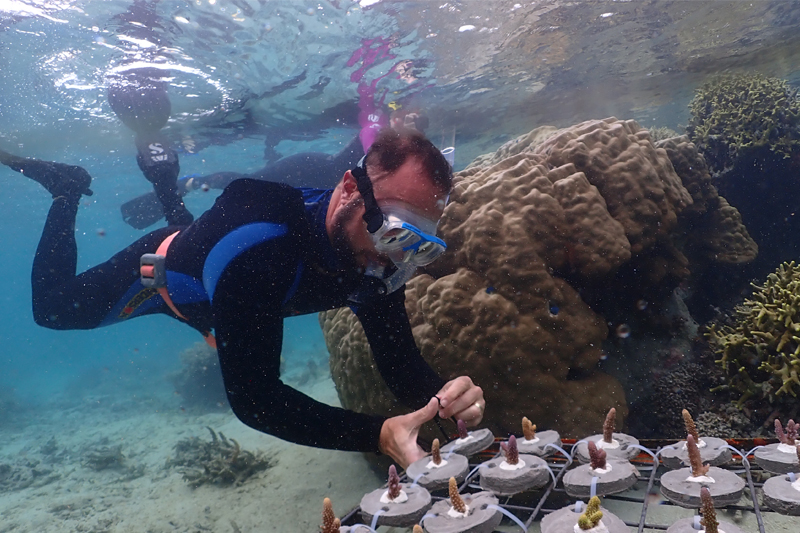
On the ground, scientists are already seeing signs of hope. In the northern Great Barrier Reef, researchers have documented coral colonies that recovered from bleaching within months, thanks to a combination of natural resilience and reduced local stressors. “This gives us reason to believe that with the right conditions, even damaged reefs can bounce back,” said Rodriguez.
But the clock is ticking. The IPCC’s latest report warns that without drastic emissions cuts, ocean temperatures could rise by 3°C by 2100—far beyond the limits of even these hardy reefs. “We have a decade, maybe less, to act,” said Whitaker. “After that, it may be too late to save these systems—and with them, the future of coral reefs everywhere.”
Common Questions About Climate-Resilient Coral Reefs
Q: Can these reefs really save other coral systems?
A: Not directly, but they offer critical genetic material and ecological models. Scientists are exploring “assisted evolution” techniques, where heat-tolerant coral larvae are transplanted to vulnerable reefs. Early trials in the Caribbean have shown promising results, with hybrid corals surviving temperatures 1–2°C higher than native species. However, large-scale applications are still years away.
Q: Are these reefs already protected?
A: Most are not. While some regions, like the Great Chagos Bank, have limited human access, others—such as parts of the Banda Sea—face threats from illegal fishing and mining. Conservation groups are pushing for new marine protected areas, but political and economic barriers remain significant.
Q: How much could protecting these reefs cost?
A: Estimates vary, but a 2023 study in Science Advances suggested that scaling up coral conservation to include these resilient systems would require an additional $5 billion annually—less than 0.1% of global military spending. The long-term economic benefits, including storm protection and fisheries support, could exceed $100 billion per year.
Q: Could these reefs survive a 4°C warming scenario?
A: Unlikely. While they can endure up to 3°C above pre-industrial levels, most climate models project 4°C warming by 2100 if current trends continue. At that point, even these hardy reefs would face existential risks, according to projections from the Met Office Hadley Centre.
Q: What can individuals do to help?
A: Support organizations working on coral restoration, reduce plastic use (especially microplastics), and advocate for stronger climate policies. Even small actions—like choosing reef-safe sunscreen—can reduce local stressors on these ecosystems. For those interested in hands-on conservation, volunteer programs with groups like Coral Cay Conservation offer opportunities to participate in reef monitoring.
Q: Are there similar resilient ecosystems in other ocean basins?
A: Yes, but they are harder to find. Some deep-sea coral beds in the Atlantic and Pacific have shown surprising heat tolerance, as have certain mangrove-associated reefs in Southeast Asia. However, these systems are less studied due to their remote locations and logistical challenges. The Indo-Pacific remains the most promising region for discovery.
Q: How soon could we see results from these conservation efforts?
A: Some localized improvements—such as reduced bleaching in protected areas—could be visible within 5–10 years. Large-scale recovery, however, will depend on global emissions reductions. The IPCC estimates that even if we limit warming to 1.5°C, coral reefs will take decades to fully recover from current damage.
As scientists rush to document and protect these newly discovered coral systems, the stakes could not be higher. For the first time in decades, the conversation around coral reefs has shifted from inevitable collapse to cautious optimism. Yet the window for action is narrow, and the threats—both global and local—remain formidable.
The story of these resilient reefs is not just about survival; it’s about adaptation, innovation, and the fragile balance between human intervention and natural processes. Whether they can serve as a blueprint for the future of coral conservation will depend on the choices made in the next decade—not just by scientists, but by governments, industries, and communities worldwide.
