Global Beatles Day: Who Was the Walrus? Unpacking the Mystery of Lennon’s Surrealist Anthem
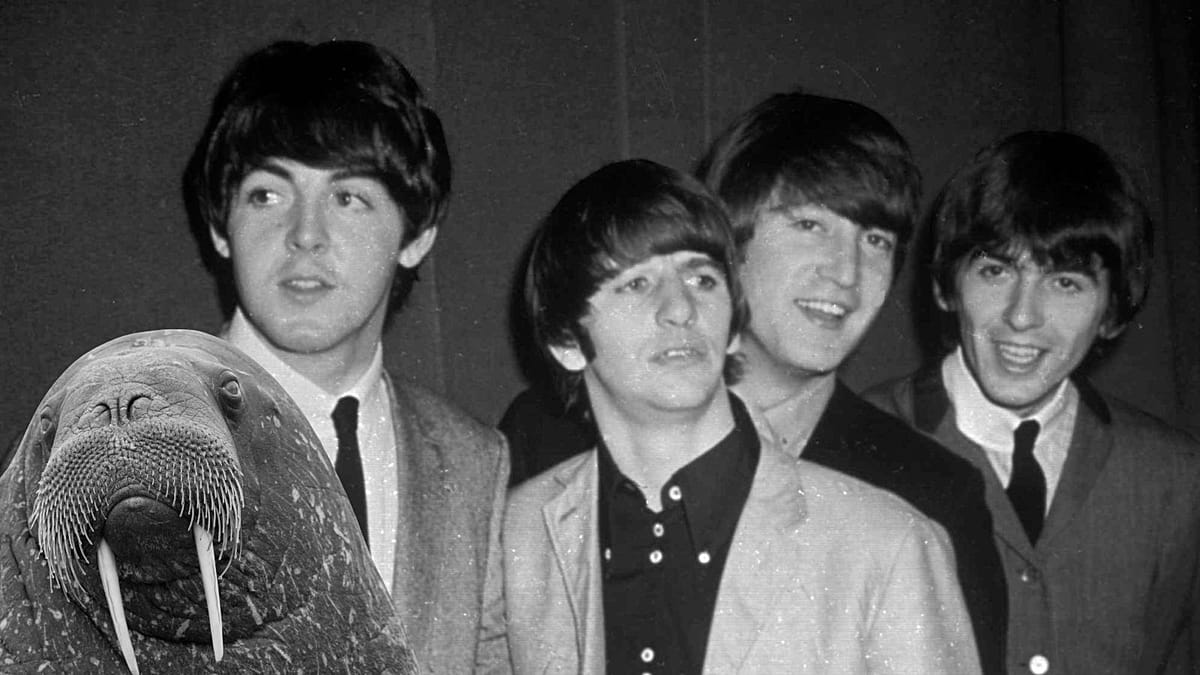
John Lennon was “the walrus” in the 1967 Beatles track “I Am the Walrus,” though the persona served as a deliberate tool to baffle fans and music critics. The song, a centerpiece of Global Beatles Day discussions, draws its primary imagery from Lewis Carroll’s 1871 poem “The Walrus and the Carpenter” to challenge the era’s trend of over-analyzing pop lyrics, according to historical accounts of the recording sessions.
What is Global Beatles Day and Why Does the “Walrus” Question Persist?
Global Beatles Day serves as an annual focal point for fans and music historians to examine the band’s influence on modern culture. While the group disbanded in 1970, the specific query regarding “who was the walrus” remains a recurring topic of debate during these celebrations. This persistence stems from the song’s intentionally oblique lyrics and the band’s transition from songwriting for the masses to avant-garde experimentation during the late 1960s.
The question “Who was the walrus?” is more than a lyrical inquiry; it represents the tension between the artist’s intent and the audience’s desire for hidden meaning. During the 1967 “Summer of Love,” the Beatles became the primary targets of a new wave of music criticism that sought deep, often spiritual or political, messages in every verse. In response, John Lennon crafted “I Am the Walrus” as a satirical commentary on this phenomenon.
- The Date: Global Beatles Day celebrations typically center on the band’s enduring legacy, often coinciding with anniversaries of major releases or member birthdays.
- The Core Mystery: The “walrus” refers to a character in Lewis Carroll’s Through the Looking-Glass, but in the song, it functions as a mask.
- The Goal: Lennon explicitly stated his intent was to confuse people who spent their time analyzing his lyrics.
The Origin of “I Am the Walrus”: A Strategy of Confusion
According to studio logs and interviews with producer George Martin, “I Am the Walrus” was written during a period when Lennon felt pressured by the public’s obsession with the “meaning” of his songs. After the release of Sgt. Pepper’s Lonely Hearts Club Band, critics began treating Beatles lyrics as sacred texts. Lennon decided to write a song that sounded profound but was designed to be nonsensical.
Lennon learned that a student had written a letter to him analyzing the lyrics of “Strawberry Fields Forever,” attempting to find a deeper hidden meaning. This prompted him to create a track that would lead the “meaning-seekers” on a wild goose chase. By incorporating random phrases and surrealist imagery, he ensured that any attempt to find a linear narrative would fail.
“I wanted to write a song that would confuse the people who think they know everything about us,” Lennon noted in various interviews regarding his songwriting process during the psychedelic era.
The Lewis Carroll Connection
The specific choice of the walrus comes from Lewis Carroll’s poem “The Walrus and the Carpenter.” In the poem, the walrus and the carpenter lure a group of young oysters to a walk on the beach, only to eat them. Lennon utilized this imagery not to tell the story of the poem, but to evoke a sense of childhood absurdity and surrealism.
By claiming “I am the walrus,” Lennon wasn’t identifying with a specific person or political figure; he was adopting a persona of absurdity. The “Eggman,” another character mentioned in the song, was a reference to Eric Burdon of the Animals, who had a penchant for unusual descriptions, though Lennon later admitted the term was largely chosen for its rhythmic and sonic quality.
The Technical Production of a Psychedelic Masterpiece
The sonic landscape of “I Am the Walrus” is as complex as its lyrics. Recorded at Abbey Road Studios in 1967, the track pushed the limits of four-track recording technology. George Martin, the band’s producer, employed an orchestral arrangement that deviated from traditional pop standards, using strings and brass to create a dissonant, swirling effect.
To achieve the song’s unique atmosphere, the production team utilized several innovative techniques:
- Tape Manipulation: The use of ADT (Artificial Double Tracking) and varying tape speeds to alter the pitch of the vocals.
- Sound Collage: The integration of “musique concrète,” including the sounds of radio chatter and chaotic studio noise at the end of the track.
- Orchestral Dissonance: The strings were instructed to play sliding notes (glissandos) to mirror the “melting” feeling of a psychedelic experience.
The resulting sound was a stark departure from the “mop-top” era of the early 1960s. It signaled the Beatles’ full immersion into the avant-garde, moving away from the structure of the three-minute pop song toward a more atmospheric, conceptual approach to music.
| Feature | Early Beatles (1963-1965) | Psychedelic Beatles (1966-1967) |
|---|---|---|
| Lyrical Focus | Romance, young love, direct address | Surrealism, introspection, social satire |
| Recording Style | Live takes, minimal overdubs | Extensive studio manipulation, sound collages |
| Instrumentation | Guitar, Bass, Drums | Sitar, Mellotron, full orchestras, tape loops |
| Song Structure | Verse-Chorus-Bridge | Non-linear, episodic, experimental |
Why the “Walrus” Mystery Matters in Music History
The enduring fascination with the “walrus” identity highlights a shift in how the public consumes art. “I Am the Walrus” was one of the first major pop songs to treat the lyrics as a puzzle without a solution. This approach paved the way for future genres, from progressive rock to the abstract lyricism of modern indie music.

By refusing to provide a clear answer, Lennon shifted the power dynamic between the artist and the critic. He demonstrated that music could be an experience of sound and emotion rather than a riddle to be solved. This philosophy is a core reason why the song is highlighted during Global Beatles Day; it marks the moment the Beatles stopped being “entertainers” and became “artists” in the most provocative sense of the word.
The Impact on Listener Psychology
Psychologists and musicologists suggest that the “Walrus” mystery persists because the human brain is wired to find patterns. When presented with a song that sounds like it has a secret, listeners will invent their own meanings. This “Pareidolia” effect—seeing patterns where none exist—is exactly what Lennon was satirizing. The song is a mirror; what a listener finds in “the walrus” often says more about the listener than the song itself.
Common Misconceptions About the Song
Over the decades, several theories have emerged regarding the identity of the walrus and the meaning of the song. Many of these have been debunked by those close to the band or by Lennon’s own testimony.
Misconception 1: The song is a hidden political manifesto.
Some theorists claim the “walrus” represents a specific political figure or a commentary on the Cold War. However, there is no evidence in the studio diaries or Lennon’s personal writings to support this. The song’s target was not a politician, but the academic analysis of pop music.
Misconception 2: The “Eggman” is a secret code for another band member.
While some believe “the Eggman” refers to Paul McCartney or George Harrison, the term was largely a playful invention. Lennon’s use of “Eggman” and “Walrus” was intended to create a surrealist pairing, not a biographical map of the band’s internal relationships.
Misconception 3: The song was written under the influence of specific hallucinogens to convey a “trip.”
While the Beatles were certainly influenced by the drug culture of the 1960s, “I Am the Walrus” was a calculated intellectual exercise. The “trip” was a stylistic choice designed to mimic the aesthetic of the era, rather than a literal transcription of a drug experience.
The Legacy of Surrealism in Modern Pop
The influence of “I Am the Walrus” can be seen in the works of artists who prioritize mood and texture over linear storytelling. From the conceptual albums of Radiohead to the abstract imagery of Björk, the precedent set by Lennon—that a song can be “about” the act of being confusing—continues to resonate.
Furthermore, the song’s use of the studio as an instrument changed the trajectory of music production. The idea that the recording process itself could be a creative act, rather than just a way to capture a live performance, is a direct result of the experimentation found in tracks like “I Am the Walrus.”
For those exploring the band’s evolution, a related explainer on the evolution of Abbey Road studios provides further context on how the physical space influenced these sonic experiments.
Frequently Asked Questions
Who was the walrus in the Beatles song?
The “walrus” was a persona adopted by John Lennon. The character is based on “The Walrus and the Carpenter” from Lewis Carroll’s Through the Looking-Glass. Lennon used the persona to mock people who tried to over-analyze his lyrics.
When was “I Am the Walrus” recorded?
The song was recorded in September 1967 at Abbey Road Studios in London. It was released as a single in October 1967 and later appeared on the Magical Mystery Tour album.

What does “the Eggman” mean in the song?
While some associate “the Eggman” with Eric Burdon of the Animals, Lennon primarily used the term for its absurdist sound and to complement the surreal imagery of the walrus.
Is Global Beatles Day an official holiday?
Global Beatles Day is a fan-driven celebration rather than a government-mandated holiday. It serves as a day for music lovers worldwide to honor the band’s contribution to art and culture.
Why did John Lennon write such confusing lyrics?
Lennon wrote the lyrics to frustrate critics and fans who were attempting to find deep, hidden meanings in his work. He wanted to prove that lyrics could be purely aesthetic or intentionally nonsensical.
The enduring nature of the “walrus” mystery ensures that every Global Beatles Day brings a new generation of listeners back to the archives of 1967. By embracing the absurd, the Beatles created a piece of music that refuses to be solved, ensuring its relevance as long as people continue to seek meaning in the noise.
