Oil Firms to Implement Big-Time Price Rollback June 23 – Philippine News Agency
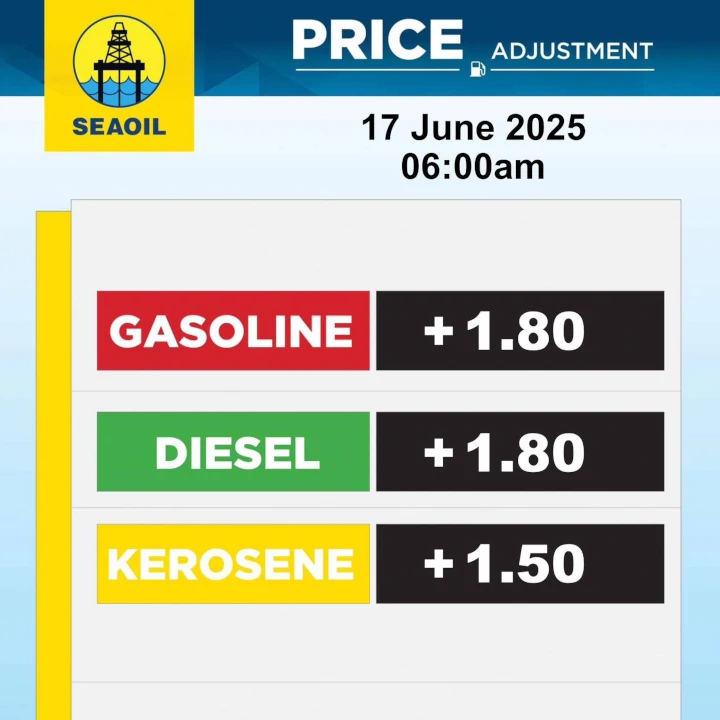
Fuel prices in the Philippines will drop significantly on June 23. According to reports from the Philippine News Agency and other major news outlets, diesel and kerosene prices are expected to decrease by over P9 per liter, while gasoline prices will see a reduction of at least P3.90 per liter.
What are the specific fuel price cuts for June 23?
Oil companies are scheduled to implement a substantial price reduction across all major fuel products on June 23. The most significant cuts apply to diesel and kerosene. BusinessWorld Online reports that these two fuel types will drop by more than P9 per liter. Meanwhile, gasoline prices are set to decrease by at least P3.90 per liter, according to the same source.
This adjustment follows a trend of volatility in global oil markets. ABS-CBN confirmed that diesel and kerosene prices are seen going down by at least P9 per liter this week, mirroring the data provided by other industry watchers. The Philippine News Agency characterized the upcoming adjustment as a “big-time price rollback,” signaling a relief for motorists and transport operators.
Below is a summary of the projected price movements based on the available reports:
| Fuel Product | Projected Rollback (Per Liter) | Source |
|---|---|---|
| Diesel | Over P9.00 | BusinessWorld / ABS-CBN |
| Kerosene | Over P9.00 | BusinessWorld / ABS-CBN |
| Gasoline | At least P3.90 | BusinessWorld |
How do different news sources frame the June 23 rollback?
While all major outlets agree on the direction of the price movement, the framing varies slightly between reports. The Philippine News Agency and Rappler emphasize the scale of the event, describing it as a “big-time” or “big” rollback. This framing suggests that the decrease is larger than the typical weekly adjustments seen in the Philippine market.
BusinessWorld Online and ABS-CBN provide more granular data, specifically highlighting the P9 threshold for diesel and kerosene. By focusing on the specific figures, these outlets provide a concrete metric for consumers to calculate their savings. Inquirer.net maintains an “Oil Price Watch” format, positioning the June 23 date as a key milestone for consumers tracking weekly fluctuations.
The consistency across these five outlets—PNA, Inquirer, ABS-CBN, Rappler, and BusinessWorld—indicates a high level of certainty regarding the downward trend in pump prices for the third week of June.
Why are diesel and kerosene prices dropping more than gasoline?
The disparity between the P9 drop for diesel and the P3.90 drop for gasoline is a common occurrence in the Philippine oil industry. This happens because different fuel types are pegged to different global benchmarks. Diesel and kerosene prices are more closely tied to the cost of middle distillates in the Mean of Platts Singapore (MOPS) market.
When global demand for industrial diesel weakens or when refinery outputs of distillates increase, diesel prices often fall more sharply than gasoline. Gasoline is influenced by different market drivers, including the demand for passenger vehicle fuel and the cost of naphtha. According to the price data reported by BusinessWorld, the current market conditions have favored a steeper decline for the distillates used in trucks, buses, and household kerosene lamps.
Key factors influencing these specific drops include:
- Global Crude Volatility: Fluctuations in Brent and WTI crude benchmarks.
- MOPS Pricing: The specific pricing of refined products in the Singapore trading hub.
- Inventory Levels: Changes in global oil stockpiles affecting supply-demand balances.
Who will benefit most from the June 23 price rollback?
The transport sector stands as the primary beneficiary of this adjustment. Because public utility vehicles (PUVs), such as jeepneys and buses, as well as logistics trucks, rely almost exclusively on diesel, a rollback of over P9 per liter provides immediate operational relief. This reduction lowers the cost of transporting goods and passengers, which can potentially ease the pressure on food prices.
Household consumers using kerosene for lighting or cooking will also see a direct benefit. Given that kerosene is often used by lower-income households in rural areas, a P9 per liter decrease represents a significant reduction in monthly utility spending.
Private car owners using gasoline will benefit less than diesel users, but a P3.90 per liter cut still offers a noticeable decrease in refueling costs. For a standard 40-liter tank, a gasoline user would save approximately P156 per full tank.
The significant drop in diesel prices is particularly critical for the logistics chain, as diesel is the primary energy source for the movement of agricultural products from farms to urban markets.
What is the historical context of these price movements?
The Philippines operates under a deregulated downstream oil industry. This means that oil companies are free to set their prices based on international market trends. The “weekly adjustment” cycle—usually implemented every Tuesday—is the standard mechanism by which firms pass on global price changes to the local consumer.
A rollback of P9 per liter is considered substantial. In previous years, price movements typically fluctuate between P0.50 and P2.00. When rollbacks exceed P5.00, it usually indicates a sharp correction in the global market or a response to a significant surplus in refined fuel products. This June 23 event aligns with a period of market correction following previous price hikes.
For those interested in how these cycles work, a related explainer on fuel deregulation in the Philippines provides more detail on why pump prices change weekly.
How does this affect inflation and the broader economy?
Fuel prices are a primary driver of inflation in the Philippines. Because fuel is an input cost for almost every sector—from farming to manufacturing to retail—a “big-time” rollback as reported by the Philippine News Agency can have a cooling effect on the Consumer Price Index (CPI).
When diesel prices drop by over P9, the cost of transporting vegetables, meat, and grains decreases. If transport operators pass these savings on to the consumers, the prices of basic commodities may stabilize or decline. This is a critical mechanism for managing inflation, especially during months when agricultural supply is tight.
However, economists often note that price rollbacks at the pump do not always lead to immediate price drops in the markets. Retailers may maintain higher prices to recover losses from previous periods of high fuel costs. Despite this, the trend remains positive for the overall economy.
Summary of Economic Implications
- Transport Costs: Immediate reduction in operating expenses for PUVs and logistics firms.
- Consumer Spending: Increased disposable income for motorists and kerosene users.
- Inflationary Pressure: Potential downward pressure on the cost of transported goods.
What should consumers expect in the coming weeks?
While the June 23 rollback provides immediate relief, fuel prices remain subject to the volatility of the global market. Consumers should monitor the MOPS pricing and global geopolitical events that could trigger either further rollbacks or sudden price hikes.
Industry analysts suggest that the market remains sensitive to production decisions by OPEC+ and the economic health of major importers like China. If global demand continues to soften, further rollbacks may occur. Conversely, any supply disruption in the Middle East or Eastern Europe could reverse these gains.
Motorists are encouraged to track “Oil Price Watch” updates from reputable sources to time their refueling. Since the rollback takes effect on June 23, those who can wait until that date will maximize their savings.
For further reading on energy trends, consider a detailed analysis of OPEC production quotas and their impact on Southeast Asian markets.
Frequently Asked Questions
When will the fuel price rollback take effect?
The price rollback is scheduled to be implemented by oil firms on June 23.
How much will diesel and kerosene prices decrease?
According to BusinessWorld Online and ABS-CBN, diesel and kerosene prices are expected to drop by over P9 per liter.
What is the projected decrease for gasoline?
Gasoline prices are expected to go down by at least P3.90 per liter, according to BusinessWorld Online.
Why are the price cuts different for gasoline and diesel?
Different fuel types are pegged to different global benchmarks in the Singapore market (MOPS). Current market conditions have caused a steeper price decline for distillates (diesel/kerosene) than for gasoline.
Who reported these price changes?
The rollback was reported by the Philippine News Agency, Inquirer.net, ABS-CBN, Rappler, and BusinessWorld Online.
Will this lead to lower food prices?
While a diesel rollback reduces transport costs for agricultural goods, the actual impact on food prices depends on whether retailers and transporters pass those savings on to the end consumer.
