Fitch Affirms Badesc’s IDRs at ‘BB’ With Stable Outlook: What it Means for Sergipe’s Development Bank
Fitch Ratings has affirmed the Issuer Default Ratings (IDRs) of Badesc, the development bank of the state of Sergipe, at ‘BB’ with a stable outlook. According to the agency, this rating reflects the bank’s strong link to the State of Sergipe and the state’s current credit profile, signaling that the bank’s ability to meet its financial obligations remains steady.
Why did Fitch Ratings maintain the ‘BB’ rating for Badesc?
Fitch Ratings affirmed the ‘BB’ Issuer Default Rating (IDR) for Badesc based on the bank’s systemic importance to the state of Sergipe and the expectation of continued support from the state government. The agency notes that Badesc operates as a primary vehicle for providing credit and financial incentives to stimulate economic growth within the region.
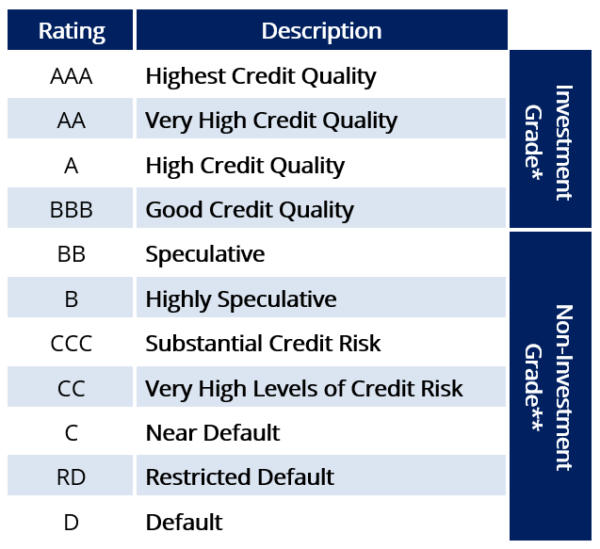
The ‘BB’ rating is categorized as “speculative grade.” In the credit rating hierarchy, this indicates that while the entity is currently capable of meeting its financial commitments, it faces higher vulnerability to adverse economic conditions than “investment grade” entities. According to Fitch, the rating is heavily influenced by the creditworthiness of the State of Sergipe itself, as the bank’s operational viability is closely tied to the state’s fiscal health.
Key factors contributing to the affirmation include:
- Government Support: The strong link between Badesc and the Sergipe state government suggests a high likelihood of support if the bank faced severe financial distress.
- Strategic Role: Badesc’s mandate to foster regional development makes it a critical asset for the state’s economic policy.
- Fiscal Stability: The “stable” outlook indicates that Fitch does not anticipate a significant shift in the bank’s credit profile or the state’s support capacity in the near term.
What is the role of Badesc in Sergipe’s economy?
Badesc, or the Banco de Desenvolvimento do Estado de Sergipe, functions as a specialized financial institution. Unlike commercial banks that focus on short-term deposits and consumer loans, Badesc focuses on long-term financing for infrastructure, industrial expansion, and the modernization of local businesses.
The bank provides the capital necessary for projects that might be deemed too risky or too long-term for traditional private lenders. By offering competitive interest rates and longer grace periods, Badesc helps bridge the gap between private investment and public development goals. According to regional financial frameworks, this allows the state of Sergipe to attract new industries and support existing agricultural and manufacturing sectors.
The affirmation of the ‘BB’ rating suggests that the institution remains a viable conduit for state-led investment, maintaining a level of creditworthiness that allows it to operate within the Brazilian financial system.
How does the ‘Stable’ outlook affect Badesc’s operations?
A “stable” outlook is a forward-looking statement from Fitch Ratings suggesting that the ‘BB’ rating is unlikely to change over the next one to two years. For Badesc, this stability provides a level of predictability for both its lenders and its borrowers.
When a rating agency maintains a stable outlook, it signals to the market that the underlying risks—such as political instability, sudden fiscal deficits in the state budget, or a collapse in regional GDP—are currently managed or predictable. This allows Badesc to plan its lending portfolios and manage its own funding costs without the immediate fear of a downgrade, which would typically increase the cost of borrowing money.
To understand how this fits into the broader rating scale, consider the following breakdown:
| Rating Category | Rating Grade | General Meaning |
|---|---|---|
| Investment Grade | BBB- and above | Low to moderate credit risk; high capacity to pay. |
| Speculative Grade | BB+ to B- | Higher risk; capacity to pay exists but is vulnerable. |
| Highly Speculative | CCC and below | High risk of default; unstable financial position. |
The critical link between Badesc and the State of Sergipe
The credit rating of Badesc is not determined in isolation. Fitch Ratings explicitly links the bank’s IDR to the credit profile of the State of Sergipe. This relationship is a common feature of state-owned development banks in Brazil, where the bank is viewed as an extension of the state’s fiscal arm.
If the State of Sergipe were to experience a severe fiscal crisis—such as a sharp increase in debt-to-GDP ratios or a failure to manage public payroll—Fitch would likely revise Badesc’s rating downward, regardless of the bank’s individual balance sheet. Conversely, an upgrade in the state’s own credit rating would likely lift Badesc’s rating.
This interdependence means that Badesc’s financial health is a mirror of the state’s governance. Factors that Fitch monitors include:
- State Revenue Streams: The ability of Sergipe to collect taxes and receive federal transfers.
- Debt Management: How the state handles its obligations to the federal government and private creditors.
- Public Spending: Whether the state maintains a sustainable balance between investment and operational costs.
What are the implications of a ‘BB’ rating for regional borrowers?
For businesses and municipalities in Sergipe that rely on Badesc for financing, the ‘BB’ rating has direct implications for the cost and availability of credit. Because Badesc is rated as speculative grade, it must pay higher interest rates when it borrows money from the capital markets compared to a bank with an ‘A’ or ‘BBB’ rating.
These higher funding costs can trickle down to the end borrower. If Badesc’s cost of capital increases, the interest rates it charges to local entrepreneurs and infrastructure projects may also rise to maintain a sustainable margin. However, because the outlook is “stable,” borrowers can expect that these costs will not spike suddenly due to a rating downgrade.
Furthermore, the ‘BB’ rating acts as a benchmark. It tells institutional investors that Badesc is a viable partner for co-financing projects, provided they have an appetite for speculative-grade risk. This can be beneficial for attracting specific types of development funds that target emerging markets or regional growth initiatives.
Comparing Badesc’s position to other development banks
Development banks across Brazil often face similar rating challenges. Many state-level banks are rated in the ‘BB’ or ‘B’ range because they are constrained by the fiscal limitations of their respective states. When compared to national-level giants like BNDES (Banco Nacional de Desenvolvimento Econômico e Social), which typically carries a higher rating due to federal backing, Badesc operates in a more volatile environment.
The affirmation at ‘BB’ places Badesc in a position where it is functional and stable, but not yet “investment grade.” To move into the investment grade category (BBB- or higher), Badesc would likely need to see a corresponding upgrade in the State of Sergipe’s credit rating, which would require significant improvements in the state’s long-term fiscal trajectory and a reduction in its overall debt burden.
For those tracking regional financial trends, it is useful to look at a related explainer on Brazilian state-owned enterprise ratings to see how other states compare.
Common misconceptions about speculative grade ratings
A common misconception is that a ‘BB’ rating implies that a bank is “failing” or “near bankruptcy.” This is inaccurate. A speculative grade rating does not mean a default is imminent; rather, it means the entity is more susceptible to external shocks than an investment-grade entity.
In the case of Badesc, the ‘BB’ rating acknowledges that the bank is performing its duties and meeting its obligations. The “speculative” label refers to the risk profile, not the current performance. Many successful development banks worldwide operate in the ‘BB’ range, especially in developing economies where the sovereign or sub-sovereign ceiling limits how high a rating any local entity can achieve.
Another misconception is that a “Stable” outlook means the rating can never change. In reality, a stable outlook is a snapshot of the current trend. If the political or economic landscape in Sergipe shifted abruptly—for example, through a major change in tax laws or a sudden economic downturn—Fitch could change the outlook to “Negative” or “Positive” before actually changing the rating itself.
Factors that could trigger a rating change
While the current outlook is stable, certain triggers could lead Fitch Ratings to revise Badesc’s IDRs. These triggers are generally divided into state-level fiscal factors and bank-level operational factors.
Potential Downward Triggers
- Deterioration of State Finances: A significant increase in the State of Sergipe’s debt levels or a sharp decline in its revenue.
- Reduced Government Support: Any policy change that signals the state government is less willing or able to support Badesc in a crisis.
- Asset Quality Decline: A sharp increase in non-performing loans (NPLs) within Badesc’s portfolio, indicating that the businesses it funded are unable to pay back their loans.
Potential Upward Triggers
- State Credit Upgrade: An upgrade in the sovereign rating of the State of Sergipe.
- Improved Capitalization: A significant increase in the bank’s capital buffers, reducing its reliance on state support.
- Diversification of Funding: The ability of Badesc to secure lower-cost funding from a wider variety of international or national sources.
Frequently Asked Questions
What is an IDR in Fitch Ratings?
IDR stands for Issuer Default Rating. It is a rating that reflects the relative likelihood of a default on all payment obligations of an entity. In this case, it measures the likelihood that Badesc will fail to pay its creditors.
Is a ‘BB’ rating good or bad?
A ‘BB’ rating is considered “speculative grade.” It is not “bad” in the sense of imminent failure, but it is lower than “investment grade.” It indicates that the entity is currently stable but carries more risk than higher-rated institutions.
Why is Badesc’s rating tied to the state of Sergipe?
Because Badesc is a state-owned development bank, its funding, mandate, and safety net are provided by the government of Sergipe. If the state cannot afford to support the bank, the bank’s creditworthiness drops.
What does a “Stable Outlook” actually mean?
A stable outlook means that Fitch Ratings does not expect the ‘BB’ rating to be upgraded or downgraded in the near future (typically the next 12 to 24 months), assuming current economic conditions persist.
How does this rating affect local businesses in Sergipe?
It ensures that Badesc remains a viable lender. While a ‘BB’ rating means borrowing costs may be higher than at a top-tier global bank, the “stable” status means these costs are unlikely to fluctuate wildly in the short term.
