The Gender Gap in Respect: Analysis of the Column | Carolyn Hax: Female breadwinner tired of disrespect for her career – The Washington Post
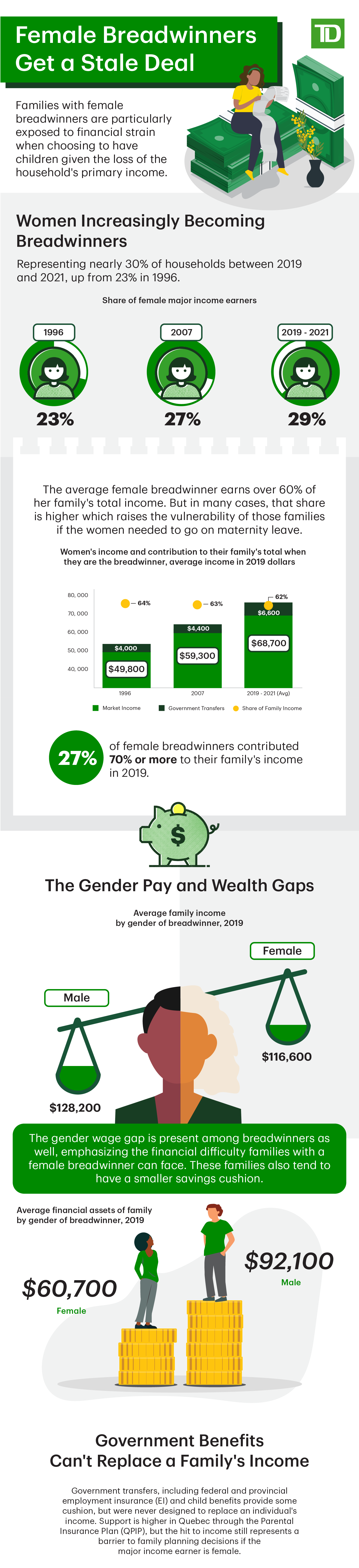
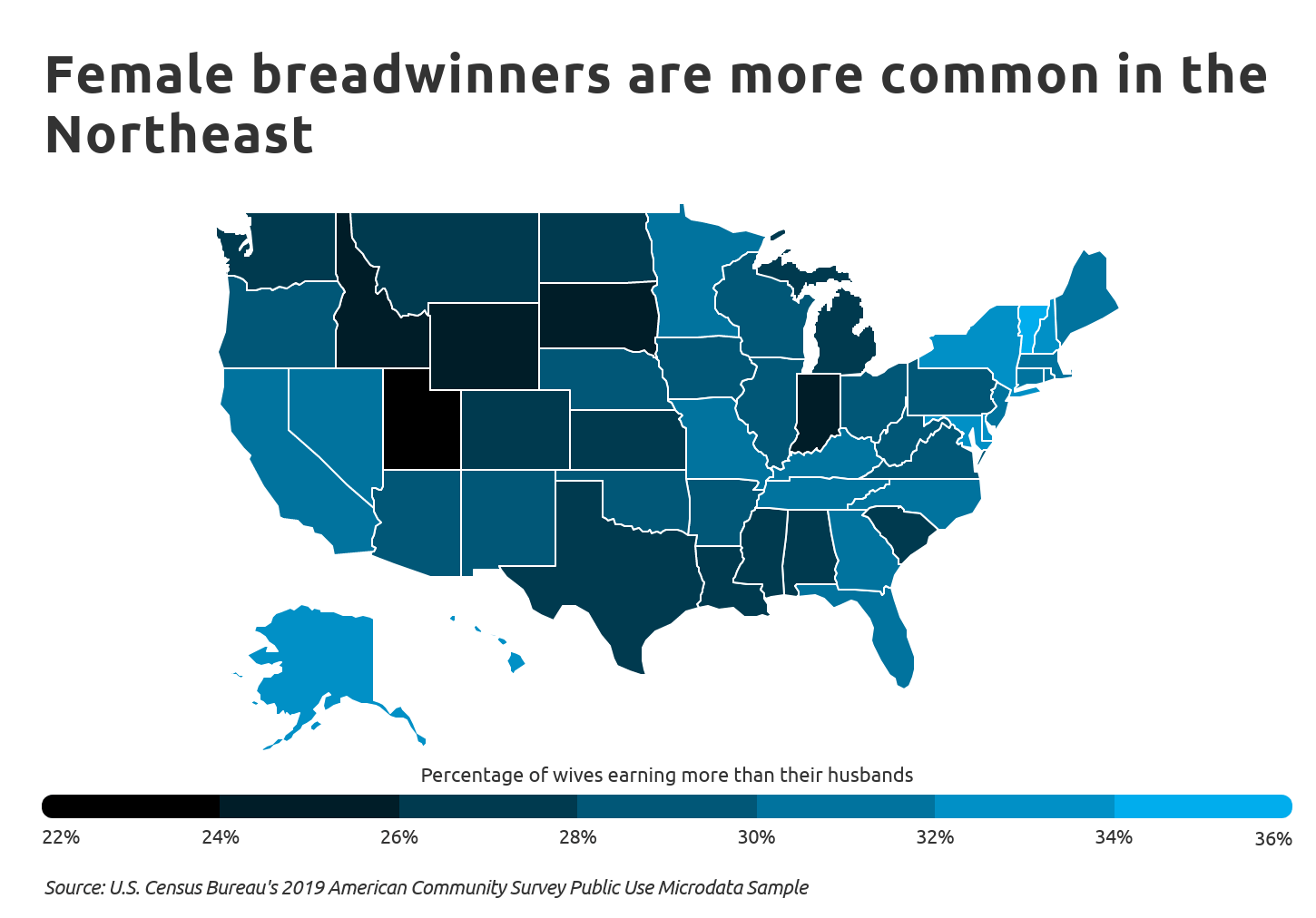
Female breadwinners increasingly report a disconnect between their financial contributions and the respect they receive within domestic partnerships. While women are earning more than their partners at higher rates than in previous decades, reported accounts indicate that this economic shift has not consistently translated into a corresponding shift in household status or emotional validation, according to sociological trends in relationship dynamics.
What is the “Respect Gap” for Female Breadwinners?
The “respect gap” refers to a psychological and social phenomenon where a woman’s role as the primary earner is acknowledged financially but dismissed or resented emotionally. In cases similar to those highlighted in the Column | Carolyn Hax: Female breadwinner tired of disrespect for her career – The Washington Post, the conflict arises when a partner accepts the financial benefits of the woman’s high income while simultaneously belittling the work required to earn it.
This dynamic often manifests as a contradiction. The partner may rely on the woman’s salary to maintain a specific lifestyle, yet they may treat her professional achievements as secondary, accidental, or less demanding than their own lower-paying work. This creates a tension where the woman provides the material security for the home but is denied the social authority usually afforded to the primary provider.
Key indicators of this disrespect include:
- Minimization: Dismissing a high-stress promotion or professional milestone as “just a job.”
- Selective Appreciation: Valuing the paycheck but ignoring the hours, stress, and mental load required to produce it.
- Double Standards: Expecting the female breadwinner to maintain traditional domestic roles (cooking, cleaning, childcare) despite her primary earning status.
- Passive Aggression: Using subtle jabs to remind the partner that their career is “not as important” as the partner’s, regardless of the actual income difference.
Why Does Career Disrespect Persist Despite Income Shifts?
The persistence of this friction is rooted in deeply embedded gender norms. For generations, the “male breadwinner” model linked financial provision directly to masculinity, authority, and respect. When these roles are reversed, it can trigger an identity crisis for partners who tie their self-worth to their ability to provide.
According to relationship experts and sociological data, the shift in income does not automatically trigger a shift in the “internalized script” of a relationship. Many couples enter partnerships with an implicit understanding of traditional roles. When the reality of the income gap contradicts that script, the partner earning less may feel a loss of power. Rather than adapting to a more egalitarian model, some respond by attempting to reclaim power through the devaluation of the other partner’s career.
This is often compounded by the “stalled revolution” concept, where women’s roles in the public sphere (work) changed rapidly, but men’s roles in the private sphere (home) changed much more slowly. This results in a scenario where the woman is working “full-time” in both the office and the home, while the partner earning less does not fully step into the supportive role required to sustain a high-earning career.
| Traditional Model | Modern Reality (Female Breadwinner) | The “Respect Gap” Conflict |
|---|---|---|
| Male earns more; holds decision-making power. | Female earns more; provides primary financial support. | Female earns more, but partner retains “traditional” authority. |
| Female handles domestic labor. | Female handles domestic labor + primary earning. | Partner expects domestic labor despite female’s career demands. |
| Provision equals respect/status. | Provision is a financial fact. | Provision is accepted, but respect is withheld. |
How the “Second Shift” Impacts High-Earning Women
A critical component of the disrespect experienced by female breadwinners is the persistence of the “second shift”—a term coined by sociologist Arlie Hochschild to describe the unpaid domestic work women perform after their paid workday ends. For the female breadwinner, the second shift is not just a matter of time management; it is a symptom of a lack of respect for her professional energy.
When a partner fails to take over a proportional share of domestic duties, they are effectively signaling that the woman’s time and professional exhaustion are less valuable than their own. This is often framed as “helping out” rather than a shared responsibility. When a high-earning woman is told her partner is “helping” with the dishes, it implies that the primary responsibility still belongs to her, regardless of her 60-hour work week.
This dynamic creates a cycle of burnout. The woman earns the money that supports the household, but she is also the one tasked with the emotional and physical labor of maintaining that household. The lack of reciprocity is often the primary source of the “tiredness” and resentment mentioned in the Column | Carolyn Hax: Female breadwinner tired of disrespect for her career – The Washington Post context.
The Mental Load and Executive Function
Beyond physical chores, female breadwinners often carry the “mental load”—the invisible work of planning, organizing, and remembering everything the family needs. This includes:
- Scheduling medical appointments.
- Managing the family calendar.
- Tracking school deadlines and social obligations.
- Planning meals and grocery lists.
When a partner expects the female breadwinner to manage these tasks while also leading the family’s financial growth, it reinforces the idea that her professional success is “extra” and does not exempt her from traditional gendered expectations.
The Psychological Impact of Devalued Professional Success
The emotional toll of being the primary earner while feeling disrespected is significant. It often leads to a specific type of isolation. In professional circles, the woman may be seen as a success, but at home, she is treated as an underperformer in the domestic sphere or a threat to her partner’s ego.
“The pain is not in the work itself, but in the realization that the person who should be your biggest cheerleader is instead the one subtly undermining your achievements to protect their own sense of status.”
This dynamic can lead to several psychological outcomes:
- Resentment: A slow-building anger that stems from the unfair distribution of labor and a lack of emotional validation.
- Guilt: Some women feel guilty for earning more, which leads them to “over-compensate” by doing more housework, which in turn reinforces the partner’s expectation that they should do it all.
- Professional Withdrawal: In some cases, women may subconsciously stop pursuing further growth to avoid further alienating their partner.
- Relationship Erosion: When the financial provider feels like a utility rather than a partner, the emotional bond weakens.
Strategies for Navigating Power Imbalances in Relationships
Correcting the respect gap requires moving from a model of “helping” to a model of “equity.” This involves a fundamental renegotiation of the relationship contract, shifting the focus from who earns more to how resources (time, energy, and money) are distributed.
Establishing a “Labor Audit”
One effective method for addressing this is a formal labor audit. This involves listing every task required to run the household—both physical and mental—and assigning who is responsible for each. When the female breadwinner sees the disparity on paper, and the partner is forced to acknowledge it, the conversation shifts from emotional complaints to factual imbalances.

Redefining Masculinity and Provision
For partners who struggle with the ego hit of not being the primary earner, the definition of “provision” must be expanded. Provision is not only financial; it can be emotional, domestic, or organizational. A partner provides value by creating a supportive environment that allows the primary earner to succeed. When the partner views their domestic contribution as a “provision” of stability, it can help mitigate the feeling of inadequacy.
Setting Professional Boundaries
Female breadwinners must often set firm boundaries regarding their professional time. This means:
- Protected Time: Establishing hours where work is non-negotiable and domestic interruptions are prohibited.
- Explicit Expectations: Clearly stating, “Because I am handling the primary financial burden, I need you to handle the primary domestic burden of [specific task].”
- Ceasing Over-compensation: Stopping the habit of doing extra chores to “make up” for earning more.
For those seeking deeper insights into these dynamics, a related explainer on gender roles in modern marriage may provide further context on how these trends are evolving globally.
Comparing the Female Breadwinner Experience to Traditional Dynamics
To understand why the female breadwinner experience is unique, it is helpful to compare it to the traditional male-breadwinner model. In traditional settings, the male’s financial provision was almost always met with a corresponding level of domestic deference. The “provider” status granted an automatic level of respect and authority within the home.
When the roles are reversed, the “provider” status is often detached from the “authority” status. The woman provides the money, but she is not granted the deference. This creates a systemic imbalance that does not exist in traditional roles. While the traditional model had its own set of problems (such as the woman’s lack of financial independence), the current “respect gap” represents a failure of societal norms to keep pace with economic reality.
Furthermore, the social stigma remains asymmetrical. A man who is not the primary earner is often viewed through a lens of “failure” by traditional standards, which drives his defensive behavior. A woman who is the primary earner is often viewed as “bossy” or “aggressive” if she attempts to claim the authority that usually accompanies that role. This “double bind” makes it significantly harder for female breadwinners to advocate for respect without being accused of overstepping.
Common Misconceptions About High-Earning Women in Relationships
There are several myths that complicate the ability of female breadwinners to find balance and respect in their partnerships. Addressing these is essential for any couple attempting to bridge the respect gap.
Myth 1: “Money solves the power struggle.”
In reality, money often exposes the power struggle. Financial independence for a woman can actually increase tension if the partner feels their only source of value (provision) has been removed. The struggle is about status and identity, not the number in the bank account.
Myth 2: “The partner is just ‘not good’ at housework.”
Often, “weaponized incompetence”—where a partner performs a task poorly so they are never asked to do it again—is used as a tool to maintain traditional gender roles. This is not a lack of skill, but a subconscious or conscious resistance to the shift in power.
Myth 3: “If she earns more, she should be happy to pay for everything.”
While financial contributions may be proportional to income, the expectation that the higher earner should carry the entire emotional and financial load without extra support is a form of exploitation. True partnership is based on mutual support, not just a financial transaction.
FAQs About Female Breadwinners and Relationship Respect
Why do some partners resent their spouse for earning more?
Resentment usually stems from an internalized belief that masculinity is tied to being the primary provider. When a woman earns more, the partner may feel a loss of identity or status, leading them to project that insecurity as disrespect toward the woman’s career.

How can a female breadwinner bring up the “respect gap” without causing a fight?
Focus on the impact of the behavior rather than the intent. Instead of saying “You don’t respect my career,” try “I feel overwhelmed when I handle the primary income and the majority of the housework; I need us to rebalance our responsibilities so I can sustain my professional performance.”
What is “weaponized incompetence” in this context?
It is when a partner claims they “don’t know how” to do basic domestic tasks (like laundry or scheduling) to avoid doing them, thereby forcing the female breadwinner to handle both the professional and domestic burdens.
Is it possible to have a successful relationship where the woman earns significantly more?
Yes, but it requires an explicit agreement to decouple financial income from domestic authority. Success depends on both partners valuing “contribution” in all its forms—financial, emotional, and domestic—equally.
What are the signs that a partner’s disrespect is a deeper issue?
If a partner consistently belittles professional achievements, attempts to sabotage career growth, or refuses to acknowledge the labor involved in earning a high income despite multiple conversations, it may indicate a deeper issue with control and power rather than a simple adjustment to new roles.
The transition to a world where women are primary earners is an economic fact, but the transition to a world where that fact is met with equal respect is a cultural project. As highlighted in the themes of the Column | Carolyn Hax: Female breadwinner tired of disrespect for her career – The Washington Post, the goal is not simply to earn the money, but to be seen and valued for the effort and expertise required to do so.
