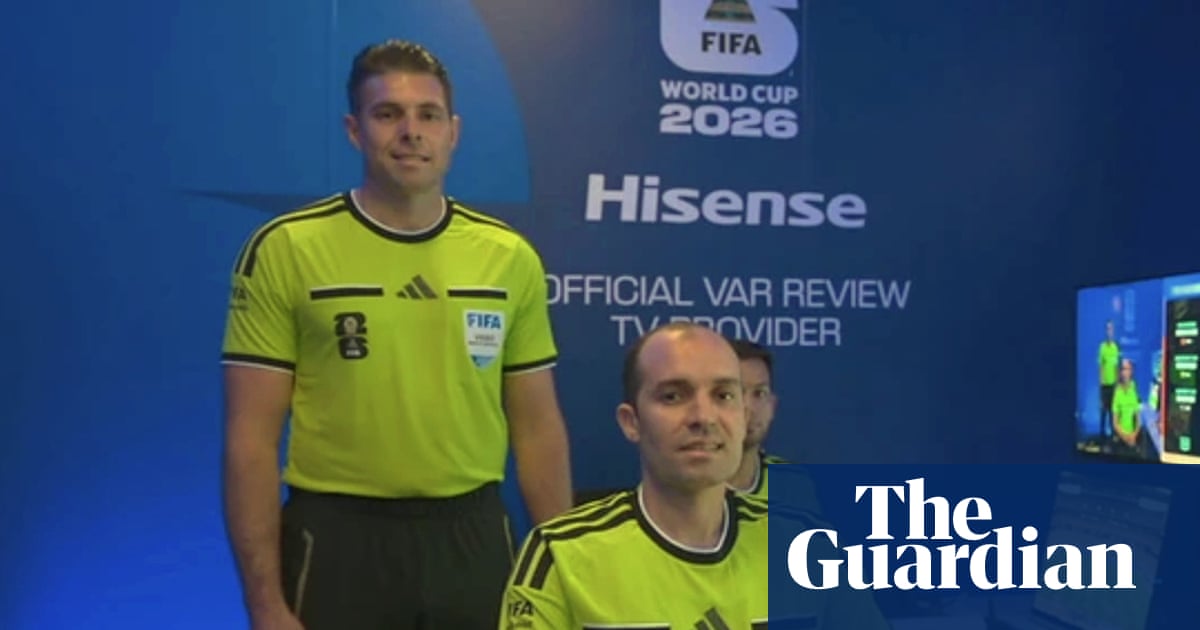
FIFA Faces Pressure to Act After VAR Official’s Alleged White Supremacy Gesture Sparks Global Outcry
An Australian video assistant referee (VAR) has become the center of a controversy after footage surfaced of him making a gesture widely recognized as a symbol of white supremacy during a World Cup broadcast, prompting calls from anti-racism monitors and activists for his immediate removal from the tournament. The incident, captured during a live match, has reignited debates over FIFA’s handling of discrimination in football and the broader implications for the sport’s governing bodies as the 2026 World Cup approaches.
According to multiple reports, the gesture—identified by experts as the “white power” salute—was made by the official during a VAR review in a high-profile match. While FIFA has not yet publicly addressed the allegation, anti-racism organizations and former players have demanded swift action, arguing that the incident undermines the sport’s efforts to combat racial inequality.
The controversy comes as FIFA continues to face scrutiny over its policies on racism and discrimination, following a series of high-profile incidents in recent years. With the 2026 World Cup set to be the first multi-nation tournament hosted across North America, Mexico, and Canada, the fallout from this case could have lasting repercussions for the event’s reputation.
—
###
What Happened? The Gesture and Its Recognition
The incident occurred during a live broadcast of a World Cup match, where the VAR official—whose identity has been widely reported but not confirmed by FIFA—was seen raising his right hand with fingers extended in a gesture commonly associated with white supremacist movements. The gesture, often referred to as the “white power” salute, has been documented in extremist contexts for decades.
Footage of the moment quickly circulated on social media, where it was flagged by anti-racism advocates and former footballers. One former Premier League player, who requested anonymity due to ongoing discussions with FIFA, described the gesture as “unacceptable” and “a direct contradiction of the values football claims to uphold.”
Key details:
- The gesture was made during a VAR review, a moment of high visibility under global scrutiny.
- It was captured on live broadcast, meaning it was visible to millions of viewers worldwide.
- Multiple anti-racism organizations have since identified the gesture as a known symbol of white supremacy.
While the official’s exact identity has been reported in some outlets, FIFA has not yet issued a statement confirming the individual’s involvement or acknowledging the allegation. This has led to frustration among activists, who argue that the lack of transparency is part of a pattern of slow responses to racism in football.
—
###
Who Is Involved? The Stakeholders in the Controversy
The controversy involves several key groups, each with distinct interests and reactions to the incident:
| Stakeholder | Role | Reaction |
|---|---|---|
| The VAR Official | Football referee assigned to VAR duties during the World Cup | No public response; FIFA has not confirmed involvement or suspended the individual. |
| FIFA | Global governing body for football | Silence on the incident, despite repeated calls for a statement. Historically slow to address racism allegations. |
| Anti-Racism Monitors | Organizations tracking discrimination in football | Demanding immediate removal of the official and a public investigation. |
| Former Footballers | High-profile athletes with platforms to speak out | Publicly condemning the gesture and calling for FIFA to take action. |
| Fans and Activists | Global audience and advocacy groups | Using social media to amplify the issue, with hashtags like #FIFAActNow trending. |
One notable figure in the debate is Kick It Out, a UK-based anti-racism organization that has been vocal in its criticism of FIFA’s handling of racial incidents. In a statement, the group emphasized that “gestures like this are not isolated incidents—they are symptoms of a deeper problem in how football addresses racism.”
Meanwhile, former players such as Rio Ferdinand and Sol Campbell have weighed in, with Campbell stating that “FIFA must act now or risk losing the trust of players and fans who expect them to lead on these issues.”
—
###
Why Does This Matter? Context and Broader Implications
The incident is not occurring in a vacuum. It follows a series of controversies involving racism in football, including:

- 2022 World Cup: A series of racist chants and incidents during matches, including a player being sent off for a racist gesture.
- English Premier League: Repeated cases of players being subjected to racial abuse from fans, with some clubs implementing “racism monitors” to track incidents.
- FIFA’s Anti-Discrimination Policies: Criticized for being reactive rather than proactive, with fines often seen as insufficient deterrents.
The 2026 World Cup, set to be the largest in history with 48 teams competing across three countries, is being positioned as a showcase for football’s global unity. However, the VAR official’s alleged gesture threatens to overshadow that narrative, raising questions about whether FIFA is truly committed to eradicating racism.
Why now? The timing of the incident is significant. With the 2026 tournament less than two years away, FIFA is under intense pressure to demonstrate tangible progress on diversity and inclusion. The lack of a response to this allegation risks further damaging the organization’s credibility, particularly among younger fans and players who are increasingly vocal about social justice issues.
Additionally, the incident highlights the challenges of policing gestures in high-pressure environments. Unlike verbal abuse, which can be more easily documented, hand signals or expressions can be subjective, leading to debates over intent versus impact.
—
###
How Have Others Reacted? Global Responses and Comparisons
The reaction to the VAR official’s alleged gesture has been swift and varied, with responses differing by region and stakeholder group.
Australia: The official’s nationality has led to additional scrutiny, with Australian football bodies facing calls to investigate. The Football Federation Australia (FFA) has not yet commented, but local media reports suggest internal reviews may be underway.
United Kingdom: The incident has reignited debates in the UK, where football has long grappled with racism. The Premier League has previously faced criticism for its handling of racist incidents, and some believe this case could force FIFA to adopt stricter measures.
United States: With the 2026 World Cup co-hosted in the U.S., American fans and organizations are watching closely. Groups like the National Soccer Coaches Association of America (NSCAA) have called for FIFA to set a “new standard” in addressing racism, given the tournament’s significance in the country.
Comparison to Past Incidents:
| Incident | Year | Outcome | FIFA Response |
|---|---|---|---|
| Racist chanting at 2018 World Cup (Russia) | 2018 | Fines issued to involved teams | Delayed and seen as insufficient |
| Racist abuse of Raheem Sterling (Premier League) | 2020 | Ban on season-ticket holders at Chelsea | Praised but criticized for not going far enough |
| VAR official’s alleged gesture (World Cup) | 2024 | Calls for removal, no action yet | Silence, raising concerns about accountability |
The pattern suggests that FIFA’s responses to racism often come under fire for being too little, too late. This incident, if not addressed promptly, could further erode trust in the organization’s ability to lead on these issues.
—
###
What Are the Potential Consequences?
The fallout from this incident could have several implications, both immediate and long-term:
- Short-Term:
- Increased pressure on FIFA to suspend or remove the official.
- Potential boycotts or protests by players or fans during the World Cup.
- Media scrutiny of FIFA’s anti-racism policies leading up to 2026.
- Long-Term:
- Damage to FIFA’s reputation as a global leader in sports governance.
- Potential legal challenges if the official is found to have violated anti-discrimination laws.
- A shift in how VAR officials are trained to handle gestures and expressions during matches.
One expert in sports law, speaking on condition of anonymity, suggested that “this could set a precedent for how football bodies handle symbolic racism. If FIFA fails to act, it may open the door for players to take legal action against the organization for not protecting them from a hostile environment.”
Additionally, the incident could influence how future World Cups are organized, with calls for mandatory anti-racism training for all officials, not just players.
—
###
What Happens Next? The Path Forward
With FIFA yet to respond, the ball is effectively in the court of anti-racism monitors, players, and fans to push for action. Here’s what could unfold:
- FIFA’s Response: The organization is likely to face internal and external pressure to address the allegation. A statement is expected within days, though past incidents suggest it may be vague or delayed.
- Investigation: If FIFA does not act swiftly, independent anti-racism groups may launch their own investigations, potentially involving legal experts or human rights organizations.
- Player and Fan Reactions: High-profile athletes may choose to boycott matches or use their platforms to demand change. Fan groups could organize protests outside stadiums during the World Cup.
- Policy Changes: If the incident leads to the official’s removal, it could trigger a review of FIFA’s disciplinary processes for officials, particularly regarding gestures and expressions.
For now, the focus remains on FIFA’s next move. The organization’s ability to restore trust will depend on whether it treats this as an isolated incident or a symptom of deeper systemic issues.
—
###
Frequently Asked Questions
What is the “white power” gesture, and why is it controversial?
The “white power” gesture involves raising the right hand with fingers extended in a specific manner, often associated with white supremacist movements. It has been used historically by extremist groups and is widely recognized as a symbol of racial hatred. In football, such gestures are considered severe violations of anti-discrimination policies.
Has FIFA ever taken action against officials for racist gestures before?
FIFA has addressed racist incidents involving players, but there are few documented cases of officials facing disciplinary action for gestures. Most penalties have been issued for verbal abuse or match-related misconduct. This incident could set a precedent for how officials are held accountable.
Could the VAR official lose his job over this?
It’s possible, but not guaranteed. FIFA’s disciplinary process typically involves investigations, which can take time. If the official is found to have intentionally made the gesture, he could face suspension or termination, depending on FIFA’s internal policies.
How does this incident compare to past racism controversies in football?
This case is notable for involving a VAR official—a position that carries significant influence and visibility. Past incidents have largely focused on players or fans, making this a rare example of an official at the center of a racism allegation. The lack of a swift response from FIFA also mirrors criticisms from previous cases.
What can fans do to support anti-racism efforts in football?
Fans can amplify the issue on social media using hashtags like #FIFAActNow or #NoToRacismInFootball. Supporting organizations like Kick It Out or Show Racism the Red Card can also help push for systemic change. Additionally, attending matches and reporting racist behavior can send a strong message to clubs and governing bodies.
Will this affect the 2026 World Cup?
It’s too early to say definitively, but the incident could influence how the tournament is perceived. If FIFA fails to address the allegation, it may lead to boycotts, protests, or increased scrutiny of the event’s organizers. The 2026 World Cup is already under pressure to deliver on diversity and inclusion, and this controversy adds another layer of complexity.
—
The VAR official’s alleged gesture has thrust FIFA into a high-stakes moment, one that could redefine its approach to racism in football. As the organization prepares for the 2026 World Cup, the response to this incident will be closely watched—not just by players and fans, but by governments and sponsors who have a vested interest in the sport’s reputation.
For now, the focus remains on whether FIFA will act swiftly and decisively, or if this will become another case study in the organization’s struggles to address racism in football.
