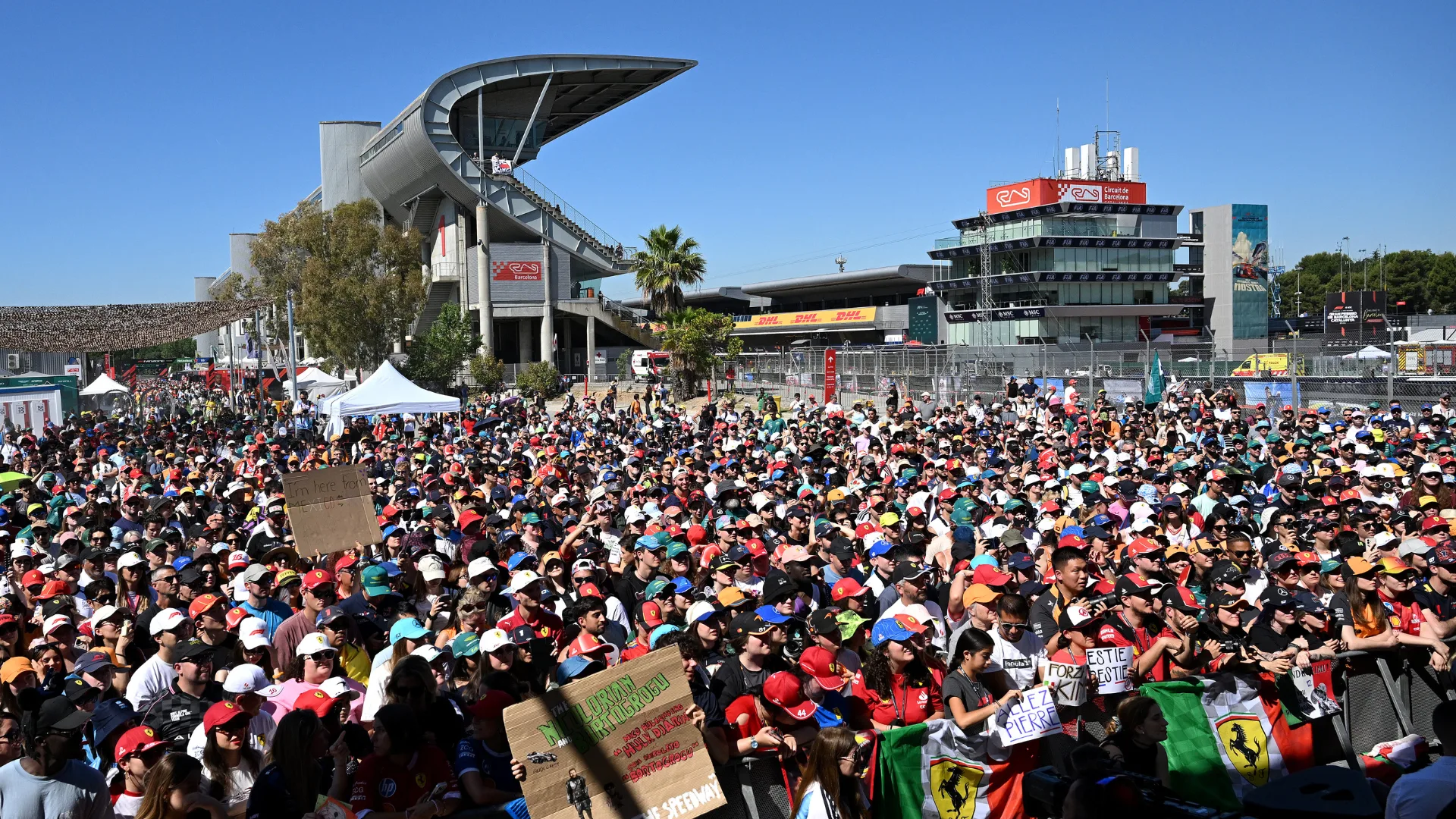
LIVE COVERAGE: Follow FP1 for the Barcelona-Catalunya GP – Formula 1
Formula 1 Free Practice 1 (FP1) for the Barcelona-Catalunya Grand Prix serves as the initial on-track benchmark for teams to calibrate aerodynamic setups and tire compounds. According to reports from Formula 1 and Sky Sports, this session is critical for evaluating car balance and weather-related grip levels before the qualifying and race events. Drivers use this time to test updates and refine their lines on the technical Spanish circuit.
What is the schedule and how to watch FP1 for the Barcelona-Catalunya GP?
The opening session of the weekend provides the first glimpse of performance parity for the 2026 season. According to the BBC, the event includes real-time updates on lap times, radio communications, and session results. For fans tracking the action, coverage is split between official Formula 1 channels and regional broadcasters.
Sky Sports provides comprehensive live streaming and highlights, focusing on technical analysis and driver reactions. The BBC offers a live text feed, focusing on timing and radio updates. This multi-platform approach allows fans to monitor both the raw data and the narrative developments of the Friday practice.
| Session | Primary Focus | Key Data Source |
|---|---|---|
| Free Practice 1 (FP1) | Baseline Setup & Aero Testing | Sky Sports / F1 Live |
| Free Practice 2 (FP2) | Long-run Pace & Tire Wear | BBC / F1 Live |
| Free Practice 3 (FP3) | Qualifying Simulation | Sky Sports / F1 Live |
How does the weather forecast affect performance at the Barcelona-Catalunya GP?
Weather conditions at the Circuit de Barcelona-Catalunya often dictate the strategic direction of FP1. Formula 1 reports that track temperature and wind speed are the primary variables affecting tire degradation and aerodynamic stability. High temperatures typically increase the risk of thermal degradation, forcing teams to adjust their camber and toe settings to preserve the rubber.
Wind is another critical factor. The open nature of the Catalunya circuit makes it susceptible to gusts that can shift the balance of the car mid-corner. According to technical analysis from Formula 1, a sudden change in wind direction can make a car feel “nervous” in high-speed sections, leading drivers to request immediate wing adjustments during their pit stops.
- High Track Temps: Increase tire sliding and accelerate wear on the soft compounds.
- Wind Gusts: Affect stability in the high-speed Turn 3 and the final sector.
- Humidity: Impacts engine cooling efficiency and air density for aerodynamic downforce.
Why is FP1 critical for the Mercedes-AMG PETRONAS F1 Team and George Russell?
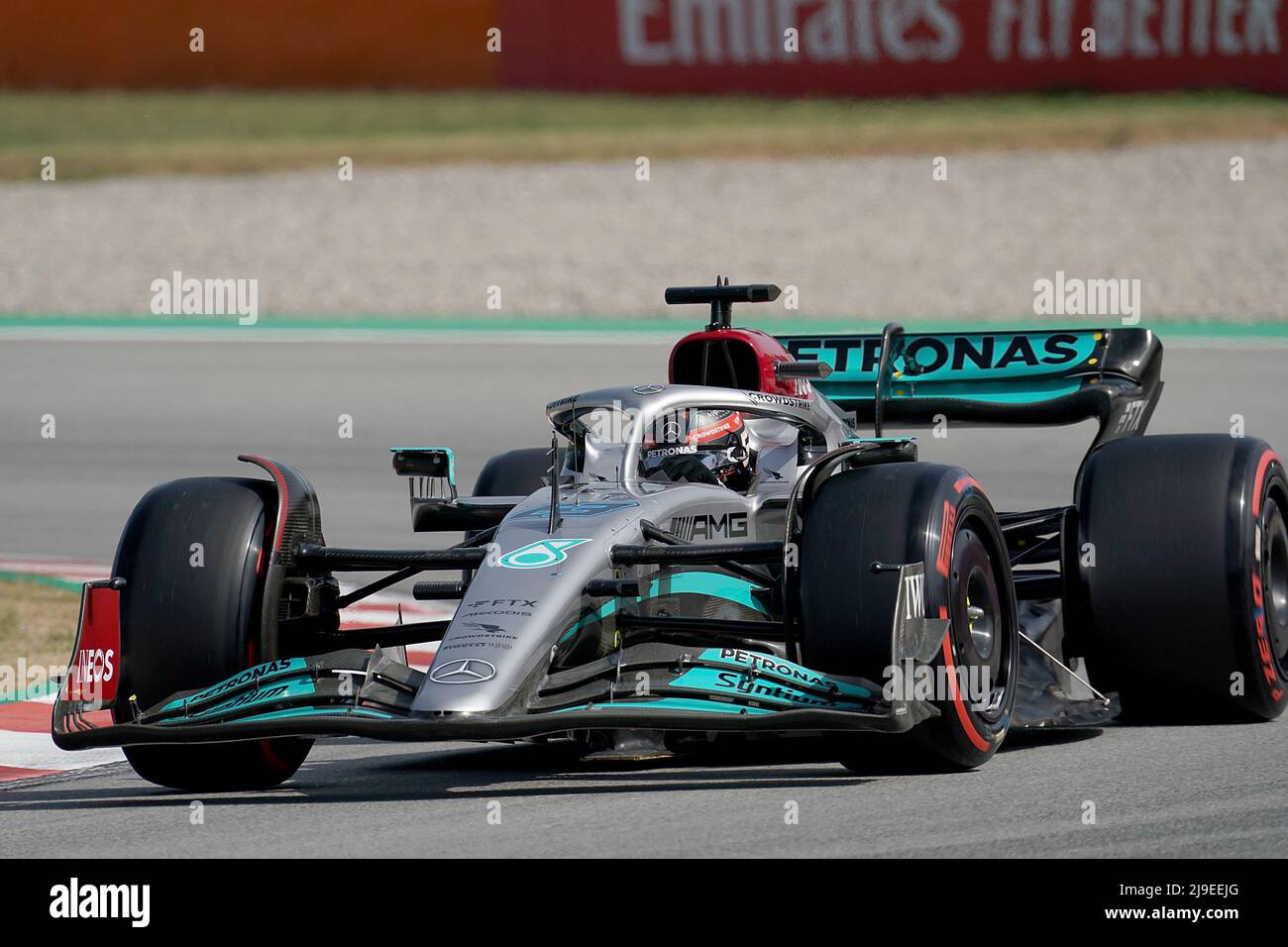
For Mercedes, the Spanish Grand Prix is often a litmus test for their aerodynamic efficiency. The Circuit de Barcelona-Catalunya is widely regarded as a “prototype” track because its layout tests almost every aspect of a car’s performance. George Russell’s history at the track is a point of focus for the team; Mercedes-AMG PETRONAS F1 Team has highlighted several of Russell’s finest races as evidence of his ability to manage the complex demands of this circuit.
Russell’s approach in FP1 involves a heavy emphasis on the high-speed corners where the car’s “platform” is most stressed. According to Mercedes team data, the goal is to find a balance that allows for high minimum speeds in the corners without sacrificing straight-line velocity on the main straight. This balance is essential for competing against the top-tier teams who often use Barcelona to validate their mid-season upgrades.
“The Circuit de Barcelona-Catalunya is one of the most demanding tracks on the calendar because it requires a car that is stable in high-speed turns but efficient on the straights.” — Technical analysis via Mercedes-AMG PETRONAS F1 Team.
What makes the Circuit de Barcelona-Catalunya a unique technical challenge?
The track is not merely a venue but a diagnostic tool for F1 engineers. Because it features a mix of long straights and a series of demanding, high-load corners, it reveals flaws in a car’s design that might be hidden at simpler tracks. This is why many teams use this location for pre-season testing.
The Role of High-Speed Corners
Turn 3 and Turn 9 are the most critical sections for aerodynamic validation. According to Sky Sports, the lateral loads experienced here are some of the highest on the calendar. If a car suffers from understeer in these sections, it loses significant time that cannot be recovered on the straights. FP1 is where drivers experiment with front-wing angles to combat this tendency.
Tire Management and Degradation
The Spanish GP is notorious for “eating” tires. The long, sweeping turns put immense pressure on the left-side tires. Formula 1 notes that teams spend a large portion of FP1 analyzing the “drop-off” in lap times as the tires age. This data informs the strategy for the race, specifically whether a two-stop or three-stop strategy is viable.
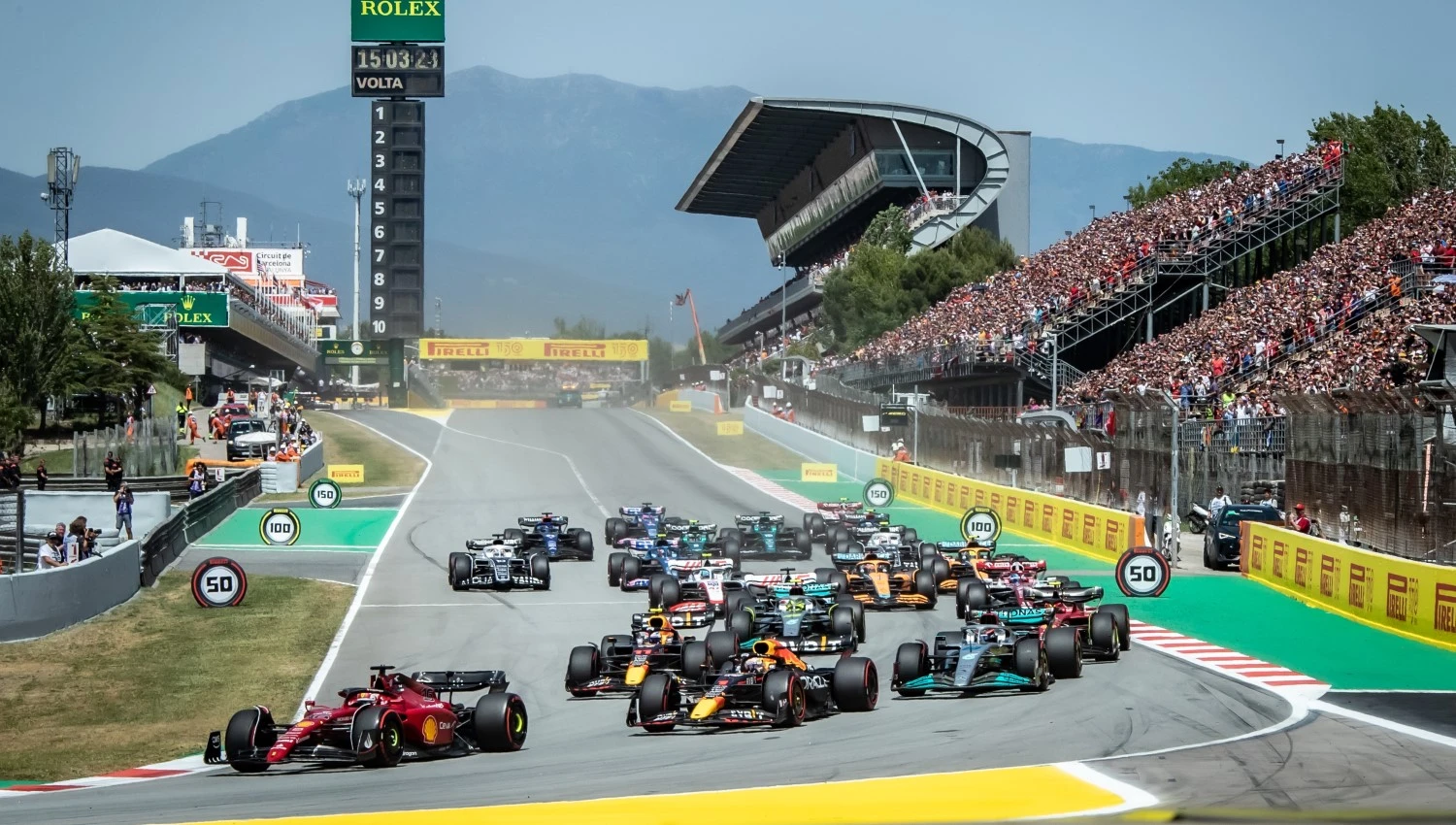
Related explainer on F1 tire compound strategies may provide further context on how Pirelli’s selections impact these sessions.
Comparing FP1 Objectives with Later Sessions
While the general goal of any practice session is speed, the specific intent of FP1 differs from FP2 and FP3. In FP1, the focus is on verification. Teams verify that the parts brought to the track are functioning as simulated in the wind tunnel. In contrast, FP2 focuses on simulation, where teams run long stints to mimic race conditions.
According to the BBC, FP1 is often the most “chaotic” session. It is common to see drivers spending significant time in the pits or running “installation laps” to check systems. By the time FP3 arrives, the focus shifts entirely to a single-lap “glory run” to prepare for qualifying.
| Metric | FP1 (Verification) | FP2 (Simulation) | FP3 (Refinement) |
|---|---|---|---|
| Fuel Load | Low to Medium | High (Race Load) | Low (Quali Load) |
| Tire Focus | All compounds (Testing) | Medium/Hard (Durability) | Soft (Peak Grip) |
| Goal | Baseline Setup | Race Strategy | Grid Position |
Common Misconceptions About Friday Practice Results
A frequent mistake made by casual observers is overvaluing the FP1 leaderboard. According to Sky Sports, the fastest lap in FP1 rarely correlates directly to the pole position in qualifying. This is because teams often run different fuel loads and aerodynamic configurations.
For instance, a team may intentionally run a “heavy” car in FP1 to test chassis stability, resulting in slower lap times despite having a faster base car. Conversely, a team might run a “super-soft” tire on a low-fuel load just to check the car’s peak potential, creating a misleadingly fast lap time. Experts from Formula 1 suggest looking at the consistency of lap times rather than the single fastest lap to gauge true performance.
Strategic Implications for the 2026 Grid
The 2026 season introduces new regulatory frameworks, making the Barcelona-Catalunya GP a pivotal moment for data collection. According to the BBC, the shift in power unit regulations and aerodynamic constraints means that teams are operating with less historical data than in previous years. This increases the importance of FP1, as it is the first time these new configurations face the unique stresses of the Spanish circuit.
Teams are not just fighting each other but are fighting the “unknowns” of the new regulations. The ability to adapt the car during the short window between FP1 and FP2 can be the difference between a front-row start and a mid-grid struggle. This adaptability is where the expertise of drivers like George Russell becomes a tangible asset for the Mercedes team.
Related explainer on 2026 F1 regulation changes details the technical shifts affecting current car designs.
Key Factors to Monitor During Live Coverage
When following the live updates from Formula 1 and the BBC, certain indicators provide more insight than others. The following points are the most telling signs of a team’s weekend potential:
- Pit Stop Frequency: A team that returns to the garage frequently is likely struggling with a specific setup issue or testing multiple wing configurations.
- Sector 2 Times: This sector contains the most technical corners. Fast times here indicate a car with superior mechanical grip and aerodynamic balance.
- Radio Tone: Listen for mentions of “understeer” or “bottoming out.” According to Sky Sports, these complaints often signal that a team is struggling to find the “sweet spot” of the ride height.
- Tire Choice: Note which teams are running the Hard compound early. This suggests they are prioritizing race-pace data over raw speed.
Frequently Asked Questions
What is the main goal of FP1 at the Barcelona-Catalunya GP?
According to Formula 1, the primary goal is to establish a baseline setup. Teams use FP1 to verify aerodynamic performance, test various tire compounds, and ensure the car is balanced for the specific temperature and wind conditions of the track.
Why is the Barcelona circuit considered a benchmark for F1 teams?
Sky Sports reports that the circuit’s layout—featuring a mix of high-speed sweeps and slow chicanes—tests nearly every aspect of a car’s performance. This makes it an ideal location for teams to validate updates and compare their progress against competitors.
Does the FP1 leaderboard predict the race winner?
No. As noted by the BBC, FP1 times are often misleading due to varying fuel loads and experimental setups. The session is more about data collection than competitive ranking.
How does weather affect the Spanish Grand Prix?
Formula 1 indicates that high track temperatures increase tire degradation, while the open layout of the circuit makes it susceptible to wind gusts that can destabilize the car in high-speed corners.
Who is the key driver to watch for Mercedes in Spain?
George Russell is a primary focus, as Mercedes-AMG PETRONAS F1 Team has highlighted his strong historical performance and ability to handle the technical demands of the Barcelona-Catalunya circuit.
As the session progresses, the data gathered in FP1 will flow directly into the engineers’ simulations, shaping the strategies for the rest of the Grand Prix weekend. The transition from baseline testing to race simulation will be the defining narrative of the Friday schedule.
