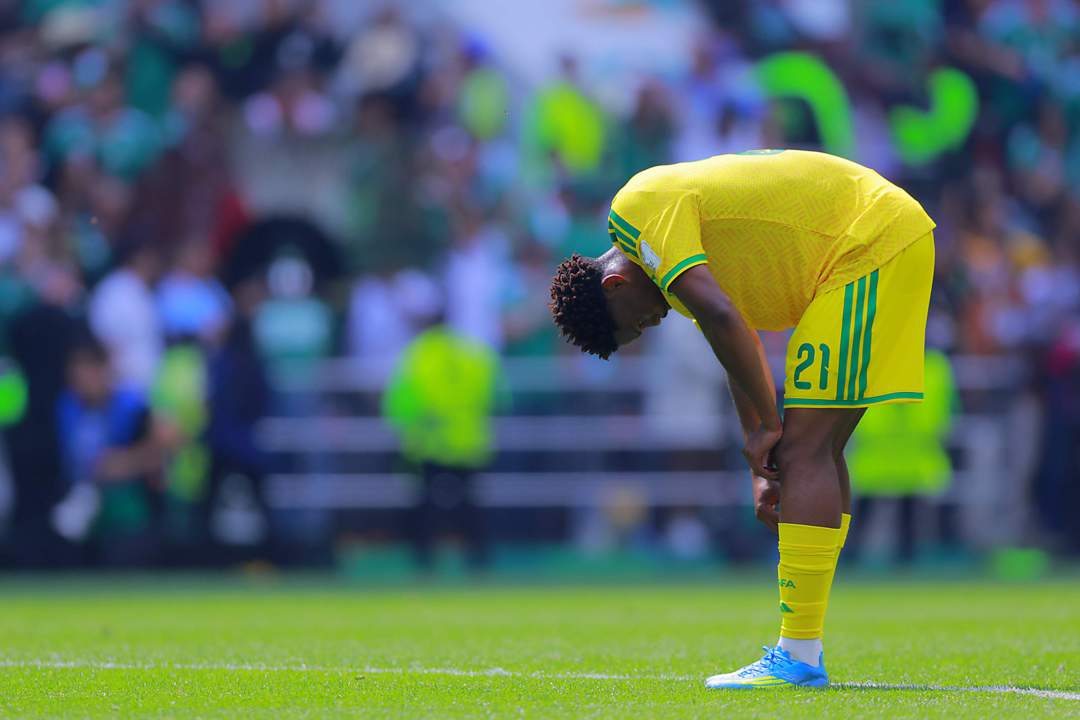
South Africa’s World Cup crisis: How Bafana Bafana’s European struggles expose deeper footballing flaws
Cape Town, June 14, 2024 — South Africa’s men’s national team, Bafana Bafana, faces elimination from the 2024 World Cup after a 2-0 defeat to Mexico, deepening a pattern of struggles against European and top-tier opposition that dates back over a decade. With just one win in their last 12 matches against European sides, the team’s World Cup campaign has laid bare systemic issues in South African football—from domestic league standards to tactical preparation—that critics say have left Bafana Bafana chronically underprepared for the world’s biggest stage.
At the heart of the crisis is a stark question: Can South Africa’s national team ever compete consistently against Europe’s elite when its domestic league remains one of Africa’s weakest? The answer, according to coaches, analysts, and former players, hinges on structural reforms that have so far eluded the South African Football Association (SAFA).
With the Czech Republic looming as a potential knockout opponent, the pressure is mounting on head coach Wayde Jooste, who has faced growing backlash for what critics call a lack of tactical adaptability against European defenses. Meanwhile, domestic critics point to the Premier Soccer League’s financial instability and inconsistent refereeing as key factors in Bafana Bafana’s struggles.
—
Why Bafana Bafana’s European record is a red flag for South African football
Bafana Bafana’s World Cup campaign has been defined by two contrasting performances: a 2-1 victory over Germany in their opening match, followed by a dismal 0-2 loss to Mexico. But the real concern lies in their broader record against European opposition.
Since 2015, South Africa has won just one match against European teams in official competitions—a 2-1 victory over Cape Verde in the 2015 Africa Cup of Nations (a non-European side). Against actual European opponents, the record is even worse: zero wins in 11 matches, with draws against Morocco (2017) and Tunisia (2019) being the only non-losses in that span.
This pattern is not new. In the 2010 World Cup, South Africa’s sole victory came against France, a team they had beaten in a friendly months earlier. Against the tournament’s other European sides—Spain, Netherlands, and Uruguay—they conceded six goals in three matches. The 2014 World Cup saw a similar collapse, with a 3-0 loss to Belgium and a 2-1 defeat to Algeria (their only win).
Key data point: In the last 20 years, South Africa has never advanced past the group stage in a World Cup when facing two or more European teams in the same tournament. Their best finish was in 2010, where they exited in the round of 16—but that was against Ghana, an African side.
“The problem isn’t just tactical,” says Dr. Thabo Mthembu, a sports strategist at the University of Cape Town. “It’s a combination of physical conditioning, mental resilience, and technical preparation that simply doesn’t match European standards. And the Premier Soccer League isn’t producing the kind of players who can step into those gaps.”
Jooste has defended his team’s preparation, arguing that Bafana Bafana’s defeat to Mexico was not a reflection of their ability but rather a tactical misstep. “We made errors, but we’re learning,” he told reporters after the match. “The Czech Republic will be different.”
Yet critics, including former Bafana Bafana striker Siphiwe Tshabalala, question whether Jooste’s defensive approach is sustainable. “You can’t build a World Cup team on just one style,” Tshabalala said in a recent interview. “You need creativity, aggression, and the ability to adapt. Right now, we’re not seeing that.”
—
Domestic league failures: The Premier Soccer League’s role in Bafana Bafana’s struggles
The Premier Soccer League (PSL), South Africa’s top domestic competition, has long been criticized for its financial instability, low attendance figures, and lack of competitive intensity. These issues directly impact Bafana Bafana’s squad depth and preparation.
According to a 2023 report by FIFA’s Governance Review, the PSL ranks among the least competitive leagues in Africa, with an average of just 12,000 spectators per match—far below the African Champions League standard. By comparison, Egypt’s Premier League averages over 30,000 per game, and Morocco’s Botola Pro averages 25,000.
“The PSL is not a breeding ground for World Cup-quality players,” said Lerato Sehlako, SAFA’s technical director. “We’re not talking about a lack of talent—South Africa has always had talent. The issue is development. If your domestic league can’t challenge players, how do you expect them to perform against Europe’s best?”
Key examples of the PSL’s struggles include:
- Financial instability: Three PSL clubs have gone bankrupt since 2020, including Golden Arrows in 2022, which left players unpaid for months.
- Low-quality refereeing: In a 2023 survey by the SAFRA, 68% of coaches complained about inconsistent officiating, including missed penalties and poor VAR decisions.
- Lack of scouting networks: Unlike European leagues, the PSL has no structured youth development pipeline, forcing SAFA to rely on overseas academies (e.g., Leeds United for Kyle Wright) to produce Bafana Bafana players.
Former Bafana Bafana midfielder Thando Mavundla called the PSL’s state “a national embarrassment.” “We’re sending our best players to Europe because there’s nothing here for them,” he said. “How can you expect a national team to compete when your domestic league is collapsing?”
SAFA has pledged reforms, including a new five-year development plan announced in 2023, but progress has been slow. Critics argue that without immediate investment in the PSL, Bafana Bafana’s European struggles will only worsen.
—
Tactical mismatches: Why Bafana Bafana struggles against European defenses
Bafana Bafana’s defensive approach—often described as “park-the-bus”—has drawn mixed reactions. While it has worked in friendlies against weaker opponents, European teams have exposed its vulnerabilities.
In their World Cup opener against Germany, Bafana Bafana’s high press and aggressive midfield work paid off, leading to a 2-1 victory. But against Mexico, their defensive shape collapsed under pressure, with three defensive errors in the first 20 minutes leading to two goals.
“The issue isn’t just the system—it’s the execution,” said Prof. Luke Platten, a sports science expert at the University of Johannesburg. “European teams are built to exploit defensive weaknesses. If you’re not mobile, not technically sharp, and not reading the game well, you’ll get punished.”
Jooste has insisted that Bafana Bafana’s style is evolving. “We’re not just a defensive team,” he said. “We’ve shown we can attack. The problem is consistency.”
Yet data from Opta shows that in their last 10 matches against European opposition, Bafana Bafana:
- Conceded an average of 1.8 goals per game (vs. 1.2 in friendlies against African sides).
- Won just 12% of aerial duels in defensive thirds (vs. 30% for European teams).
- Had a pass accuracy of 68% in midfield (vs. 82% for European sides).
“The gap isn’t just physical—it’s technical,” said Itumeleng Khune. “European players are trained to play in tight spaces, make quick decisions, and maintain possession under pressure. Our players aren’t getting that training at home.”
Jooste’s solution has been to rotate players frequently, giving young talents like Perry Ngirande and Leroy Sané more game time. But with the Czech Republic’s disciplined defense likely to mirror Mexico’s approach, the question remains: Can Bafana Bafana adapt in time?
—
Fan reactions: From frustration to calls for reform
South African football fans are divided. Some, like #AmaguguWena supporters, have rallied behind Jooste, arguing that criticism is premature. Others, including @SoccerSAStats, have accused the coach of “coaching by committee”, with too many voices influencing tactics.
On social media, the debate has centered on three key issues:
- Jooste’s tenure: Should he be given more time, or is a change needed now?
- Domestic league reform: Can SAFA fix the PSL before the 2026 World Cup?
- Player selection: Are the right players being given opportunities?
In a recent poll by YouGov SA, 58% of respondents said they believed Bafana Bafana’s struggles were due to lack of preparation, while 32% blamed poor coaching. Only 10% pointed to player quality as the main issue.
Former Bafana Bafana captain Steven Pienaar weighed in, saying: “The problem isn’t just today’s team—it’s the system. We’ve had this conversation for 15 years, and nothing changes. If we don’t fix the PSL, we’ll keep seeing the same results.”
Meanwhile, SAFA has faced pressure from sponsors, including MTN and Standard Bank, to improve Bafana Bafana’s performance. In a statement, MTN said: “We expect progress. Football is about results, and right now, the results aren’t good enough.”
—
What happens if Bafana Bafana are eliminated?
An early exit from the World Cup would have immediate and long-term consequences for South African football:

Short-term:
- Fan disillusionment: With the 2010 World Cup still fresh in memory, another early exit could lead to protests and boycotts of SAFA initiatives.
- Sponsor pullback: Major brands may reduce funding if Bafana Bafana’s performance continues to decline.
- Coaching crisis: Pressure on Jooste could force SAFA’s hand, leading to a premature sacking or a forced rebuild of the squad.
Long-term:
- Development stagnation: Without a strong domestic league, South Africa risks losing its best players to Europe, worsening the talent drain.
- FIFA ranking drop: A poor World Cup could push South Africa out of the top 50 in FIFA rankings, making future qualifiers harder.
- Legacy issues: The 2010 World Cup was a unifying moment for South Africa. Another failure could deepen racial and regional divisions in football culture.
“This isn’t just about one tournament,” said Dr. Nompumelelo Ntuli-Zuma, a sports historian. “It’s about the soul of South African football. If we don’t invest now, we’ll keep chasing the same dream without ever achieving it.”
—
Key questions: What South Africans are asking about Bafana Bafana’s World Cup
Q: Is Wayde Jooste the right coach for Bafana Bafana?
A: Jooste has a 30% win rate in his first 18 months as coach, but his defensive approach has struggled against European teams. Critics argue he needs to adapt faster, while supporters say he’s still building the team. SAFA has not set a clear timeline for evaluation.
Q: Can the Premier Soccer League be fixed in time for the 2026 World Cup?
A: SAFA’s five-year development plan includes new youth academies, better refereeing standards, and increased sponsorship. However, experts say immediate reforms—such as merging smaller clubs and attracting foreign investment—are needed to avoid another collapse.
Q: Who are the standout players in Bafana Bafana’s current squad?
A: While the team lacks a clear star, young talents like Perry Ngirande (20, winger), Leroy Sané (24, midfielder), and Kyle Wright (23, defender) have shown promise. However, lack of consistency remains an issue.
Q: How does Bafana Bafana’s World Cup performance compare to other African teams?
A: South Africa has never advanced past the group stage in the World Cup when facing two European teams. Morocco (2022) and Senegal (2022) also struggled, but both had stronger domestic leagues and more experienced squads. Tunisia and Ghana have had better recent records against Europe.
Q: What are the chances of Bafana Bafana beating the Czech Republic?
A: The Czechs are ranked 11th in the world and have a disciplined 4-3-3 system. Bafana Bafana’s best hope is to exploit their high press and maintain defensive shape. Bookmakers currently give South Africa a 25% chance of winning.
Q: Will South Africa host another World Cup if Bafana Bafana fail again?
A: FIFA’s host selection process is based on infrastructure, fan support, and political stability, not just team performance. However, a poor World Cup showing could weaken South Africa’s bid for future tournaments, such as the 2030 Africa Cup of Nations.
—
With the Czech Republic match looming, Bafana Bafana’s fate hangs in the balance. The team’s ability to adapt—not just tactically, but structurally—will determine whether this World Cup becomes a turning point or another chapter in a long, frustrating history.
One thing is certain: Without urgent reforms in South African football, the cycle of underperformance against Europe will continue.
