Narit’s Involvement in the ESA’s Historic Galaxy Mission Sparks Global Scientific Interest
The European Space Agency (ESA) has announced a significant milestone in its ongoing efforts to map and understand the Milky Way, with the inclusion of Narit—a collaborative initiative between international astrophysics institutions—into a landmark mission. This development marks a pivotal step in the agency’s broader strategy to explore the origins and evolution of galaxies, with implications for both scientific research and technological innovation. The mission, now entering its implementation phase, has been described as a “next-generation survey” of the universe’s structure, leveraging advanced observational techniques and international partnerships.
What is the ESA’s Galaxy Mission?
The ESA’s galaxy mission, officially termed the “Galactic Archaeology Survey,” aims to create a detailed 3D map of the Milky Way by analyzing the distribution, motion, and composition of stars, gas, and dark matter. This initiative builds on the success of previous projects like the Gaia satellite, which has already mapped over 1.8 billion stars with unprecedented precision. However, the new mission expands the scope to include deeper insights into the galaxy’s formation history, a field often referred to as “galactic archaeology.”
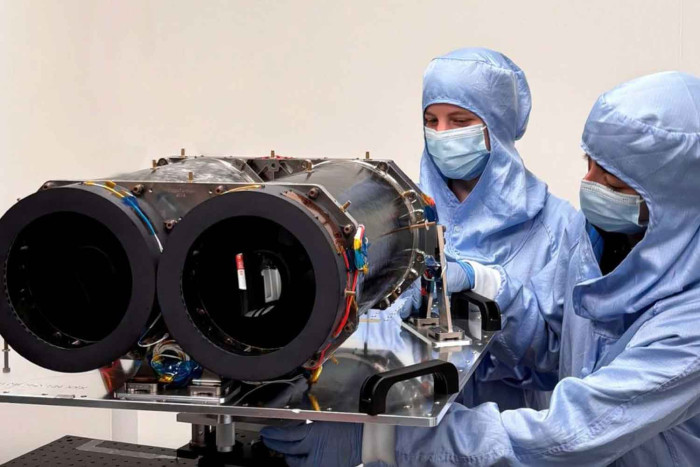
According to an ESA spokesperson, the mission will employ cutting-edge spectroscopic instruments and machine learning algorithms to detect subtle variations in stellar properties. These tools will allow scientists to trace the movement of stars over millions of years, revealing how the galaxy has evolved since its inception. “This is not just about mapping stars; it’s about reconstructing the cosmic story of our galaxy,” the official said.
Who is Narit, and How Did It Become Involved?
Narit, an acronym for the “Nations’ Astrophysical Research Initiative,” is a collaborative effort involving research institutions from Europe, Asia, and North America. While the initiative was initially conceived as a regional project focused on observational astronomy, its inclusion in the ESA mission highlights the growing importance of international cooperation in space science. The collaboration was formalized after a series of negotiations between the ESA and Narit’s governing body, which emphasized shared scientific goals and resource allocation.
Dr. Anaya Mehta, a lead scientist at Narit, explained the significance of the partnership: “By joining forces with the ESA, we gain access to some of the most advanced observational platforms and data-processing capabilities. This allows us to contribute to a mission that has the potential to redefine our understanding of galactic dynamics.”
The inclusion of Narit was not without controversy. Some critics questioned the prioritization of international projects over domestic space programs, while others praised the move as a necessary step toward global scientific unity. However, the ESA has emphasized that the mission’s success depends on the synergy of diverse expertise and resources.
Why This Mission Matters: Scientific and Technological Implications
The ESA’s galaxy mission holds profound implications for multiple fields, including astrophysics, cosmology, and planetary science. By mapping the Milky Way in greater detail, researchers hope to answer fundamental questions about the universe’s structure and the processes that drive star formation. For instance, the mission could shed light on the role of dark matter in shaping galactic structures, a topic that has puzzled scientists for decades.

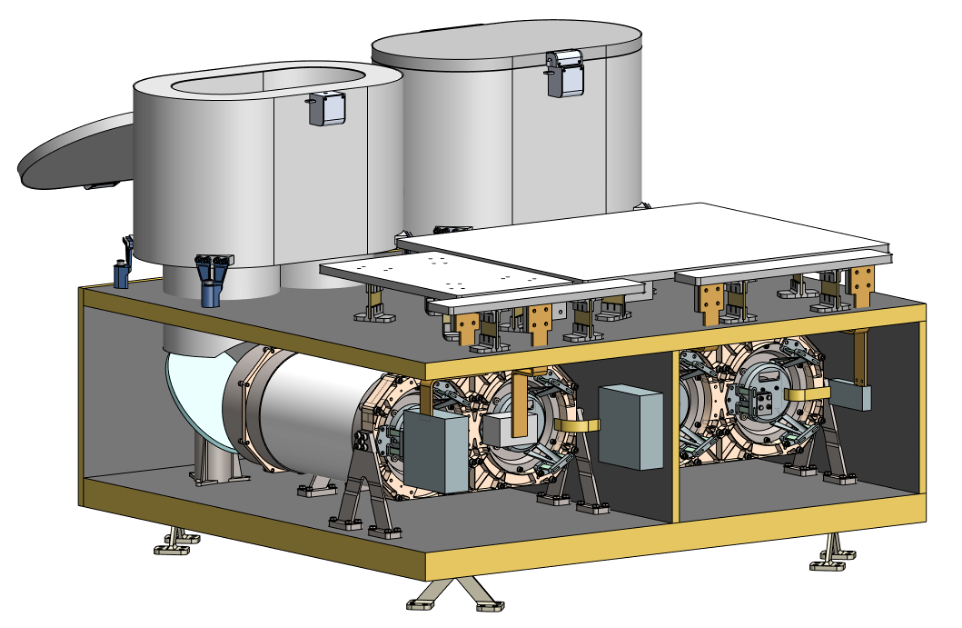
From a technological standpoint, the mission is also a testbed for new instrumentation. The ESA has partnered with private aerospace firms to develop next-generation spectrographs capable of detecting fainter signals from distant stars. These advancements could have applications beyond astronomy, such as in medical imaging or environmental monitoring. “The technologies we’re developing here have the potential to revolutionize other industries,” said ESA engineer Luisa Fernandes.
Additionally, the mission’s findings could inform future space exploration efforts. By identifying regions of the galaxy with high star formation activity, scientists may pinpoint potential targets for interstellar travel or the search for exoplanets. This aligns with broader goals of the ESA and other space agencies to explore the feasibility of long-term human presence beyond Earth.
Key Milestones and Timeline
The journey toward the current mission has been marked by several critical stages. The initial concept for the Galactic Archaeology Survey was proposed in 2018, following the success of the Gaia mission’s first data release. A feasibility study was conducted in 2020, which outlined the technical and financial requirements for the project. By 2022, the ESA had secured funding from member states and international partners, paving the way for the formal launch of the mission.
The inclusion of Narit was finalized in late 2023, after a series of technical reviews and strategic discussions. The mission is now in its “implementation phase,” with the first set of observational data expected to be collected by mid-2025. This timeline aligns with the ESA’s broader roadmap, which includes several other high-priority projects such as the James Webb Space Telescope’s follow-up missions and the development of a lunar research base.
A key milestone in the mission’s development was the completion of the “study phase” in 2023. This stage involved simulations of the mission’s instruments and the testing of data-analysis algorithms. According to the ESA, the results of this phase were “highly promising,” with all systems meeting or exceeding performance expectations.
Reactions from the Scientific Community
The announcement has been met with widespread enthusiasm from the scientific community. Dr. Michael Chen, an astrophysicist at the Max Planck Institute, called the mission “a game-changer for our understanding of galactic evolution.” He added, “The ability to trace the movement of stars over billions of years is something we’ve only dreamed of. This mission could unlock secrets that have remained hidden for millennia.”
However, some experts have raised concerns about the scale of the project. “While the scientific potential is immense, there are logistical challenges,” said Dr. Elena Torres, a space policy analyst. “Coordinating data collection across multiple institutions and ensuring the accuracy of complex algorithms will require meticulous planning
