
Epcoritamab Plus R2 Sustains Efficacy Across Subgroups in R/R Follicular Lymphoma: Clinical Data Analysis
Epcoritamab combined with lenalidomide and rituximab (R2) maintains consistent efficacy across various patient subgroups with relapsed or refractory (R/R) follicular lymphoma, according to data reported by Targeted Oncology and OncLive. This combination therapy demonstrates a stable response rate regardless of prior treatment history or specific patient characteristics in the studied cohorts.
How does Epcoritamab plus R2 perform in R/R Follicular Lymphoma subgroups?
Clinical data indicates that the combination of epcoritamab and the R2 regimen—consisting of lenalidomide and rituximab—yields consistent results across multiple subgroups of patients suffering from relapsed or refractory (R/R) follicular lymphoma. According to reports from OncLive and Targeted Oncology, the efficacy of this triplet therapy does not fluctuate significantly when analyzed by specific patient demographics or prior lines of therapy.
Follicular lymphoma is often characterized by a pattern of relapse and remission, leaving many patients with limited options after initial treatments fail. The stability of the response across subgroups suggests that the epcoritamab-R2 combination may provide a predictable therapeutic outcome for a broad range of patients who have failed standard care.
- Consistent Response: The therapy shows a uniform effect across different patient subsets.
- Combination Synergy: The use of R2 (lenalidomide and rituximab) alongside the bispecific antibody epcoritamab targets the malignancy through multiple pathways.
- Subgroup Stability: Efficacy remains sustained even in patients with varying degrees of prior treatment exposure.
What are the latest results for Epcoritamab in First-Line DLBCL?
Beyond follicular lymphoma, epcoritamab is being evaluated for use in Diffuse Large B-Cell Lymphoma (DLBCL). According to Raul Cordoba, as reported by Oncodaily, new data from the EPCORE DLBCL-3 study examines the impact of epcoritamab in the first-line setting for DLBCL patients.
The shift toward using bispecific antibodies in first-line treatment represents a departure from traditional chemotherapy-heavy regimens. The EPCORE DLBCL-3 data aims to determine if early intervention with epcoritamab can improve long-term outcomes and reduce the toxicity associated with intensive chemotherapy.
Furthermore, Genmab announced via Business Wire that epcoritamab monotherapy and combination regimens have demonstrated high response rates specifically in elderly patients with newly diagnosed DLBCL. This is a critical finding, as elderly patients often cannot tolerate the aggressive chemotherapy typically required for DLBCL treatment. The ability to achieve high response rates in this fragile population suggests a potential shift in the standard of care for geriatric oncology.
How does Epcoritamab compare to chemoimmunotherapy in LBCL?
In patients with pretreated Large B-Cell Lymphoma (LBCL), epcoritamab has shown a distinct advantage over traditional chemoimmunotherapy. According to CancerNetwork, epcoritamab yields superior progression-free survival (PFS) compared to standard chemoimmunotherapy options.
Progression-free survival is a primary metric in oncology, measuring the length of time during and after treatment that a patient lives with the disease but it does not get worse. The superiority of epcoritamab in this metric indicates that patients remain in remission longer than those receiving traditional chemotherapy combinations.
| Lymphoma Type | Treatment Approach | Reported Outcome | Source |
|---|---|---|---|
| R/R Follicular Lymphoma | Epcoritamab + R2 | Sustained efficacy across subgroups | Targeted Oncology / OncLive |
| Newly Diagnosed DLBCL (Elderly) | Epcoritamab (Mono/Combo) | High response rates | Business Wire |
| Pretreated LBCL | Epcoritamab vs. Chemo | Superior PFS | CancerNetwork |
What is the mechanism of action for Epcoritamab?
Epcoritamab is a T-cell engaging bispecific antibody. Unlike traditional monoclonal antibodies that simply mark a cancer cell for destruction, bispecific antibodies act as a bridge. One arm of the antibody binds to CD20, a protein expressed on the surface of B-cells (including the malignant cells in follicular lymphoma and DLBCL), while the other arm binds to CD3, which is found on T-cells.
By physically pulling the T-cell and the B-cell together, epcoritamab forces the immune system to recognize and attack the cancer cell directly. This mechanism bypasses some of the traditional requirements for T-cell activation, making it a potent tool in relapsed or refractory cases where the cancer has evolved to evade the immune system.
The ability of epcoritamab to function across different B-cell malignancies—from the indolent nature of follicular lymphoma to the aggressive profile of DLBCL—highlights the versatility of CD20-directed T-cell engagers.
Why does subgroup consistency matter in clinical trials?
In many oncology trials, a drug may show a strong overall response rate, but closer inspection reveals that the benefit is driven by a small subset of “super-responders,” while other groups see little to no benefit. When Targeted Oncology and OncLive report that epcoritamab plus R2 “sustains efficacy across subgroups,” it means the drug’s performance is reliable.
Consistency across subgroups typically includes variables such as:
- Prior Lines of Therapy: Whether the patient has failed two lines of treatment or five.
- Age and Comorbidities: Whether the response is the same in younger patients versus the elderly.
- Disease Burden: Whether the patient has high-volume disease or localized relapse.
For clinicians, this reliability reduces the guesswork involved in prescribing the treatment. It suggests that the combination of epcoritamab and R2 is not dependent on a specific genetic marker or a narrow patient profile to be effective.
Comparing Epcoritamab’s impact across different B-cell malignancies
The data across the various reports shows a tiered impact of epcoritamab depending on the malignancy type. In R/R Follicular Lymphoma, the focus is on consistency and the synergy with the R2 regimen. In contrast, the data for DLBCL focuses on accessibility—specifically for elderly patients who cannot tolerate standard care—and early intervention via the EPCORE DLBCL-3 study.
When looking at LBCL, the metric shifts to durability. The superior PFS reported by CancerNetwork suggests that epcoritamab doesn’t just induce a response, but maintains it longer than chemoimmunotherapy. This contrast is vital: while the R2 combination helps stabilize follicular lymphoma, the monotherapy or combination in LBCL/DLBCL is challenging the dominance of chemotherapy in aggressive lymphomas.
Related analysis on bispecific antibody trends in hematology may provide further context on how these therapies are replacing traditional cytotoxic agents.
What are the implications for the future of lymphoma treatment?
The integration of epcoritamab into various lines of therapy suggests a broader trend toward “chemo-free” or “chemo-light” regimens. The high response rates in elderly DLBCL patients, as noted by Business Wire, indicate that the toxicity profile of bispecific antibodies may be more manageable than that of traditional R-CHOP (rituximab, cyclophosphamide, doxorubicin, vincristine, and prednisone) regimens.
The consistent efficacy in R/R follicular lymphoma suggests that the R2 combination (lenalidomide and rituximab) provides a strong foundation that enhances the T-cell engaging capabilities of epcoritamab. This multi-pronged approach—combining an immunomodulator (lenalidomide), a monoclonal antibody (rituximab), and a bispecific antibody (epcoritamab)—creates a comprehensive attack on the malignant B-cells.
Industry observers and clinicians are now watching for whether these results will lead to updated guidelines from bodies such as the National Comprehensive Cancer Network (NCCN). If the superior PFS in LBCL and the subgroup consistency in FL are validated in larger phase 3 trials, epcoritamab could move from a late-line salvage therapy to a primary treatment option.
Common misconceptions about bispecific antibodies in lymphoma
One common misconception is that bispecific antibodies are simply “stronger versions” of monoclonal antibodies. In reality, they operate on a different biological principle. While a monoclonal antibody like rituximab marks a cell for the immune system to find, a bispecific antibody like epcoritamab actively recruits and activates the T-cell to kill the target.
Another misconception is that these therapies are only for patients who have failed all other options. As the EPCORE DLBCL-3 data suggests, researchers are actively moving these therapies into the first-line setting to prevent the disease from becoming refractory in the first place.
Finally, some assume that “consistent efficacy” means “100% success rate.” In clinical terms, consistency refers to the variance of the response across groups, not the absolute eradication of the disease in every patient. It means the drug works similarly well (or poorly) across different types of patients, making it a predictable tool for doctors.
Frequently Asked Questions
What is the R2 regimen in the context of follicular lymphoma?
The R2 regimen refers to a combination of rituximab, a CD20-directed monoclonal antibody, and lenalidomide, an immunomodulatory drug. In the reported studies, this is used in conjunction with epcoritamab to treat relapsed or refractory follicular lymphoma.
What does “relapsed or refractory” (R/R) mean?
Relapsed means the cancer returned after a period of improvement. Refractory means the cancer did not respond to the initial treatment or progressed shortly after starting it. R/R patients typically have more difficult-to-treat disease.
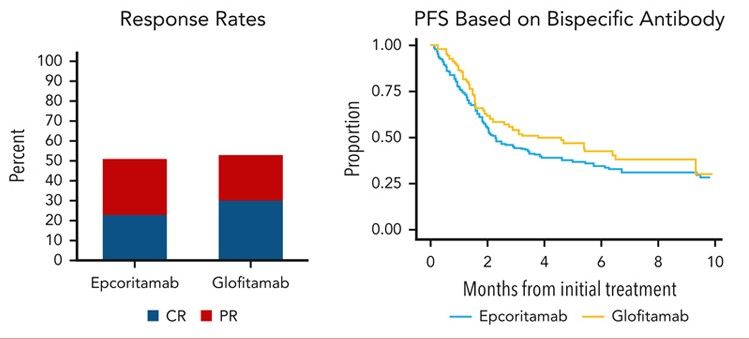
How does PFS differ from an overall response rate?
An overall response rate (ORR) measures the percentage of patients whose cancer shrank or disappeared. Progression-free survival (PFS) measures the length of time the patient lives without the disease worsening. As reported by CancerNetwork, epcoritamab showed superior PFS in pretreated LBCL, meaning the benefit lasted longer.
Is Epcoritamab approved for first-line DLBCL?
According to the report on the EPCORE DLBCL-3 study from Oncodaily, epcoritamab is currently being studied in the first-line setting. Approval for first-line use typically follows the completion and review of these clinical trials.
Why is epcoritamab particularly useful for elderly DLBCL patients?
According to Business Wire, epcoritamab has shown high response rates in elderly patients who may be unable to tolerate the high toxicity of standard chemotherapy. This provides a more viable treatment option for patients with significant comorbidities.
