Philippe Bouvard, animateur historique des "Grosses Têtes" sur RTL, est mort à 96 ans
The iconic broadcaster and print journalist shaped French popular culture across a six-decade career, launching the radio institution Les Grosses Têtes in 1977.

Philippe Bouvard passed away peacefully at his home in Cannes at approximately 8 a.m. On Monday, 24 August 2026, at the age of 96, according to announcements made by his wife to RTL and reported by Ozap. His death closes a six-decade broadcasting career that reshaped French popular culture, prompting RTL to suspend its regular programming for a special morning broadcast dedicated to his legacy.
Born in Coulommiers on 6 December 1929, Bouvard navigated an unstable early academic path that included three failures at the baccalauréat and a brief stint at the Centre de formation des journalistes (CFJ) in Paris, from which he was expelled after six months, with the director recording that he n’est pas doué pour le journalisme mais réussira dans les professions commerciales
, as detailed by Ozap and Midi Libre. After working odd jobs selling sunglasses and encyclopedias, he entered the photo department of *Le Figaro* as a courier in 1952. Earning his press card by captioning photographs, he climbed the ranks to lead the Paris and gossip desk by 1962, before serving as editor-in-chief, director, and editorialist at *France-Soir* between 1973 and 1998, alongside contributions to *L'Express*, *Paris Match*, and *Le Point*, as outlined by Closer.
Related YouTube video


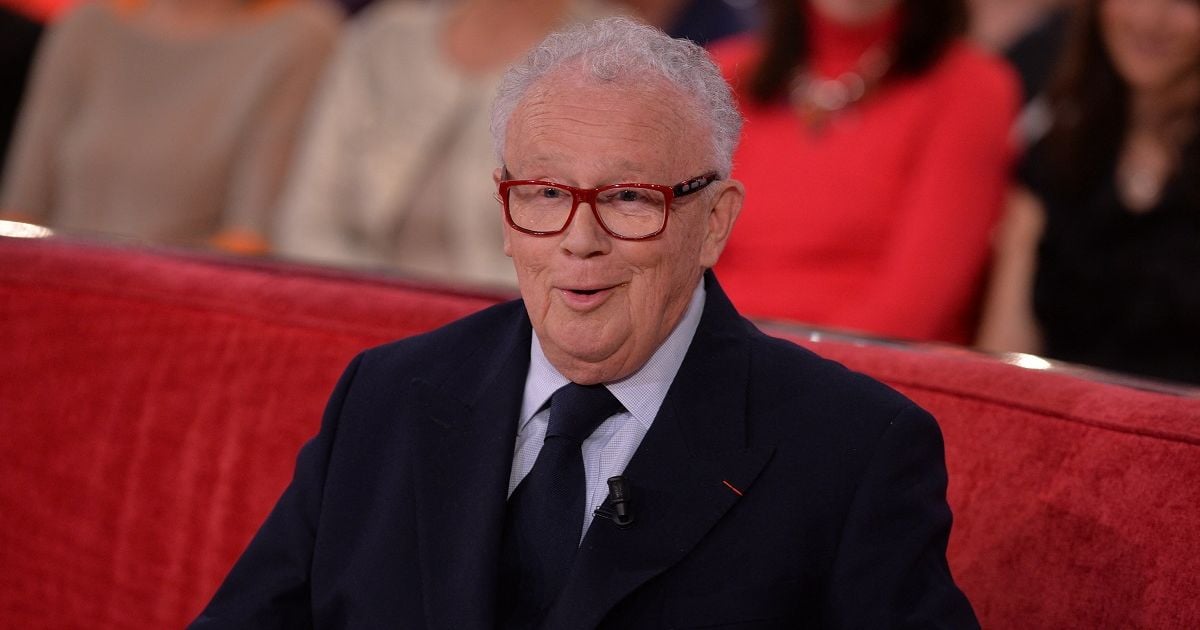
By the 1960s, Bouvard had expanded into radio with Radio-Luxembourg — which became RTL in 1966 — serving as an interviewer and eventually becoming editor-in-chief of the 1 p.m. News. His professional identity transformed fundamentally on 1 April 1977, when program director Jean Farran enlisted him to create a daily quiz and entertainment format. Initially recorded in a cramped studio without an audience around a tiny table with four microphones, Les Grosses Têtes grew into a national institution that routinely drew more than 2.5 million listeners every afternoon, featuring iconic early panelists such as Jean Dutourd, Jacques Balutin, Roger Pierre, and Jean Lefebvre, alongside later fixtures like Jean Yanne, Jacques Martin, and Claude Sarraute.
Concurrently, Bouvard established a major television footprint by launching *Le Petit Théâtre de Bouvard* on Antenne 2 in 1982, creating an influential breeding ground for emerging comedic talent that launched performers including Muriel Robin, Mimie Mathy, Chevallier et Laspalès, and Les Inconnus, according to Europe 1. Despite his institutional success, his career was marked by severe public fractures, most notably in June 2000 when RTL's management abruptly ousted him to court a younger demographic, replacing him with Christophe Dechavanne. When RTL’s ratings collapsed, the station recalled Bouvard in early 2001. A more wrenching transition occurred in September 2014, when management handed the reins of *Les Grosses Têtes* to Laurent Ruquier. Bouvard admitted that stepping away was un déchirement
and later confessed he could never have relinquished the show of his own volition.
His public persona was similarly complex. While celebrated for his literary wit and defense of general culture, Bouvard openly acknowledged operating within a reactionary framework, describing himself to *Le Parisien* as a Français moyen, râleur, chauvin, un rien xénophobe
, a persona he occasionally confessed to regretting as an entrapment, as reported by Europe 1. His provocative style also brought legal and physical peril. In 1996, he was convicted of inciting racial hatred following a riddle posed on television during *Les Grosses Têtes*. Decades earlier, he faced grave security threats: police discovered photographs of his home and an abduction plan belonging to the notorious gangster Jacques Mesrine after Mesrine's death in 1979, and in September 1985, a mentally unstable assailant shot him five times outside the RTL studios, inflicting wounds to his abdomen and finger, as detailed by Ozap.
Refusing total inactivity even as his eyesight and hearing declined, Bouvard continued writing columns and weekend radio segments, including *Allô Bouvard* and *Les portraits de Philippe Bouvard*. He achieved his final professional objective on 1 January 2025, when he officially retired from broadcasting to fulfill his ultimate ambition of securing exactly 60 years of radio work and 60 years of continuous service to RTL, according to reports by L'Indépendant and Europe 1.
Key Milestones in Philippe Bouvard's Career
- 6 December 1929: Born in Coulommiers, Seine-et-Marne.
- 1 April 1977: Launched *Les Grosses Têtes* on RTL.
- September 2014: Handed over presentation of *Les Grosses Têtes* to Laurent Ruquier.
- 1 January 2025: Officially retired from broadcasting after completing 60 years of service to RTL.
Tributes poured across the French media landscape following his passing, with Laurent Ruquier telling RTL listeners that Bouvard a créé l'impertinence à la radio et à la télévision
and calling him a master of the craft, while Jean-Pierre Foucault praised his ability to bring general culture to the masses, as noted by La Provence and TV Magazine.
How significant is this development?
Contribute your assessment to the aggregated reader intelligence ledger.
Archypedia is dedicated to independent, evidence-backed reporting. This briefing was synthesized from primary source reporting, corroborated across independent newsrooms, and verified against our Editorial Standards.
Transparency record
Evidence behind this report
This report synthesizes 10 distinct sources. Open the source ledger below to compare the underlying coverage.
- ozap.com
- lindependant.fr
- closermag.fr
- midilibre.fr
- europe1.fr
- rmc.bfmtv.com
- laprovence.com
- tvmag.lefigaro.fr
- lavenir.net
- sudradio.fr
Prepared under the Archypedia Editorial Policy by the Iris Kane editorial desk profile. AI-assisted tools may support drafting and verification; public accountability remains with Archypedia. Report an error.